

















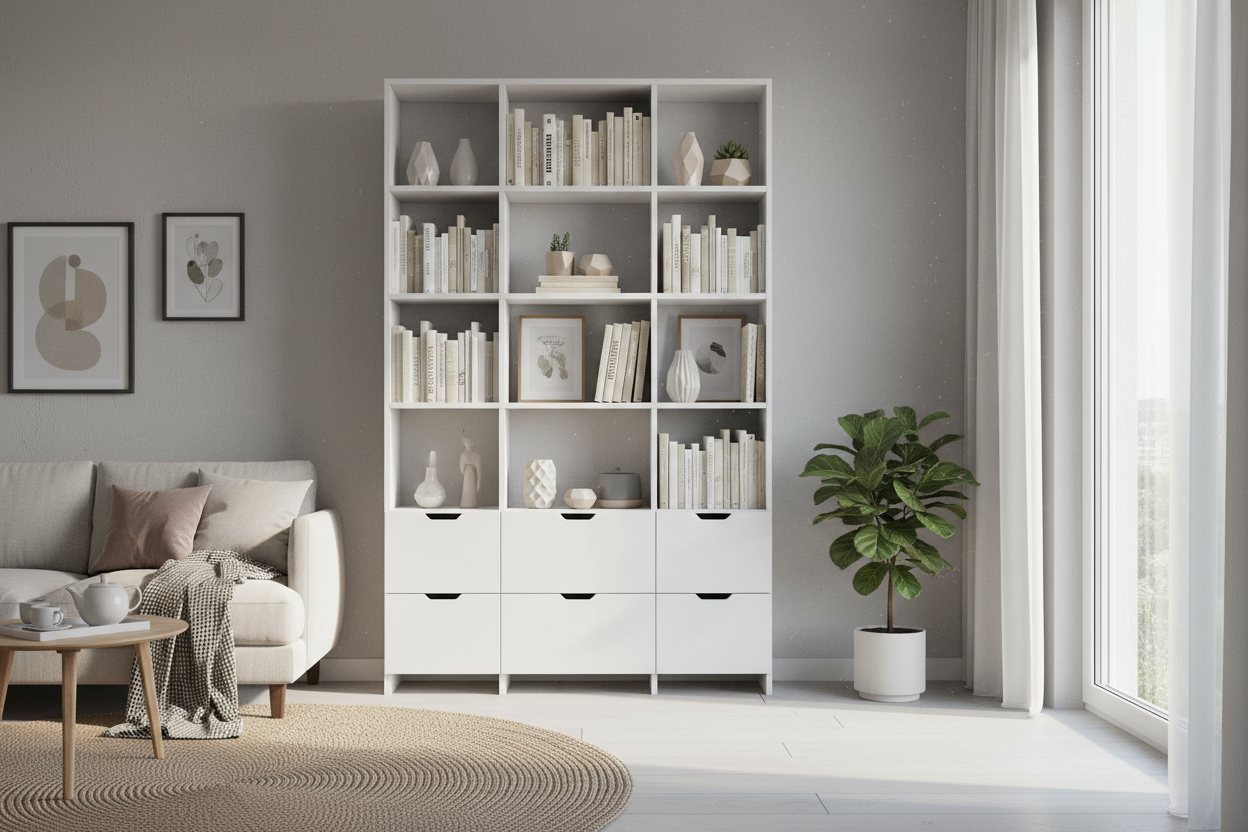
Finding furniture that balances storage needs with aesthetic appeal is a constant struggle, especially in smaller homes or apartments where every square foot counts. You want to display your favorite novels and travel souvenirs, but you also have a pile of charging cables, paperwork, and miscellaneous clutter that needs to disappear. The most effective solution to this dilemma is a white bookcase with drawers on bottom. This hybrid piece of furniture solves the vertical storage problem while keeping the visual weight of the room light and airy due to its finish.
Combining open shelving with closed cabinetry offers the best of both worlds. The upper section allows for curating a personality-filled display, while the lower section handles the messy reality of daily life. White furniture, in particular, reflects natural light, making a room feel more expansive rather than closed in by heavy wood tones. Whether you are outfitting a nursery, a home office, or a living room, this specific configuration is a workhorse that often goes underappreciated.
My Experience with the "Clutter Hybrid"
I learned the value of this furniture style the hard way when I moved into a studio apartment that had zero closet space. My initial setup involved open industrial shelving, which looked great on Pinterest but terrible in reality. Within a week, the shelves were a chaotic mix of books, socks, and mail. It looked messy, and because the shelves were dark metal, the room felt smaller.
I eventually swapped that unit for a tall white bookshelf with drawers on bottom. The transformation was immediate. I used the three deep drawers for linens and office supplies, effectively hiding the "visual noise." The white finish blended into the walls, making the unit look like built-in cabinetry rather than a bulky piece of furniture. It taught me that storage isn't just about capacity; it's about concealment. Being able to sweep a messy desk into a drawer and close it before guests arrive is a luxury that open shelving simply cannot provide.
Why the Bottom-Drawer Configuration Matters
There is a structural and visual reason why the specific design of a white bookshelf with drawers on bottom works so well. From a physics standpoint, placing the drawers at the base lowers the center of gravity. Books are heavy, but stacks of paper, files, or toys packed into drawers are often heavier. Having this weight at the floor level makes the unit more stable and less prone to tipping, though anchoring furniture to the wall is always a safety requirement.
Visually, this layout grounds the room. If you have drawers at the top or middle, it breaks the eye line and can make the piece feel top-heavy. By keeping the bulk at the bottom, the piece feels anchored. This allows the open shelves above to feel lighter. You can leave negative space between items on the shelves without feeling guilty about wasted space, because the heavy-duty storage is happening efficiently in the drawers below.
Versatility Across Different Rooms
One of the strongest selling points of white drawers with bookshelf units is their chameleon-like ability to fit into almost any room's function. The utility changes, but the form remains effective.
The Home Office
In a workspace, the drawers become filing cabinets or tech storage. The open shelves hold reference books and decorative plants to keep the vibe from feeling too sterile. White is particularly good here as it promotes a sense of focus and cleanliness.
The Nursery
Parents often flock to this design. The drawers are perfect for diapers, wipes, and onesies, while the shelves hold bedtime stories and stuffed animals. As the child grows, the furniture evolves. The diaper drawer becomes a toy drawer, and eventually a school supply drawer, without needing to buy new furniture.
The Living Room
Here, the unit functions as a media center or a library. The drawers are ideal for board games, video game controllers, and throws. The white finish pairs well with colorful book spines or framed photos, allowing the contents to pop without clashing with the frame.
Choosing the Right Materials and Finish
Not all white finishes are created equal. When shopping, you will typically encounter three main categories: solid wood with paint, MDF (Medium Density Fiberboard), and laminate or melamine.
Solid wood is the most durable but also the most expensive. If you choose painted wood, look for a semi-gloss or satin finish, which is easier to wipe down than matte paint. MDF is a common, budget-friendly option for white furniture. It is smooth and takes paint well, avoiding the wood grain texture that some minimalists dislike. However, MDF can swell if it gets wet, so be cautious with watering plants on the shelves.
Laminate is incredibly resistant to scratches and stains. If you are looking for a white bookcase with drawers on bottom for a high-traffic area or a kid's room, high-quality laminate is often the pragmatic choice. It resists the yellowing that can sometimes happen with oil-based paints over time.
Styling Tips to Avoid the "Cluttered" Look
White furniture acts as a blank canvas, which is both a blessing and a curse. If you overcrowd the shelves, the clutter becomes very obvious against the bright background. To maintain a sophisticated look, follow the rule of thirds. Fill one-third of the shelf with books, one-third with decorative objects (vases, sculptures), and leave one-third empty.
For the drawers, invest in internal organizers. A deep drawer can quickly become a junk drawer without dividers. Using clear bins or fabric cubes inside the drawers maximizes the utility of your white drawers with bookshelf combo. This ensures that when you pull a drawer open, the sense of calm you get from the clean white exterior continues on the inside.
Assembly and Maintenance
White furniture shows dust and fingerprints more than wood grain, but it hides scratches less than black furniture. A simple microfiber cloth is usually enough for daily dusting. For scuffs on a white finish, a magic eraser sponge is often effective, but test it on a hidden spot first to ensure it doesn't dull the sheen.
When assembling these units, pay close attention to the drawer slides. If the unit uses cheap plastic rollers, the drawers may stick or derail if overloaded. Look for metal ball-bearing slides if possible, as they offer a smoother action and can support more weight. This is crucial if you plan to store heavy items like reams of paper or photo albums in the bottom section.
Final Thoughts on Organization
Investing in a unit that combines display space with concealed storage is one of the smartest design moves you can make. It acknowledges that we all have things we want to show off and things we need to hide. A white bookshelf with drawers on bottom provides that balance while keeping your space feeling bright, open, and intentionally designed.
Frequently Asked Questions
How much weight can the bottom drawers typically hold?
This depends heavily on the drawer slides and the bottom reinforcement. Standard drawers can usually hold 15-25 pounds, while heavy-duty metal slides can support up to 50 pounds or more. Always check the manufacturer's weight rating before filling them with heavy items like paper files.
Does white furniture yellow over time?
Cheaper oil-based paints or low-quality plastics can yellow when exposed to direct sunlight for years. To prevent this, look for UV-resistant finishes or high-quality melamine/laminate, and try to position the bookshelf out of harsh, direct beams of sunlight.
Can I add drawers to an existing open bookshelf?
Yes, insertable drawer boxes or fabric bins are a common solution. While they won't look as seamless as a built-in unit, you can find white storage cubes that slide into standard shelf cubbies to mimic the look and function of integrated drawers.

Leave a comment
This site is protected by hCaptcha and the hCaptcha Privacy Policy and Terms of Service apply.