

















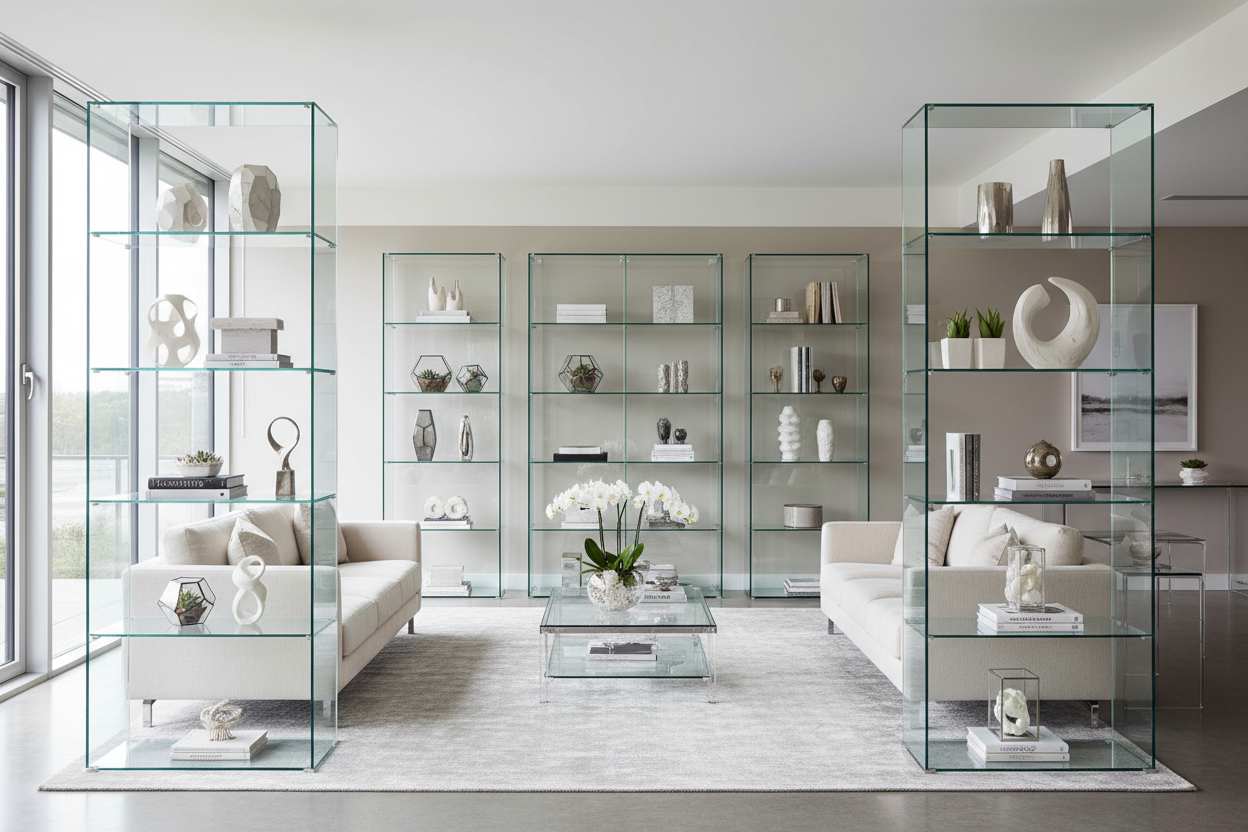
I spent three hours last night moving my favorite ceramic vases around a mahogany bookshelf, and they still looked like they were hiding in a basement. It’s the classic interior design trap: we buy heavy wood because it feels 'substantial,' but then we wonder why our living rooms feel like a cluttered library from the 1920s. If you’re tired of your decor looking like a museum exhibit in the dark, it’s time to talk about the display shelf glass solution.
- Glass allows natural light to reach every corner of the shelf, eliminating shadows.
- Transparent tiers create the illusion of more floor space in small rooms.
- Glass is easier to clean and sanitize than porous, unfinished wood.
- It forces you to be more intentional with your styling because there is nowhere to hide clutter.
Why Solid Wood Bookshelves Are Swallowing Your Decor Alive
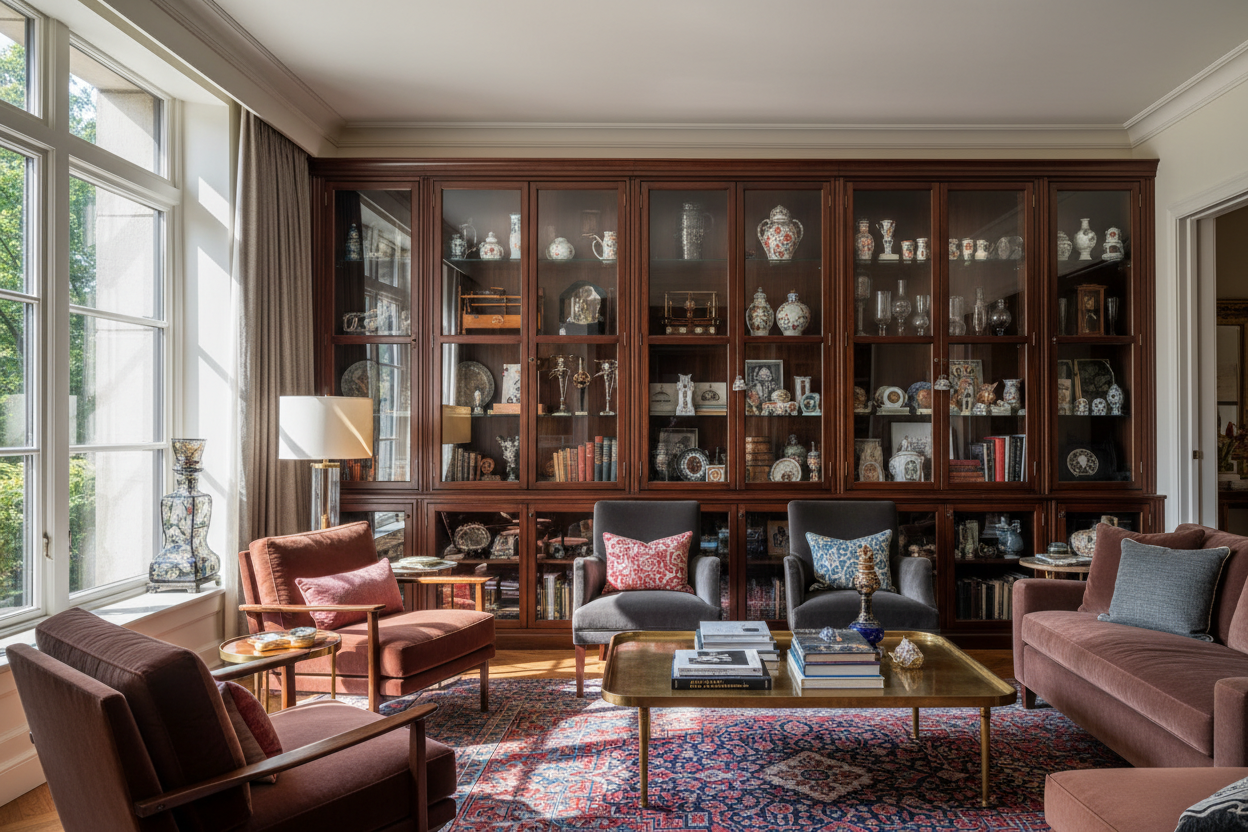
Solid wood has its place—usually for holding 50-pound encyclopedias or acting as a dining table. But for decor? It’s a light-killer. Most standard adjustable shelf storage units in dark oak or walnut create a 'cave effect.' Because the shelves are opaque, the light from your windows or lamps hits the top shelf and stops dead. Everything on the lower tiers ends up in a murky grey zone.
I’ve seen beautiful, hand-painted pottery look like cheap plastic just because it was sitting on a dark shelf. When you use a display shelf with glass, you aren't just buying furniture; you're buying a lighting upgrade. Wood absorbs light; glass distributes it. If your room feels cramped, check your shelving. If it’s a solid wall of timber, that’s your culprit.
The Undeniable Magic of a Display Shelf Glass
There is a specific kind of visual trickery that happens when you swap wood for a display shelf glass. It’s called 'visual weight.' A 72-inch tall wood cabinet feels like a giant monolith standing in the room. A glass unit of the same size feels like it’s barely there. It lets the color of your walls and the texture of your rugs peek through.
This transparency is why professional decorators love glass. It allows you to display bulky items—like large art books or heavy sculpture—without making the room feel top-heavy. Light passes through from the top, the sides, and even the bottom, giving your objects a glow that wood simply can't replicate. It’s the difference between looking at something in a box and looking at it in the open air.
3 Things That Always Look Better on a Display Shelf With Glass
Not everything belongs on glass, but these three categories are non-negotiable. First: Metallic accents. Brass, silver, and copper need light to 'pop.' On a wood shelf, they just look dull. On glass, they catch every stray beam of sun. Second: Glassware. Whether it’s vintage depression glass or a modern decanter, glass-on-glass is a vibe. If you have a collection, consider a wine bar cabinet with light to really make those bottles shine.
Third: Trailing plants. Pothos, ivy, and string-of-pearls need light to hit their top leaves to stay healthy. On a solid shelf, the 'hair' of the plant blocks its own light. On a glass shelf, the sun can hit the leaves from below, keeping the plant lush from top to bottom. It’s a small detail that makes a massive difference in how long your indoor jungle actually survives.
Enclosed vs. Open: What's the Right Move for Your Space?
The biggest debate in the glass world is whether to go 'naked' (open shelving) or 'caged' (enclosed cabinets). Open glass shelves are great for a minimalist, airy look, but they are a magnet for dust. If you live in a city or have pets, you’ll be wiping them down every three days. That’s why I usually lean toward a large display cabinet storage shelf.
An enclosed unit with glass doors gives you all the light-filtering benefits but acts as a shield against dust and cat hair. Plus, there’s something incredibly satisfying about the 'clink' of a glass door closing. It makes your collection feel curated and protected, rather than just 'stuff' sitting on a ledge. If you have toddlers or a particularly clumsy Golden Retriever, the enclosed route is the only sane choice.
Do You Actually Need Multiple Tiers?
Scale is everything. Don't buy a six-foot tower if you only have three cool things to show off. A single, well-placed display shelf glass tier can act as a focal point. However, if you’re a serious collector—think LEGO sets, vintage cameras, or rare sneakers—you need to think about volume.
I often get asked if a 4-shelf glass display case is enough for a growing collection. Usually, the answer is yes, provided you don't over-crowd it. The beauty of glass is the negative space. If you jam a glass shelf full of 50 items, you lose the 'floating' effect. Give your objects room to breathe, and the glass will do the rest of the work for you.
My Honest Experience
I once bought a massive, black-painted oak bookshelf for my 600-square-foot apartment. I thought it looked 'sophisticated.' In reality, it made my living room feel like a walk-in closet. I eventually sold it on Craigslist and replaced it with a simple glass-and-steel unit. The change was instant—the room felt twice as big. The only downside? Fingerprints are real. If you touch the glass, you’ll see it. I keep a microfiber cloth hidden in a nearby drawer for quick touch-ups. It’s a small price to pay for a room that actually feels like it has oxygen in it.
FAQ
Is tempered glass really necessary?
Yes. Never buy non-tempered glass for shelving. If it breaks, regular glass shards are dangerous needles; tempered glass breaks into small, relatively harmless pebbles. Most reputable furniture brands only use tempered glass, but always check the fine print.
How much weight can a glass shelf actually hold?
It depends on the thickness. A standard 6mm glass shelf can usually handle 15-20 pounds if supported correctly. If you're planning on stacking heavy cast-iron cookware, stick to wood. If it's decor, glass is plenty strong.
Does glass shelving look too 'office-y'?
Only if you buy the cheap, all-chrome versions. To keep it feeling like a home, look for units that mix glass with warm metals like brass or even units that have a wooden frame but glass inserts. It’s all about the mix of textures.

Leave a comment
This site is protected by hCaptcha and the hCaptcha Privacy Policy and Terms of Service apply.