

















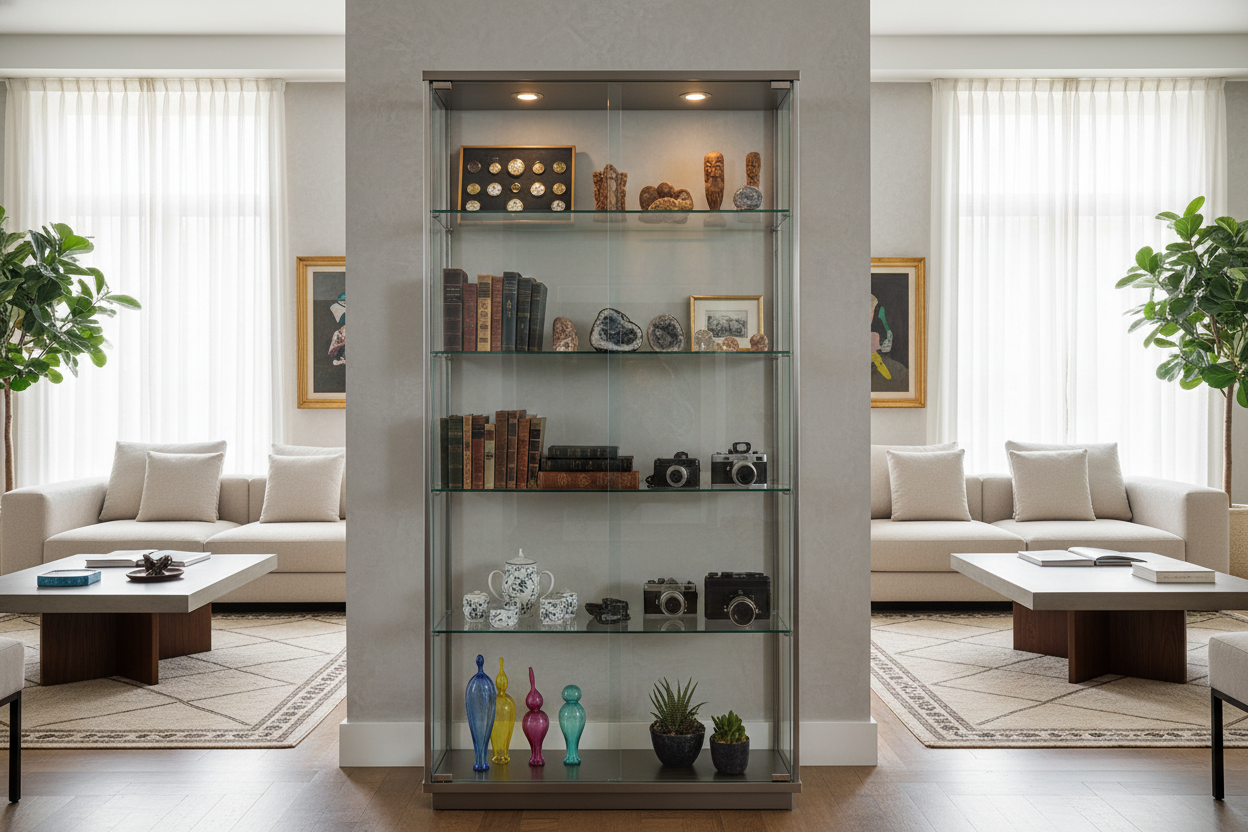
I have spent way too many nights staring at a 4-shelf glass display case in my digital cart, wondering if it would actually hold my vintage camera collection or just look like a sad, half-empty aquarium in the corner of my living room. We have all been there—that agonizing 'Goldilocks' struggle of furniture shopping where everything is either a tiny tabletop box or a massive, floor-to-ceiling wardrobe that eats half the square footage. It is the kind of decision that leads to 47 open browser tabs at 1 AM.
Quick Takeaways
- A 4-shelf unit typically hits 60-64 inches, which is the sweet spot for eye-level viewing without blocking wall art.
- Glass eliminates the 'visual weight' of heavy wood, making small rooms feel larger.
- Four tiers allow for specific categorization (e.g., one for books, two for collectibles, one for plants).
- Always prioritize 5mm tempered glass over cheap 3mm alternatives for safety.
The Awkward 'Too Big vs. Too Small' Furniture Dilemma
The frustration of buying display furniture is real. I once bought a three-shelf unit thinking it would be subtle, but it ended up looking like a glorified nightstand. It sat too low, forcing guests to awkwardly hunch over to see my signed first editions. On the flip side, I have seen five- and six-shelf units that instantly turn a cozy living room into a crowded museum exhibit. They dominate the vertical space and make the ceiling feel like it is crashing down on you.
The move from open shelving to glass is usually a sign that you are tired of the 'dusting tax.' I spent years cleaning soot off my collectibles every weekend before I realized that choosing the perfect display cabinet is actually about protecting your time as much as your stuff. A mid-sized unit provides that enclosure without the bulk of a library-style bookcase. It is the bridge between 'I have a few cool things' and 'I am a serious collector.'
Why the 4-Shelf Glass Display Cabinet Just... Works
There is a bit of math behind why the 4-shelf glass display cabinet feels so right in a standard home. Most of these units stand between 60 and 65 inches tall. This height is intentional; it aligns beautifully with the tops of most window frames and doorways, creating a sense of architectural harmony. When a piece of furniture sits at this level, your eyes naturally gravitate toward the middle two shelves—the prime real estate for your absolute favorite pieces.
If you go much taller, the top shelf becomes a 'dust collector' that you can barely see. If you go shorter, you are wasting the vertical space you pay so much rent for. I recently looked at a 4 tier display cabinet bookcase that perfectly illustrated this. By spreading the tiers out vertically rather than horizontally, you get the storage of a wide sideboard but with the footprint of a small armchair. It is efficient, but because it is glass, it does not feel like a 'tower' of stuff. It feels like a window into your interests.
How to Style a 4 Shelf Glass Display Case (Without Cramming)
The biggest mistake people make with a 4 shelf glass display case is treating it like a grocery store shelf. You do not want to line things up in a straight row like cans of soup. My rule is 'heavy on the bottom, light on the top.' Put your largest, most solid items on the bottom shelf to ground the piece. As you move up, use acrylic risers to create varying heights. This breaks up the horizontal lines and keeps the viewer's eye moving.
The frame color also matters more than you think. A black cabinet with glass doors acts like a crisp, grounding border for your collection. It is like putting a frame around a painting; it tells the eye exactly where to look. If you have a lot of colorful items—think vibrant ceramics or bright action figures—that dark frame provides the necessary contrast to make those colors pop rather than getting lost against a pale wall.
The 60/40 Rule for Shelf Space
To keep your display from looking like a cluttered thrift store, I always recommend the 60/40 rule. Aim to fill about 60% of each shelf with your items and leave the other 40% completely empty. This 'negative space' is what makes a collection look curated. It lets the light move through the glass, which is the whole point of buying a glass case in the first place. If you cram it edge-to-edge, you might as well have bought a solid wooden cabinet.
When Should You Actually Size Up?
Be honest with yourself about the volume of your hoard. If you are a bibliophile with 300 hardcovers or a collector with life-sized movie props, a single four-shelf unit is going to fail you. You will end up double-stacking items, and the stuff in the back will never be seen. That is when you need to bite the bullet and look for a large display cabinet storage shelf. These wider units offer the depth and stability required for heavier loads, like thick art books or metal statues, which can actually bow the glass on smaller, more delicate units.
The Goldilocks of Display Furniture
For 90% of homes, the four-tier setup is the safest and most stylish bet. It offers enough room to grow your collection without demanding you dedicate an entire wall to it. It is the 'just right' solution that balances visibility, protection, and floor space. If you want your home to look like an adult lives there—someone who appreciates their things enough to show them off but not enough to let them take over the room—this is your size.
My Personal Experience: The 'Wobble' Lesson
I once tried to save $60 by buying a generic 4-shelf case that used plastic pegs to hold up the glass. It looked fine in the photos. But the first time I walked past it a bit too quickly, the whole thing rattled like a maraca. One peg eventually failed, and I spent my Saturday picking glass shards out of the carpet. Now, I only buy units with metal shelf supports or those where the glass slots directly into the frame. Do not skimp on the hardware; your collection is worth the extra few bucks for stability.
Frequently Asked Questions
Are glass display cases hard to keep clean?
They do show fingerprints, especially if you have kids or pets. However, a quick wipe with a microfiber cloth and a 50/50 vinegar-water mix once a week is usually all it takes. It is still less work than individually dusting 50 small items on an open shelf.
How much weight can a glass shelf actually hold?
For standard 5mm tempered glass, you are usually looking at 10-15 pounds per shelf. If you have heavy stone sculptures or stacks of large books, you definitely need to check the manufacturer's specs or look for a unit with reinforced supports.
Do I really need to anchor it to the wall?
Yes. Absolutely. Glass cases are top-heavy by nature, and because they are narrow, they have a higher center of gravity. Most quality units come with a wall-anchor kit—use it. It is a five-minute task that prevents a total disaster.

Leave a comment
This site is protected by hCaptcha and the hCaptcha Privacy Policy and Terms of Service apply.