


















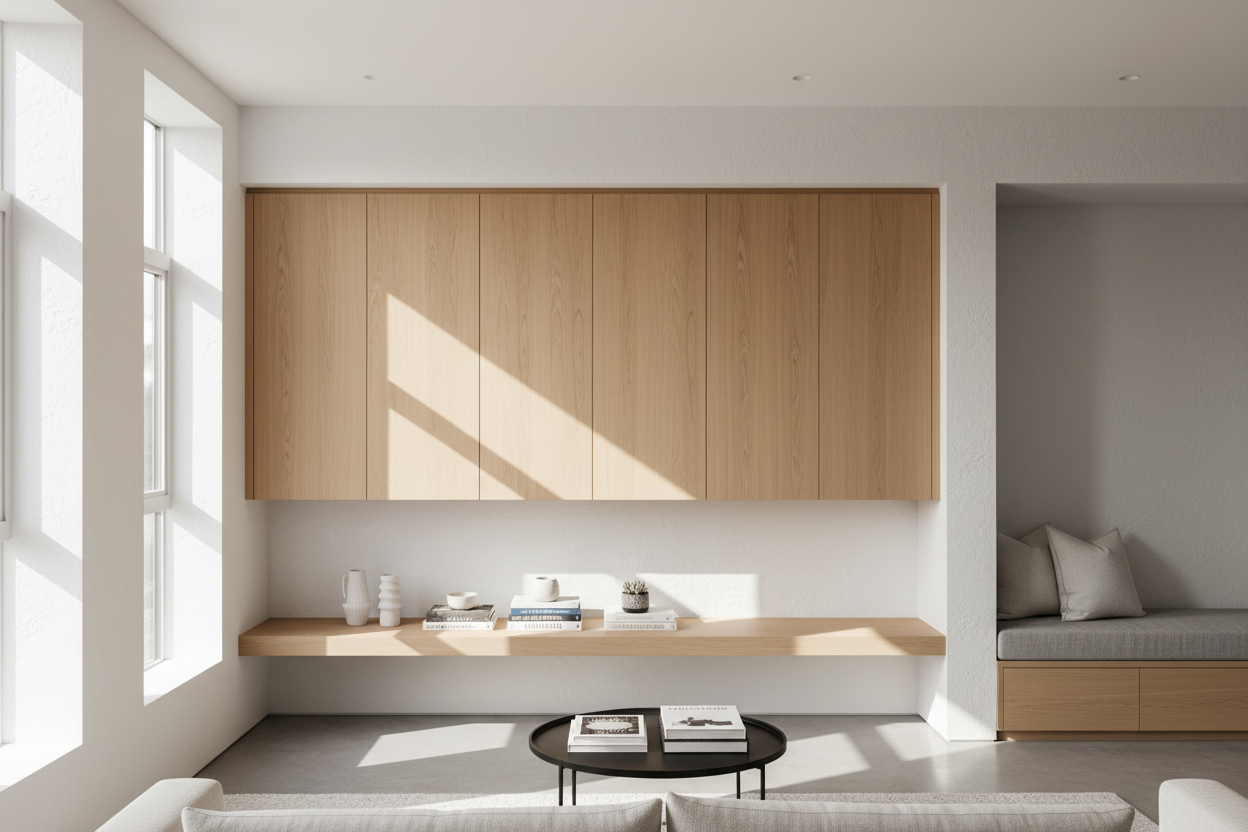
I stood in my living room with a tape measure and a dream that was rapidly dying. I wanted that 'old money' library look—the kind where the shelves look like they grew out of the walls and hold the weight of a thousand hardcovers without flinching. Then the quote came in: $15,000 for a 12-foot media wall. For that price, I expected the carpenter to include a first-edition Gatsby and a rolling ladder made of solid mahogany.
- Modular units cost roughly 70% less than custom-built millwork.
- Prefabricated pieces cut the project timeline from months to a single weekend.
- The 'custom' secret lies in the trim, caulk, and a unified paint color.
- Investing in solid base units prevents the dreaded 'IKEA sag' over time.
The $15,000 Quote That Made Me Rethink Everything
The carpenter was a nice guy, but his estimate felt like a personal attack on my savings account. He talked about 'custom scribing' and 'furniture-grade maple,' which sounds lovely until you realize you're paying for his new truck. I spent three nights staring at my blank wall, wondering if I could just live with a few floating shelves and a sense of defeat.
I knew what I didn't want: a wall of flimsy, white-laminate bookcases that scream 'first apartment.' I needed something with weight. I needed 3/4-inch thick shelving that wouldn't bow under my collection of heavy art books. That's when I stopped looking at 'bookcases' and started looking at modular built-in cabinets.
Enter the Magic of Modular Built-In Cabinets
The difference between a cheap flat-pack and high-quality modular storage cabinets is all in the construction. We’re talking about pre-sized units made from kiln-dried wood or high-density fiberboard that arrive 90% assembled. They aren't the wobbly things you find in a big-box aisle; they have solid backs and heavy-duty hardware.
By using these as my base, I wasn't building from scratch—I was just playing with adult Legos. I chose units that were 36 inches wide to span my 12-foot wall perfectly. No weird gaps, no awkward 2-inch slivers of wasted space. The goal was to make these separate boxes look like one continuous piece of architecture.
Why Prefabricated Built-Ins Win on Timeline
If I had gone the custom route, I’d still be waiting for a 'shop drawing' approval. Custom shops usually have a 12-to-16-week lead time. I ordered my prefabricated built-ins on a Tuesday, and they were in my driveway by the following Friday. I went from a blank wall to a fully functional library in eight days, including the time I spent agonizing over paint swatches.
My Secret Trick for Prefab Built-In Bookshelves
Here is how you bridge the gap between 'bought' and 'built.' First, I built a simple 2x4 platform for the cabinets to sit on. This raised them up so I could run my existing 5-inch baseboards right across the bottom of the units. It’s the easiest way to make prefab built-in bookshelves look like they’ve been there since the house was built.
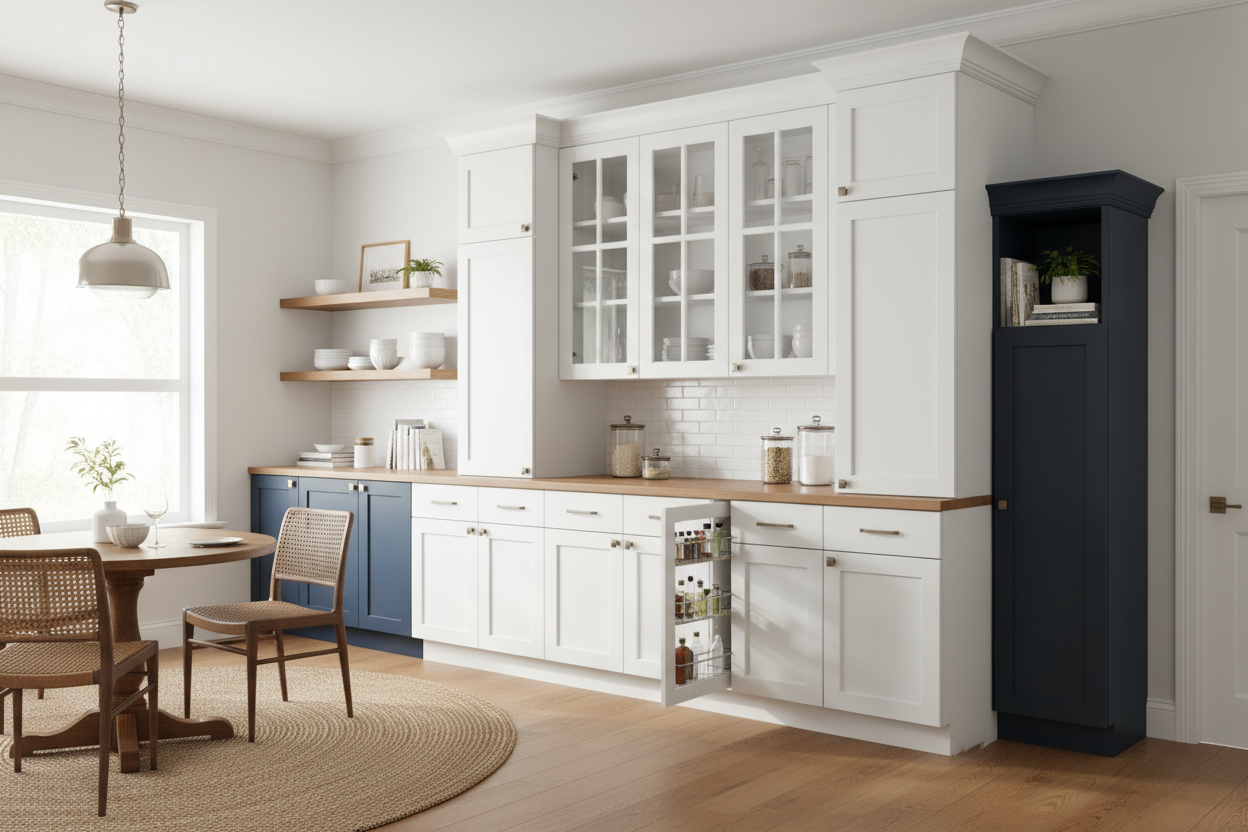
Next, I used built-in storage cabinets with doors for the bottom half. This is non-negotiable. You need a place to hide the messy stuff—the router, the PlayStation, and the board games with missing pieces. For the top, I added crown molding that touched the ceiling. Once you fill the gaps with wood filler and caulk, the seams vanish.
The real trick? Painting everything the same color. I went with a deep charcoal in a satin finish. When the walls, the shelves, and the trim are all one hue, your eyes stop seeing individual boxes and start seeing a custom installation. I spent about $400 on trim and paint to make $3,000 worth of cabinets look like $15,000.
When Modular Built Ins Actually Make More Sense
Custom millwork is permanent. If you decide you want a larger TV in three years, you're taking a sledgehammer to your investment. With modular built ins, you have a safety net. I actually messed up my first layout—I realized halfway through that I wanted more space for a record player. Since they weren't glued to the studs yet, I just swapped two units around.
If you're someone who moves every few years or just likes to rearrange the furniture every spring, you might even consider free standing cabinets for living room storage instead of a full install. But for that high-end look, the modular-to-permanent pipeline is the sweet spot for most homeowners.
The Final Verdict: Where I'd Spend and Where I'd Save
Total project cost? Roughly $4,200. I saved over $10,000 and the result is indistinguishable from the 'pro' version to anyone who isn't a master woodworker. My advice: don't skimp on the base units. Buy the heaviest, most solid modules you can afford. Cheap units will sag under the weight of books within a year, and no amount of crown molding can fix a frowny-face shelf.
Save your money on the trim. Standard pine molding from the hardware store looks just as good as the expensive stuff once it's sanded and painted. Splurge on the hardware—heavy brass knobs give the cabinets a tactile 'expensive' feel every time you open a door. My only regret was not doing it sooner.
How do you hide the seams between modular units?
Wood filler and an orbital sander are your best friends. I butt the cabinets tight against each other, screw them together through the side frames, and then use a tiny bit of filler on the seam before painting. If you're really fancy, you can nail a thin 'face frame' strip over the joint.
Do I need to anchor these to the wall?
Yes. Absolutely. If you’re stacking units or going floor-to-ceiling, you must anchor them into the studs. These things are heavy, and once you fill them with books, they become a tipping hazard. Don't skip the $5 L-brackets for the sake of your safety.
What paint finish is best for shelves?
Go with a satin or semi-gloss. Matte paint on shelves is a nightmare because books will leave scuff marks, and it's much harder to dust. A bit of sheen makes the surface 'harder' and easier to wipe down when things get gritty.

Leave a comment
This site is protected by hCaptcha and the hCaptcha Privacy Policy and Terms of Service apply.