

















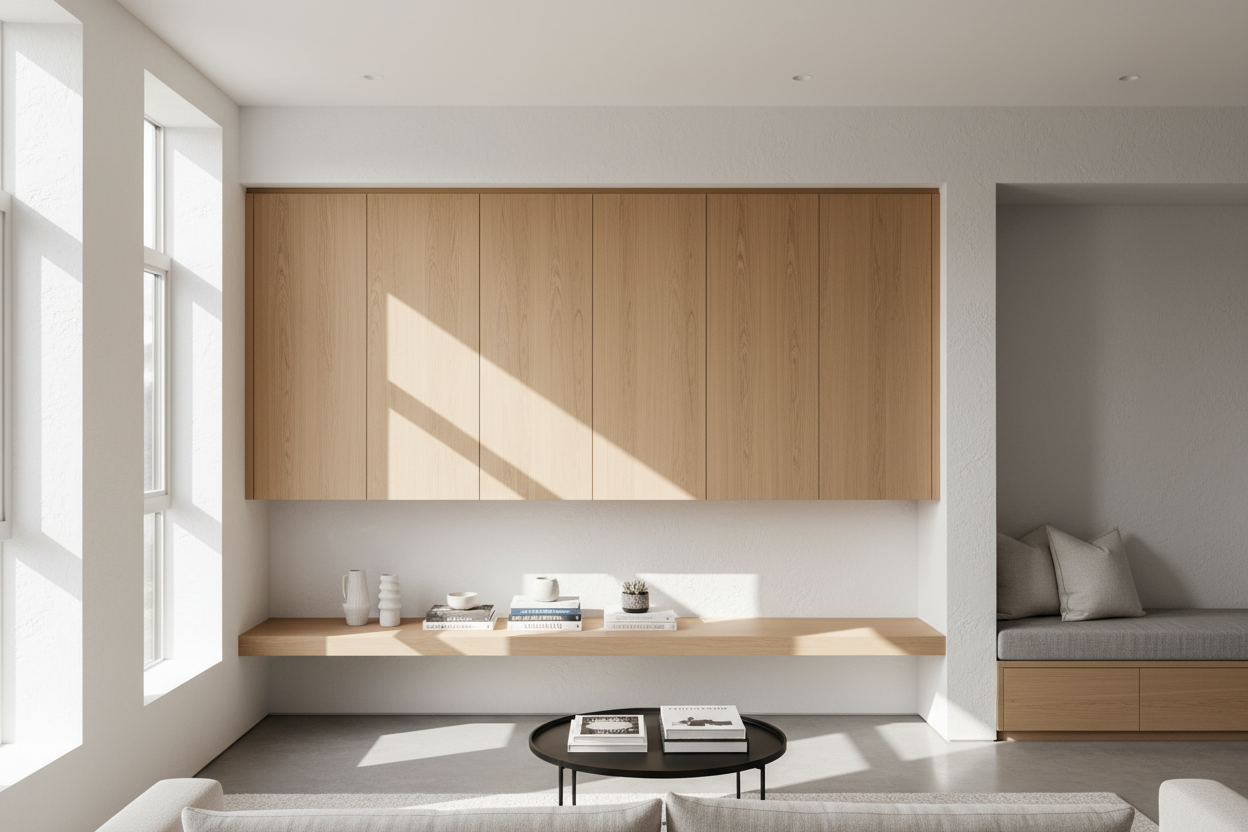
I spent three years shoulder-checking a generic shoe cabinet every time I walked down my hallway. It was only 11 inches deep, but in a 36-inch wide corridor, those 11 inches are the difference between a graceful walk and a clumsy stumble. I finally got fed up, grabbed a utility knife, and decided that if I couldn't find a slimmer cabinet, I'd just shove the one I had into the wall.
Deciding to install a cabinet in wall is a commitment to a weekend of dust and a lifetime of reclaimed floor space. It’s the ultimate hack for homes built with standard 2x4 framing, where there’s about 3.5 inches of hollow, wasted potential sitting behind your paint. If you’re tired of bruising your hip on furniture that’s just too big for the room, this is your sign to stop looking at floor plans and start looking at what’s inside your drywall.
Quick Takeaways
- You gain about 4 inches of depth without losing an inch of floor space.
- Standard wall studs are usually 16 inches apart, giving you a 14.5-inch wide opening to work with.
- Avoid exterior walls if you live in cold climates—you’ll lose your insulation and deal with cold drafts.
- Always use a high-quality stud finder that detects live electrical wires before you cut.
The 'Aha' Moment: When Normal Furniture Just Won't Fit
We’ve all been there—trying to force a standard 12-inch deep bookshelf into a bathroom or a tiny entryway. It looks cluttered. It feels cramped. You start wondering why modern houses are built with so many dead zones. Most interior walls are basically just empty air held up by sticks of pine.
By choosing to install wall cabinet units that sit flush, you’re reclaiming real estate you already paid for. It’s the difference between a room feeling like a storage locker and feeling like a custom-designed suite. When you stop fighting for every inch of floor and start using the vertical space between your studs, the whole flow of your home changes.
Can You Actually Put a Cabinet in Wall Anywhere?
Before you go full demo-day with a sledgehammer, you need to know what’s back there. Most interior walls are non-load-bearing, but they are often packed with surprises like PVC vent pipes or 14-gauge electrical Romex. If you cut into a wire, your weekend project just got three times more expensive and significantly more dangerous.
I recommend a stud finder with AC detection. If it beeps like crazy in one spot, move your cabinet six inches over. Also, skip the exterior walls. If you remove the fiberglass insulation to fit a cabinet, that wall is going to be freezing in the winter and might even develop condensation issues behind your shelves. Stick to the interior partitions where the only thing you're displacing is air.
The Messy Reality of Cutting Drywall
Let’s be honest: cutting drywall is disgusting. It’s a fine, chalky powder that gets into your eyelashes, your coffee, and your soul. You think you’ve covered everything with plastic sheets, but a week later, you’ll still find a white film on your TV remote. It's the price you pay for a custom look.
The key is a sharp utility knife for the perimeter and a hand-held drywall saw for the rest. Do not use a power oscillating tool unless you want to create a localized dust storm in your living room. It’s a slow, gritty process, but seeing that clean rectangular hole for your wall unit with cabinets is incredibly satisfying. Just keep a shop vac running while you cut to catch the worst of the fallout.
Scared of Saws? How to Fake the Flush Look
If you're renting or the thought of a structural mishap keeps you up at night, you don't actually have to cut the wall. You can get a high end built in look just by choosing the right furniture and mounting it strategically. It's about visual weight, not just physical depth.
Instead of recessing, look for ultra-slim profiles. A white wall mounted glass cabinet can be anchored directly to the studs. Because it floats off the floor, your eyes see more floor space, which tricks your brain into thinking the room is bigger than it is. It’s a cleaner alternative that doesn't involve a trip to the hardware store for joint compound and sandpaper.
Making the Most of Your Shallow Storage
A recessed cabinet is only about 3.5 to 4 inches deep. You aren't going to store a slow cooker or a stack of thick bath towels in there. This is for the small stuff that usually creates surface clutter: spices in the kitchen, skincare in the bathroom, or keys and mail in the foyer.
By transforming your foyer with a recessed unit, you eliminate the landing strip of junk on a traditional console table. It keeps the walkway clear and makes your home feel organized the second you walk through the door. It’s about utility, not bulk. Sometimes the best storage is the kind you can't even see from the side.
Personal Experience: My 'Oops' Moment
The first time I tried this, I didn't check for a header. I assumed every wall was just studs and air. Halfway through my cut, I hit a solid block of 2x10 lumber. I had to pivot my entire design and patch a 6-inch gash in the drywall. My advice? Map out your studs with painter's tape and drill a tiny pilot hole to peek inside before you commit to the big cut. It saves a lot of swearing.
FAQ
Does a recessed cabinet weaken the wall?
Not if it's a non-load-bearing wall and you stay between the studs. If you have to cut a stud to make the cabinet wider, you need to install a header, which is a much bigger job involving structural support.
Can I do this in an apartment?
Only if you want to lose your security deposit. This is a permanent structural change. Stick to surface-mounted floating shelves or slim cabinets that anchor to the wall without piercing the drywall skin.
How do I hide the gap between the cabinet and the drywall?
Use a cabinet with a flange or trim that overlaps the wall by about half an inch. It covers your messy saw cuts and makes the whole thing look professional without needing to be a master at drywall finishing.

Leave a comment
This site is protected by hCaptcha and the hCaptcha Privacy Policy and Terms of Service apply.