

















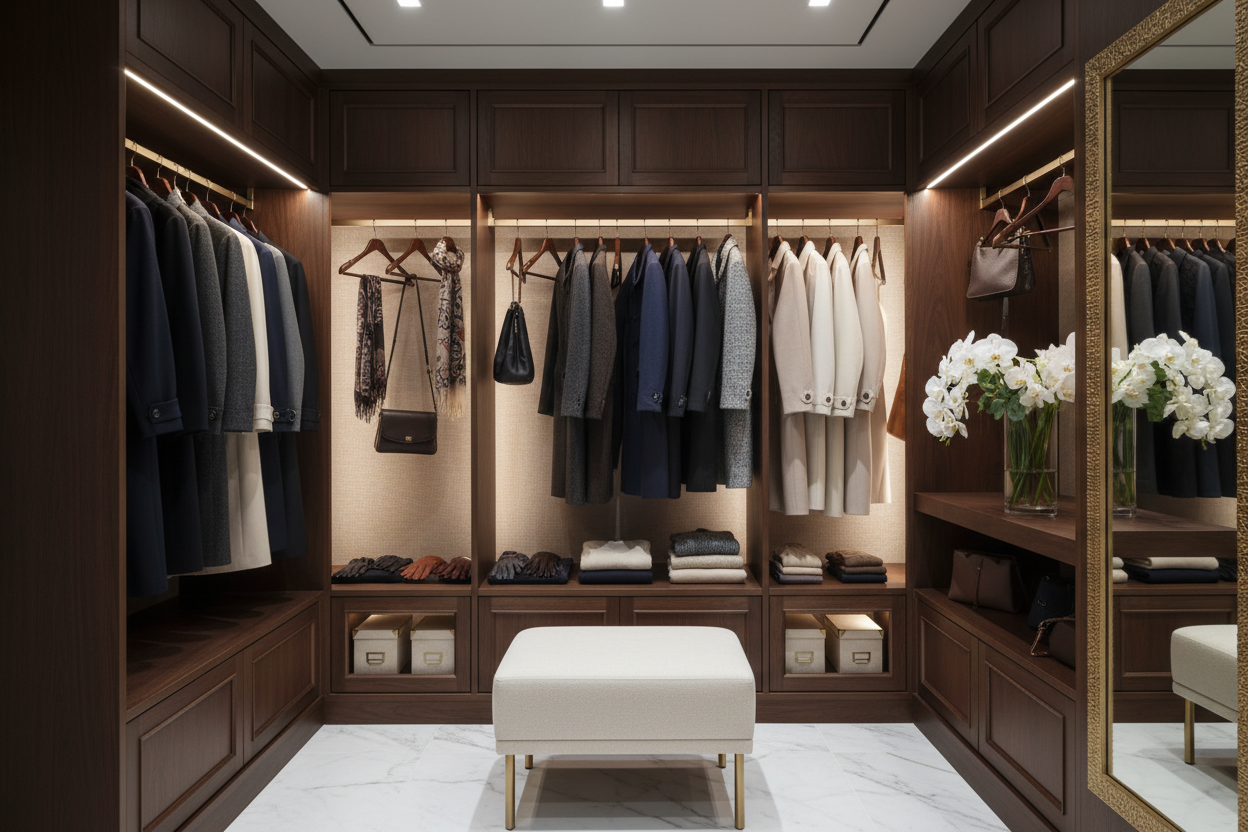
The foyer is the handshake of the home—it sets the tone before a guest even steps into the living room. Yet, too often, I see clients treating this area as an afterthought, resulting in a chaotic "drop zone" rather than a curated arrival point. The solution lies not just in organization, but in intentional architectural planning. A well-designed coat closet for entryway integration does more than hide jackets; it anchors the space, providing both visual weight and essential utility without compromising the flow of your home.
Key Features to Look For
- Standard Depth: Ensure a minimum internal depth of 24 inches (61 cm) to prevent coat sleeves from getting crushed by the door.
- Ventilation: Look for louvers or breathable joinery details to allow damp outerwear to dry without causing mildew.
- Hardware Quality: Opt for heavy-duty hinges and rods capable of supporting the weight of heavy winter wool and leather.
- Integrated Lighting: Motion-sensor LED ribbon lights are essential for visibility in deep, often dark hallway recesses.
Space Planning and Architectural Layout
Before selecting finishes, we must address the footprint. In a narrow corridor, a standard swing door can be a fatal design flaw, blocking traffic flow when open. For a tight hallway coat closet, I almost exclusively recommend pocket doors or high-quality sliding systems with soft-close mechanisms. These maintain the sleek silhouette of the wall while ensuring accessibility.
If you are remodeling, consider building the closet flush with existing walls. Recessed joinery feels bespoke and high-end, whereas a standalone wardrobe can sometimes feel bulky and temporary. The goal is for the closet to read as part of the architecture, not a piece of furniture placed against it.
Choosing the Right Material and Finish
Durability Meets Aesthetics
Entryways are high-traffic zones subject to moisture, mud, and impact. While a delicate silk-touch matte lacquer looks stunning in a showroom, it is rarely practical for a family home. I advise clients to look for high-pressure laminates (HPL) with a wood grain texture or sealed hardwood veneers for the exterior. These materials resist scuffs from bags and shoes much better than standard paint.
Interior Considerations
Don't neglect the interior finish. A melamine interior is standard, but lining the back panel with cedar adds a luxurious, aromatic touch that naturally repels moths—a detail often found in heritage estates. Furthermore, the floor of the closet should continue the flooring of the entryway. Do not install a bottom shelf or lip; you want to be able to slide muddy boots directly in without lifting them over a threshold.
Ergonomics and Internal Configuration
The interior configuration defines the usability of your entryway coat closet. A single rod is rarely enough. I prefer a split system: one high rod for long trenches and wool coats, and a double-hang section for shorter jackets. This maximizes vertical storage efficiency.
Additionally, dedicated shoe storage should be elevated off the floor if you aren't doing a roll-in design. Angled shelves with a heel catch allow you to see your footwear options immediately, preventing that inevitable pile-up of sneakers at the bottom of the closet.
Lessons from My Own Projects
I learned a hard lesson about ventilation early in my career during a renovation for a client in a damp coastal city. We designed a stunning, high-gloss, floor-to-ceiling unit that was virtually airtight to maintain a seamless look. It was visually perfect.
However, three months later, the client called complaining of a musty smell. Because we hadn't accounted for airflow, damp raincoats were trapping humidity inside the joinery, warping the expensive veneer and creating a mildew issue. I had to retrofit inconspicuous air vents at the top and bottom of the millwork to create a convection current. Now, I never design a closed unit without considering how the cabinetry "breathes." It’s a technical detail that isn't glamorous, but it preserves the investment.
Conclusion
Investing in a proper closet system transforms your entrance from a cluttered passageway into a sophisticated gallery. By focusing on durable materials, proper depth, and adequate ventilation, you ensure that your foyer remains welcoming and functional for years to come. Treat this space with the same design rigor as your living room, and the results will speak for themselves.
Frequently Asked Questions
What is the ideal depth for a coat closet?
The gold standard is 24 inches (61 cm) deep. If you are working with a shallow space (under 22 inches), you will need to use a valet rod (front-to-back hanging) rather than a standard side-to-side rod to accommodate hanger width.
Should I use mirrored doors for my entryway closet?
Mirrored doors are excellent for small foyers as they bounce light and visually double the space. However, ensure you choose a tinted or antique mirror finish if you want a softer, more luxurious aesthetic compared to standard silver glass.
How do I light a closet without hardwiring?
If hiring an electrician isn't feasible, look for rechargeable, motion-activated LED light bars that attach via magnetic strips. Place them just above the door frame on the inside to illuminate the clothes without creating glare.


Leave a comment
This site is protected by hCaptcha and the hCaptcha Privacy Policy and Terms of Service apply.