

















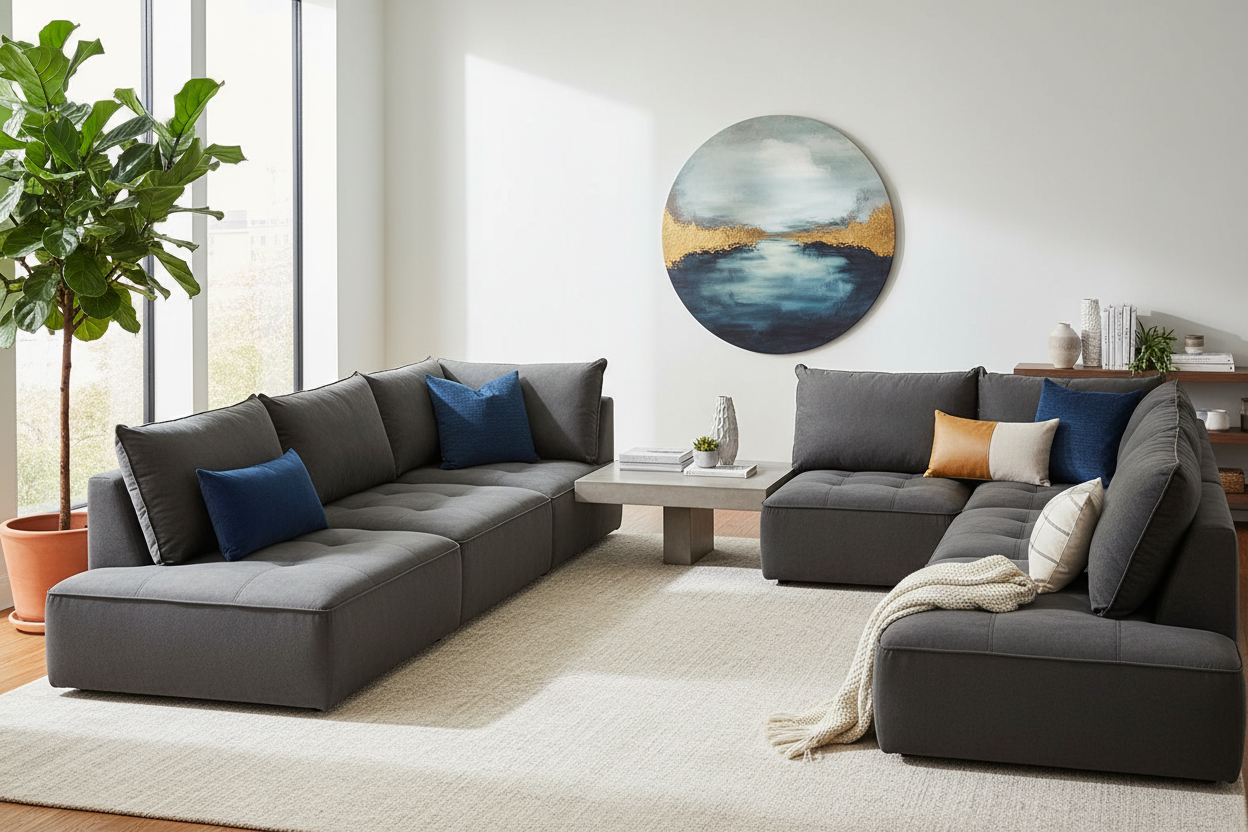
There is a specific frustration that arises when you realize a standard sofa dictates the flow of a room rather than the other way around. You purchase a piece for a specific wall, and suddenly, your design options are locked in stone. This is where sectional sofa units bridge the gap between rigid architecture and fluid living. As an interior designer, I often steer clients toward these modular systems not just for their aesthetic appeal, but because they solve the complex geometry of modern living spaces. Whether you are navigating a tricky open-plan loft or a cozy media room, understanding how to leverage these pieces is essential for a cohesive home.
Key Features to Look For
- Connector Mechanism: Ensure the hardware used to link the pieces is heavy-duty metal (often called alligator clips) to prevent the units from drifting apart during use.
- Frame Construction: Look for kiln-dried hardwood frames rather than particle board to ensure the individual modules maintain structural integrity over time.
- Seat Depth & Height: Since these units often float in a room, a lower profile with a deeper seat (min 24 inches) usually offers a more contemporary, lounge-like silhouette.
- Upholstery Consistency: Verify that the fabric runs down the sides of each module, allowing you to use them as standalone chairs if needed.
The Art of Spatial Planning with Modulars
The primary allure of these pieces is their ability to manipulate traffic flow. Unlike a traditional L-shape that forces a specific orientation, sectional sofa separates allow you to dictate where the conversation happens. In my design practice, I often use detached modules to create 'zones' within a larger great room. By breaking the sofa visual, you allow for pass-through traffic, which makes a room feel larger and less obstructed.
When planning your layout, consider the negative space—the empty area around the furniture. A common mistake is pushing all units together into a massive block. Instead, consider floating the chaise element slightly away from the main bank of seats. This creates a dynamic visual rhythm and prevents the furniture from swallowing the room.
Selecting Materials for Longevity
Because a break apart sectional is handled more frequently—pushed apart for parties or reconfigured for movie nights—the upholstery faces different stressors than a static couch. I always recommend high-performance fabrics with a high double-rub count (over 30,000). Textured weaves, such as bouclé or heavy linen, tend to hide the slight misalignments that can occur when connecting modules better than flat velvets or smooth leathers.
Suspension and Support
The suspension system is the unsung hero of comfort. For modular units, I prefer sinuous spring construction or eight-way hand-tied springs. Avoid webbing-only support systems if you plan on keeping the piece for more than five years. Since each unit is self-contained, the suspension needs to provide uniform resistance; otherwise, you will end up with one module that sits lower than its neighbor, ruining the visual line.
Why Logistics Matter
One of the most practical arguments for a sectional that comes apart is delivery access. If you live in an apartment with a tight elevator or a home with a narrow staircase, a monolithic sofa simply won't fit. Modular units are brought in piece by piece, eliminating the dreaded 'pivot' scenario. However, this convenience shouldn't compromise the aesthetic; once assembled, the joinery should be invisible, presenting a unified front.
Lessons from My Own Projects
I want to share a specific realization I had while sourcing a massive modular pit sofa for a client in a high-traffic family room. On paper, the 'cloud-like' soft fill seemed perfect. However, after three months, the client called me. Because the units were individual, the ones used most frequently (the corner spots) had compressed significantly more than the center units. It created an uneven, sloppy horizon line that drove me crazy.
Since then, I have changed my specification strategy. Now, when I buy sectional sofa units, I insist on a high-density foam core wrapped in down, rather than 100% down or fiber fill. It maintains the architectural shape of the cube while still offering that sink-in comfort. Also, a small detail that saves sanity: I always check the underside of the connectors. Plastic connectors snap; heavy-duty metal ratchets are the only way to ensure your sofa doesn't slowly separate while you're napping on it.
Conclusion
Investing in modular seating is about future-proofing your home. It allows your furniture to evolve alongside your lifestyle, moving from a formal seating arrangement to a relaxed family lounge with a simple reconfiguration. By focusing on quality connectors, durable fabrics, and proper scale, you can curate a space that is as functional as it is beautiful.
Frequently Asked Questions
How do I keep the sectional units from sliding apart?
High-quality modular sofas come with under-mount alligator clips or metal brackets. If your vintage or budget-friendly model lacks these, you can purchase aftermarket rubber non-slip pads for the feet or install universal sectional connectors to the frame's underside.
Can I use the pieces of a sectional as standalone chairs?
This depends on the finish. A true modular design will have fully upholstered sides on every unit. However, some cheaper 'sectional sofa separates' have black lining fabric on the connecting sides. Always check the 'finished on all sides' specification before purchasing.
Are modular sectionals comfortable for sleeping?
They can be excellent for sleeping, especially deep-seat versions (40 inches or more). However, you must ensure the connectors are tight so a gap doesn't form between the cushions during the night. A fitted sheet over two connected ottomans can also create a makeshift guest bed.

Leave a comment
This site is protected by hCaptcha and the hCaptcha Privacy Policy and Terms of Service apply.