

















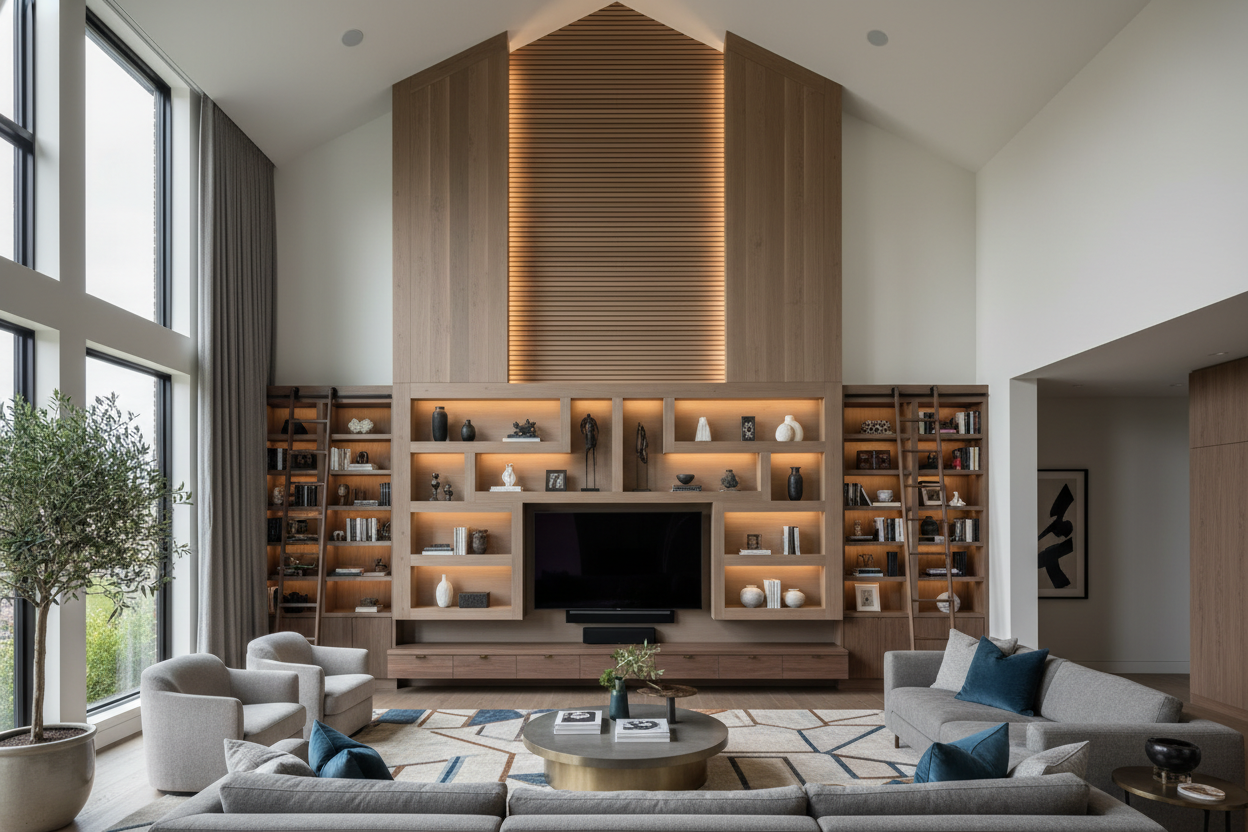
I remember standing in a client's great room where the ceiling peaked at a dizzying 18 feet. They had pushed a standard 60-inch media console against that wall, and it looked like a postage stamp stuck to a billboard. If you are staring at a massive blank wall and wondering why your built in entertainment center vaulted ceiling plan feels 'off,' it is almost certainly a scale issue.
Quick Takeaways
- Scale for the peak of the room, not just the height of the TV.
- The 2/3 rule prevents your furniture from looking like a dollhouse accessory.
- Vertical textures like shiplap or stone can bridge the gap without the cost of full-height cabinetry.
- Integrated lighting is mandatory to avoid the 'shadow cave' effect at night.
The 'Dollhouse Effect' of Dramatic Rooflines
When you place standard 8-foot cabinets under a 15-foot pitch, you fall victim to the 'dollhouse effect.' Everything looks miniature and accidental. I have seen homeowners spend thousands on a high-end entertainment center only to have it swallowed by the sheer volume of the room. It feels like the furniture is huddling near the floor, afraid of the ceiling.
In rooms with high ceilings, your furniture needs to act like architecture. A freestanding unit rarely has the visual 'heft' to anchor a vaulted wall. You need a design that acknowledges the verticality, or you will end up with a room that feels cold and unfinished, no matter how much you spend on the sofa.
The 2/3 Rule for Scaling Your Millwork
Here is the visual math I use for every high ceiling entertainment center project: your built-ins should occupy at least two-thirds of the wall's height at its lowest point. If your wall is 12 feet at the shoulder before it slopes up, don't stop your cabinetry at 7 feet. That creates a harsh horizontal line that effectively cuts your room in half.
By pushing the height to 9 or 10 feet, you keep the eye moving upward. You don't necessarily have to hit the ceiling with the wood itself, but the visual weight needs to dominate that lower two-thirds. This creates a sense of permanence and intentionality that standard furniture just can't provide.
Bridging the Gap Without Going Broke
Let’s be real: custom cabinetry that reaches a 20-foot peak is expensive enough to require a second mortgage. I once quoted a job where the upper 'dead' cabinets alone were $8,000. If that is not in the budget, you can bridge the gap using vertical materials.
Consider building the base units to a standard height and then running vertical shiplap or a contrasting paint color all the way to the peak. This creates a cohesive farmhouse built in entertainment center aesthetic that feels like a floor-to-ceiling installation without the price tag of custom boxes. It is about creating a vertical 'column' of interest that leads the eye to the architecture.
To Float or Not to Float?
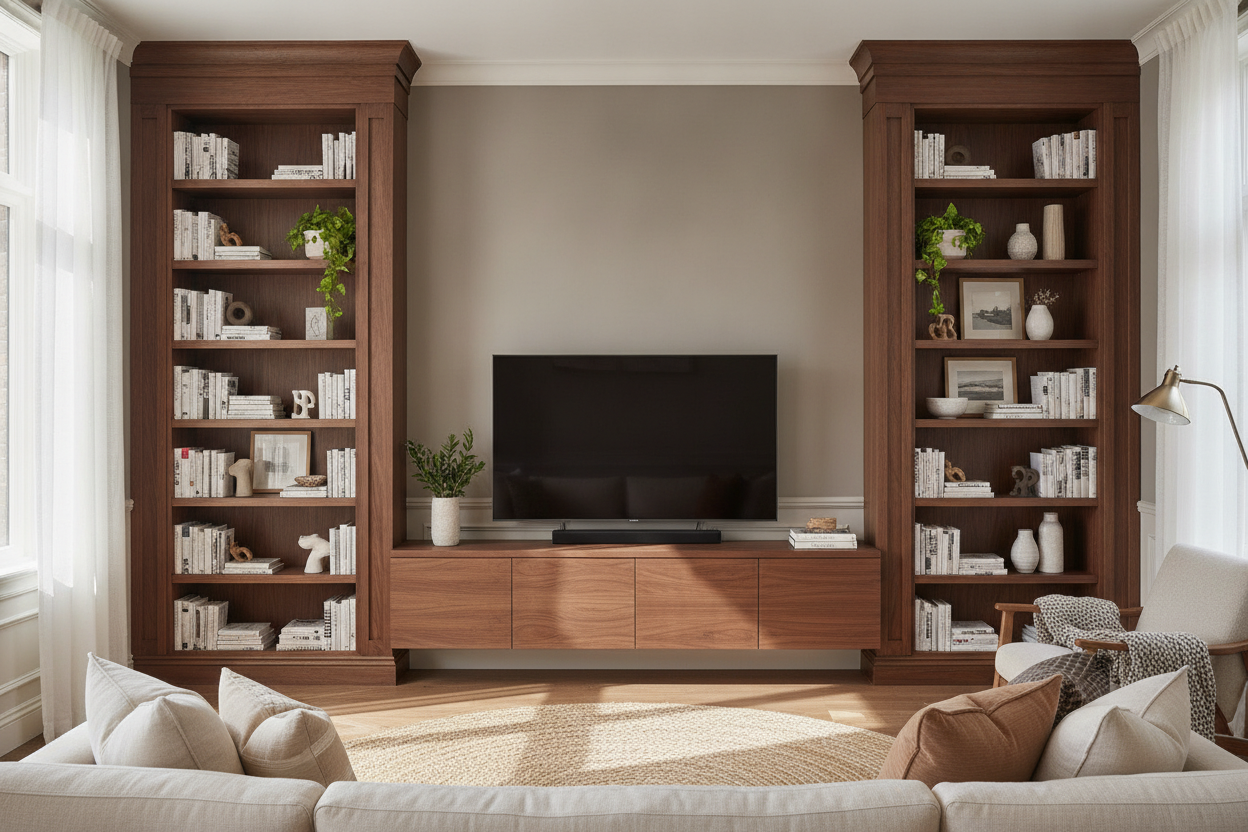
When designing an entertainment center with vaulted ceiling dimensions, you have to decide on the 'weight' of the base. Traditional floor-to-ceiling built-ins can feel heavy and oppressive in smaller vaulted rooms. If your space feels narrow, a floating base might be the better play.
When weighing a built in vs floating entertainment center, I usually look at the flooring. If you have beautiful wide-plank white oak, a floating unit lets that floor 'breathe' while the vertical shelving handles the height of the vault. It’s a more modern approach that keeps the room feeling airy rather than cluttered.
Lighting the Void (Don't Skip This Step)
A vaulted ceiling entertainment center has a tendency to turn into a dark, shadowy void once the sun goes down. If you don't have dedicated lighting for the upper reaches of the wall, the top of your beautiful built-in will simply disappear into the gloom. It looks unfinished and, frankly, a bit creepy.
I always recommend integrated lighting. Whether you choose a high gloss entertainment center with LED ambiance or install classic library sconces above the top shelf, you need to throw light upward. It defines the silhouette of the unit and makes the entire wall feel like a feature 24 hours a day.
Personal Experience: My 'Stock Cabinet' Disaster
Early in my career, I tried to DIY a 12-foot media wall using stock kitchen cabinets from a big-box store. I thought I could just stack them. I was wrong. The proportions were a nightmare, and I ended up with a 4-foot gap of 'nothingness' at the top that just collected dust and dead flies. I ended up spending more on custom trim to hide my mistakes than I would have spent on the right units to begin with. Learn from my pride: plan for the height from day one.
FAQ
How high should my built-ins go on a vaulted wall?
Aim for at least two-thirds of the wall's height. If you can't go all the way to the ceiling, use paint or texture to carry the eye the rest of the way up.
Can I use a standard TV stand under a vaulted ceiling?
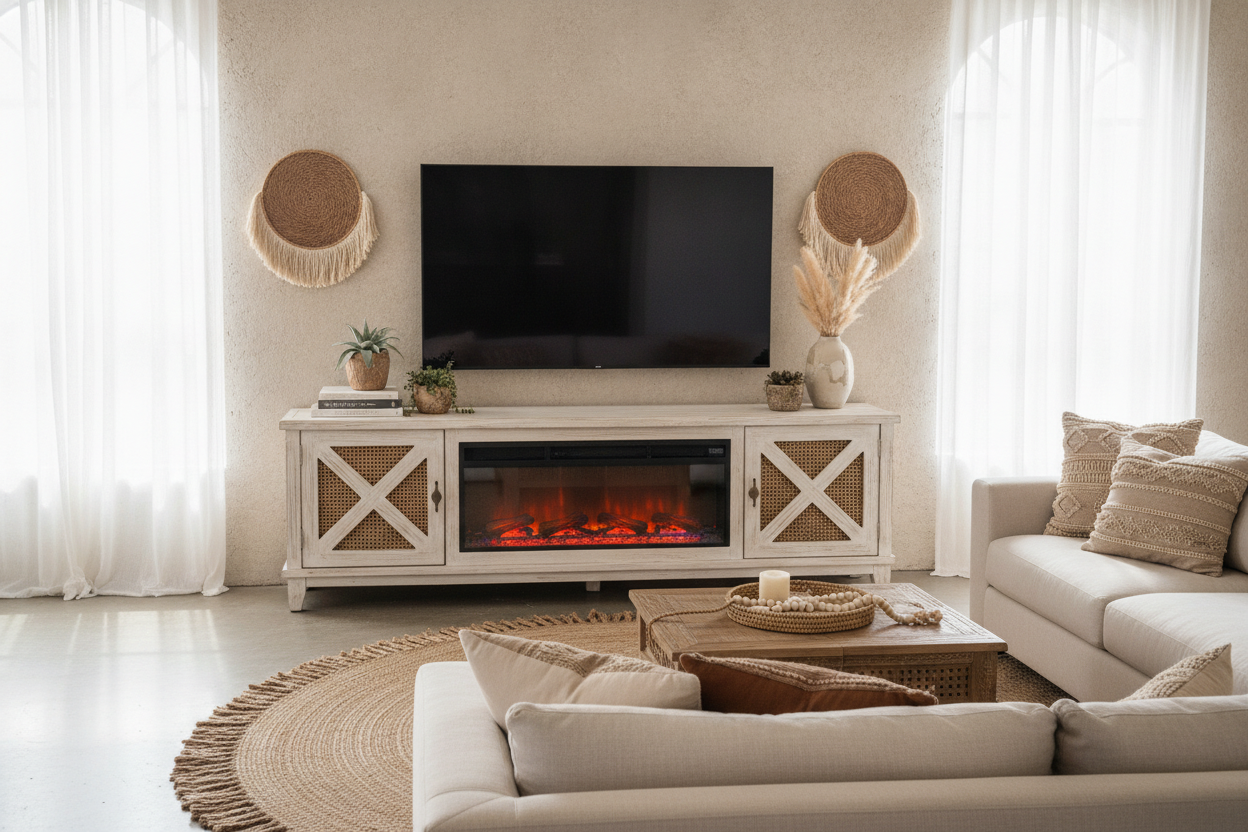
You can, but it will likely look undersized. To fix this, hang large-scale art or install vertical wall treatments above the stand to match the scale of the room.
Should I paint the built-ins the same color as the wall?
If you want the unit to feel like part of the architecture, yes. If you want it to be a focal point, choose a contrasting color that pulls the eye toward the center of the room.

Leave a comment
This site is protected by hCaptcha and the hCaptcha Privacy Policy and Terms of Service apply.