
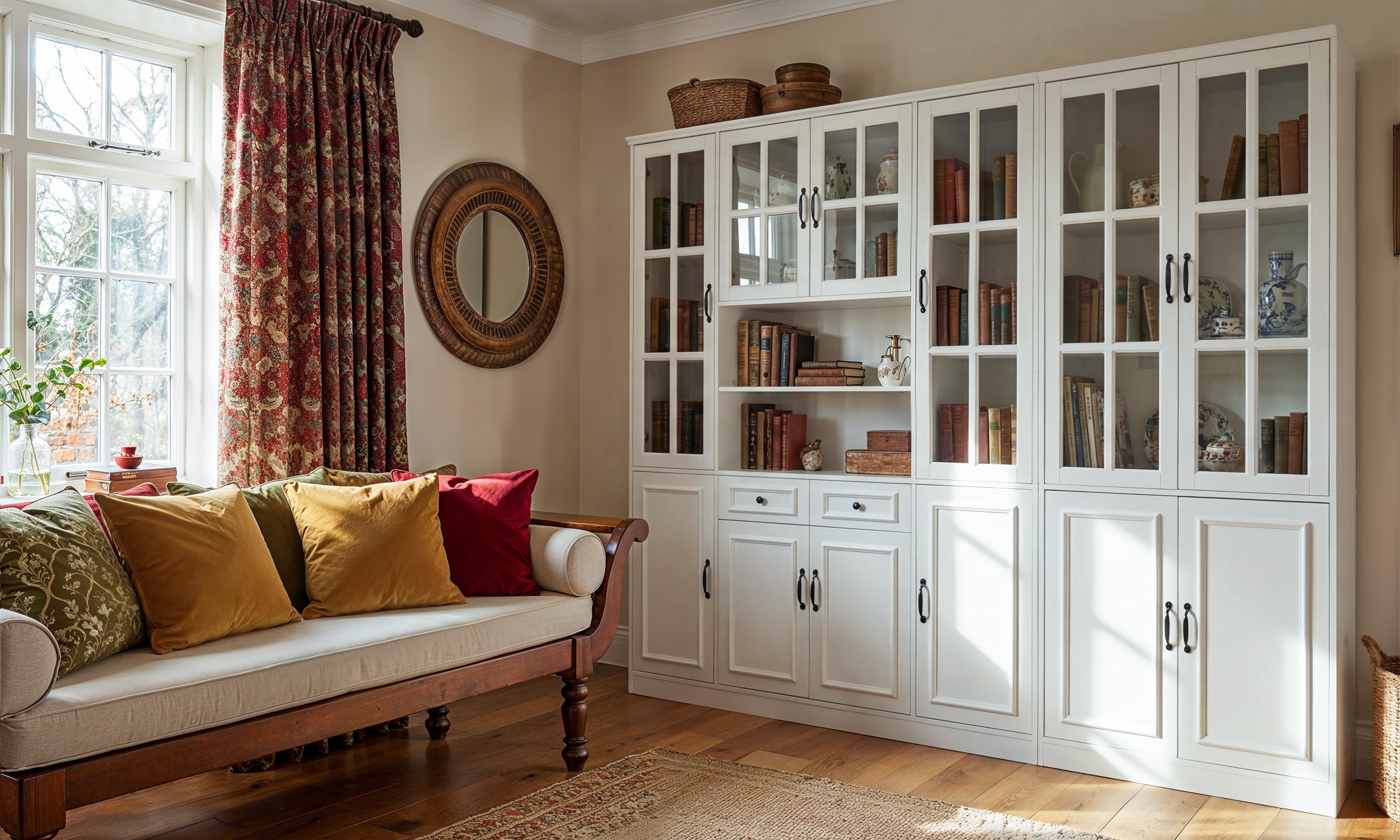
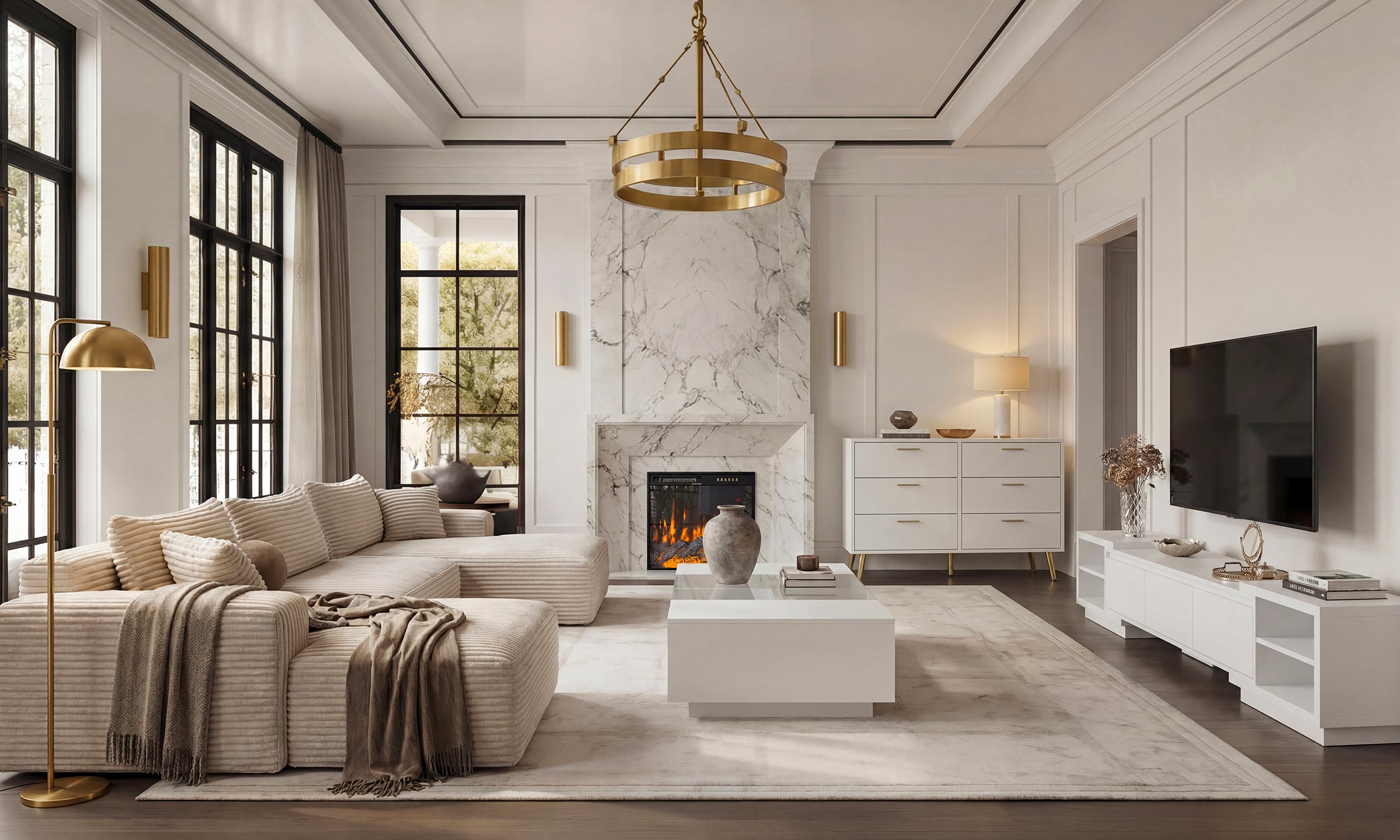
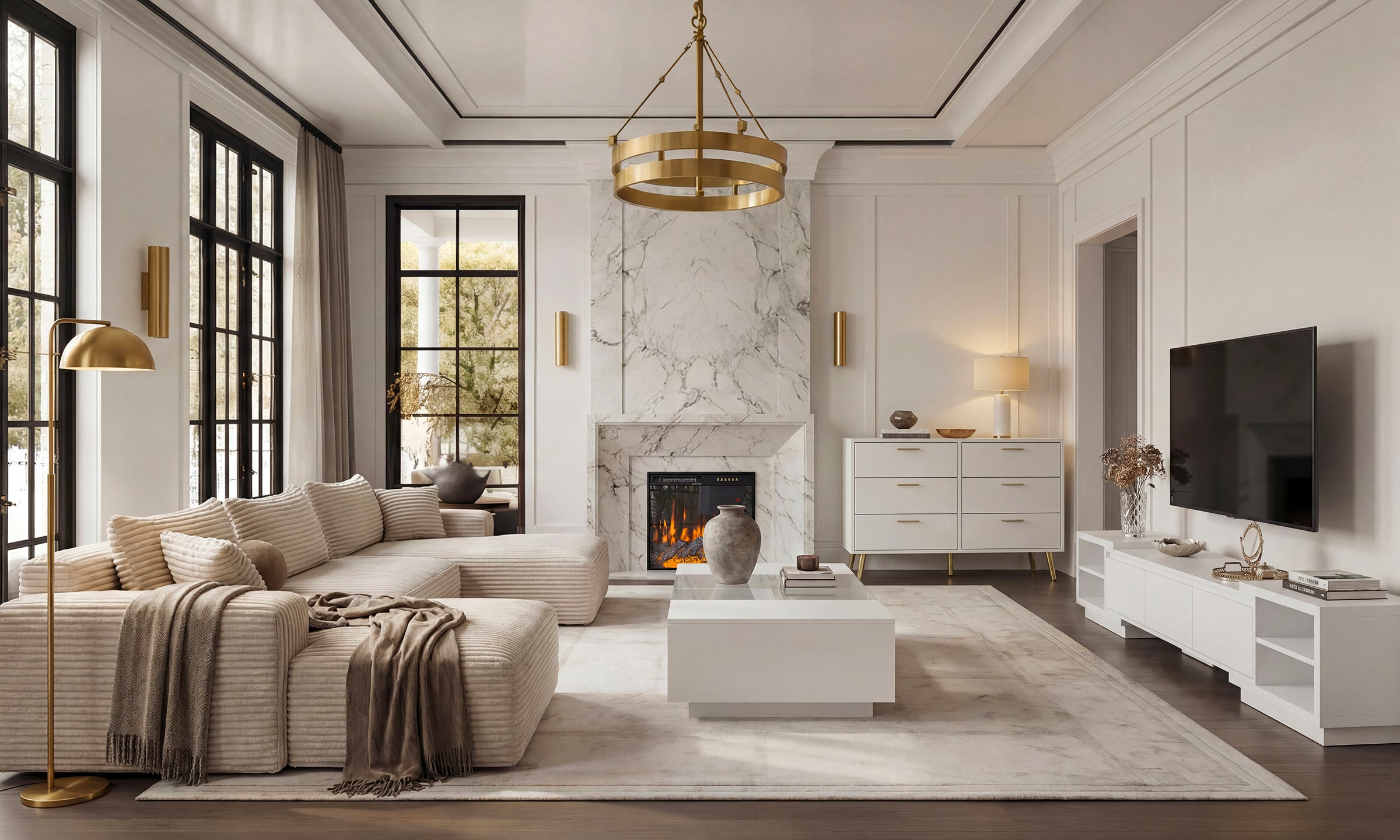



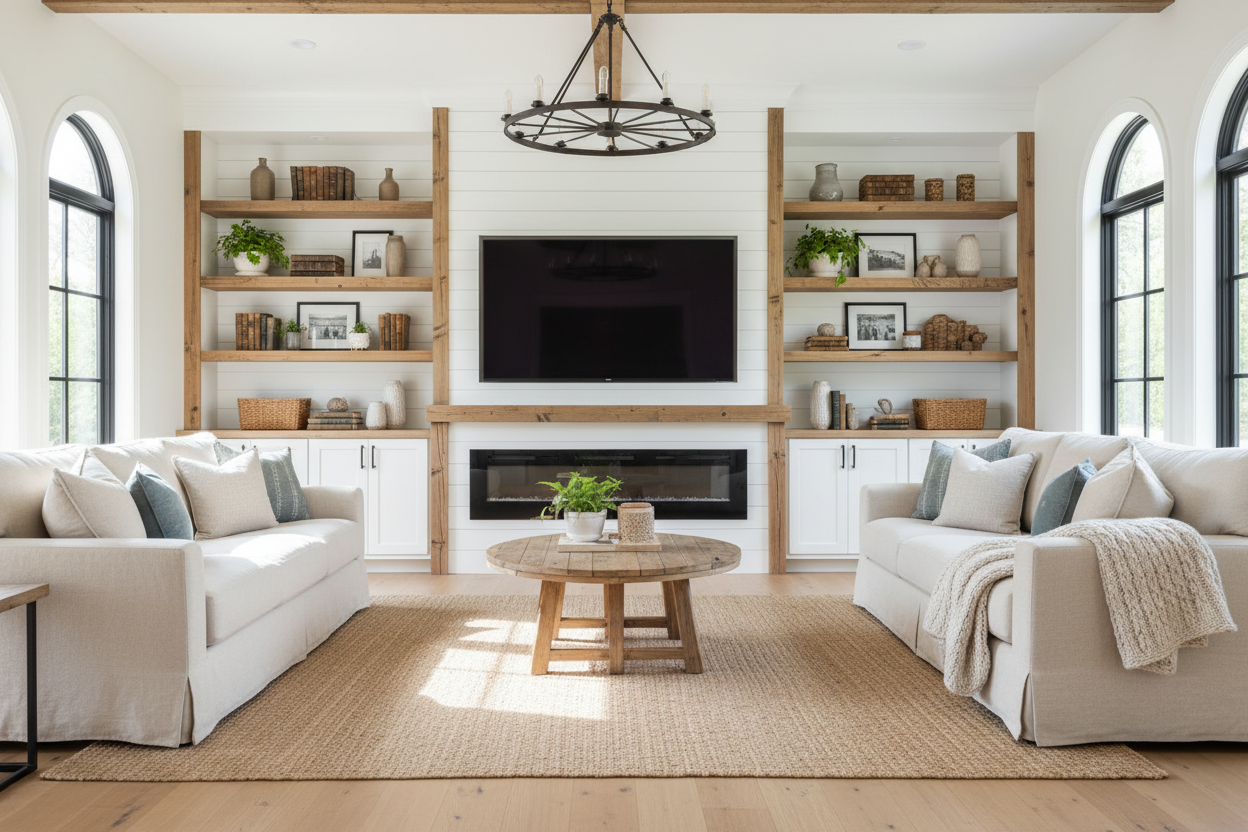
You know that feeling when you walk into your living room and something just feels off? Maybe you've got a beautiful TV mounted on the wall, but all the cords are dangling down like spaghetti. Or you've got media consoles and bookshelves scattered around, but nothing feels cohesive. After furnishing over 200 homes, I've seen this exact scenario play out countless times. The solution I keep coming back to? A farmhouse built in entertainment center.
Quick Takeaways
- A built-in creates a focal point that anchors your entire living room layout
- Modern farmhouse designs hide tech clutter while maintaining rustic warmth
- Proper sizing matters—measure your room before planning
- Material choices affect both durability and the overall aesthetic
- Concealed storage is essential for keeping living rooms tidy
Why Farmhouse Built-Ins Are More Than Just Rustic Charm
I remember working with a family in Portland who had just moved into a 1920s craftsman home. They loved the original woodwork but struggled with where to put their 65-inch TV and gaming consoles. They'd tried a standalone entertainment unit, but it looked temporary against the home's permanent character. That's when we designed a custom built-in that respected the home's history while serving their modern needs.
A farmhouse built-in entertainment center solves the disconnect between architectural character and contemporary living. It's not just about looking rustic—it's about creating intentional storage that works with your room's proportions. For example, in a standard 12x14 living room, a properly sized built-in leaves you with a 36-inch walkway on either side, maintaining flow while providing substantial storage. I often reference principles from our Built In Entertainment Cabinet A Designers Honest Guide when explaining how built-ins should relate to room dimensions.
The Modern Farmhouse Built-In: Where Rustic Meets Contemporary
The modern farmhouse built in entertainment center represents the best of both worlds. You get the warmth of traditional materials—think shiplap accents or reclaimed wood shelves—paired with clean lines that accommodate today's flat-screen TVs and sound systems. I recently designed one with integrated LED lighting that automatically dims when you start a movie, creating theater-like ambiance without overwhelming the rustic aesthetic.
What makes this style work is how it handles technology. Instead of visible wires and black plastic components, everything gets integrated seamlessly. I've used products like our Farmhouse Nightstand with Built-In Outlet as inspiration for how to incorporate electrical access discreetly. The key is placing outlets and cable management behind doors or within drawers, so you maintain that clean farmhouse look.
Design Elements That Make Farmhouse Built-Ins Work
When I design these units, I focus on three core elements: materials, storage, and integration. Each decision affects how the piece functions daily and how it ages over time. I've seen poorly constructed built-ins start sagging after just a few years, while properly built ones become permanent fixtures that add value to homes.
Our Entertainment Center Collection shows various approaches, but for built-ins, customization is key. You're not buying a pre-made piece—you're creating something specific to your space. That means considering everything from ceiling height to existing trim work.
Material Selection: Reclaimed Wood to Modern Composites
Material choice makes or breaks a farmhouse built-in. Traditionalists often want reclaimed barn wood, which adds authentic character but requires more maintenance. The kiln-dried hardwood frames I typically use provide stability, resisting warping better than standard construction lumber. For painted finishes, I recommend medium-density fiberboard (MDF) for smooth surfaces, though it's less durable than solid wood at corners and edges.
I worked on a project in Colorado where we used locally sourced beetle-kill pine with its distinctive blue streaks. The clients loved the story behind the material, but we had to seal it thoroughly to prevent further insect damage. For most homeowners, I suggest a combination: solid wood for structural elements and high-quality plywood for large panels, finished with a durable water-based polyurethane.
Storage Solutions That Hide Modern Clutter
The magic of a well-designed farmhouse built-in lies in what you don't see. I always include a combination of open shelving for display and closed storage for electronics. For a typical setup, I allocate at least 18 inches of vertical space for AV components, with ventilation built into the cabinet backs. Media storage needs have changed—now it's more about gaming consoles, streaming devices, and router equipment than DVD collections.
One of my favorite solutions is incorporating pull-out trays for gaming systems. They slide forward for use, then tuck completely out of sight. For cable management, I use brush plates or grommets that allow cords to pass through while maintaining a clean appearance. The goal is to have a living room that looks like a peaceful retreat, not a tech showroom.
Making It Work in Your Space: Practical Considerations
Before you start planning, measure everything. Twice. I once had clients who designed their entire built-in around a specific TV size, only to upgrade to a larger model before installation. Leave some flexibility—design for your current setup plus one size up. For most rooms, keeping the built-in under 48 inches tall maintains good sightlines while providing ample storage.
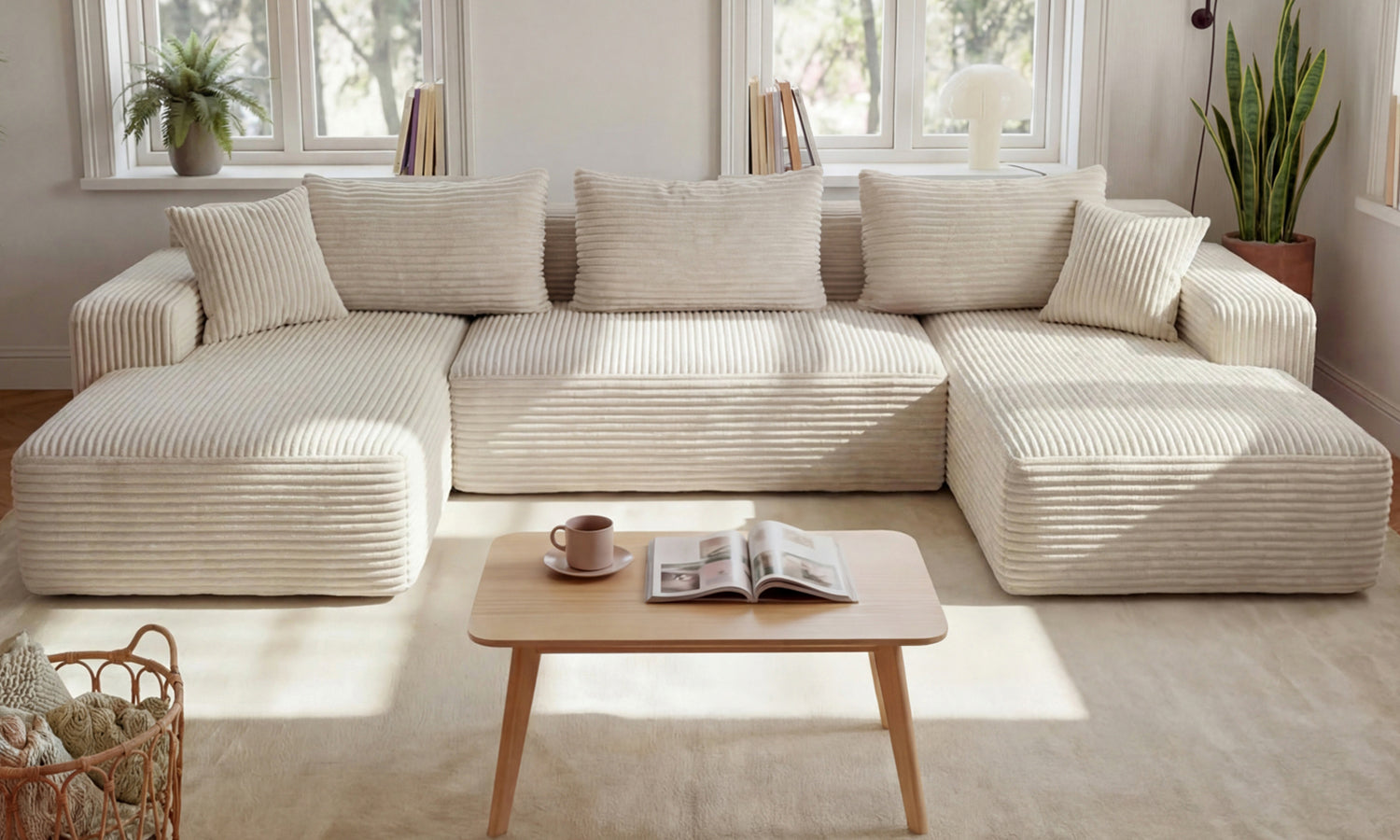
Consider your room's traffic patterns. I recommend at least 42 inches between the built-in and any facing sofa for comfortable viewing. If you have a sectional, measure the longest wall it could occupy. Our 48 in Entertainment Center Width Guide explains why specific dimensions work better in standard room layouts.
Installation matters too. Built-ins should be securely anchored to wall studs, not just drywall. For older homes with uneven floors, we often install a level platform first, then build the unit on top. This prevents gaps at the bottom and ensures doors operate smoothly.
Why This Design Choice Stands the Test of Time
After all these projects, I've noticed something consistent: families don't regret investing in quality built-ins. Unlike trendy furniture that dates quickly, a well-executed farmhouse built-in entertainment center adapts. You can update hardware, refresh paint, or reconfigure shelves as needs change. The structure remains solid.
Compare this to standalone units like our Modern Entertainment Center with Storage, which work well in rentals or temporary spaces. But for homeowners wanting to create a permanent, cohesive look, built-ins provide that custom solution. They become part of the home's architecture rather than just furniture placed against a wall.
Personal Experience: The Honest Downside
I should mention the challenges too. Built-ins are commitment—you can't easily rearrange your living room afterward. They're also more expensive upfront than buying ready-made furniture. I once underestimated the electrical work needed for a built-in, requiring us to add a new circuit to handle all the components. Always budget 15-20% extra for unexpected issues, especially in older homes where you might discover wiring or structural surprises.
The installation process creates dust and disruption. Plan to be out of the room for at least a week if it's a full construction project. But every client who's endured the process has told me it was worth it when they finally had a living room that felt complete and functional.
FAQ
How much does a custom farmhouse built-in typically cost?
It varies widely by materials and size, but expect $3,000-$8,000 for a quality installation including materials and labor. Painted finishes usually cost less than stained hardwoods.
Can I add a built-in to a rental apartment?
Generally not, unless you have landlord approval and are willing to leave it behind. For rentals, consider freestanding pieces that achieve a similar look without permanent modification.
How do I maintain a farmhouse built-in?
Dust regularly with a microfiber cloth. For wood surfaces, use appropriate cleaners—avoid harsh chemicals on painted finishes. Check hardware tightness annually, as doors and drawers can loosen over time.
What if I want to change the style later?
That's the advantage of built-ins—you can repaint, change hardware, or even reconfigure some interior elements. The basic structure remains, giving you flexibility within the permanent footprint.

Leave a comment
This site is protected by hCaptcha and the hCaptcha Privacy Policy and Terms of Service apply.