

















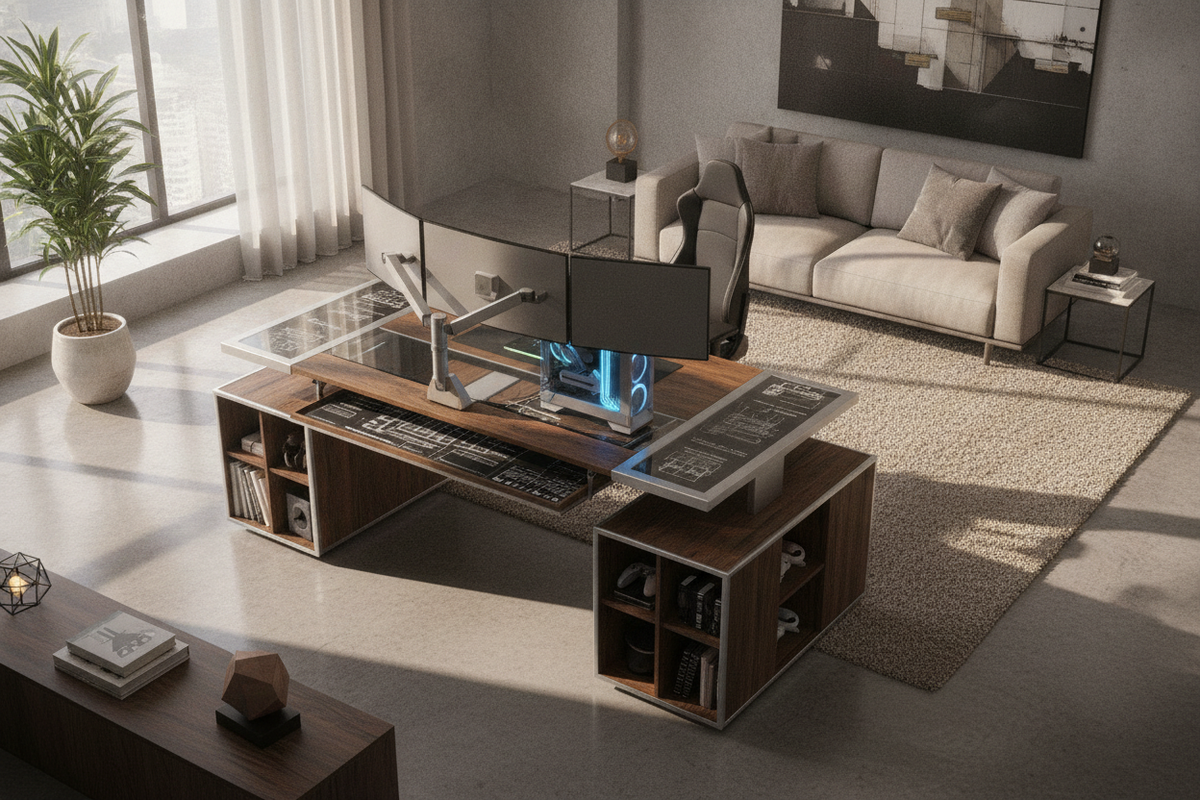
Understanding the Emanuiel Desk Archetype: Gaming Dynamics Meet Sit-Stand Versatility
Modern workstation architecture increasingly demands dual-purpose flexibility. A setup must accommodate high-intensity competitive gaming sessions alongside disciplined, prolonged professional work. The emanuiel desk archetype, recognized as an emanuiel height adjustable standing gaming desk, addresses this intersection by combining the ergonomic versatility of sit-stand motorized platforms with the specialized structural demands of high-performance gaming rigs.
Unlike conventional static tables, a height-adjustable gaming desk must sustain dynamic vertical movement while supporting heavy, delicate peripherals. Balancing aggressive battlestation aesthetics with clean architectural lines requires careful planning. For a deeper look at harmonizing visual presence with high-performance hardware, exploring a comprehensive gaming desk guide provides useful perspective on surface finishes, backlighting discipline, and equipment proportion.
Transitioning between seated focus and standing posture alters user interaction with monitors, mice, and control surfaces. When standing, your body naturally shifts weight, placing dynamic side-to-side and front-to-back pressure on the desktop. The underlying workstation frame must counteract these micro-forces to prevent display jitter and maintain steady arm support during rapid mouse tracking.
Surface Geometry and Spatial Footprints: Dimension Categories for Multi-Screen Rigs
Selecting the correct desktop footprint involves balancing room dimensions with the physical envelope of your peripheral hardware. Choosing the proper span defines cockpit immersion and overall room flow:
- Compact to Medium Widths: Well-suited for single ultrawide displays or modest dual-monitor arrays where room perimeter space is constrained.
- Extended Width Platforms: Ideal for triple-monitor setups, studio audio monitors, and full-tower PC enclosures positioned directly on the desktop surface. When planning expansive multi-panel arrays, evaluating a dedicated height adjustable standing product provides generous lateral workspace without overcrowding critical mouse-tracking zones.
- Depth Considerations: A shallow desktop forces monitors uncomfortably close to your field of view, compromising focal depth and leaving inadequate forearm support. Deeper surfaces allow users to push clamp-mounted arms further back, creating dedicated keyboard and wrist resting zones.
Beyond the tabletop itself, evaluate the kinetic travel zone. Ensure that wall trims, window sills, hanging art, and adjacent bookshelves sit clear of the desktop perimeter as the surface travels up and down throughout the day.
Kinetic Stability and Elevation Mechanics: Managing Active Loads and Monitor Swing
The engineering core of any sit-stand workstation lies in its lifting columns and structural underframe. Understanding how loads distribute across the frame helps maintain long-term balance and smooth elevation adjustments:
Leg geometries generally fall into central T-frame or offset C-frame profiles. C-frame legs shift the upright columns toward the rear of the desk, creating uninterrupted under-desk legroom and clear pathways for rolling seating. However, placing heavy displays on clamp mounts along the rear edge introduces cantilevered torque. To counteract this force, the lifting mechanism and base feet must distribute weight evenly across the entire depth of the base plates.
Selecting an adjustable height standing product equipped with programmable memory presets simplifies consistent posture changes. Motorized lift columns must handle both distributed loads, such as mousepads and small speakers, and concentrated loads, such as clamped multi-display mounts or heavy desktop towers, without binding or stuttering during transit.
Cable Geometry and Peripheral Routing: Dynamic Sit-Stand Wire Management
Dynamic height adjustments introduce unique wire management challenges. A cable layout that looks pristine at seated height can bind, stretch, or pull hardware loose when the desk rises to its maximum standing position. Following strategic layout rules ensures seamless transitions:
- Unified Umbilical Routing: Consolidate primary power and display feeds into an articulated cable spine or flexible braided sleeve. Route all perimeter hardware to an under-desk surge protector so that only a single main power cable drops to the wall outlet.
- Slack Calibration: Measure cable slack exclusively at the highest standing point. Ensure that display cords, headphone cables, and audio wires maintain gentle curvature without snagging against frame brackets or motor housings.
- Under-Desk Raceway Trays: Wide horizontal wire trays mounted beneath the rear edge conceal power bricks, USB hubs, and excess wire length away from sightlines.
For more strategies on concealing accessories and achieving a refined minimalist look across sit-stand workstations, reviewing an interior-focused standing desk guide provides practical guidance on spatial decluttering.
Storage Synergy and Room Integration: Merging Battlestations with Functional Storage
Because an adjustable desk moves continuously throughout the day, integrated storage must be planned around vertical clearance zones. Attaching heavy drawer stacks directly to moving desktops increases mechanical strain on lift motors, making detached perimeter storage a more versatile choice.
Pairing your desk with complementary cabinetry and shelving keeps gaming accessories, controllers, reference materials, and networking hardware organized without cluttering the primary gaming field. Exploring modular solutions within an adjustable collection allows you to tailor shelf heights around your computer tower, game libraries, and audio interfaces.
Storage Placement Principles:
- Low-Profile Mobile Pedestals: Position under-desk mobile drawer units with sufficient clearance beneath the crossbeam at the lowest seated height setting.
- Flanking Credenzas: Situate storage sideboards parallel to the desk, ensuring at least several inches of lateral gap to prevent surface rub during motorized height travel.
- Vertical Wall Shelving: Mount overhead shelves well above the maximum raised monitor height to prevent accidental collisions when elevating the workstation.
Assembly Workflows and Long-Term Maintenance for Adjustable Desks
Proper assembly and routine upkeep are vital for sustaining stable, wobble-free operation across the lifespan of a motorized gaming desk. Approaching assembly systematically guarantees structural rigidity from day one:
- Frame Pre-Alignment: Assemble the steel subframe on a soft, protective surface. Hand-tighten all bolts before applying final torque, ensuring structural squareness across the crossbeams and leg joints.
- Motor Synchronization and Calibration: Follow manufacturer initialization routines to sync dual-motor systems. This prevents uneven elevation rates that could tilt the work surface.
- Floor Leveling: Adjust the threaded glides under the base feet until the frame is completely level. An unlevel base amplifies monitor wobble and places asymmetric strain on telescoping leg sleeves.
- Periodic Fastener Audits: Motorized movement and daily gaming activity generate microscopic vibrations over time. Inspect and re-tighten frame hardware periodically to preserve peak rigidity.
By coordinating structural stability, thoughtful wire slack, and perimeter storage integration, the Emanuiel desk archetype provides a balanced, high-performance workstation engineered for both competitive play and everyday focus.

Leave a comment
This site is protected by hCaptcha and the hCaptcha Privacy Policy and Terms of Service apply.