

















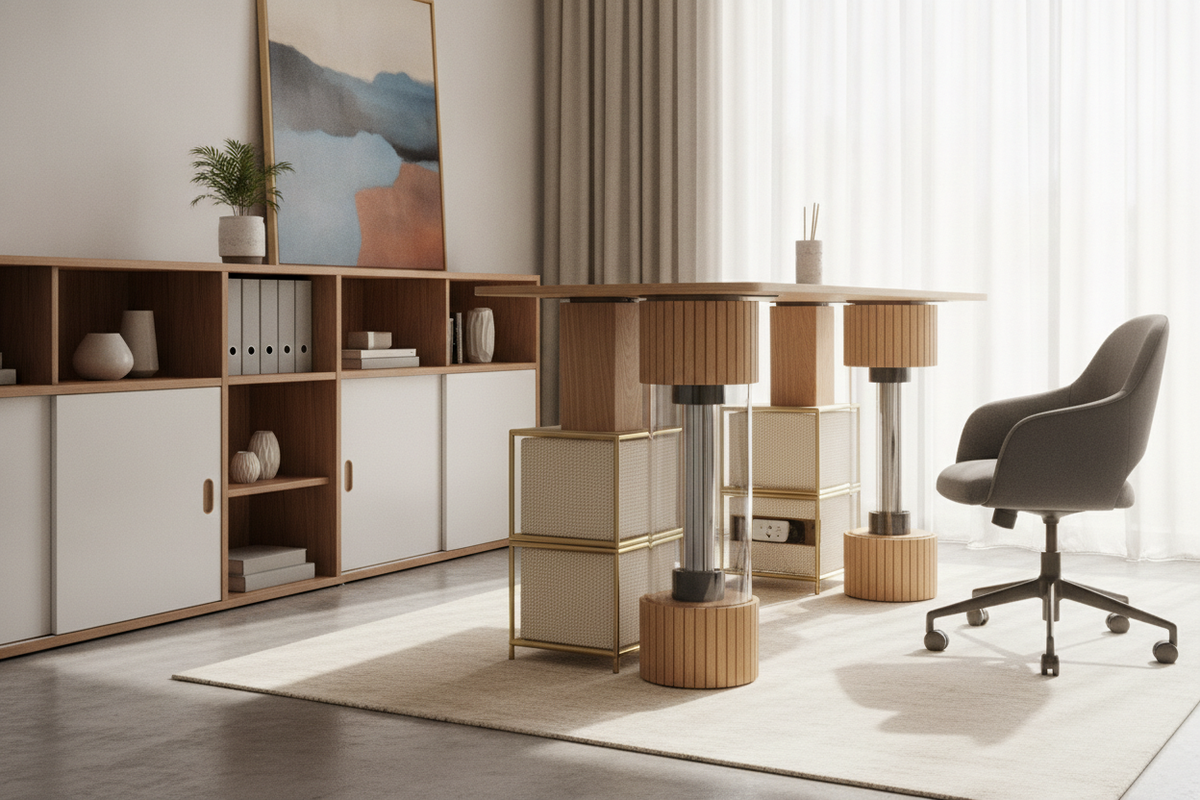
The Visual Evolution of Sit-Stand Workstations: Why Leg Enclosures Matter
Modern remote work has elevated the height-adjustable workstation from an ergonomic novelty to a fixture of residential interiors. However, a common aesthetic challenge remains: the stark, utilitarian steel lifting columns often clash with warm, curated interior palettes. While commercial office spaces accommodate exposed metal T-legs and mechanical brackets, home offices demand visual cohesion. Similar to exploring an armoire computer desk ikea the secret to hiding your office, integrating a standing desk leg cover bridges the gap between mechanical utility and sophisticated interior architecture.
By enclosing bare metal lifting legs in refined wraps, tambours, or fabric shrouds, homeowners can disguise industrial hardware and anchor their workspace with sculptural intent. The goal is not merely concealing the motorized elements, but transforming vertical supports into deliberate focal points that complement nearby cabinetry and architectural millwork.
Aesthetic Archetypes for Standing Desk Leg Covers
When selecting or building standing desk leg covers, several distinct material archetypes offer varied stylistic results:
- Fluted Architectural Tambour: Flexible wooden slats mounted on fabric backing create cylindrical or rounded rectangular columns. This treatment echoes mid-century reeding and high-end residential joinery, softening angular metal geometries.
- Tailored Acoustic Felt Shrouds: Semi-rigid, sound-dampening felt wraps provide tactile warmth and subtle texture. These wraps often fasten via concealed magnetic strips or low-profile hook-and-loop fasteners, offering an understated, Scandinavian-inspired look.
- Monolithic Minimalist Box Shrouds: Clean-lined matte timber or painted composite enclosures provide a grounded, pedestal-like appearance suitable for contemporary or minimalist environments. Much like the principles behind desk hide office guide, these enclosures transform functional mechanics into purposeful architectural volumes.
- Curved Magnetic Steel Cladding: Powder-coated architectural sheet metal shells clip directly onto column bases, maintaining an industrial silhouette while streamlining seams, fasteners, and cable pathways.
Kinetic Clearance Mechanics: Protecting Telescoping Lifting Columns
Unlike stationary furniture, height-adjustable desks undergo continuous vertical movement. Adding any standing desk base cover requires careful attention to kinetic clearance to avoid binding telescoping stages or obstructing internal motors.
Motorized legs operate in two-stage or three-stage telescoping configurations, where concentric metal sleeves slide inside one another. When outfitting a base such as an office sit stand product, choose an enclosure method that respects vertical travel dynamics:
- Split-Sleeve Floating Systems: The upper shroud attaches beneath the desktop, while the lower base shroud sits on the foot bracket. As the desk rises, the two sections slide past each other without friction.
- Upper-Only Skirts: A decorative wrap extends downward from the desktop to cover the widest upper stage of the column, leaving the bottom extension open while preserving visual proportion at sitting height.
- Flexible Bellows and Slatted Wraps: Flexible tambours or pleated fabrics expand and contract rhythmically as the desk moves through its height presets.
- Pinch-Point Buffer Zones: Maintain generous radial clearance around the moving column to ensure dynamic power cords and motor cables never become trapped during height transitions.
DIY vs. Modular Pre-Fabricated Leg Enclosures: Design Frameworks
For those researching how to hide standing desk legs, the choice generally comes down to custom DIY fabrication or modular wrap assemblies. Each path offers distinct design advantages depending on spatial goals and tool access.
The DIY Fluted Wood Column Method
Creating diy standing desk leg covers using flexible wood pole wrap or tambour panels is one of the most popular bespoke techniques. Homeowners cut flexible slatted panels to match the circumference of the upper column section, finish them with matching wood stain or matte paint, and secure them with non-permanent hook-and-loop straps or magnetic collars. This allows for simple removal if the motor needs calibration or maintenance.
Modular Slipcovers and Magnetic Brackets
Modular sit stand desk leg covers offer a drill-free installation alternative. These kits typically use magnetic mounting brackets that snap directly to steel columns, holding rigid fabric or composite panels in place without voiding desk frame warranties or leaving adhesive residue on powder-coated steel.
Designing the Sculptural Workstation: Architectural Dupes and Luxury Silhouettes
Design enthusiasts often admire high-end designer pieces like the rove concepts athena desk, rove concepts standing desk, or eryk standing desk for their massive, sculptural fluted pillars. However, achieving this aesthetic does not require a bespoke luxury budget. Many decorators create an athena standing desk dupe or rove concepts standing desk dupe by pairing modular dual-motor lift frames with custom fluted column wraps.
By installing an architectural column shroud around a dependable platform like an office sit stand product, you capture the stately presence of an athena desk or rove standing desk while retaining smooth, programmable height adjustment. The result delivers the visual weight of an executive table alongside modern sit-stand functionality.
Harmonizing Shrouded Desks with Surrounding Home Office Storage
A freestanding desk with architectural leg covers should not exist in isolation. To create an intentional, balanced workspace, coordinate leg finishes with surrounding storage pieces, credenzas, armoires, and shelving.
- Material Rhythm: If your desk wraps feature warm white oak fluting, introduce matching oak elements in nearby sideboard doors, bookshelf accents, or drawer fronts.
- Proportional Weight: Enclosed desk legs add visual mass to the room. Balance this presence with grounded storage credenzas rather than delicate, spindle-legged accent tables.
- Spatial Sightlines: As highlighted in desk in home office layouts what furniture stores hide, positioning a desk with sculptural leg covers facing the entrance creates a commanding, polished focal point rather than presenting exposed cables and industrial brackets.
Strategic Maintenance, Cable Concealment, and Inspection Access
While aesthetics are essential, functional access must remain uncompromised. Any well-engineered desk leg cover system should facilitate straightforward maintenance and cable management:
- Integrated Cable Runs: Route motor power supplies, controller leads, and peripheral cords down the interior channel of the enclosure, pairing them with an articulated cable spine.
- Tool-Free Access: Fasten decorative panels with magnetic latches, sliding friction collars, or discrete tabs so you can inspect motor housings, control boxes, and reset ports without disassembling the desktop.
- Leveling Foot Clearance: Ensure the lower edge of the shroud sits slightly above the floor bracket, allowing full access to adjustable leveling glides to keep the workstation stable across varied floor surfaces.

Leave a comment
This site is protected by hCaptcha and the hCaptcha Privacy Policy and Terms of Service apply.