

















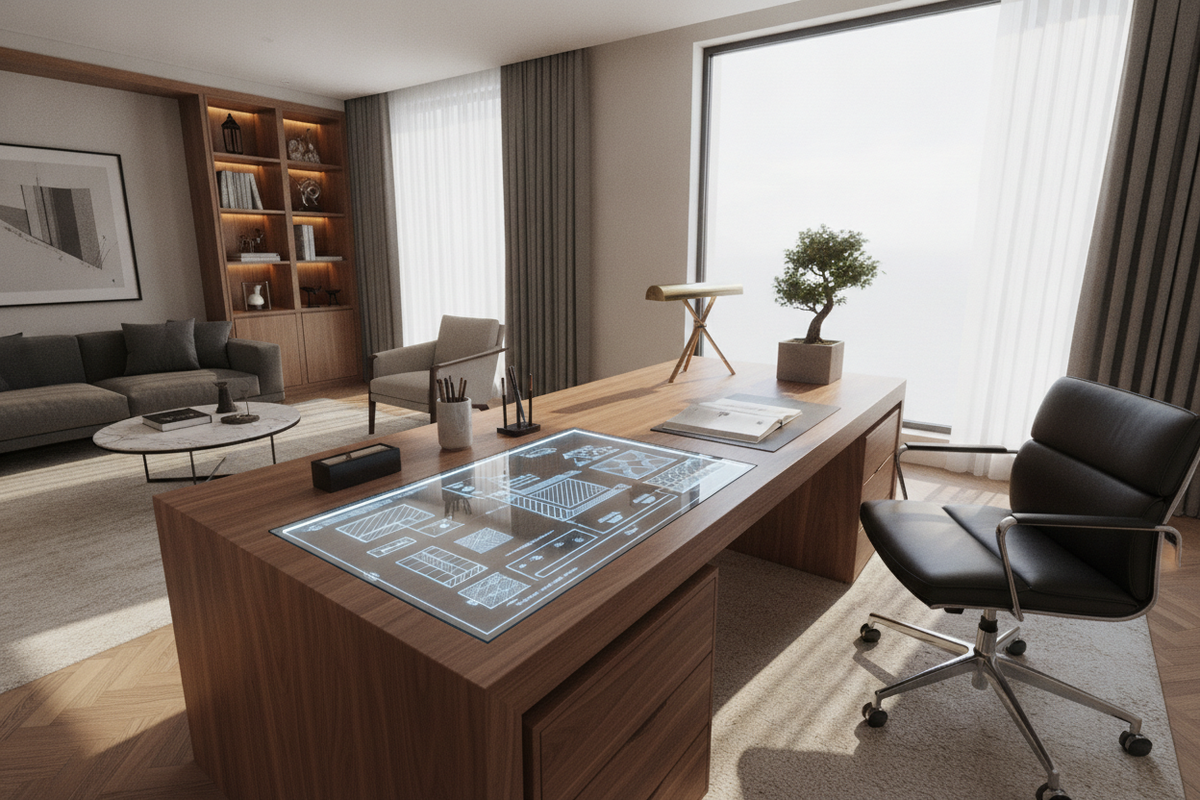
Defining the Elegant Desk: The Intersection of Form, Function, and Visual Weight
An elegant desk is defined by deliberate balance. Unlike utilitarian office furniture designed strictly for mass utility, a refined workstation balances physical durability with architectural poise. When selecting a workstation for a dedicated study, bedroom nook, or open living area, the silhouette must establish visual harmony with the surrounding architecture. In our editorial view, the transition from a purely functional setup to a curated workspace begins when you treat the desk as an anchor piece rather than mere equipment.
Good looking desks achieve this distinction through careful attention to line, negative space, and joinery. Open-leg silhouettes introduce lightness into smaller rooms, while waterfall edges and continuous pedestals offer a grounded presence suited to executive layouts. When planning your layout, exploring a curated computer desk collection helps you evaluate how different frame profiles, tapers, and finishes interact with ambient light and room proportions.
Design Archetypes of the Stylish Computer Desk
Modern interior aesthetics embrace several distinct archetypes for home workstations, each catering to different architectural moods and spatial requirements:
- Mid-Century Warmth: Characterized by tapered dowel legs, beveled desktop borders, and warm wood tones. For classic and transitional rooms, a warm timber desk computer product introduces natural grain patterns and organic warmth that soften hard technological edges.
- Monolithic Minimalism: Features continuous panel legs, thick slab surfaces, and flush joints. This archetype works well in contemporary spaces seeking a sculptural, uncluttered aesthetic.
- Architectural Metal and Wood: Combines slender powder-coated or brushed metallic framing with floating timber surfaces, maintaining an airy profile ideal for loft-style spaces.
- Fluted and Ribbed Art Deco Revival: Utilizes cylindrical ribbed pedestals and soft curves to add subtle tactile texture without overwhelming the surrounding decor.
Spatial Geometry and Proportion: Sizing Your Desk for Room Harmony
Proportion is essential when selecting a stylish computer desk. A desk that is too deep can crowd a narrow pathway, while an undersized table can look adrift in a spacious room. Beyond surface length, evaluate the desk's visual mass—how solid the base appears relative to the open space beneath it.
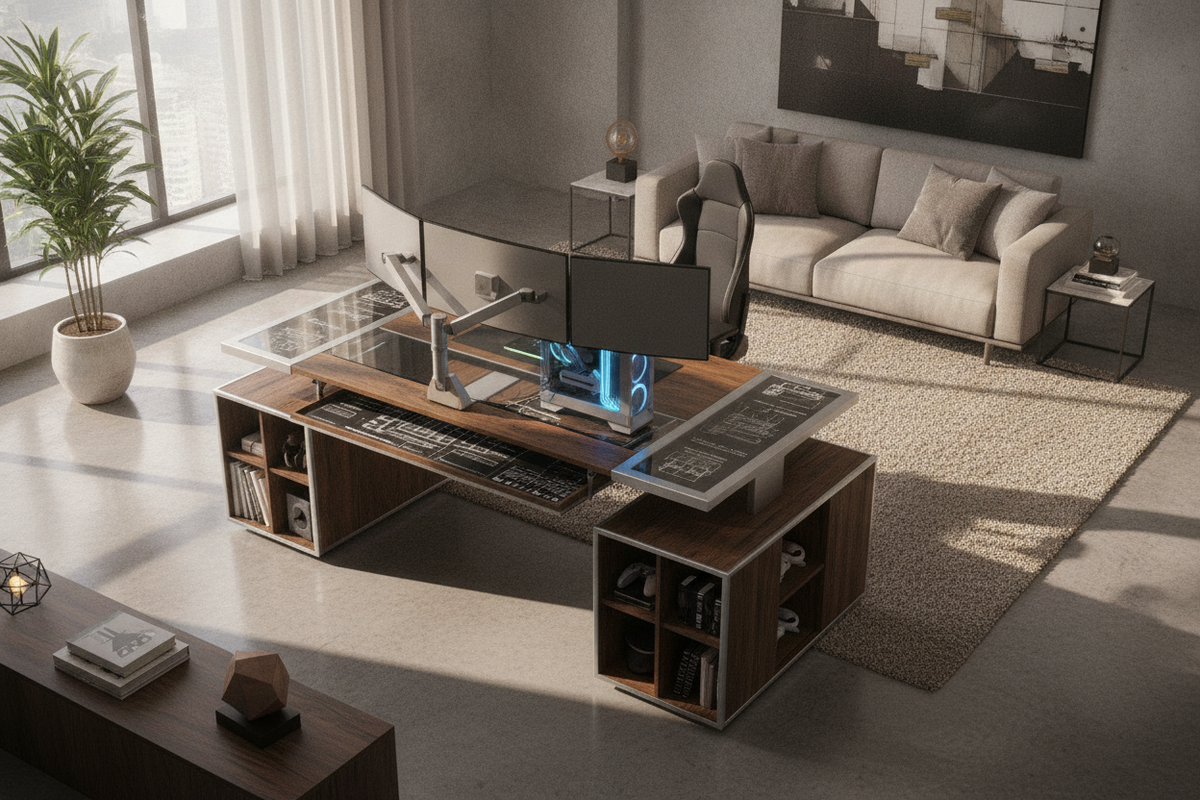
In multifunctional spaces where layout efficiency is essential, a modern corner computer desk product maximizes corner perimeter while maintaining a clean aesthetic. Corner and L-shaped configurations help divide open-plan rooms into distinct zones, keeping productive work areas clearly separated from relaxation zones while maintaining open pathways.
Material Palettes and Tactile Finishes Shaping the Trending Desk
The materials defining today's trending desk designs emphasize tactile engagement and layered visual depth. Interior designers increasingly move away from high-gloss laminates in favor of rich, matte textures that diffuse reflections and resist everyday smudges.
- Matte Lacquer: Offers velvety, light-absorbing finishes in muted tones like chalk white, charcoal, and warm taupe, establishing a serene foundation for creative work.
- Rich Veneers and Solid Woods: Natural walnut, white oak, and ash provide unique grain variations that create an organic contrast against monitors and metallic desk accessories.
- Textured Stone and Terrazzo Elements: Used in modest accents or integrated trays, stone details introduce cool, grounded weight to modern workspaces.
- Brushed Metallic Hardware: Champagne bronze, brushed nickel, and matte black pulls add subtle jewelry-like refinement to integrated drawers and pedestals.
Concealed Storage and Cable Zoning: Preserving Aesthetic Purity
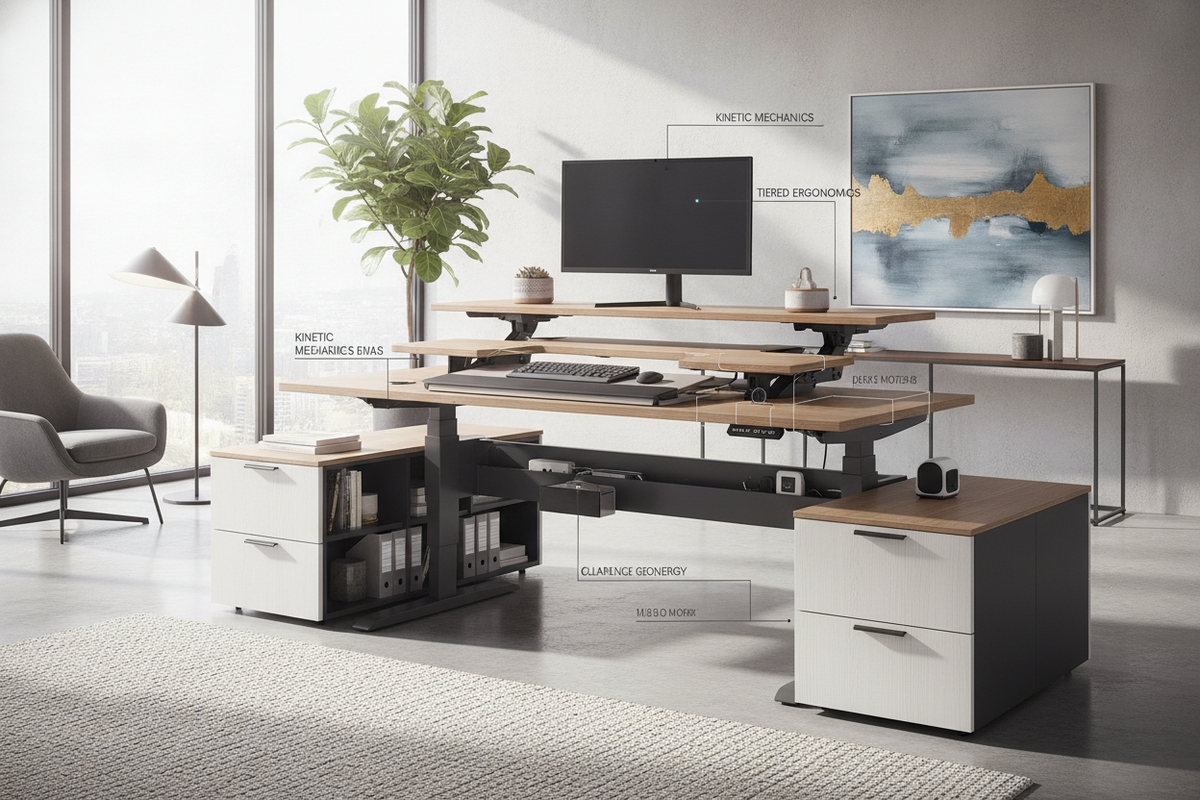
A primary challenge in styling an elegant desk is accommodating digital hardware without compromising clean design lines. A stylish computer desk requires thoughtful cable routes and discreet compartments to maintain visual order throughout the workday.
Prioritize desks designed with shallow center utility drawers, under-desk wire trays, and pass-through channels along the rear perimeter. To ensure your workstation remains clutter-free without sacrificing utility, consult our ergonomic computer desk guide on avoiding common home office layout errors, such as misjudging leg clearance or underestimating wire management needs.
Interior Styling Synergy: Coordinating Bookcases, Credenzas, and Accent Chairs
An elegant desk should not exist in isolation; it anchors a cohesive interior narrative. To complete your home workstation, integrate complementary storage pieces such as matching low credenzas, tall open bookcases, and comfortable accent seating.
If your workstation resides within an open-concept living area, integrating styling tips from an enclosed computer desk guide helps establish clean boundaries that keep productivity tools discreetly tucked away after working hours. Finish the space with directional task lighting, a felt or leather desk blotter, and tailored upholstery that unifies form, comfort, and sophisticated design across the entire room.

Leave a comment
This site is protected by hCaptcha and the hCaptcha Privacy Policy and Terms of Service apply.