

















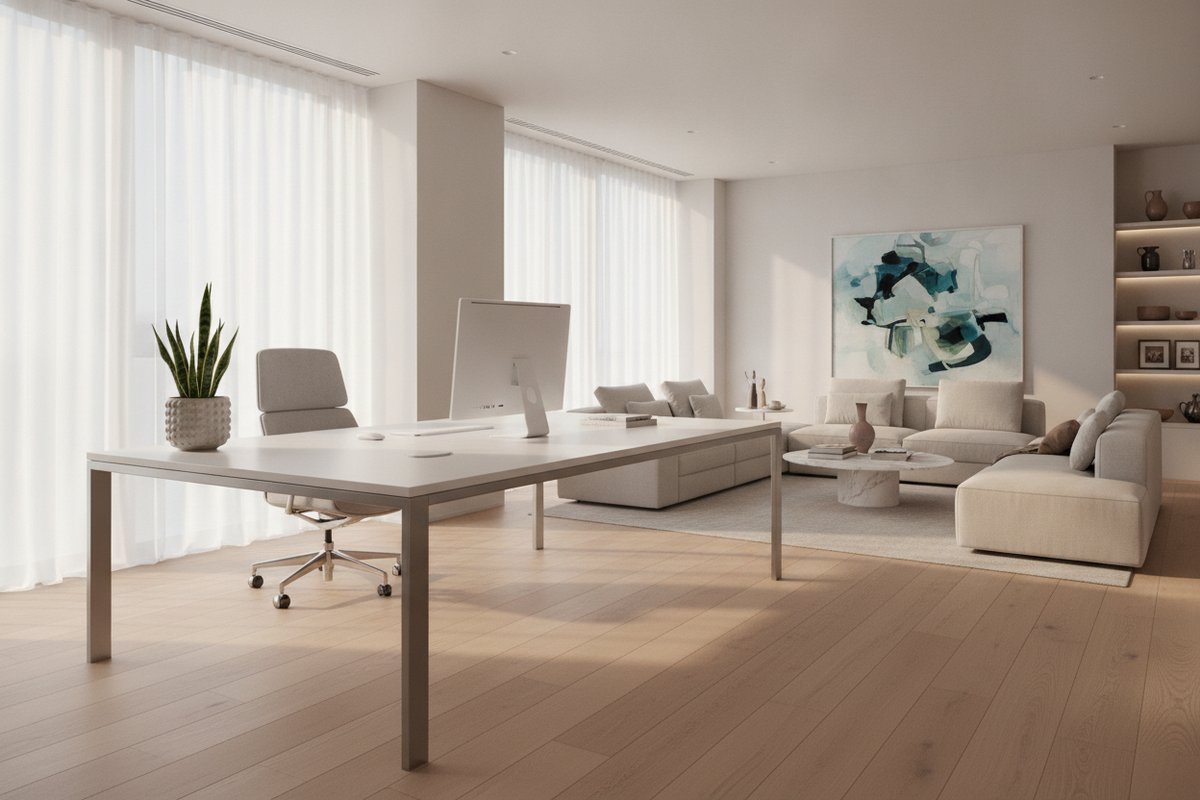
Why Choose a Big White Desk for Modern Workspaces?
Selecting an expansive workstation often presents a spatial dilemma: how do you secure sufficient surface area without visually overwhelming the room? A white desk big enough to support multi-monitor arrays, reference materials, and creative tools solves this balance through reflective neutrality. Where dark woods and industrial metals present substantial visual mass, light-toned surfaces interact with ambient daylight to preserve an airy, open atmosphere across the entire room.
A large white desk visually recedes into light or neutral walls, allowing rooms with standard ceiling heights to feel less congested. Whether planning a dedicated study or integrating a workstation into a multi-purpose living space, opting for a big white desk provides an expansive staging area for modern workflows while maintaining clean interior architectural lines and balanced visual proportions.
Dimension Categories: Wide vs. Long White Desk Formats
Not all spacious workstations serve the same functional routine. Identifying whether your setup demands generous front-to-back depth or an extended horizontal span determines how comfortably hardware, lighting, and everyday peripherals sit within reach.
Wide Surface Depth for Hardware and Multi-Display Setups
A wide desk white finish layout focuses primarily on front-to-back depth. This format is ideal for users with substantial monitor arms, oversized reference manuals, or dedicated creative drafting gear. When positioning display stands, a wide white desk preserves comfortable viewing distances, preventing keyboards and wrist rests from crowding the front edge. It leaves ample perimeter room for desk pads, desktop audio monitors, and balanced lighting without encroaching on primary input zones.
Elongated Linear Spans for Dual-Tasking and Shared Work
An extra long white desk or long white desk prioritizes lateral span over extreme depth. This elongated geometry supports zoned task division, allowing you to establish a primary computing zone at one end while preserving dedicated space for analog paperwork, sketching, or a secondary user on the other. For shared home offices, a shared long white computer desk creates a continuous visual line along a shared wall, keeping the room orderly rather than visually segmented.
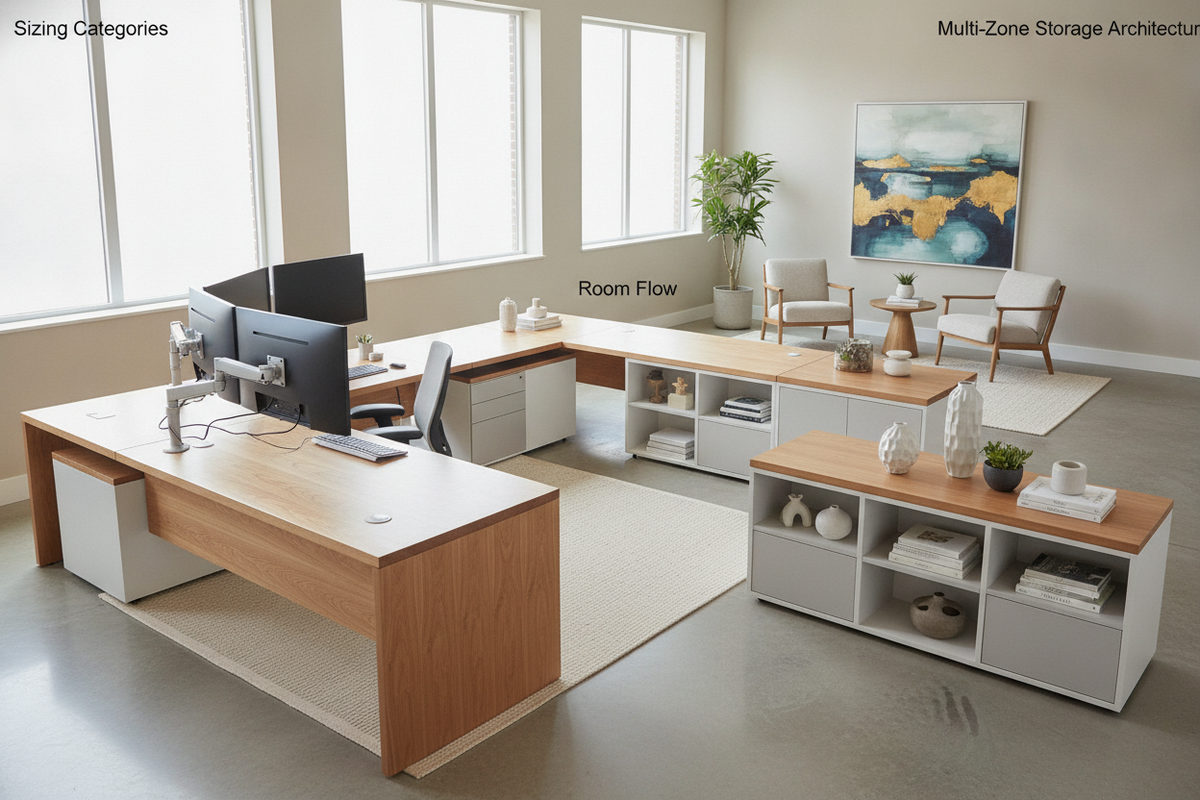
Room Flow and Placement Principles for Large Desks
Introducing a substantial piece of furniture into an office requires deliberate attention to circulation paths. To keep a large white office desk functional, ensure there is adequate perimeter space behind your task chair to recline and exit without striking walls or cabinetry. Maintaining unhindered pathways to entryways and windows prevents the furniture from obstructing daily movement across the room.
When configuring rooms that incorporate high vertical elements, such as a white tall desk or complementary shelving towers, spatial balance becomes paramount. Aligning primary sightlines with natural daylight sources prevents harsh shadows across your workspace. For broader guidance on maintaining balanced proportions with substantial furniture, explore avoiding a bulky room presence with large furniture.
Integrated Storage Architectures: Keeping Wide White Surfaces Clutter-Free
The visual appeal of an expansive light surface can easily be compromised by tabletop clutter. Incorporating smart organization ensures your large white computer desk stays clean, calming, and functional throughout high-intensity projects.
Pedestals vs. Open Shelving Returns
Choosing a large white desk with storage involves deciding between concealed drawer pedestals and open lower shelving. Closed pedestals conceal paperwork, power bricks, and office peripherals behind flush panel fronts, maintaining a sleek silhouette. Conversely, open shelving or return wings—such as those featured on a corner desk with large storage—provide immediate access to daily binders and tech accessories while utilizing corner space efficiently.
Desktop Organization and Small Accessory Containment
Even with ample lower storage, small daily essentials naturally accumulate near the keyboard. Managing pens, adapters, and loose stationery with dedicated trays or storage bins for office supplies keeps the desk surface disciplined. Subdividing your supplies prevents the broad white surface from becoming an accidental catch-all for unrelated household items.
Material Finishes, Light Reflection, and Durability
The finish of an expansive desk influences both daily maintenance and visual comfort. Because white surfaces reflect higher levels of ambient and overhead illumination, finish texture matters for optical comfort:
- Matte and Satin Laminates: Soften direct reflections from task lamps and overhead fixtures, reducing optical glare during long computing sessions on a long white computer desk.
- High-Gloss Surfaces: Deliver striking contemporary lines and clean architectural contrast, though they require regular wiping to manage fingerprints and reflect task lighting more sharply.
- Powder-Coated Support Frames: Offer resistance to scuffs around foot-rest areas and maintain a uniform, low-sheen tone across metal leg assemblies and structural aprons.
For daily upkeep, non-abrasive microfibers and mild cleaning agents preserve protective clear coats without causing surface clouding over time.
Structural Rigidity and Span Support for Expansive Desktops
As desk widths expand past standard dimensions, structural engineering becomes essential. A wide desktop carrying heavy monitor arms, desktop towers, and books requires robust under-structure support to prevent center sag over long periods of use.
Look for furniture configurations incorporating hidden steel apron beams, longitudinal support channels, or sturdy return assemblies. For L-shaped layouts, options like a minimalist white computer corner desk distribute weight efficiently across multiple support planes. Integrated adjustable leveling glides are equally helpful, compensating for uneven flooring and eliminating subtle desktop wobble during active keyboard work.
Decision Checklist: Selecting the Right Expansive White Desk
Before finalizing your layout, cross-reference your space and functional requirements against these key considerations:
- Clearance and Circulation: Confirm comfortable space for chair travel and walk-around clearance along all exposed desk edges.
- Hardware Footprint: Match desktop depth to monitor stand profiles or clamp depths to preserve healthy viewing distances.
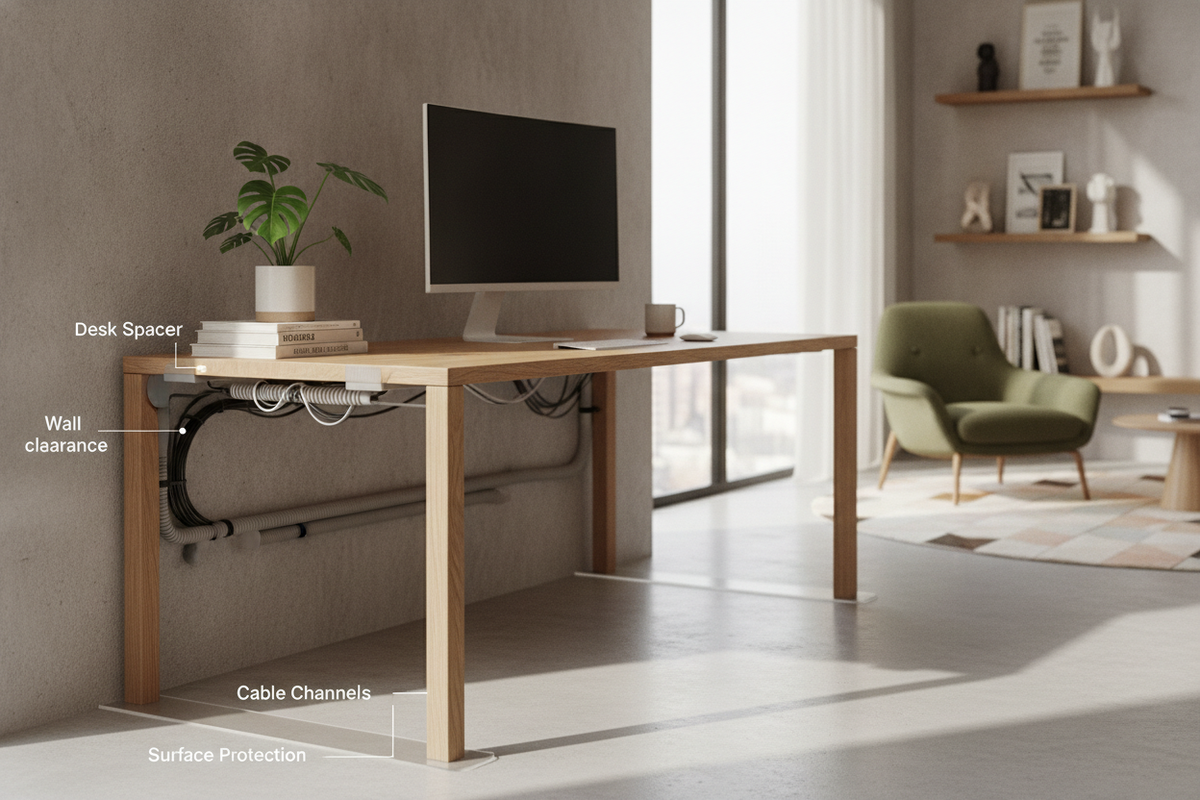
- Cable Routing: Check for integrated grommets, modesty panel channels, or under-desk trays to prevent power bricks from cluttering the floor.
- Storage Access: Ensure drawers or cabinet doors open fully without contacting surrounding walls, baseboards, or door frames.

Leave a comment
This site is protected by hCaptcha and the hCaptcha Privacy Policy and Terms of Service apply.