

















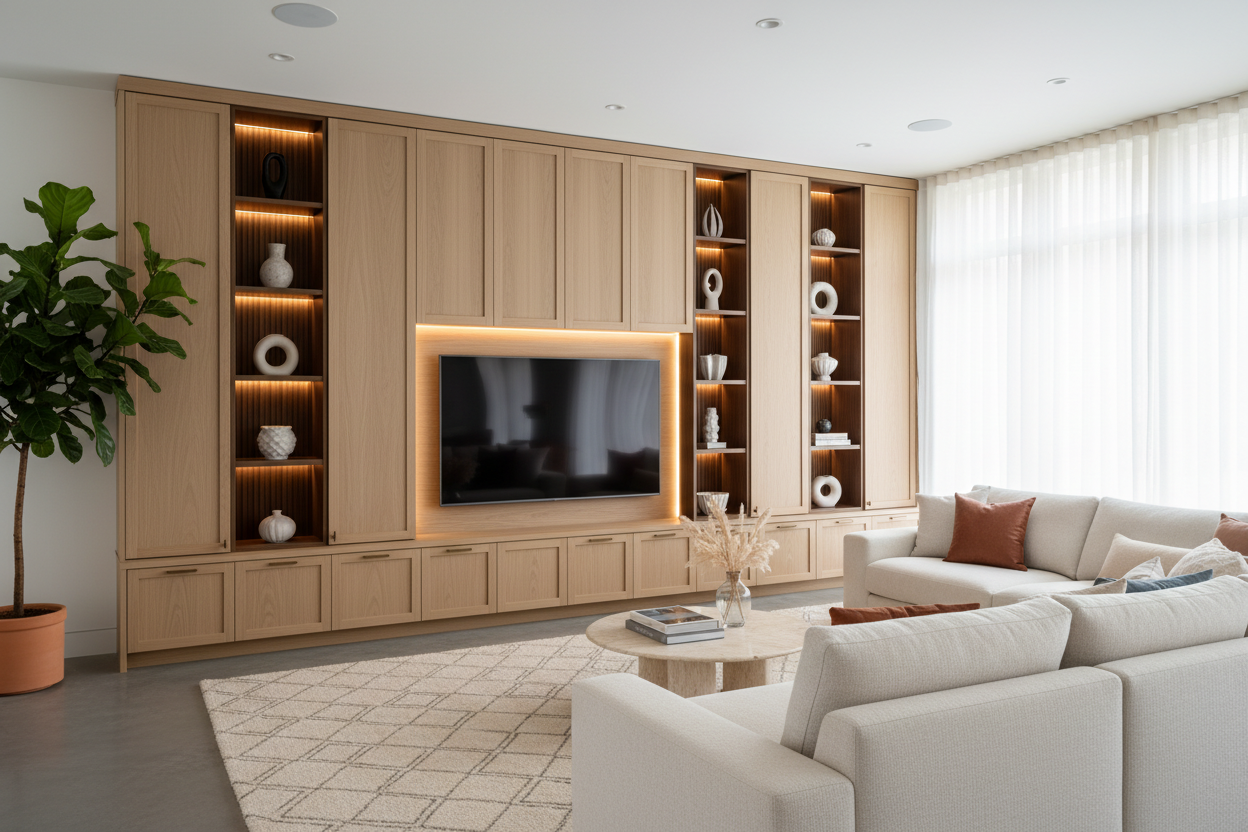
We've all been there: you look around your open-concept living room or suburban family room and realize you simply do not have enough closets. The immediate instinct is to buy the biggest piece of furniture you can find to hide the mess. But bringing extra large storage cabinets into a residential space is trickier than it looks. What seems like a practical solution online often arrives and feels like a massive, looming monolith that swallows the room whole.
Scaling large furniture requires a careful balance of proportion, material, and placement. In this guide, I'll walk you through exactly how to choose a massive storage piece that actually looks intentional, rather than like an oversized locker you shoved against a wall.
Quick Decision Guide
- Measure for clearance, not just footprint: Ensure you have at least 36 inches of walkway space in front of the cabinet so doors can fully open without blocking traffic.
- Match the height to your ceilings: An extra large cabinet should leave either 12 to 18 inches of negative space below the ceiling or go completely flush to the top. Avoid leaving a tiny, awkward 3-inch gap.
- Consider visual weight: If the piece is dark and heavy, balance it by placing it on a wall with ample natural light or flanking it with lighter elements.
- Safety is non-negotiable: Any piece over 30 inches tall must be anchored to a wall stud, regardless of how heavy or stable it feels when empty.
Space Planning: Making Room for the Big Pieces
Mastering Proportion in Open Concepts
In modern North American homes, the lack of built-in storage makes extra wide storage cabinets incredibly appealing. However, width requires balance. If you place a massive 80-inch wide piece on a short wall, it will immediately make the room feel cramped. Instead, anchor these pieces on your longest uninterrupted wall. Think of the cabinet as an architectural feature rather than just a piece of furniture.
When dealing with an extra large cabinet, pay close attention to depth. A standard depth is 15 to 18 inches. If you go deeper—say, 20 to 24 inches for storing bulky items like winter coats or large appliances—you must account for the physical footprint cutting into your livable floor space.
Style and Visual Weight
Choosing the Right Fronts
The doors you choose dictate how heavy the piece feels in your room. An extra large storage cabinet with doors that are solid wood, painted in a dark hue, will carry immense visual weight. This works beautifully in a large, well-lit room where you want a moody, grounded focal point.
If you are working with a tighter space or lower ceilings, consider fronts with glass panels, cane detailing, or fluted wood. These textures break up the solid mass. Even an extra wide cabinet feels significantly lighter when it features raised legs, allowing you to see the floor underneath, which tricks the eye into perceiving more space.
Designer's Honest Take: Lessons from My Own Projects
A few years ago, I specified a gorgeous, matte black extra large storage cabinet for a client's dining room. It was 96 inches tall and held everything from their fine china to their kids' board games. It looked incredible on installation day.
But here is the reality of massive, dark cabinetry: it absorbs light like a black hole. Because the room only had one east-facing window, the piece made the entire space feel cavernous by 3 PM. We ended up having to install dedicated picture lights above it and swap the solid hardware for polished brass just to bounce some light around. I also learned a hard lesson about hinges that day. When doors are that large, standard hinges will sag within six months. Always check that an oversized piece uses heavy-duty, multi-point European hinges, or you'll be adjusting them constantly.
Frequently Asked Questions
How deep should an extra large storage cabinet be?
For general household items, books, and board games, 15 to 18 inches is ideal. If you plan to store bulky items like small kitchen appliances, winter gear, or large bins, look for a depth of 20 to 24 inches.
Can I put a massive cabinet in a small room?
Yes, but you have to manage the visual weight. Choose a lighter color, ensure it goes nearly to the ceiling to draw the eye up, and opt for a piece with legs rather than a solid plinth base so the floor remains visible.
How do I organize an extra wide storage cabinet?
Use structural inserts. Extra wide shelves are prone to bowing if overloaded and tend to become chaotic. Use standardized bins or baskets for smaller items, and reserve the center of the shelves for heavier items to distribute the weight evenly.


Leave a comment
This site is protected by hCaptcha and the hCaptcha Privacy Policy and Terms of Service apply.