

















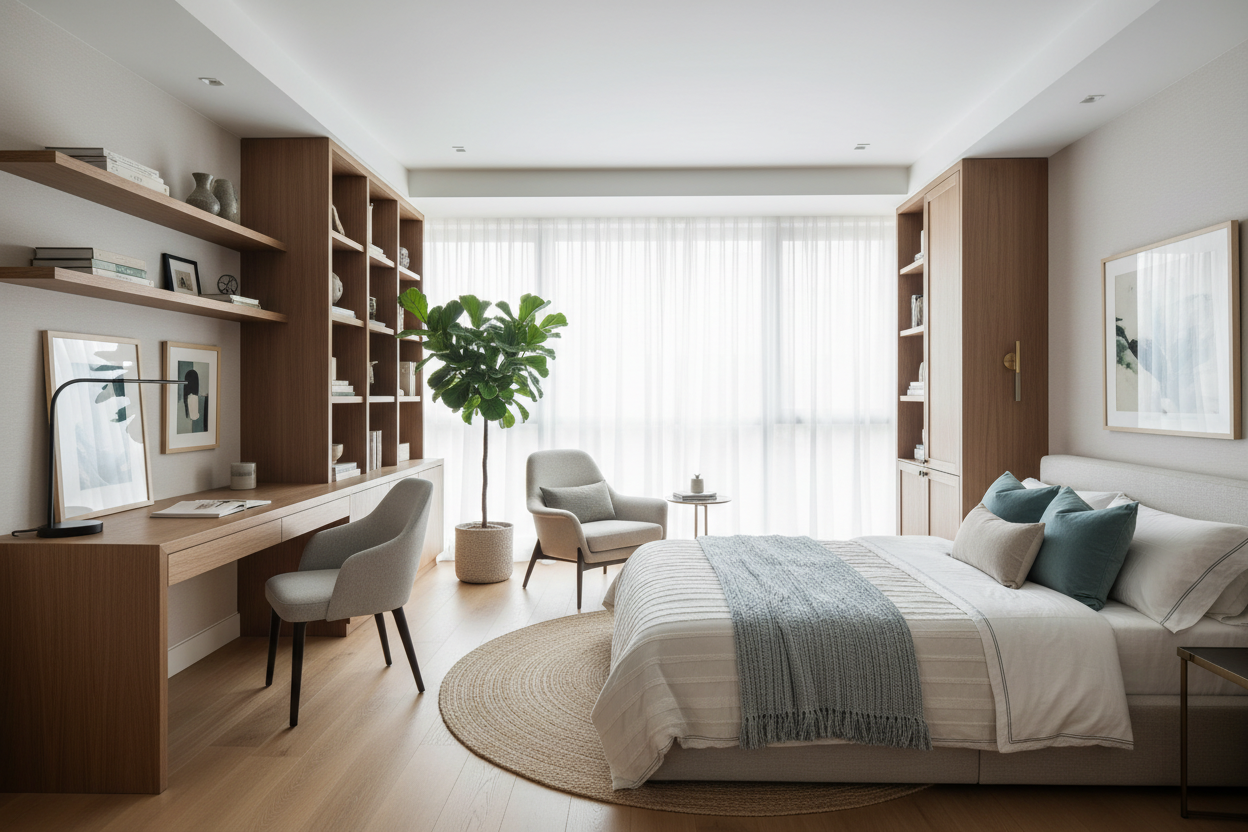
The ultimate design paradox involves attempting to be highly productive in a space biologically engineered for rest. It is a delicate balance; if the scale tips too far toward the corporate, your sleep hygiene suffers. If it leans too far toward comfort, your productivity plummets. When consulting on bedroom office layouts, my goal is always to create a psychological divide within a physical unity. You do not want the last thing you see before closing your eyes to be a stack of unpaid invoices or a chaotic nest of charging cables.
Key Zoning Principles for Dual-Purpose Rooms
Before buying a single piece of furniture, consider these fundamental requirements for a successful layout. These elements determine whether the room feels cohesive or cluttered.
- Visual Separation: Use area rugs, open shelving, or even lighting changes to delineate the 'work zone' from the 'sleep zone'.
- Ergonomic Scale: In bedrooms, massive executive desks overwhelm the space. Opt for writing desks with shallower depths (around 20-24 inches).
- Vertical Utilization: Minimize the footprint by building storage upward rather than outward to preserve circulation paths.
- Acoustic Softening: Hard office surfaces echo. Balance them with upholstered chairs and heavy drapery to maintain a bedroom atmosphere.
Mastering Space Planning and Orientation
The placement of your desk is the most critical decision in your bedroom and office layout. The golden rule in interior design is the 'Command Position.' Ideally, you should face the door, but not be directly in line with it. However, in a bedroom context, there is a more pressing rule: Never face the bed while working, and never face the desk while sleeping.
The Window Alcove Strategy
If your architecture allows, positioning the desk within a window bay or alcove is ideal. It capitalizes on natural light—essential for circadian rhythms—and naturally tucks the workspace away from the primary circulation path around the bed.
The 'Floating' Desk Technique
In tighter quarters, pushing all furniture against the wall can create a stagnant 'waiting room' effect. Floating a slim desk perpendicular to a wall can act as a room divider, physically separating the sleeping area from the work area without blocking light.
Selecting the Right Silhouette and Materials
When sourcing furniture, the visual weight of the piece is just as important as its physical dimensions. A heavy, dark mahogany desk will suck the air out of a standard bedroom.
Materiality and Texture
For bedroom office decor ideas, I lean heavily toward materials that bridge the gap between residential and commercial. Light oak, walnut veneers, or matte lacquers work beautifully. Avoid glass tops if you are prone to clutter; seeing the wires through the desk adds visual noise. Instead, look for desks with modesty panels or integrated cable management to hide the 'guts' of your technology.
The Chair Dilemma
Do not drag a massive, high-back gaming chair into a serene bedroom. It ruins the aesthetic immediately. Look for 'mid-back' task chairs upholstered in linen, velvet, or leather that complement your headboard. There are many ergonomic options now that disguise themselves as accent chairs, offering lumbar support without the industrial look.
Lighting: The Invisible Divider
Your bedroom office layout ideas must include a lighting plan. Overhead lighting is rarely sufficient for focused work and is often too harsh for relaxation. Use a dedicated task lamp with a warm temperature (2700K-3000K) for the desk. Crucially, ensure this light can be turned off completely at night. The work area should recede into the shadows when the workday ends, allowing the bed area's ambient lighting to take over.
Lessons from My Own Projects: The "Standby Light" Issue
I learned a very specific lesson regarding bedroom workspaces during a renovation for a client in a downtown loft. We designed a beautiful, custom built-in walnut desk that looked seamless. However, two weeks after installation, the client called me complaining of poor sleep.
The culprit wasn't the layout or the mattress—it was the electronics. We hadn't accounted for the blinking standby lights on the monitor, the router, and the printer. In a dark bedroom, those tiny pulsing LEDs were aggressive distractions. I had to go back and install a master 'kill switch' for the desk outlets inside a cabinet. Now, when I design these spaces, I insist on concealed power strips with on/off toggles or integrated cabinetry that allows you to physically close a door on the technology. It’s a small detail, but in a bedroom, total darkness is a luxury you shouldn't compromise on.
Conclusion
Integrating a workspace into your sanctuary doesn't mean sacrificing style or sleep. By choosing furniture with the right visual weight, adhering to strict zoning, and managing your lighting, you can create a space that supports your ambition during the day and cradles your rest at night. It is about intention, not just placement.
Frequently Asked Questions
How do I fit a desk in a very small bedroom?
For tight spaces, utilize verticality. A wall-mounted ladder desk or a floating shelf desk eliminates bulky legs, making the floor area appear larger. Alternatively, replace a bedside table with a small writing desk to serve dual purposes.
What is the best way to hide a computer monitor in a bedroom?
If you use a laptop, store it in a drawer. For large monitors, consider a desk with a lift mechanism, or position the desk inside a closet (the 'cloffice' concept) so you can close the doors on your work at the end of the day.
Can I use a dining chair for my bedroom office?
You can, but proceed with caution. If you work for more than two hours a day, a dining chair will eventually cause back strain. If you must use a dining chair for aesthetics, add a dedicated lumbar pillow and ensure the seat height allows your elbows to rest at a 90-degree angle.


Leave a comment
This site is protected by hCaptcha and the hCaptcha Privacy Policy and Terms of Service apply.