

















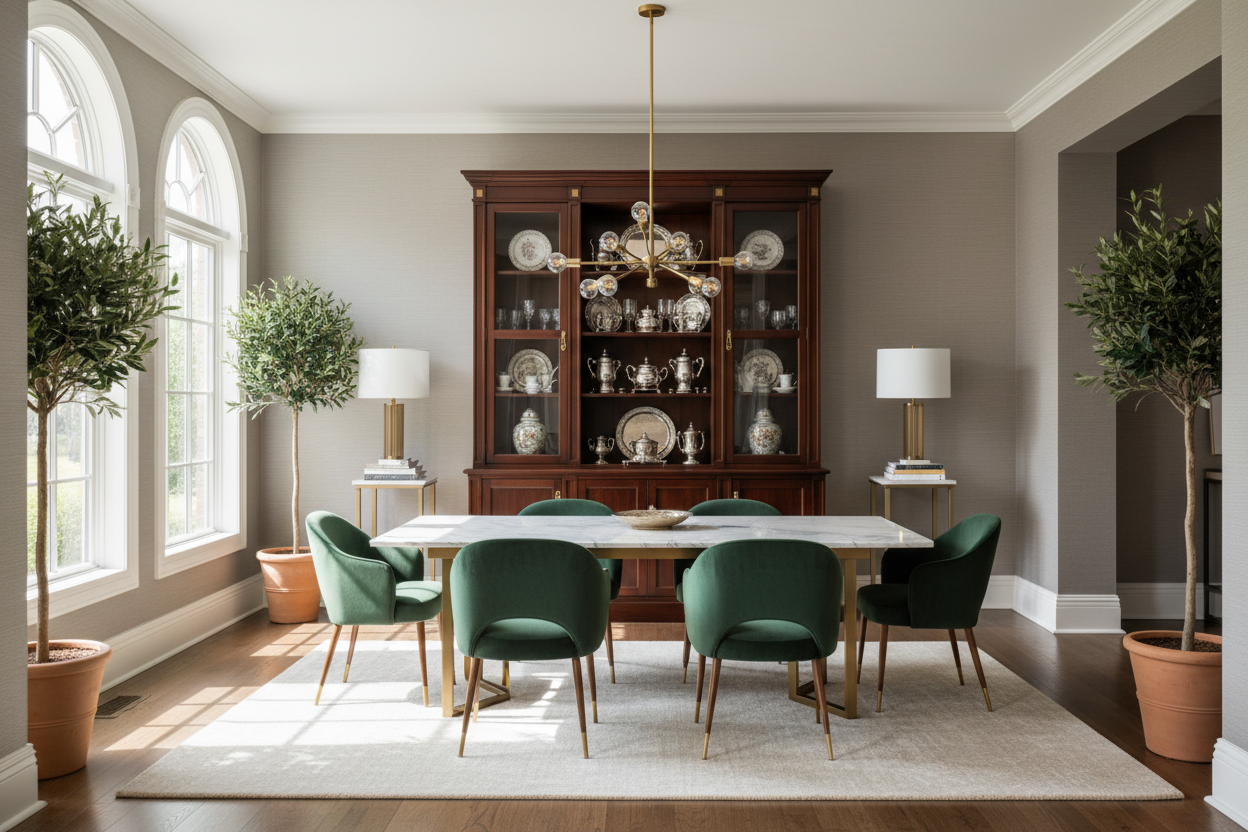
I remember helping a client who inherited her grandmother's formal china cabinet. It was beautiful—solid mahogany, hand-carved details, the kind of piece that commands attention. But in her light-filled, modern condo, it felt like a visitor from another era. She told me, 'I want something that feels special, but it needs to feel like me.' That's the heart of it. Choosing a formal china cabinet today isn't about adhering to strict rules; it's about finding that intersection of quality, presence, and personal expression.
Quick Takeaways
- Formality is now defined by quality and intention, not just traditional ornamentation.
- Check the joinery (dovetail or mortise-and-tenon), glass clarity (low-iron for less green tint), and material thickness (shelves at least 3/4" thick).
- Modern formal styles use clean lines, mixed metals, or unexpected colors while maintaining fine craftsmanship.
- Leave at least 36 inches of clearance in front for comfortable access and viewing.
- Style with a mix of heirlooms, art pieces, and everyday objects you love.
What Makes a China Cabinet 'Formal' (And Why That Definition Is Changing)
Traditionally, a formal china cabinet meant specific things: rich, dark woods like mahogany or cherry, ornate carvings, leaded glass doors, and a certain imposing scale. The craftsmanship was non-negotiable—dovetail drawers, solid wood frames, hand-finished details. It was furniture meant for a dedicated dining room, to display porcelain that came out for holidays.
But after furnishing over 200 homes, I've seen that definition evolve dramatically. For my North American clients, 'formal' now speaks more to quality and intention than a specific period style. It's about a piece that feels considered and special. A cabinet with sleek, minimalist lines crafted from quarter-sawn oak with flawless French dovetail joinery can feel just as formal as a Victorian bombe chest. The shift is from 'traditional' to 'intentional.' People want pieces that hold their cherished items with respect, but that also respect the overall vibe of their home.
The Designer's Checklist: 5 Non-Negotiables for a Luxury China Cabinet
Whether you're drawn to ornate or streamlined, these are the quality markers I check on every high-end piece. They're what separate a true investment from something that will feel cheap in a year.
- Joinery: Look for dovetail or mortise-and-tenon joints in the frame and drawers. Staples or simple butt joints won't withstand the weight of your dishes or the test of time.
- Material Integrity: The back panel shouldn't be flimsy cardboard or 1/8" plywood. Opt for 1/4" plywood or solid wood. Shelves should be at least 3/4" thick to prevent bowing under weight.
- Glass Clarity: Not all glass is equal. Low-iron glass (often called 'ultra-clear') has a significantly reduced greenish tint, making your displays look truer in color. It's a hallmark of our 74-inch china cabinet and other quality pieces.
- Finish & Hardware: The finish should be smooth, even, and deep—not plasticky. Drawers should glide silently on metal runners. Hardware should feel substantial in your hand; if it feels lightweight, it probably is.
- Scale & Proportion: This is where many go wrong. A massive cabinet in a small eat-in kitchen will dominate. Conversely, a petite piece in a vaulted great room will get lost. Always mock up the footprint with painter's tape on your floor.
Beyond Traditional: Formal Styles That Speak to Modern Tastes
Gone are the days when 'formal' meant only one look. Today's elegant china cabinets borrow from different eras and aesthetics to create something personal. I'm seeing a huge demand for pieces that have a formal presence but a contemporary soul.
Think clean, vertical lines instead of serpentine curves. Think mixed materials: a walnut frame with brass inlay detailing, or a cabinet with a matte lacquer body and natural oak interior shelves. Color is a powerful tool here. A deep, moody black cabinet with glass doors can feel incredibly formal and modern, especially when paired with polished nickel hardware. The key is that the craftsmanship remains impeccable—the formality is in the execution, not just the ornament.
The Statement Maker: Ornate Details Done Right
If you love detail, go for it! The trick is balance. In a room with simple Shaker-style cabinetry, a china cabinet with intricate marquetry or delicate fluting becomes a stunning focal point. Look for carvings that are crisp and deep, not shallow and stamped. Inlays should have tight seams. When it comes to hardware, choose one standout element—maybe dramatic, curved brass pulls—and let the rest of the design be more subdued. The goal is for the detail to feel integral, not glued on.
The Quietly Confident: Streamlined Elegance
For many of my clients, less is more. A formal cabinet in this vein achieves its impact through perfection of form. Imagine a piece with absolutely straight, plumb lines, made from a single batch of rift-cut white oak so the grain flows seamlessly. The doors might be full-height with minimal framing around the glass, putting the focus entirely on what's inside. The elegance comes from the precision of the build, the warmth of the wood, and the quality of the silence when the door closes. It doesn't shout; it simply asserts.
Making It Yours: Styling Your Formal Cabinet for Real Life
This is where personality shines. Yes, you can display your grandmother's bone china. But also mix in your collection of vintage decanters, a set of artisanal ceramic bowls you use daily, or a few pieces of mineral geode you love. Vary heights: use sturdy plate stands for platters, and layer cake stands to create different levels. Leave some breathing room—clutter diminishes the impact. I often recommend the 'rule of three' for groupings. And remember, lighting is key. If your cabinet doesn't have built-in lights, a small, battery-operated LED puck light placed on the top shelf makes everything glow. For more elegant display ideas, we have a whole guide dedicated to it.
The Final Fit: Placement and Partnership in Your Home
A formal china cabinet shouldn't feel like it was dropped in from space. Its placement needs to be a conversation with the room. In a dining room, it often anchors the wall opposite the entry. Ensure there's a clear 36-inch walkway in front. In open-concept homes, I often place them as a graceful room divider between a dining and living area, with the glass doors visible from both sides. Don't forget styling a china cabinet in the living room is a fantastic option for showcasing books and art objects. For tighter spaces, an elegant corner china cabinet can be a space-saving hero. Always consider the sightlines from your main seating area—this is a piece meant to be seen and enjoyed.
Personal Experience: The One That Got Away
Early in my career, I pushed a client toward a stunning, enormous antique breakfront. It checked every 'formal' box. But I failed to fully account for the low ceilings in her 1920s bungalow. When it was delivered, it visually swallowed the room. We made it work with strategic lighting and very sparse styling, but it was a lesson learned: measurements on paper and the feel in the room are two different things. Always, always consider the volume of your space, not just the floor footprint.
FAQ
Can a formal china cabinet work in a casual home?
Absolutely. It's all about balance. A streamlined, light-wood formal cabinet can add structure and sophistication to a casual, breezy space. Think of it as the 'well-dressed guest' at a relaxed party.
What's a reasonable budget for a quality piece?
For a true, solid-wood, well-constructed cabinet from a reputable maker, start around $2,500. Custom or heirloom-quality pieces from specialty artisans can range from $5,000 to $15,000+. It's a long-term investment.
How do I protect my dishes inside?
Ensure the shelves are sturdy (3/4"+ thick) and level. Use non-slip shelf liner (the felt or rubber mesh kind). For extremely delicate pieces, consider adding a thin, clear acrylic lip to the front edge of shelves.
Is built-in lighting necessary?
It's a significant upgrade but not strictly necessary. It dramatically enhances the display, especially for glassware and ceramics. If it's not built-in, the battery-operated LED options today are excellent and easy to install.


Leave a comment
This site is protected by hCaptcha and the hCaptcha Privacy Policy and Terms of Service apply.