

















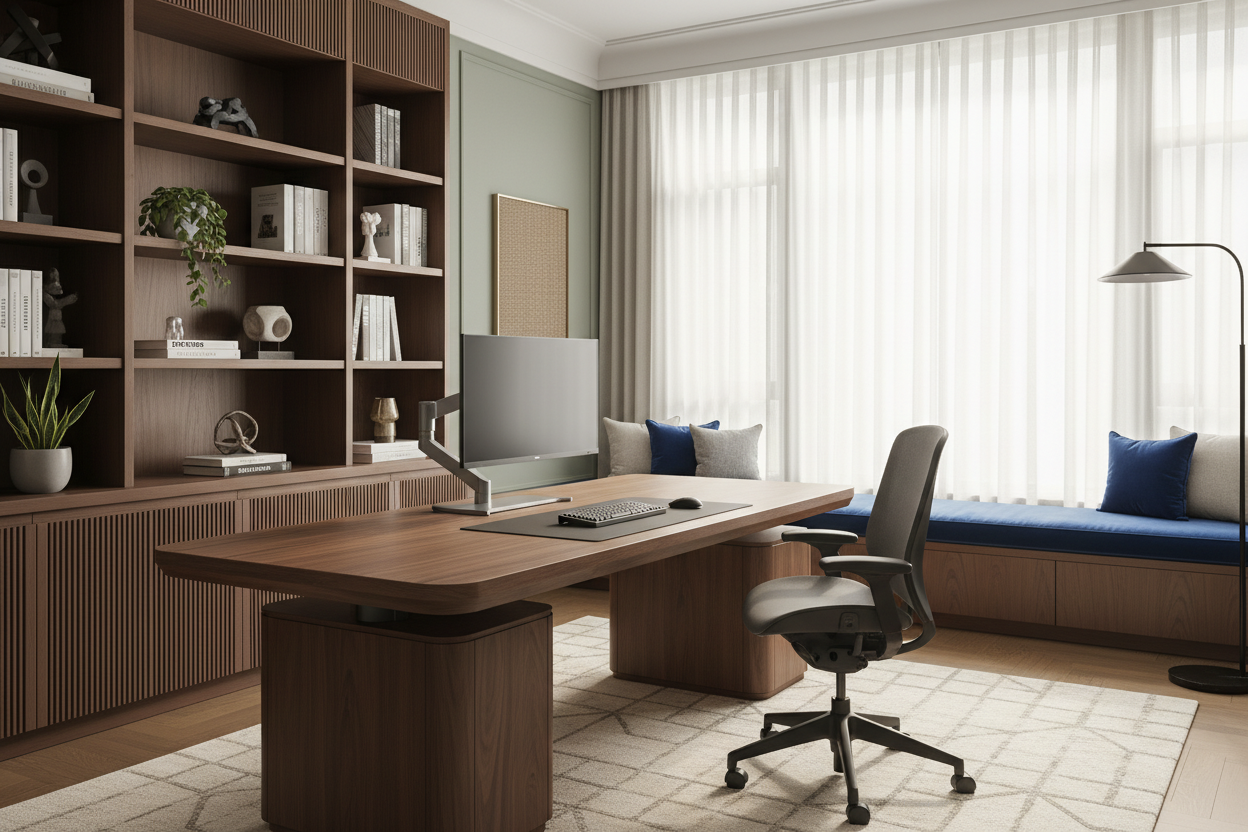
We have all experienced the fatigue that comes from working in a makeshift environment—hunching over a dining table or squinting at a screen in a dimly lit corner. A truly functional office is not merely about placing a desk against a wall; it is about engineering an environment that reduces cognitive load and supports physical endurance. As a designer, I tell my clients that your workspace should be the most hardworking room in the house, yet it often gets the least amount of budget allocation regarding ergonomics and flow.
Key Features of a High-Performance Workspace
- Ergonomic Triangle: The relationship between your chair height, desk surface, and monitor eye-level must be calibrated to prevent strain.
- Layered Lighting: A mix of ambient (overhead) and task lighting (articulated desk lamps) with a color temperature between 3000K and 4000K.
- Acoustic Control: Use of soft furnishings, rugs, or acoustic panels to dampen echo and reduce distraction.
- Closed Storage: Prioritizing cabinetry over open shelving to minimize visual noise and maintain a clean aesthetic.
- Surface Depth: A desk depth of at least 30 inches to accommodate monitors while leaving room for writing and peripherals.
Mastering the Layout and Flow
The biggest failure I see in home offices is poor orientation. Avoid pushing your desk directly against a wall if you can help it. This "cubicle effect" limits your visual field and can feel stifling. Instead, position the desk in the "command position," facing the door but not directly in line with it. This layout allows you to see who is entering and generally provides a greater sense of authority and calm.
When planning a functional office space, traffic flow is paramount. Ensure you have at least 42 inches of clearance behind your chair to slide back and rotate comfortably without hitting a bookshelf or credenza. If you are incorporating client seating, maintain a conversational distance of roughly 4 to 8 feet.
Materiality: Durability Meets Aesthetics
The materials you choose dictate the longevity of the office. For the desk surface, solid wood (walnut or white oak) offers a tactile warmth that glass or metal lacks. Glass tops, while sleek, can feel cold on the wrists and are notorious for showing fingerprints and dust, requiring constant maintenance.
For seating, consider the abrasion rating of the fabric. If you opt for an upholstered executive chair over a technical mesh task chair, look for high-performance velvets or top-grain leathers that patina well over time rather than cracking. The goal is a material palette that absorbs wear rather than highlighting it.
The Lighting Equation
Lighting is often an afterthought, yet it defines the functionality of the room. Overhead cans cast shadows on your work surface. You need to introduce a dedicated task light with an articulated arm. This allows you to direct light exactly where you are writing or reading, reducing eye fatigue.
Furthermore, pay attention to screen glare. A window behind you will reflect off your monitor; a window in front of you can cause contrast issues. Perpendicular window placement, fitted with sheer drapery or solar shades, usually offers the best balance of natural light and glare control.
Lessons from My Own Projects
I want to share a specific realization from a project I completed last year—let’s call it the "Open Shelving Regret." I designed a stunning, wall-to-wall open shelving unit for a client who insisted on displaying their book collection and awards. It looked architectural and beautiful on installation day.
However, three months later, during a site visit, I noticed the functionality had collapsed. The shelves were cluttered with invoices, printer paper, and miscellaneous tech cables. The visual noise was actually causing the client stress. We ended up retrofitting custom cabinet doors on the lower three shelves to hide the "ugly" necessities of work.
My personal take: Unless you are incredibly disciplined, open storage is for decor, not for office supplies. Always allocate at least 60% of your storage to closed cabinetry or drawers. It is the only way to maintain that crisp, professional feel when the workday gets chaotic.
Conclusion
Creating a workspace that serves you requires looking beyond the catalogue image. It is about understanding your own workflow and investing in pieces that offer physical support and visual calm. When you prioritize the mechanics of how you work, the aesthetic appeal naturally follows.
Frequently Asked Questions
What is the ideal desk size for a dual-monitor setup?
For dual monitors, aim for a desk width of at least 60 inches and a depth of 30 inches. This prevents the screens from dominating the surface and allows enough focal depth to reduce eye strain.
How do I hide cords in a functional office space?
Invest in furniture with integrated cable management channels (grommets). If you are using a vintage desk, mount a cable tray underneath the surface and use velcro ties to bundle cords along the leg of the desk furthest from the door.
Is a standing desk worth the investment?
Yes, but prioritize stability. Many budget standing desks wobble at full height, which ruins concentration. Look for a dual-motor mechanism with a heavy base to ensure the surface remains rigid while you type standing up.

Leave a comment
This site is protected by hCaptcha and the hCaptcha Privacy Policy and Terms of Service apply.