

















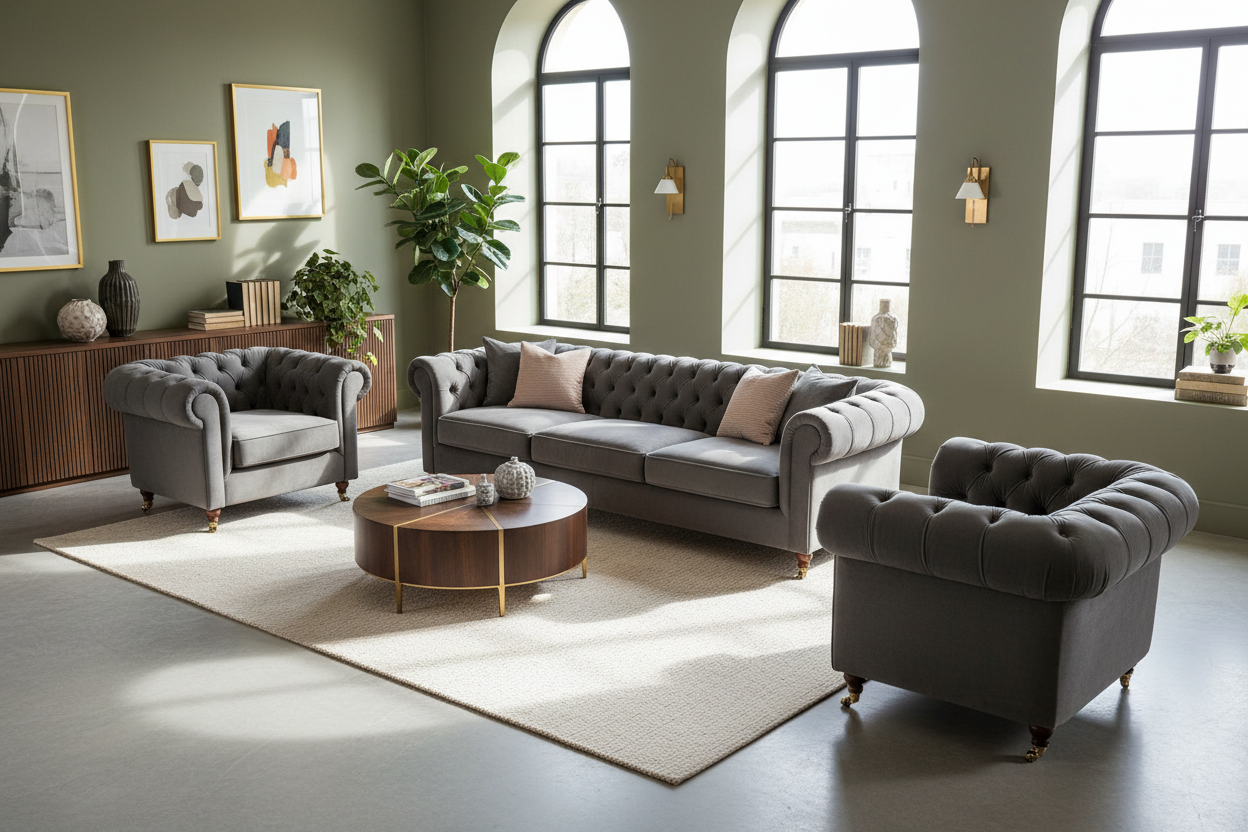
There is a specific allure to the classic British club sofa—deep button tufting, rolled arms, and a sense of history. However, authentic pieces often come with a four-figure price tag that pushes the boundaries of a renovation budget. This brings us to the ikea chesterfield alternative. Many homeowners find themselves torn between the desire for that "Old Money" aesthetic and the practicality of flat-pack furniture. As a designer, I am often asked if these budget-friendly interpretations can genuinely hold their own against heritage brands or if they merely look like temporary placeholders.
Quick Decision Guide: The Chesterfield Checklist
- The Silhouette: Look for the classic deep button tufting and rounded arms. The current IKEA contender, the VISKAFORS, mimics this shape well but sits lower than traditional antiques.
- Fabric Durability: Avoid the lower-tier faux leathers for this style; they tend to look plasticky on tufted curves. Opt for the velvet-touch fabrics which hide the budget price point better.
- Visual Weight: Chesterfield styles are visually heavy. Ensure your room has high enough ceilings or ample floor space so the sofa doesn't dominate the layout.
- Comfort Level: Be prepared for firmness. This style is designed for upright sitting, not sinking in.
Analyzing the Silhouette and Construction
When we discuss an IKEA Chesterfield, we are primarily looking at the VISKAFORS collection, which is their direct answer to this traditional design. In high-end design, the value of a Chesterfield lies in the craftsmanship of the pleats. A poorly made tufted sofa will show pulling or uneven tension in the fabric.
Surprisingly, IKEA manages the visual tension quite well. The deep seat and rounded armrests provide that requisite heavy, grounding effect in a living room. However, you must consider the scale. Traditional Chesterfields are massive. The IKEA iteration is slightly more compact, making it viable for urban apartments, but it can look diminutive in a grand, double-height living room unless paired with substantial armchairs.
Material Selection: The Velvet vs. Leather Debate
This is where the "luxury" look is either made or broken. In my professional opinion, you should almost always choose the fabric or velvet options over IKEA’s grain leather or coated fabric for this specific style.
Why Fabric Wins Here
Real leather develops a patina; budget leather (or coated fabric) tends to crack or peel, especially around button tufting where tension is highest. The velvet-style polyester blends offered by IKEA absorb light rather than reflecting it. This absorption softens the edges and masks the lack of hand-tied springs, giving the piece a much more expensive appearance than the price tag suggests.
Ergonomics and Comfort Profile
A common misconception is that a thick, heavy-looking sofa is soft. The Chesterfield profile is historically rigid. The back is low and upright, designed originally so gentlemen wouldn't wrinkle their suits. The IKEA version maintains this firmness.
If you are looking for a "lounging" sofa to nap on, the low back might offer insufficient neck support. However, for a formal sitting room or a conversational layout where posture is key, the ergonomics are excellent. To soften the experience, I always advise clients to layer the corners with oversized, feather-filled scatter cushions to break up the rigidity.
Lessons from My Own Projects
I recently specified the VISKAFORS in a dark grey velvet for a client’s home office—a space that needed to look authoritative but had a tight budget. Here is the unvarnished truth I learned during installation: The legs are the weak link.
While the upholstery looked stunning against the walnut bookshelves, the stock wooden legs felt a bit light and generic, instantly signaling "flat-pack." We solved this by purchasing third-party custom turned-wood legs with a darker walnut finish (most use a standard M8 screw thread). That simple $40 swap completely changed the gravity of the piece.
Another detail to note is the lint factor. The tufting buttons are magnets for dust and pet hair. Unlike a smooth cushion you can just wipe down, you will need a vacuum with a specialized upholstery brush attachment to get into the crevices of the tufting, or it will start looking grimy within three months.
Conclusion
The IKEA Chesterfield style is a formidable contender if you know how to manipulate it. It offers the architectural structure of a high-end piece without the fragility of an antique. By choosing the right fabric and upgrading the hardware, you can curate a space that feels curated and timeless.
Frequently Asked Questions
1. Can you remove the covers on an IKEA Chesterfield for washing?
Generally, no. Due to the deep button tufting and fixed upholstery required to maintain the Chesterfield shape, the covers on the VISKAFORS and similar models are fixed. You will need to rely on spot cleaning or professional upholstery cleaners.
2. Is the IKEA Chesterfield suitable for small living rooms?
It can work, but be careful with visual crowding. Because the arms are rolled and wide, the "footprint" of the sofa is larger than the actual seating area. Measure your hallways and door frames, as the bulky back piece can be difficult to maneuver into tight rooms.
3. How do I style it to make it look less like IKEA?
Focus on "breaking" the brand coordination. Do not buy the matching footstool. Instead, pair the sofa with a vintage rug, a brass floor lamp, and mismatched accent chairs. Mixing eras and textures diverts the eye and makes the sofa feel like a deliberate vintage find.

Leave a comment
This site is protected by hCaptcha and the hCaptcha Privacy Policy and Terms of Service apply.