

















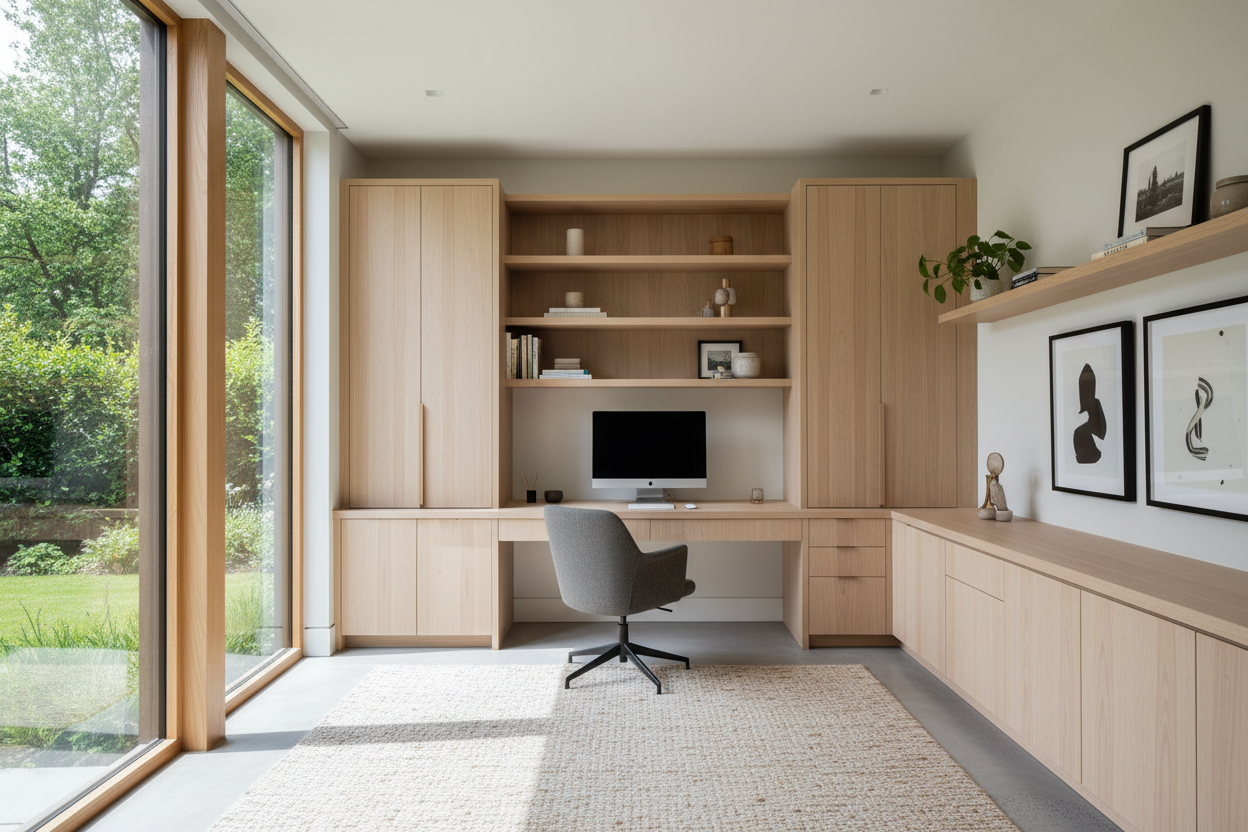
Most home offices start the same way: a floating desk, a filing cabinet that doesn't quite match, and a bookcase overflowing with paperwork. The result is a room that feels visually chaotic and physically cramped. If you are tired of staring at a mismatched, cluttered setup during video calls, built ins for home office are the ultimate architectural fix.
A well-planned custom unit anchors the room, hides the mess, and provides a polished backdrop for your workday. In this guide, I will walk you through exactly how to plan your cabinetry, choose materials that hold up to daily wear, and avoid the most common installation mistakes that plague residential projects.
Quick Decision Guide
- Base cabinets should ideally be 20 to 24 inches deep to accommodate printers, scanners, and heavy files.
- Upper shelving should stay between 12 and 14 inches deep to prevent a top-heavy, looming appearance in the room.
- Always plan your electrical and hardwired internet routing before the framing begins, not after the boxes are built.
- Mix closed storage (drawers and doors) with open shelving to balance display space with practical clutter management.
Designing for Workflow and Visual Weight
When conceptualizing built in office wall units, the layout must serve your daily routine. Don't just build a wall of shelves; build a functional command center. You need to account for how you move, where your primary monitors sit, and what items need to be within arm's reach versus stored away.
Understanding Clearances
A common mistake is ignoring negative space and traffic flow. If you are incorporating a desk into the built-in, leave at least 36 to 42 inches of clearance behind your chair so you can roll back comfortably without hitting a wall or another piece of furniture. If your room features standard 8-foot ceilings, taking cabinets all the way to the top requires careful proportioning—use crown molding to bridge the gap and make the unit feel like an original part of the home's architecture.
Selecting Materials That Last
You might be browsing built in office cabinet ideas online, but photos rarely show how a material handles a scratched laptop, a spilled coffee, or the heavy weight of architectural binders.
The Truth About MDF vs. Plywood
Clients often assume solid wood is the only high-end choice. In reality, solid wood is overkill for most painted built-ins and can warp with indoor humidity changes. Cabinet-grade plywood offers the best structural integrity for the cabinet boxes and shelves to prevent sagging. However, Medium Density Fiberboard (MDF) is actually superior for painted doors and drawer fronts because it doesn't expand, contract, or show wood grain, ensuring a flawless, glass-like painted finish.
Blending Architecture with Decor
Without intentional styling, built in bookshelves for home office setups can quickly look like a cluttered retail stockroom. The goal is to integrate the unit seamlessly with your existing interior style, whether that is transitional, mid-century modern, or minimalist.
Styling the Shelves
To avoid visual fatigue, use the rule of thirds: dedicate one-third of the shelf space to books, one-third to decorative objects or art, and leave one-third as empty space. This allows the eye to rest and highlights the items you actually want to showcase. Layering textures, like woven baskets in the lower cubbies or brass hardware on the cabinet doors, adds warmth to what is essentially a massive wooden box.
Designer's Honest Take
I have designed dozens of custom office layouts over the last 15 years, and I still remember a painful lesson from a high-end project in a Chicago suburb. We installed a stunning, wall-to-wall matte black oak unit. It looked incredible on installation day. But within a month, the client called to say the dark surface showed every single speck of dust and paper fiber. It was a maintenance nightmare.
Even worse, I hadn't accounted for the massive power brick of their new ultra-wide curved monitor, which didn't fit through the standard 2-inch grommet hole we drilled. We had to retrofit the desktop on site, which was messy and frustrating. Now, I always specify lighter or mid-tone finishes for high-use desk surfaces, and I mandate 3-inch wire management cutouts with hidden raceways in the back of all base cabinets.
Frequently Asked Questions
How deep should home office built-ins be?
Base cabinets work best at 20 to 24 inches deep, which provides enough room for bulkier equipment like printers. Upper shelves should be narrower, typically 12 to 14 inches deep, to comfortably hold books and decor without casting heavy shadows on the desk below.
Are built-in wall units for office spaces a good investment?
Yes, provided you plan to stay in the home for at least five to seven years. They add significant architectural interest and can increase resale value by offering dedicated, premium workspace. However, they are a fixed investment you cannot take with you when you move, unlike freestanding furniture.
How do I hide messy cords in a built-in desk?
Plan for an integrated wire raceway just beneath the desktop. Most importantly, ensure your electrician installs power outlets directly inside the lower cabinets. This allows you to plug in printers, routers, and charging stations completely out of sight behind closed doors.


Leave a comment
This site is protected by hCaptcha and the hCaptcha Privacy Policy and Terms of Service apply.