

















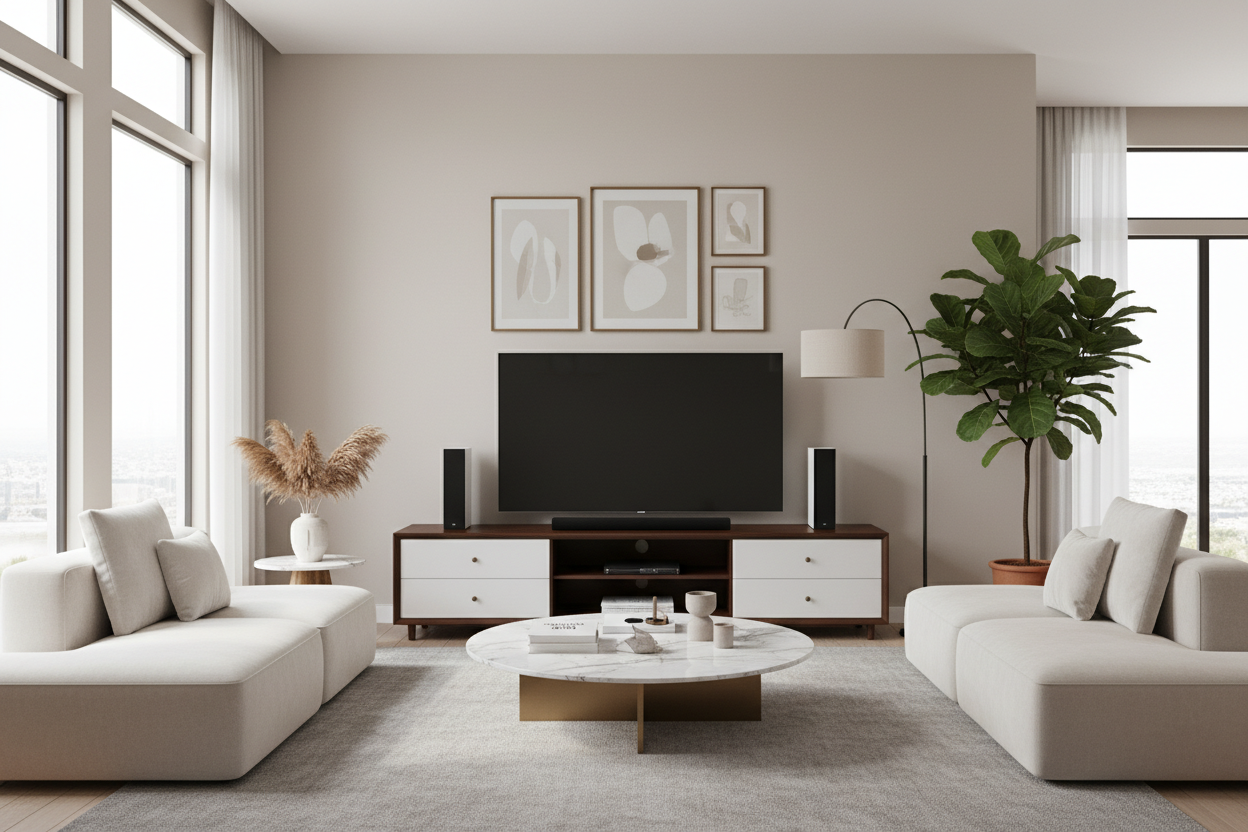
I've walked into hundreds of living rooms where the biggest problem wasn't the paint color or the rug—it was that the entertainment center felt either too massive, swallowing the room, or too puny, making the TV look like it was floating in space. You know the feeling: you buy that sleek console online, it arrives, and suddenly your 65-inch TV looks comically large above it, or your collection of gaming consoles and speakers has nowhere to go. That's where the 48 in entertainment center comes in. After furnishing over 200 homes, I've found this specific width to be the unsung hero of balanced, functional living rooms.
Quick Takeaways
- A 48-inch width creates ideal visual balance for most sofas (72-96 inches wide) and standard room sizes.
- It comfortably fits a soundbar, gaming console, media streamer, and cable box with smart organization.
- This size leaves crucial 18-24 inches of clearance on each side for traffic flow and side tables.
- It's the standard base width for many modular and wall-mounted systems, offering future flexibility.
The 48-Inch Sweet Spot: Why This Width Works
Let's talk scale. In interior design, we follow a simple principle: your key furniture pieces should relate to each other and the room. A typical three-seat sofa is about 84 inches wide. Placing it opposite a console that's 60 inches or wider starts to feel bulky and blocky—it competes for visual dominance. A 48-inch console, however, sits comfortably under that scale, creating a balanced anchor without overwhelming. For most North American living rooms in the 12x14 to 14x18 foot range, this width leaves the recommended 36-inch walkways on either side of your main seating area intact. It's about proportion, not just measurement. If you're weighing Is A Tv Stand And Entertainment Center Worth The Space, consider this: a properly scaled piece like a 48-inch console maximizes utility without wasting precious square footage.
TV Console 48 Inches Wide: What Fits and What Doesn't
Here's the practical reality. A quality tv console 48 inches wide typically offers an interior shelf height of about 7-8 inches. That means it can accommodate a modern soundbar (usually 2-4 inches tall), a PlayStation 5 or Xbox Series X (about 6 inches tall on its side), a streaming device like an Apple TV, and a cable box—all on one shelf, with room for a power strip behind. I always recommend units with a solid back panel (not just hardboard) for cable management; you can drill precise holes for cords. What won't fit? Large, old-school AV receivers (often over 10 inches tall) or massive multi-disc DVD changers. For most people's tech today—streaming boxes, game consoles, soundbars—it's perfect. For a clean, integrated look, a Led Tv Stand Console Table Entertainment Center High Gloss in this width offers a seamless surface that hides clutter.
Measuring Your Space: The 3-Step Room Assessment
Before you buy anything, grab your tape measure. First, measure your TV's width. Your console should be at least as wide as your TV, ideally a few inches wider for stability. A 55-inch TV is about 48 inches wide without the stand—see the match? Second, measure your wall. Mark where you want the console to sit, then ensure you have at least 6 inches of breathing room on each side from walls, doorways, or built-ins. Third, measure your viewing distance. Sit where you normally would and make sure the center of your future TV (mounted or on the console) will be at eye level when seated, about 42 inches from the floor. This three-step check takes 10 minutes and prevents 90% of layout regrets.
Designer Choices: Style Options for Your 48-Inch Console
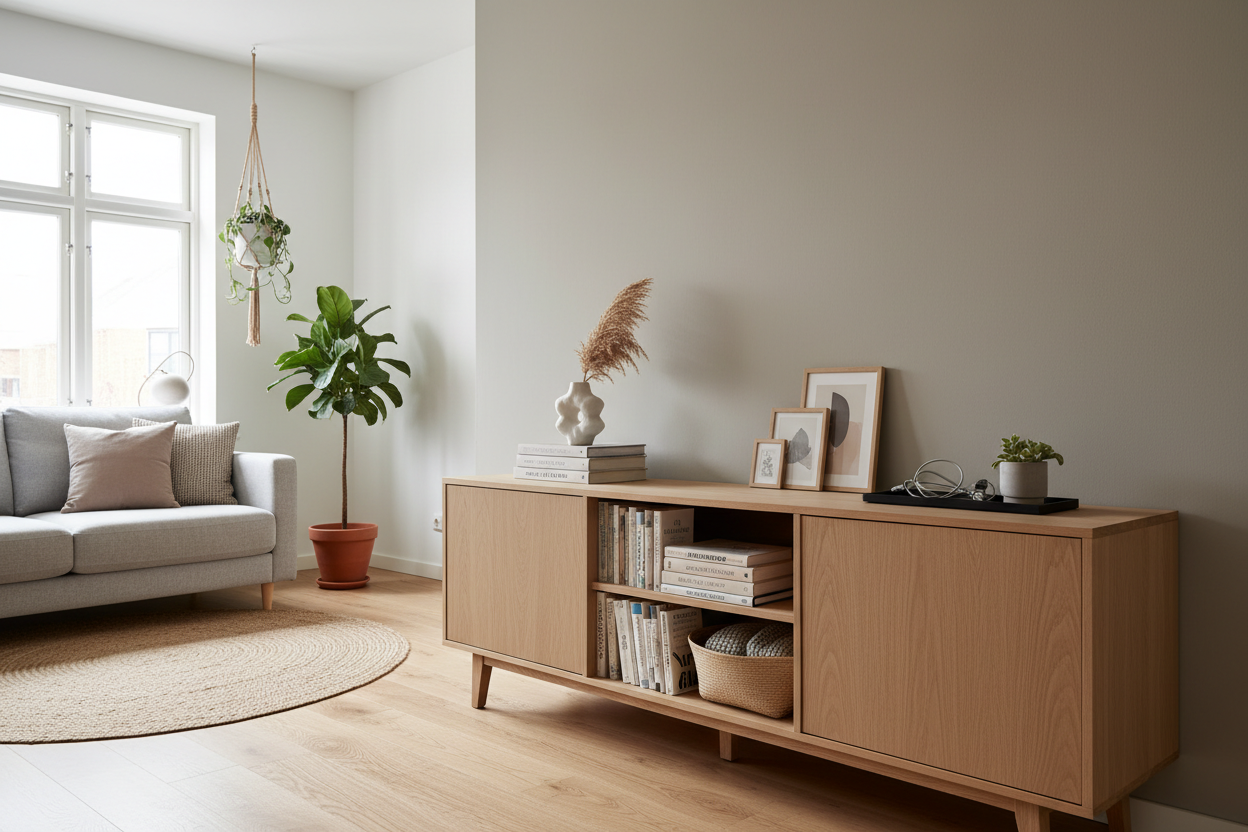
The beauty of this width is its versatility across styles. For a mid-century modern look, seek out consoles with tapered legs, walnut veneer, and clean lines—the 48-inch span is classic for that era. For a more traditional feel, a console with shaker-style doors and a maple finish in this width feels substantial but not heavy. Many contemporary lines offer modular systems where a 48-inch base unit can be flanked by matching 24-inch cabinets later if your needs change. If you love the look of a Mid-Century Modern Entertainment Center: Why It's More Than Just a TV Stand, you'll find 48 inches is a common and harmonious width for that aesthetic.
The Floating Console Advantage: When Wall-Mounted Makes Sense
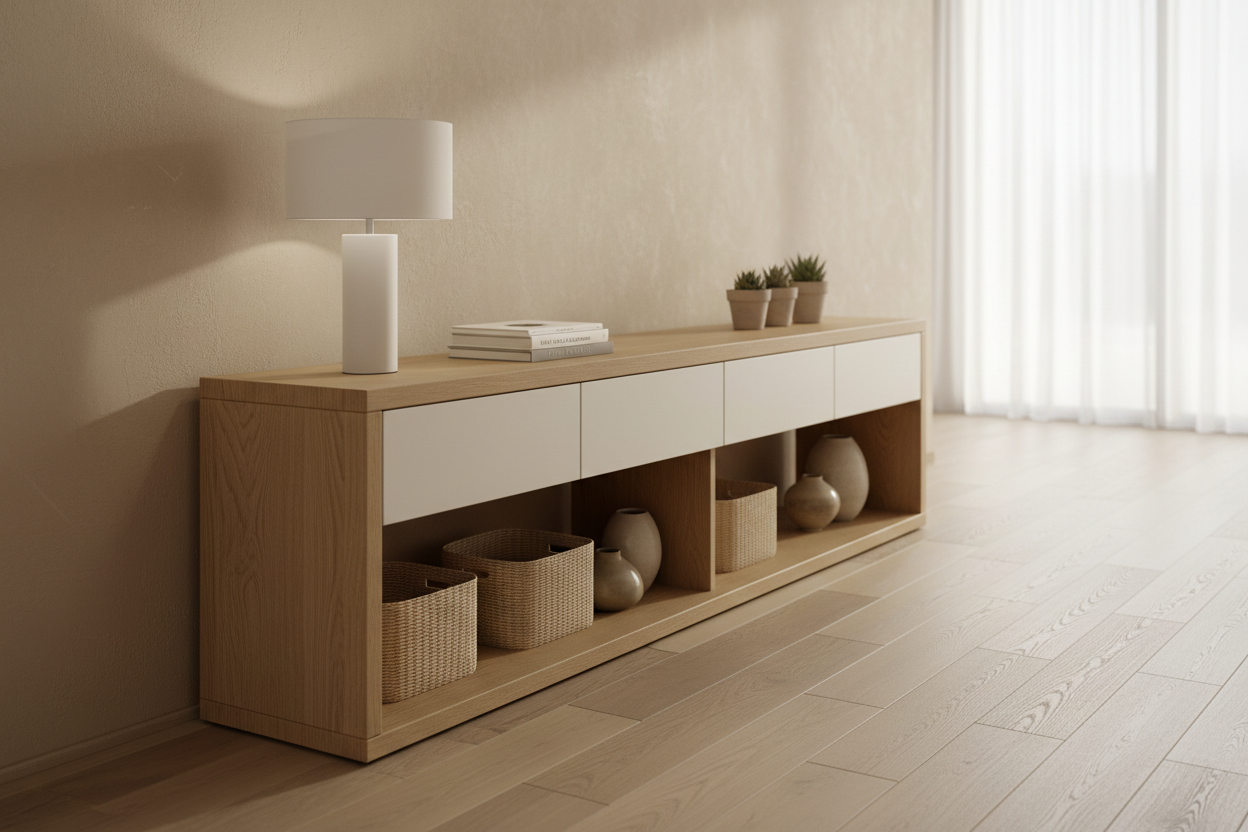
In smaller spaces—think apartments or rooms under 12x12 feet—a wall-mounted floating console is a game-changer. By lifting the unit 6-8 inches off the floor, you create a visual sense of more space. Cleaning becomes effortless—just run a mop underneath. For a tv console 48 inches wide, wall-mounting requires solid anchoring into wall studs (always find at least two). The weight capacity is key: a well-built unit of kiln-dried hardwood can hold 100+ pounds distributed, perfect for your TV and components. It makes the room feel airier.
Beyond the Console: Creating a Cohesive Entertainment Zone
Your entertainment center shouldn't live in isolation. Pair it with a media cabinet or bookshelf of a complementary height (usually 28-32 inches tall) on one side, not necessarily matching perfectly. On the other side, a floor lamp with a dimmable bulb helps reduce screen glare. I often place a shallow, long console table (about 10 inches deep) behind the sofa to create a layered look, keeping the focus on the entertainment zone. To explore the full range of what works together, browsing an Entertainment Center collection can give you ideas for complementary pieces.
Personal Experience: The Honest Downside
In my own home, I used a 48-inch console for years. The upside was perfect scale in my 13x15 living room. The downside emerged when I upgraded to a massive subwoofer for my sound system—it simply wouldn't fit inside elegantly and had to sit on the floor beside it. For true audiophiles with large components, a wider or specialized cabinet might be necessary. But for 80% of households, the 48-inch width is the sweet spot between form and function.
FAQ
Is 48 inches too small for a 75-inch TV?
It can work if the TV is wall-mounted directly above, but the console will look visually slight compared to the TV's width. For TVs 70 inches and larger, I'd recommend stepping up to a 60-inch console for better balance.
Can two 48-inch consoles be put together?
Technically yes, but you'd have a 96-inch span which is very long. It's better to look for a modular system designed to connect, or use a 48-inch console with a complementary side unit.
What's the ideal height for a 48-inch entertainment center?
Most are 20-24 inches tall. This puts the TV at a good viewing height when placed on top, or allows for comfortable clearance if wall-mounted above.
How much weight can a typical 48-inch console hold?
A well-constructed console with a solid wood frame and proper joinery (like dovetail or mortise-and-tenon) can hold 150-200 pounds distributed. Always check the manufacturer's specifications.

Leave a comment
This site is protected by hCaptcha and the hCaptcha Privacy Policy and Terms of Service apply.