

















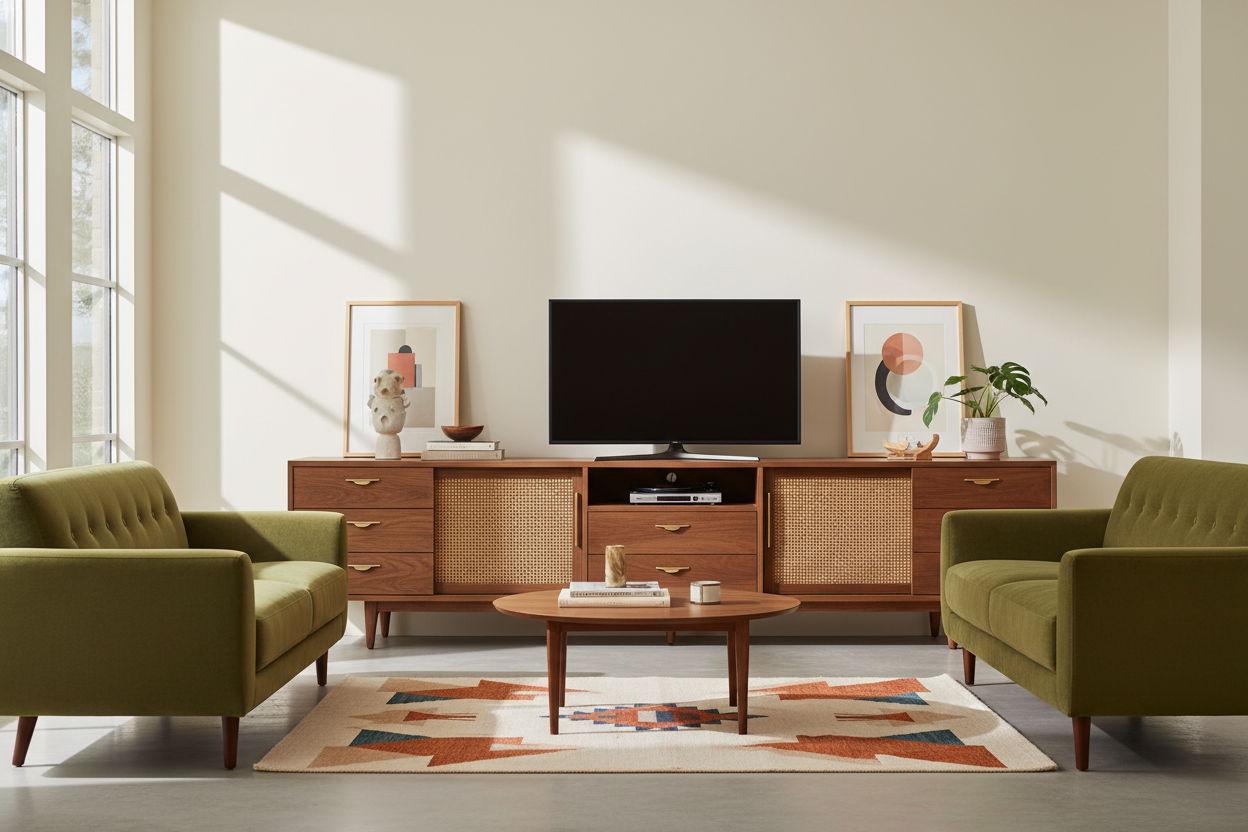
I remember walking into a client's new apartment last year. They'd just bought a beautiful 65-inch TV, and it was sitting on a cheap, wobbly stand that looked like it belonged in a dorm room. The rest of the space had these gorgeous vintage chairs and a teak coffee table, but the focal point of the room was all wrong. That's the moment I realized how many people see a mid-century modern entertainment center as just a place to put the TV. It's so much more. It's the anchor of your living room, a statement piece that sets the tone for your entire space.
After furnishing over 200 homes, I've seen the good, the bad, and the wobbly. Let's talk about how to choose one that actually works for your life.
Quick Takeaways
- True mid-century design means clean lines, tapered legs, and functional materials like solid wood or quality veneers.
- Modern versions must solve today's problems: think hidden cable management and storage for game consoles.
- Size is critical. Your stand should be at least 4-6 inches wider than your TV on each side for stability.
- Warm wood tones like walnut are classic, but don't be afraid of a black or white lacquer finish for contrast.
- Style it like a credenza, not a tech hub. Use books, a single sculptural object, and maybe a trailing plant.
What Makes a True Mid-Century Modern Entertainment Center?
When you're shopping, you'll see a lot of pieces labeled 'mid-century modern' that miss the mark. The real thing isn't just about a retro look. It's about specific principles born from the post-war era, where designers focused on making beautiful, functional furniture for modern living.
The hallmarks are clean, straight lines or gentle, organic curves. You'll see tapered legs—think of a subtle cone shape—that lift the piece off the ground, creating a light, airy feel. This isn't just for looks; it makes cleaning underneath easier. The materials matter. Authentic pieces use real woods like walnut, teak, or rosewood, often with a simple oil or lacquer finish that shows off the grain. Imitations might use photo-printed veneers over particleboard, which chips and looks flat. Function is built-in. A mid-century modern credenza tv stand was designed for storage, and that logic applies perfectly to hiding today's media clutter.
The Practical Side: Storage, Cable Management, and Durability
Here's where the design gets smart. A vintage piece might have beautiful sliding doors, but it wasn't built for a PlayStation 5, a soundbar, and a tangle of HDMI cables. Today's best designs take that iconic silhouette and engineer it for 2024.
Look for integrated solutions. I love pieces with a dedicated cable port at the back, paired with a management system inside the cabinet—hooks, channels, or ties—to keep everything organized and out of sight. For storage, consider your needs. Do you have gaming systems, board games, or a collection of records? Open shelves are great for decor and frequently used items, while closed cabinets with slatted doors or solid panels hide the mess. I recently used a fantastic mid-century modern TV stand with cable management that had slatted doors for ventilation (crucial for electronics) and open shelves that balanced display and function perfectly.
Durability is non-negotiable. Check the construction. A solid wood or plywood frame with proper joinery (dovetail or mortise-and-tenon) will last decades. Avoid stands held together mostly with staples and glue; they won't support the weight of a large TV and equipment over time.
Sizing It Right: From 65-Inch TVs to Room Proportions
This is the most common mistake I see. You fall in love with a stand online, but when it arrives, it's either dwarfed by your TV or overwhelms your small living room. Let's get specific.
For a 65 inch tv stand mid century style, you need a unit that's at least 70 inches wide. This gives you a few inches of buffer on each side, which looks balanced and provides space for speakers or decor. Depth is key for stability—aim for at least 18 inches. The height of a mid century modern low profile tv stand is usually between 20-24 inches. This lower center of gravity feels grounded and works well with modern, wall-mounted TVs, keeping the viewing angle comfortable.
Now, think about the room. In a standard 12x14 living room, a large entertainment center shouldn't exceed two-thirds of the wall it's on. You need to maintain at least 36 inches of clear walkway in front of it. I once had a client buy an 80-inch unit for a narrow room; it felt like a wall. We swapped it for a 68-inch stand, and the space instantly breathed. If you're unsure, I always recommend reading a guide on how to avoid TV stand sizing mistakes. For larger spaces or more complex setups, learning to master your entertainment center layout can save you a major headache.
Material and Finish: Warm Woods and Timeless Colors
The soul of mid-century design is in the material. The most iconic choice is a rich, warm wood. American walnut is a classic—it has a deep, chocolate-brown grain that mellows beautifully over time. Teak is another favorite, known for its natural oils and durability. For a more affordable option that still looks great, look for oak or even a high-quality walnut veneer over a stable plywood core.
When we talk about a brown mid century tv stand, it's not just one shade. It ranges from light, honey-toned oak to the almost espresso dark of some walnut stains. My advice? Bring home finish samples. See how the color changes in your room's light throughout the day.
And you're not locked into brown. The mid-century palette also included bold accents. A black lacquer or matte white finish on a mid mod entertainment center can look incredibly sharp in a room with lots of natural wood tones elsewhere, creating a beautiful contrast. Just ensure the finish is durable—a high-pressure laminate or quality lacquer will resist scratches and water rings better than a thin paint.
Styling Your Mid-Mod Entertainment Center
Think of your entertainment center as a low-slung credenza or a sideboard. You wouldn't pile random junk on a beautiful credenza, right? The same rule applies here. The goal is curated simplicity.
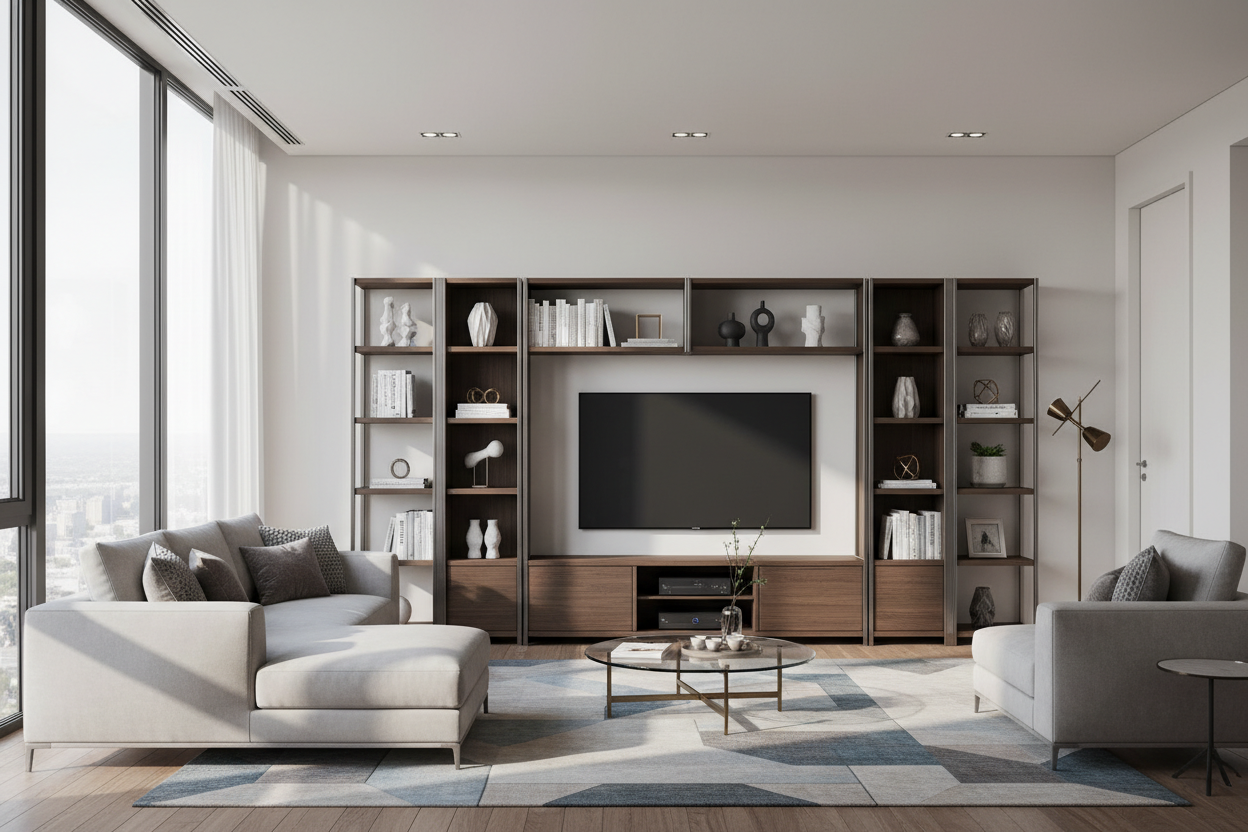
Start by minimizing tech. Hide routers, cables, and remotes inside. On top, anchor one side with a small stack of art books or a single, substantial object—a ceramic vase, a vintage globe, a abstract sculpture. On the other side, add life with a plant. A snake plant or a pothos in a simple, neutral pot works beautifully. Avoid symmetry; it can look staged. For larger units, like a 3-piece entertainment center with overhead cabinets, style the upper shelves sparingly. One item per shelf is often enough.
Pulling the look together means considering the other furniture. Your tv unit mid century should converse with your coffee table and sofa. If your stand is walnut, choose a coffee table in a complementary wood or a material like marble or metal to add texture. Keep the lines consistent—if your stand has clean, straight lines, a round coffee table can soften the space, while a rectangular one reinforces the geometric theme.
Personal Experience: The Honest Downside
I have to be honest—the very thing that makes these pieces beautiful can also be a challenge. The low profile and often lighter construction (compared to a bulky media console) mean they aren't always the best choice for enormous, heavy tube-style TVs from the past. For today's flat screens, it's fine, but always check the weight limit. Also, the minimalist design means less 'junk drawer' space. You have to be committed to tidying cables and putting things away. It's a trade-off: you get a cleaner, more elegant room, but you lose the ability to just shove everything behind a door and forget about it.
FAQ
Can a mid-century modern TV stand hold a heavy 75-inch TV?
Yes, but you must check the specifications. Look for a stated weight capacity (often 100-150 lbs for the top surface). Ensure the stand is wide enough—ideally 6+ inches wider than the TV—and that it's made from solid wood or reinforced plywood. The weight is distributed across the entire surface, not just the center.
How do I clean and maintain a wood entertainment center?
Dust regularly with a soft, dry cloth. For smudges, use a slightly damp cloth and dry immediately. Avoid harsh chemicals or silicone-based polishes. For oil-finished wood, you can apply a fresh coat of the recommended oil (like teak or tung oil) once a year to nourish it. For lacquered finishes, just dust and damp-wipe.
What's the difference between a TV stand and an entertainment center?
Typically, a TV stand is a single, low unit designed primarily to support a TV. An entertainment center is often taller and includes additional storage components like side cabinets or overhead units. A mid-century modern entertainment center often blurs this line, functioning as a stylish, multi-purpose piece of furniture.
Is mid-century modern style going out of fashion?
From my two decades in design, I can say it's not a passing trend. Mid-century modern is a foundational design movement, like Art Deco or Shaker. Its emphasis on simplicity, function, and organic forms gives it a timeless quality. It evolves, mixing with contemporary elements, but the core principles remain deeply relevant. It's a classic, not a fad.
Choosing the right piece is about finding where iconic design meets your daily life. It should make your room feel both designed and lived-in. If you're ready to start looking, I encourage you to browse our TV stands collection to see how these principles come to life in different forms.

Leave a comment
This site is protected by hCaptcha and the hCaptcha Privacy Policy and Terms of Service apply.