

















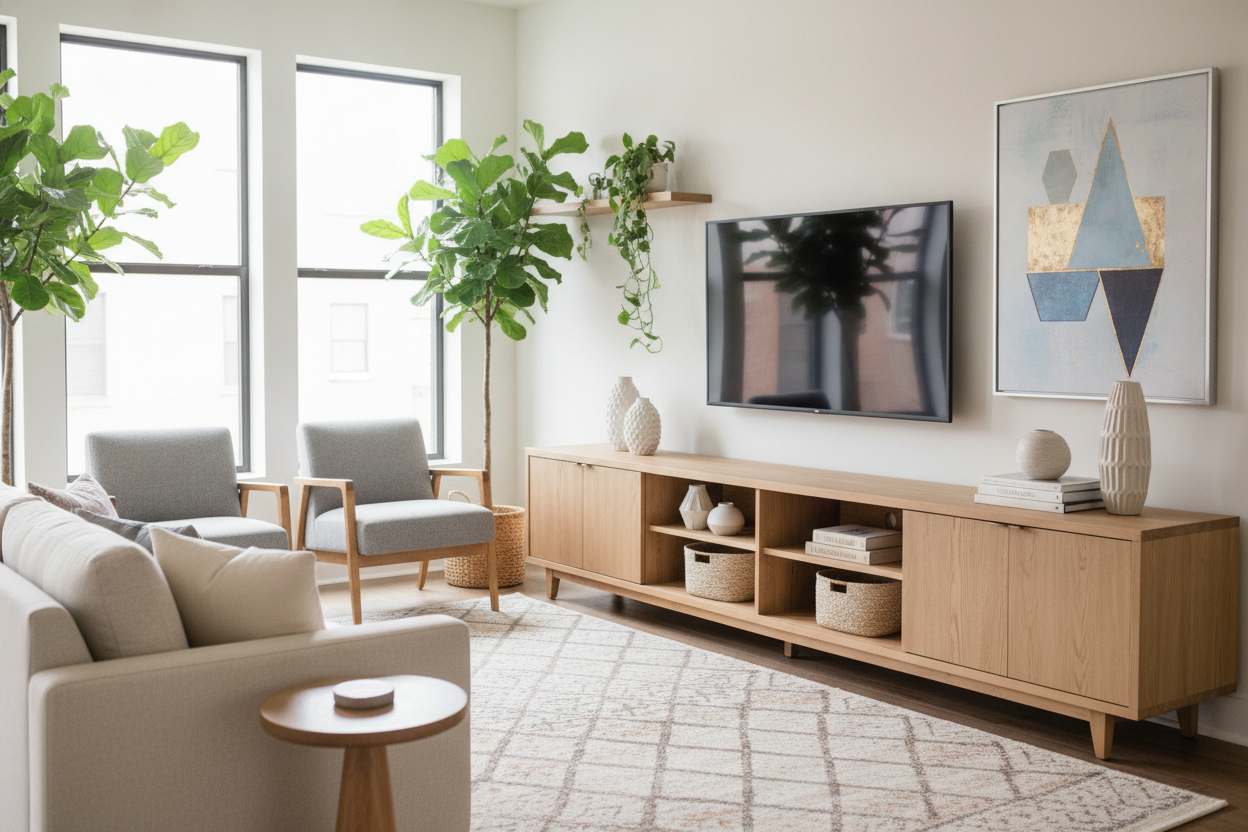
I spent three months staring at a 55-inch TV that sat so low I felt like I was looking at my floorboards. My living room felt unfinished, like the furniture was designed for a dorm room rather than a home. I finally realized the problem wasn't my TV or my wall art—it was the squat, flimsy media unit that looked like it was cowering under the weight of my electronics. That's when I discovered the magic of using a credenza tv setup.
The Problem With the Modern 'Squat' Console
If you browse a standard collection of TV stands today, almost all of them sit less than 20 inches off the floor. There is a reason for this: manufacturers are designing for massive 85-inch screens that need to stay low so you aren't looking at the ceiling. But for those of us with normal-sized TVs and human-sized sofas, these units leave a massive, awkward gap of dead space on the wall.
These ultra-low units offer almost zero functional storage. You might get a tiny drawer that barely fits a remote or a shelf that collects dust. When I had one, my router sat on top like a plastic spider, and my collection of board games ended up in a pile in the corner because they were too deep for the 'modern' console. It felt flimsy—usually made of thin MDF that sagged the moment I added a soundbar.
What Actually Makes a Credenza TV Setup Better?
A credenza is a piece of furniture with presence. Traditionally used in dining rooms, they are taller, deeper, and built with more architectural 'weight.' When you use a credenza tv stand, you are choosing a piece of 'grown-up' furniture that grounds the room. It doesn't look like a tech accessory; it looks like a design choice.
When you start looking into the media console vs credenza debate, you realize that the latter was built for heavy sets of china and linens. This means the construction is usually much sturdier. My current setup is a solid mango wood piece with brass hardware. It doesn't wobble when the dog runs past, and it actually bridges the gap between my dining area and my seating area without looking like a mismatched afterthought.
But Won't My Neck Hurt? (The Viewing Angle Myth)
The biggest fear people have is that a taller credenza entertainment center will lead to a trip to the chiropractor. Let's do the math. A standard sofa seat height is about 18 to 20 inches. Your eyes, when seated, are usually between 36 and 42 inches from the floor. A credenza that stands 30 to 34 inches tall puts the center of a 55-inch TV right at eye level.
If you prefer a floating look, you can always opt for a wall mount TV entertainment unit. This allows you to hang the screen a few inches above the credenza, giving you room for decor on the surface while keeping the screen at that sweet-spot height. I found that I actually slouch less now because I'm not looking down at my lap to see the screen.
Swallowing the Mess: The Storage Advantage
The real reason I will never go back to a 'tech' stand is the storage. An entertainment centers & tv stands credenza hybrid is usually 18 to 20 inches deep. That is enough room to hide a bulky PlayStation, a massive mesh router, and three baskets of tangled chargers. I even have a whole shelf dedicated to my oversized coffee table books that never fit anywhere else.
If you are worried about your remotes not working through solid wood doors, look for a credenza with sliding glass doors. This gives you the depth of a dining piece but keeps the signal path clear for your electronics. I personally use a small IR repeater—a $15 gadget—that lets me hide everything behind solid doors while still controlling the volume from the couch.
How to Make It Look Like It Belongs in the Living Room
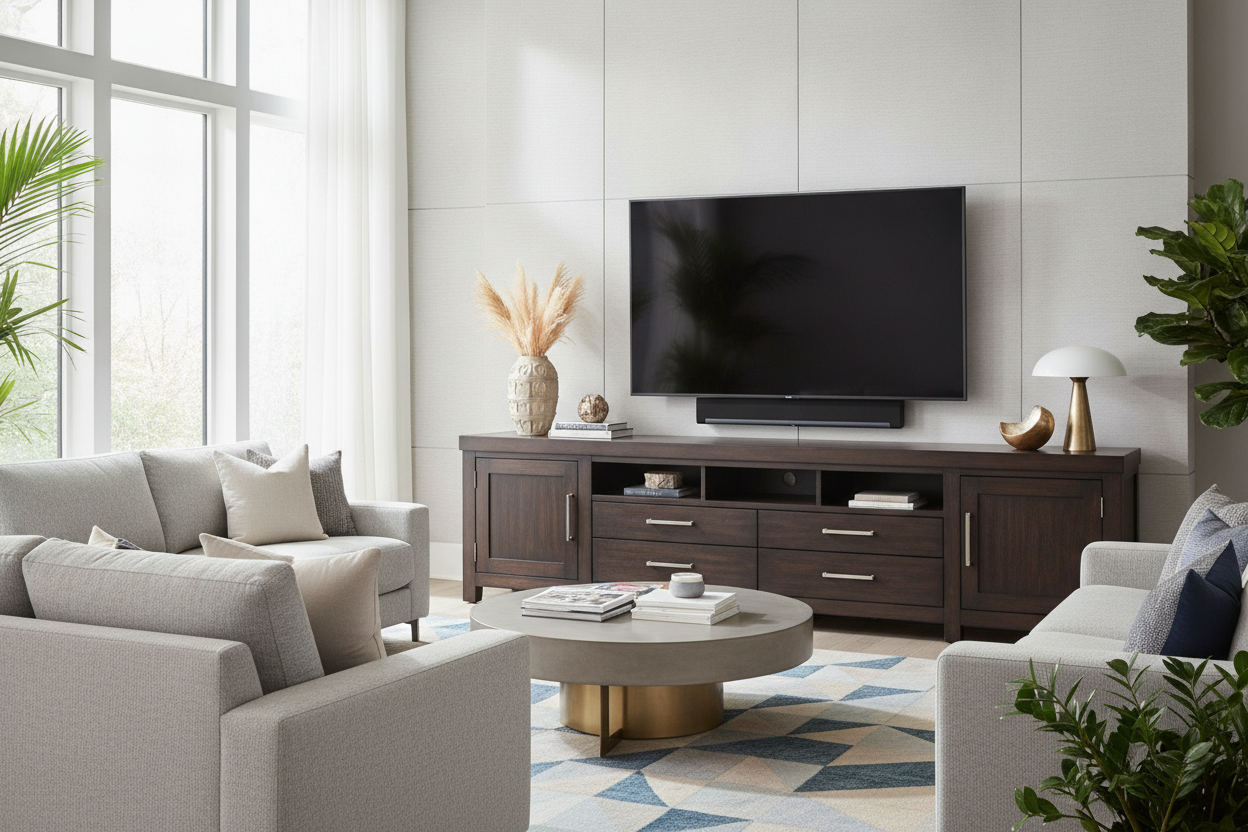
To keep the piece from looking like a stray dining room cabinet, you have to style the top. Don't just center the TV and call it a day. I like to flank my screen with two tall, thin lamps. This adds 'visual height' and provides much better ambient lighting for movie nights than a harsh overhead light.
Stack a few books on one side to lean against the TV base, and maybe add a small tray for your remotes. The goal is to make the TV feel like part of a larger vignette. By using a taller piece, you've already filled most of the 'dead' wall space, so you don't need to worry about hanging dozens of small pictures around the screen to make the room feel full.
FAQ
Is a 36-inch credenza too tall for a 65-inch TV?
It depends on your seating. If you have a very low, modern 'pit' sofa, it might feel a bit high. For a standard sofa, it works well, but you might want to sit a bit further back to avoid a steep viewing angle.
How do I manage wires in a piece not made for media?
I used a 2-inch hole saw drill bit to create a clean opening in the back panel of my vintage credenza. It took five minutes and hidden all the cables instantly. Just make sure you check for structural supports before drilling.
Can a credenza hold a heavy TV?
Absolutely. Most are built to hold heavy stacks of dishes or stone tops. Just ensure the legs are solid wood or metal and not thin plastic pegs. Solid wood frames are always the safest bet for heavy tech.

Leave a comment
This site is protected by hCaptcha and the hCaptcha Privacy Policy and Terms of Service apply.