

















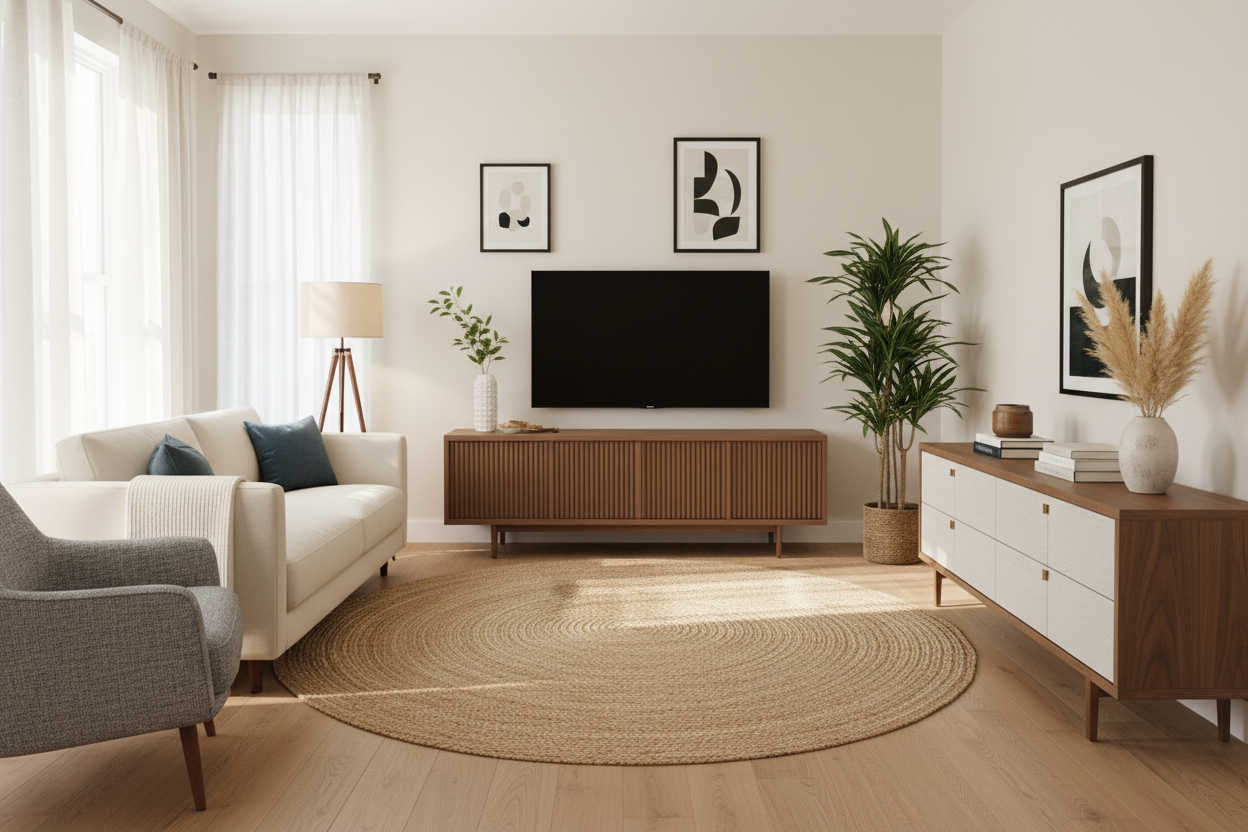
I spent four hours last Tuesday scrolling through furniture sites until my eyes crossed. I just wanted a place to put my 65-inch OLED, but I ended up in a rabbit hole of 'low-profile media units' and 'mid-century sideboards.' Honestly, what does tv stand for if we can't even agree on what to call the thing it sits on? It feels like every time I find a piece I like, the price doubles because the retailer decided to call it a 'credenza' instead of a stand.
- A 'console' is usually slim and designed specifically for tech and cable management.
- A 'credenza' is traditionally for dining rooms but offers better hidden storage.
- 'Media unit' is often code for 'this is a very large piece of furniture that will take four hours to assemble.'
- Always check the weight limit; modern TVs are light, but a vintage receiver can snap a cheap shelf in half.
The Great Living Room Vocabulary Crisis
Shopping for living room furniture used to be simple. You bought a TV, and then you bought a stand. Now, you’re forced to navigate a linguistic minefield. If you search for a 'tv table name,' you might get a flimsy $40 folding tray or a $2,000 hand-carved mahogany plinth. Retailers love using fancy Italian words to justify a higher price tag for what is essentially a box that holds your Roku.
The frustration is real. You’re looking for a tv stand for your specific space, but the search results are flooded with 'sideboards' that are 36 inches high—way too tall for comfortable viewing. It’s a vocabulary crisis that leads to a lot of 'add to cart, then immediately delete' moments. We need to define what these things actually are before you spend a grand on a piece that puts your screen at neck-straining heights.
So, What is a TV Console Exactly?
In the industry, a 'media console' is the gold standard. When someone asks 'what is a tv console,' they’re usually looking for something long, low, and deep enough to hold a gaming console or a soundbar. Unlike a standard table, a console is built with 'cable management'—which is just a fancy way of saying there are holes in the back so your living room doesn't look like a spaghetti factory.
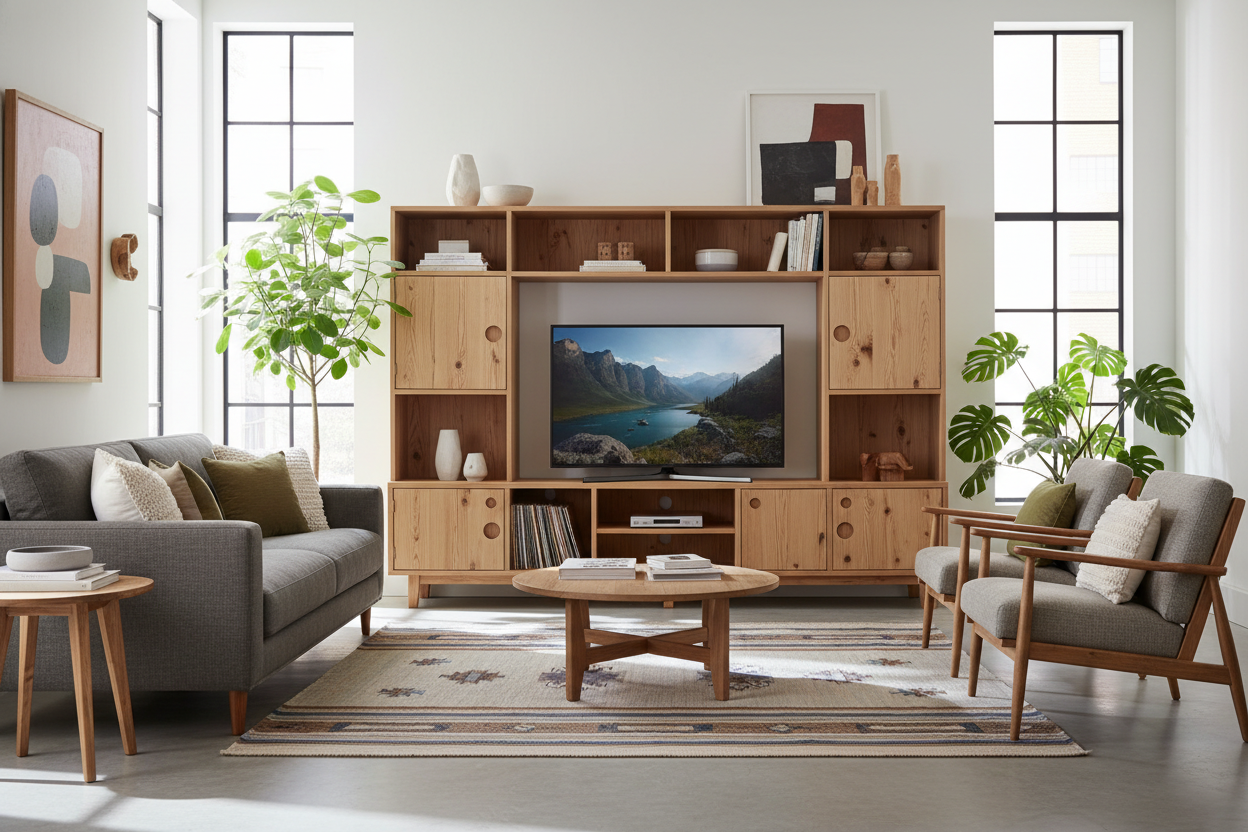
I usually recommend a modern TV stand with cabinets and drawers if you have a lot of peripherals. The beauty of a true console is the height. Most sit between 18 and 24 inches off the ground. This keeps the center of your screen at eye level when you're slumped on the sofa, which is exactly where it should be if you value your spine.
Credenza, Sideboard, or Cabinet? Translating the Jargon
If you’re looking for another name for tv stand, you’ll eventually hit the word 'credenza.' Traditionally, a credenza was a piece of dining room furniture used for serving food. Today, it’s another word for tv stand that implies it has doors and looks like 'real' furniture rather than a tech accessory. If you’re wondering what is a tv cabinet called when it has full-length doors that hide the screen entirely, that’s usually an 'armoire,' though those are mostly extinct now.
When deciding between styles, ask yourself is a drawers TV stand worth it for your specific mess. If you have kids with three different gaming systems, you want a cabinet with ventilated doors. If you just have a single Apple TV, a minimalist sideboard works. Just remember: what is tv stand for if not to hide the ugly power bricks and tangled HDMI cords?
Wait, What Does TV Stand For in a Wall-Mounted World?
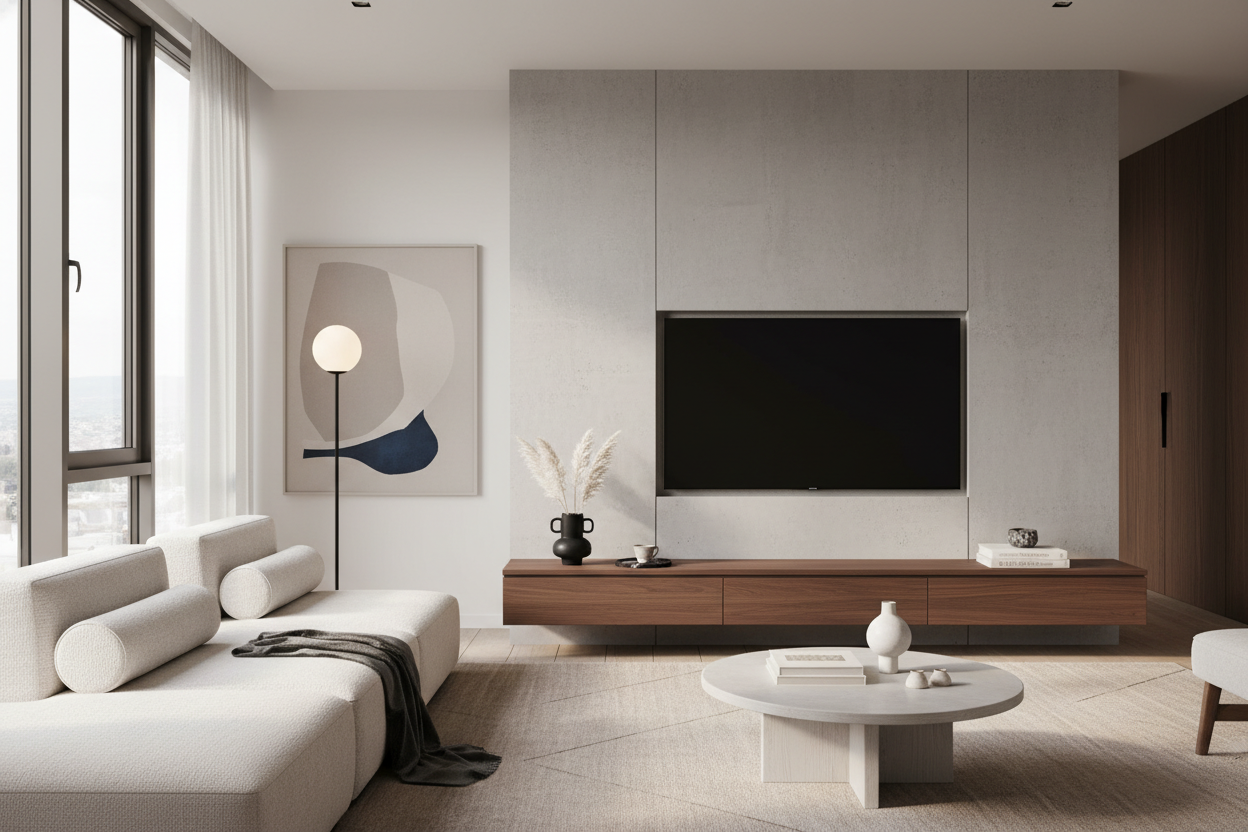
This is the question I get most often: 'If my TV is on the wall, why do I need a stand?' It’s a fair point. But a floating TV often looks like it’s just drifting off into space. You need a piece of furniture underneath to 'ground' the room. It provides a visual anchor and, more importantly, a place to put the stuff that still needs wires.
Even if you don't have a cable box, you probably have a router or a smart home hub. You can browse TV stands that are specifically designed to be extra low and wide, which looks incredible under a wall-mounted 75-inch screen. It turns the TV from a black rectangle on the wall into a deliberate design choice.
How to Know Which 'TV Table' You Actually Need
The tv console meaning changes depending on who you ask, but for your home, it should mean 'storage that works.' If you have a collection of physical media (yes, some of us still like 4K Blu-rays), you need shelves. If you’re a minimalist, you want something sleek. I personally think a walnut TV stand worth it because the dark wood tone hides the shadows of the tech while adding warmth to the room.
Don't get hung up on what are tv stands called on a specific website. Focus on three things: height, ventilation, and width. Your stand should be at least 6-10 inches wider than your TV on both sides. Anything less and it looks top-heavy and accidental. Whether you call it a cabinet, a console, or a credenza, just make sure it’s sturdy enough to handle your setup.
My Honest Mistake: The 'Vintage' Trap
A few years ago, I bought a gorgeous 1960s sideboard to use as a TV stand. It was stunning. It was also a nightmare. It had no holes for wires, and the wood was so thick that my remote's infrared signal couldn't get through the doors. I ended up having to drill three-inch holes into the back of a $800 antique just so I could plug in my Xbox. Learn from me: if it wasn't built for tech, you're going to have to perform surgery on it.
Frequently Asked Questions
What is a tv stand called?
It can be called a media console, a credenza, a sideboard, or a media cabinet. The name usually depends on how much storage it has and how 'fancy' the brand wants to sound.
What is a tv stand with cabinets called?
This is typically called a media cabinet or a credenza. These are great for hiding messy wires and electronics behind solid or slatted doors.
What do you call a tv stand that is very tall?
Those are usually referred to as 'high-boy' TV stands or media chests. They are meant for bedrooms where you need to see the screen over the foot of the bed.

Leave a comment
This site is protected by hCaptcha and the hCaptcha Privacy Policy and Terms of Service apply.