

















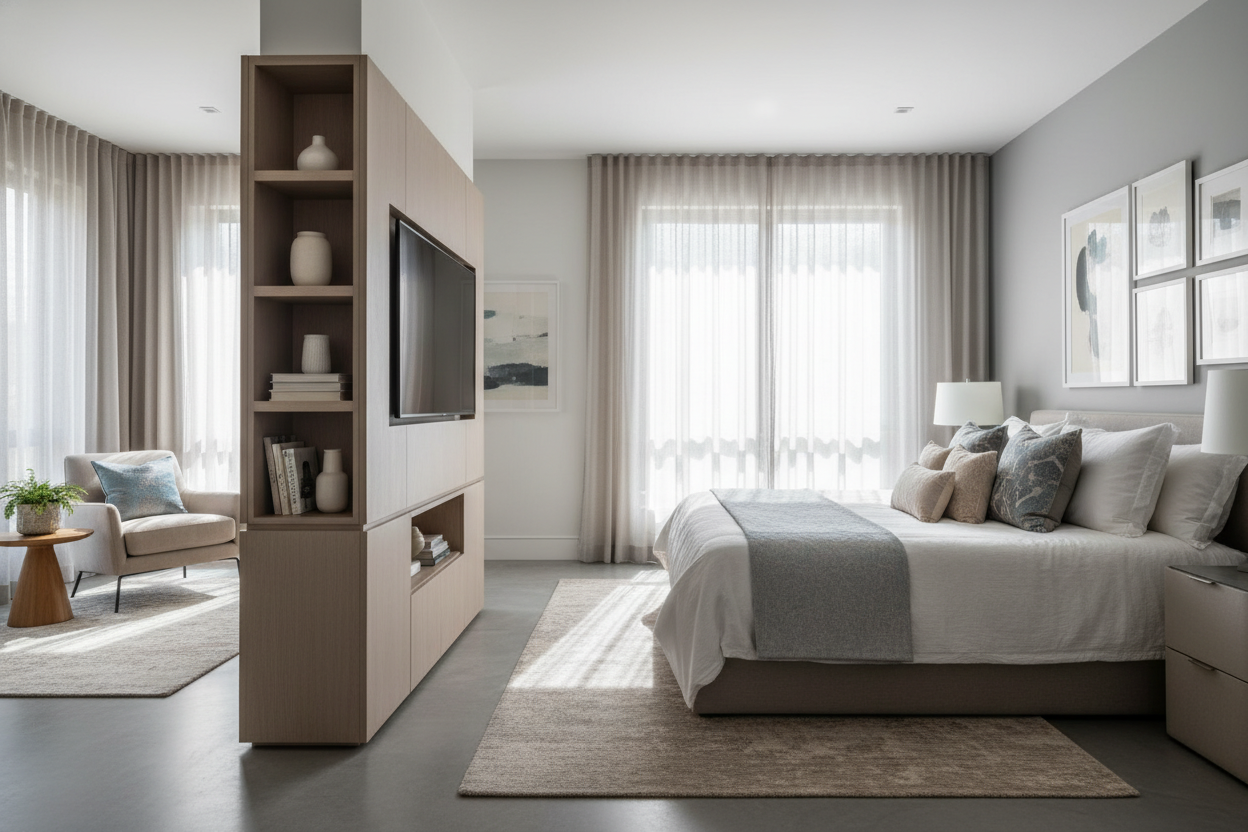
I spent three weeks watching a prestige drama through the narrow gap between my big toes and a stack of three pillows. It was miserable. I finally realized that my sleek, mid-century media console—the one I loved in my living room—was a total failure in the primary suite. It sat too low, forcing me to crane my neck or sit bolt upright just to see the subtitles.
The geometry of a bedroom is fundamentally different from a living room. In a lounge, you are sitting on a sofa with your eyes roughly 36 to 40 inches off the floor. In bed, you are reclined or lying flat, and your line of sight has to clear a mountain of blankets and your own feet. That is why a high bedroom tv stand is not just a preference; it is a ergonomic necessity for anyone who takes their late-night binging seriously.
- Height is king: Aim for a stand that is 30 to 42 inches tall to clear the footboard.
- Cable management: Dedicated stands beat dressers because they actually have routing holes.
- Visual weight: Tall stands can feel bulky, so look for slender legs or floating designs.
- Safety first: High furniture is top-heavy; always use the included wall anchors.
The Pillow Problem: Why Standard Consoles Fail in Bedrooms
Standard living room consoles usually hover between 18 and 24 inches. This height is designed for eye-level viewing from a seated position on a 17-inch sofa. In a bedroom, your mattress alone might be 25 inches off the ground. When you add a duvet and a couple of pillows, a low console ensures you are staring at the edge of your mattress rather than the screen.
Trying to make a low stand work leads to what I call 'The Slump.' You end up propped up on your elbows or stacking pillows in a way that kills your lower back. I once tried to 'fix' this by putting my TV on a stack of coffee table books. It looked like a college dorm room and felt even less stable. A dedicated tall unit solves the sightline issue without the DIY disaster.
Finding the Sweet Spot: How Tall Should Your Setup Be?
Before you buy, grab a tape measure. Sit in bed exactly how you usually watch TV. Have someone measure from the floor to your eyes. That measurement is your target center-point for the screen. Generally, a browse standard and tall Tv Stands search will show you that bedroom-specific units need to hit that 30-to-42-inch mark to be effective.
If you have a massive king-sized bed with a thick pillow-top mattress, lean toward the 40-inch side. If you are in a platform bed that sits lower to the ground, 30 inches might be plenty. The goal is to keep your neck in a neutral position. You want to look slightly up, not down at your shins. Choosing a high tv stand for bedroom use means you can finally stop using your feet as a tripod.
Dressers vs. Dedicated Tall Stands: The Cord Dilemma
The oldest trick in the book is just putting the TV on top of a dresser. I did this for years, and I hated every second of it. Dressers are deep—usually 18 to 22 inches—which eats up a ton of floor space. They also lack cord management. You either have to drill a hole through the back of a perfectly good piece of furniture or deal with a 'cable waterfall' spilling over the side.
Dedicated media chests are narrower and built with electronics in mind. They have ventilated backs so your PlayStation doesn't melt and specific cutouts for power strips. If you are working with a tight layout, sometimes a small tv stand for bedroom corners is a better play than trying to cram a bulky dresser into a walkway. It keeps the room feeling airy while giving you the height you need.
Floating Consoles for the Ultimate Custom Height
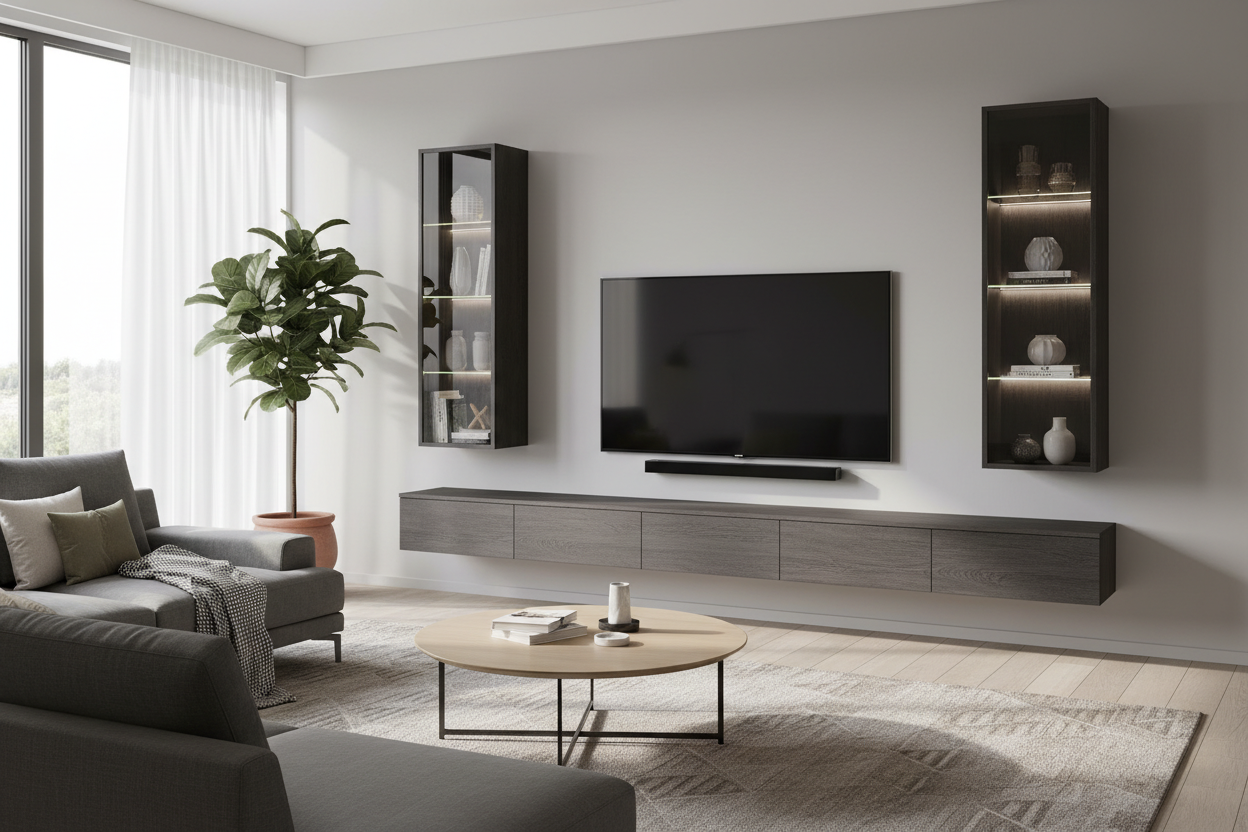
If you really want to dial in the ergonomics, stop looking at legs entirely. Wall-mounted units allow you to ignore standard furniture heights and mount the piece exactly where your eye level demands. It creates a clean, modern look that makes a small bedroom feel significantly larger because you can see the floor underneath it.
For example, the 110 floating high gloss tv stand is a solid choice for a modern suite. You can mount it at 35 inches or 45 inches—whatever clears your toes. Just make sure you are hitting studs. I once tried to mount a heavy shelf with cheap drywall anchors, and I woke up at 3 AM to the sound of my electronics meeting the floor. Learn from my mistake: buy a stud finder.
How high should a TV be in a bedroom?
Usually, the center of the screen should be about 40 to 48 inches from the floor. This is higher than a living room setup because you are usually viewing from a reclined position.
Can I just use a normal TV stand?
You can, but you will likely be staring through your feet or pillows. Standard stands are too short for the average bed height.
Are tall TV stands unstable?
They can be because they have a higher center of gravity. Always use wall-mounting safety straps, especially if you have kids or pets who like to zoom through the room.


Leave a comment
This site is protected by hCaptcha and the hCaptcha Privacy Policy and Terms of Service apply.