

















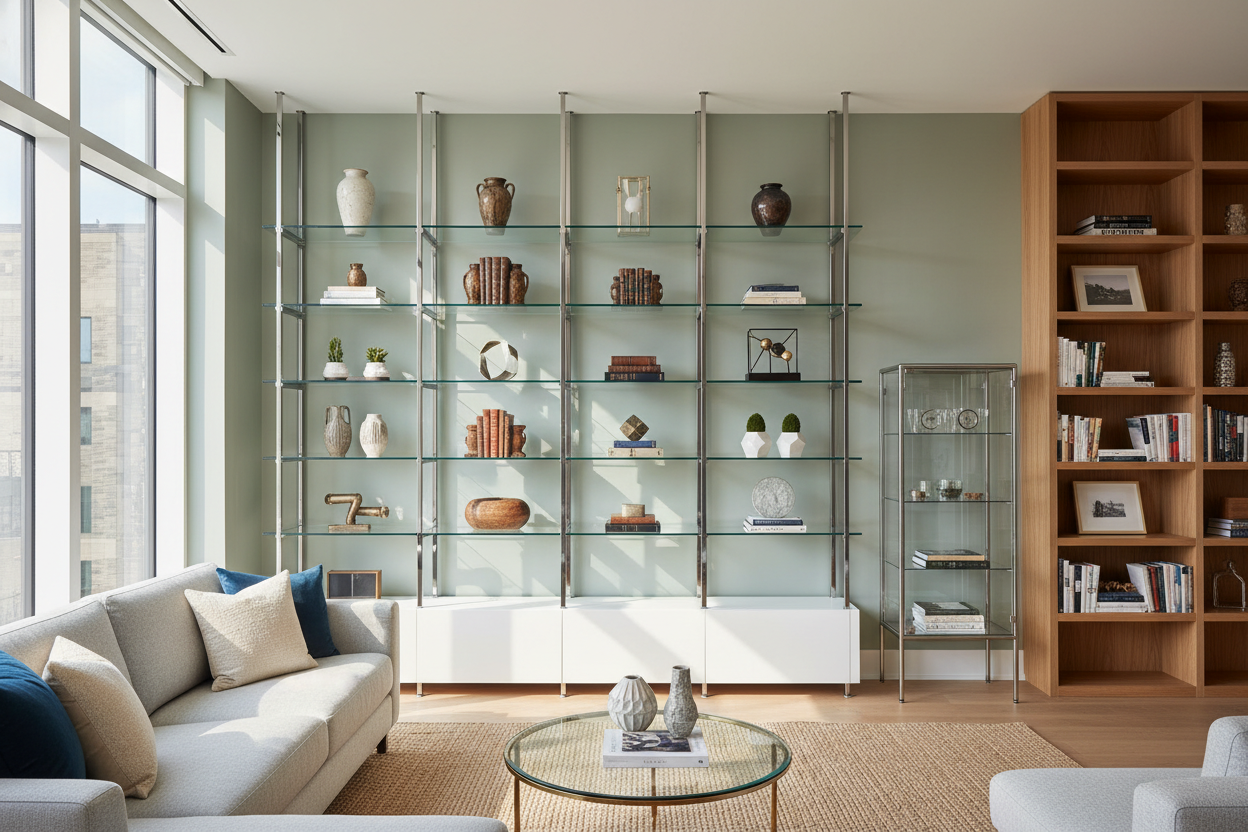
I spent last Saturday afternoon with a microfiber cloth and a bottle of spray, realizing I'd spent forty minutes just dusting a single shelf of my 'trendy' open bookcase. It’s a vicious cycle: you style the perfect vignette, and three days later, it looks like it’s been sitting in an abandoned attic. That’s when I started looking into shelves with glass as a legitimate lifestyle upgrade rather than just a design choice.
Quick Takeaways
- Glass doors reduce dusting chores by roughly 80% compared to open ledges.
- Enclosed units protect valuable books and delicate glassware from humidity and pet dander.
- Mixed materials—like a wood and glass shelving unit—prevent the room from looking like a retail store.
- Adjustable glass shelves allow light to pass through, making small rooms feel significantly larger.
I Reached My Breaking Point With Open Shelving
I used to be an open-shelf evangelist. I loved the way a raw wood ledge looked stacked with vintage hardcovers and ceramic vases. But the reality of living with them is less 'curated boutique' and more 'unpaid janitor.' In my house, which is subject to the whims of a shedding golden retriever and an old HVAC system, open shelves are basically just magnets for gray fuzz. Every time I wanted to read a book, I had to blow a layer of dust off the spine first. It’s exhausting.
I finally decided I was done. I started the process of trading chunky wood ledges for glass because I needed something that didn't feel so heavy in my 12-foot living room. A glass shelf unit offers a transparency that wood simply can't match. When you switch to a glass shelving unit, you're not just changing the storage; you're changing how light moves through the room. A tall glass shelf doesn't block the wall behind it, which keeps the space feeling airy even if the unit is six feet tall.
The transition wasn't just about aesthetics, though. It was a tactical move to reclaim my weekends. I realized that shelving unit with glass shelves provided a physical barrier between my stuff and the environment. No more pet hair on my first editions. No more greasy kitchen film on my display plates. It was a total shift in how I viewed home maintenance.
The Great Debate: Dust vs. Fingerprints
The biggest argument against a glass shelving unit is usually: 'But what about the fingerprints?' I’ll be honest with you—if you have toddlers or a weird habit of touching your furniture with buttery fingers, you will see smudges. However, let’s look at the math. To clean a glass shelving stand or a glass stand shelf, you spray a cloth once and wipe a flat surface for ten seconds. To dust an open shelf, you have to pick up every single object, wipe the object, wipe the shelf, and put the object back exactly where it was. It’s a no-brainer.
A glass shelves unit or glass shelves storage setup centralizes the cleaning. I’ve found that a tall glass shelving unit only needs a quick buff once every two weeks to stay looking sharp. Contrast that with my old free standing glass shelf that I used to keep in the bathroom—that thing required constant attention because of water spots. But in a living room? A glass floor shelf is remarkably low-maintenance. The glass storage shelf keeps the interior pristine, so the only thing you're ever cleaning is the exterior 'skin' of the unit.
I also noticed that glass shelving units living room style actually encourage you to keep your things organized. When items are behind a glass shelf organizer, they feel more like a 'collection' and less like 'clutter.' There's a psychological boundary there. Whether it's a 4 tier glass shelving unit or a series of standing glass shelves, the enclosure creates a sense of intentionality that open shelves lack.
How to Avoid the 'Retail Store' Look
My biggest fear when shopping for glass shelving units was that my living room would end up looking like a pharmacy or a high-end watch shop. You know the look—lots of chrome, harsh lights, and that sterile 'don't touch' vibe. To avoid this, you have to be picky about the frame. A white metal and glass shelving unit can look very modern and chic, but if you want warmth, you should look for pieces that incorporate natural textures.
I eventually landed on a standard storage bookcase with glass door shelves. The wood frame provides that 'homey' library feel, while the glass doors give me the protection I crave. It’s the perfect hybrid. If you're working with a tight corner, a narrow glass shelving unit or a small glass shelving unit can act as a highlight piece without overwhelming the room. For larger walls, a large glass shelving unit with black steel frames can give you that industrial loft look without the 'retail' coldness.
Don't be afraid to mix your shelf unit glass with other materials. A wood and glass shelving unit balances the fragility of the glass with the sturdiness of timber. If you're worried about it looking too formal, avoid the units with built-in puck lights unless you're actually displaying a museum-grade trophy collection. Natural light hitting a tall glass shelf unit is usually more than enough to make your items pop without looking like a showroom display.
What Deserves to Go Behind the Glass (And What Doesn't)
Styling enclosed glass shelving is a different beast than styling open ones. Since everything is visible through the glass storage shelves, you have to be mindful of 'visual noise.' I’ve found that visually heavy items—like thick art books, large ceramic bowls, or a glassware shelving unit full of scotch decanters—look incredible behind glass. The glass adds a layer of 'finish' to them. Even a simple shelf rack glass setup can make ordinary objects look like art.
However, glass is not the place for your junk drawer items. If you have a stack of messy mail, tangled charging cables, or half-finished knitting projects, the glass will only highlight the mess. This is why I always recommend a large display cabinet storage shelf. Having those four drawers at the bottom is a lifesaver. You put the 'pretty' stuff behind the three glass doors and hide the 'ugly but necessary' stuff in the metal-handled drawers below. It’s the ultimate 'mullet' of furniture: business on the top, party (or chaos) on the bottom.
For a long glass shelf or large glass shelves, try to leave some negative space. Overcrowding a glass shelf stand makes it look like a thrift store. If you're using a small glass shelf unit for a bar setup, keep the bottles grouped by height. The transparency of the glass means you see the sides and backs of objects, so make sure your glassware shelving unit is styled in 360 degrees, not just from the front.
Final Verdict: Are They Worth the Swap?
After living with both, I’m never going back to 100% open shelving. The time I’ve saved on cleaning alone paid for the units within the first three months. But the real win is the flexibility. Most high-quality glass units come with adjustable shelf storage, which is a feature I didn't realize I needed until I tried to fit a 14-inch coffee table book into a standard 12-inch cubby. Being able to move those glass panes up or down means your storage grows with your collection.
Whether you choose a freestanding glass shelving unit or a more permanent built-in look, the benefits are clear. You get the protection of a cabinet with the visual lightness of a shelf. If you're on the fence, start with a small glass shelf unit in a low-traffic corner. Once you see how much cleaner your items stay, you'll likely find yourself eyeing a tall glass shelf unit for the main room. It's a small change that makes your home feel more like a sanctuary and less like a chore list.
FAQ
Is tempered glass really necessary for shelves?
Absolutely. Never buy a glass shelf stand that isn't tempered. If it breaks, tempered glass shatters into small, blunt cubes rather than dangerous, jagged shards. It's a non-negotiable for safety, especially with heavy books.
How much weight can a glass shelving unit actually hold?
It depends on the thickness, but most 1/4-inch tempered glass shelving units can comfortably hold 25-40 lbs per shelf. If you're planning on storing a full encyclopedia set, look for a wood and glass shelving unit where the glass is supported by a center mullion.
Do glass shelves make a room look bigger?
Yes, significantly. Because glass shelving units living room pieces don't create a solid visual 'wall,' your eyes travel all the way to the back of the unit. This 'see-through' effect is the oldest trick in the book for making a cramped apartment feel spacious.

Leave a comment
This site is protected by hCaptcha and the hCaptcha Privacy Policy and Terms of Service apply.