

















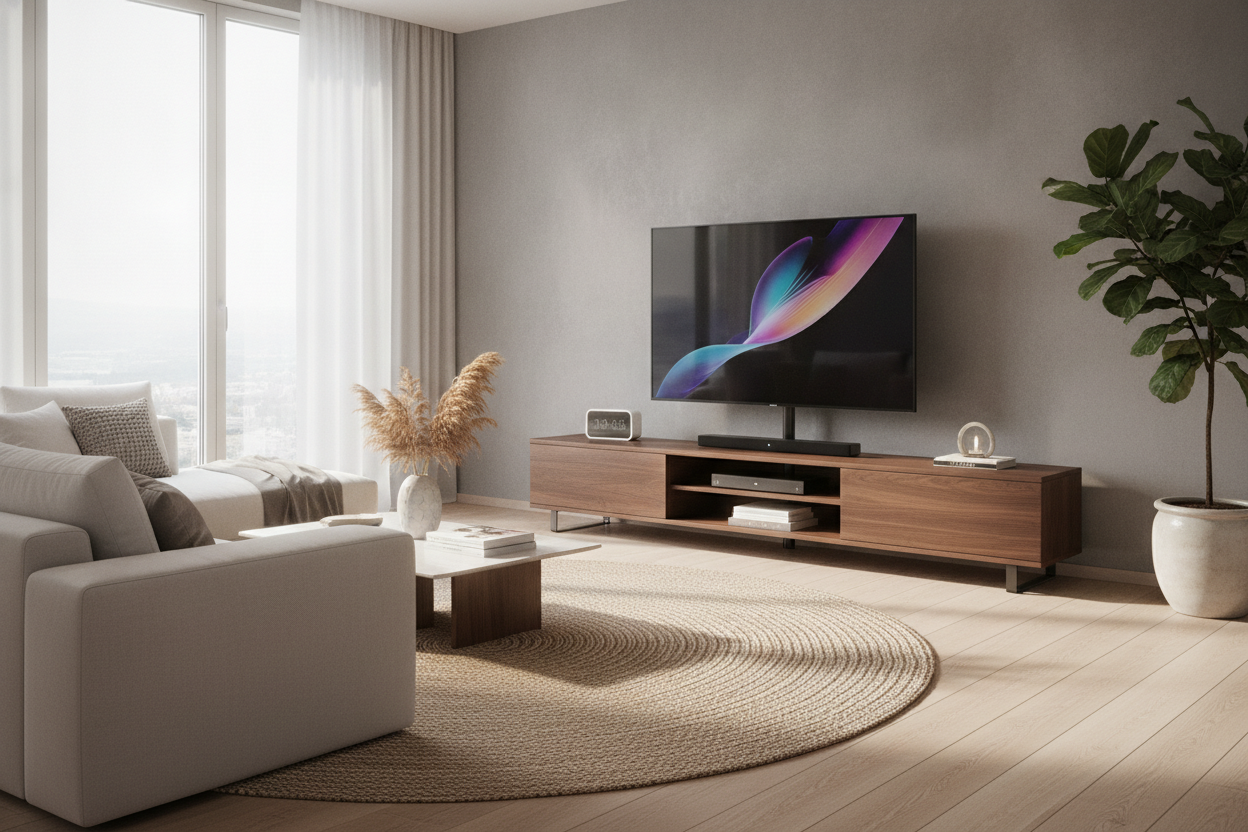
I remember unboxing my first OLED. It was so thin it felt like I was holding a $2,000 sheet of glass. I carefully placed it on my old media console—a chunky, 24-inch deep beast from my college days—and the whole room felt... off. It looked like a wafer sitting on top of a tractor. If you're looking for a tv stand for flatscreen setups, you need to stop thinking about 'furniture' and start thinking about proportions.
- Depth is the enemy; 12 to 15 inches is usually the sweet spot for modern tech.
- Width creates visual stability; your stand should be 6-12 inches wider than the screen.
- Cable management isn't a luxury; it's a requirement for thin screens.
- Avoid 'tall' units unless you want neck strain and a top-heavy vibe.
The 'Razor-Thin Screen, Chunky Base' Dilemma
We've spent the last decade making screens thinner, yet we're still dragging around media consoles built for tube TVs or early, heavy plasma units. Putting a bezel-free 65-inch screen on a massive, two-foot-deep wooden cabinet creates a weird visual void. It’s like wearing a slim-fit suit with hiking boots. I often get asked, Can An Antique Tv Stand Actually Hold A Modern Flat Screen? Sure, it can hold the weight, but it usually kills the aesthetic. You want something that matches the 'lightness' of the tech.
What Makes a Modern Flat Screen Console Actually Work?
The geometry of the living room has shifted. Since modern tv stands for flat screens don't need to support a 150-pound cathode-ray tube, manufacturers can play with floating designs and minimalist legs. The goal is a low-profile anchor. You want a flat panel tv cabinet that acts as a foundation, not a centerpiece that competes for attention. A big screen tv stand needs to be sturdy without looking like a fortress.
Depth is Everything (And Less is More)
In my current 700-square-foot apartment, every inch of floor space is a battlefield. A traditional flat panel tv stand was eating up 24 inches of depth. I swapped it for a unit that's only 14 inches deep—just enough for my PS5 and a soundbar. It opened up the walkway and made the room feel double the size. This Modern Tv Stand With Cabinets And Drawers For Tvs Up To 70 9 is a great example of how to keep things shallow without losing storage for your peripherals.
Wide is Always Better Than Tall
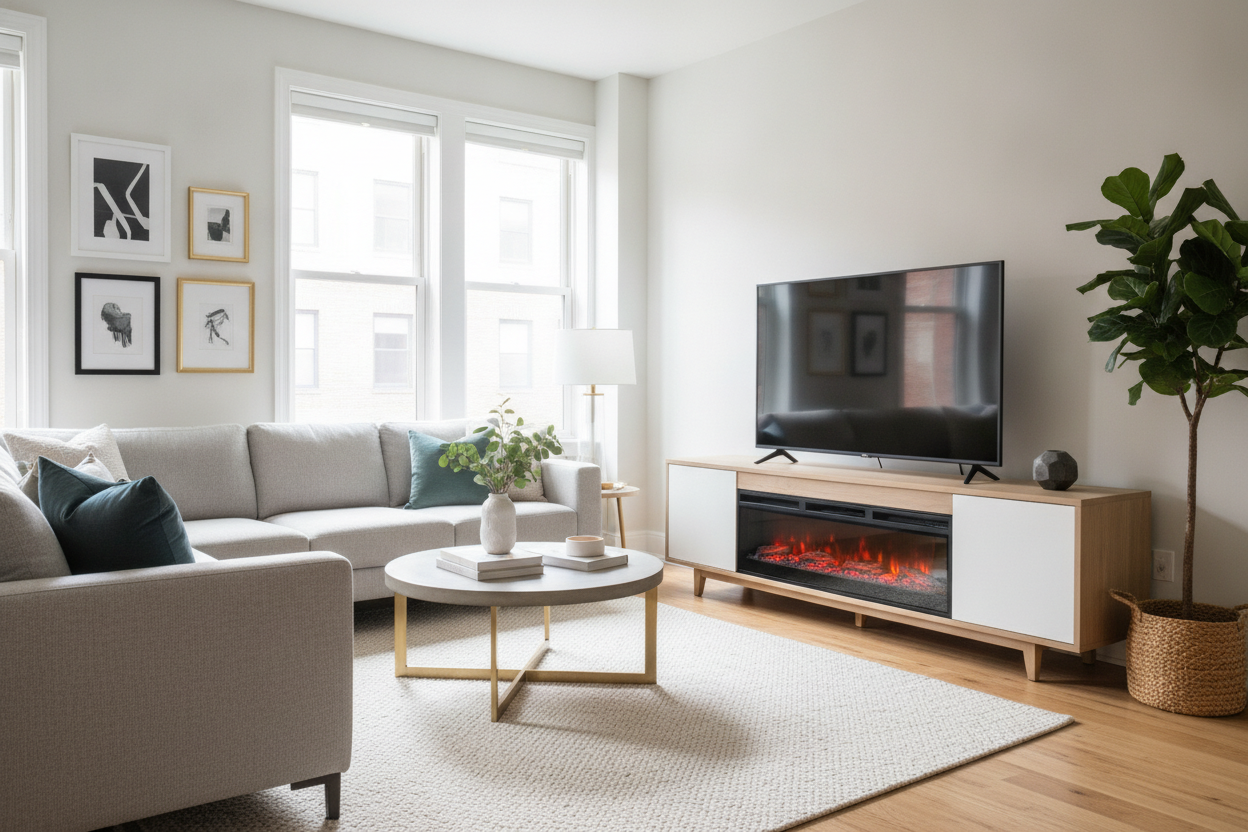
I see people buy a 75-inch TV and put it on a 50-inch stand. It looks like a lollipop. It’s terrifying. Use the rule of thirds: your stand should be significantly wider than your TV to ground the image. A Wide Tv Stand Entertainment Stand Adjustable Tv Stand For Living Room prevents that 'about to tip over' anxiety and gives you space for a lamp or a plant to soften the tech. Large screen tv stands should always prioritize a horizontal footprint over vertical bulk.
The Awkward Corner Conundrum
Corners are where design dreams go to die. Most people shove a rectangular flat screen stand into a 90-degree corner and end up with a dusty triangle of cables and dead air behind it. It's a waste of square footage. The Big Mistake We Make With Corner TV Stands for Flat Screen TVs is usually choosing a unit that's too deep, forcing the TV further out into the room than it needs to be. Look for wedge-shaped designs or ultra-slim consoles that can tuck closer to the drywall.
Say Goodbye to the 'Dangling Wire' Aesthetic
Nothing ruins a flat screen entertainment center faster than a waterfall of black HDMI cables. If your console doesn't have cutouts or a hidden channel, you're doing it wrong. I've spent too many Sunday afternoons with zip ties and velcro strips trying to fix poor design. When browsing Tv Stands, prioritize the ones that actually acknowledge that wires exist. A dedicated flat screen console should hide the power bricks and router chaos so your screen can actually look as sleek as the marketing promised.
Personal Experience
I once bought a 'vintage-inspired' flat screen console that had zero ventilation in the back. My receiver literally started smelling like burnt plastic after two hours of gaming. I ended up having to drill my own holes with a hole saw—not exactly the 'ready to assemble' experience I paid for. Now, I never buy a flat screen table without checking the back panel for airflow and cord access first.
FAQ
How wide should my tv stand for flat screen tvs be?
Aim for at least 3-6 inches of clearance on each side of the screen. If your TV is 55 inches wide, look for a stand that is at least 62-65 inches wide to keep it from looking top-heavy.
Can I put a flat screen on a regular dresser?
You can, but check the height. Dressers are usually 30-35 inches tall, which puts the screen too high for most sofas. If you're looking up at the screen, your neck will hate you in twenty minutes.
What's the best material for a big screen tv stand?
Metal or solid wood is best. High-quality MDF is fine for smaller screens, but massive 75-inch or 85-inch TVs can cause cheap particle board to bow over time. Always check the weight capacity before you buy.

Leave a comment
This site is protected by hCaptcha and the hCaptcha Privacy Policy and Terms of Service apply.