

















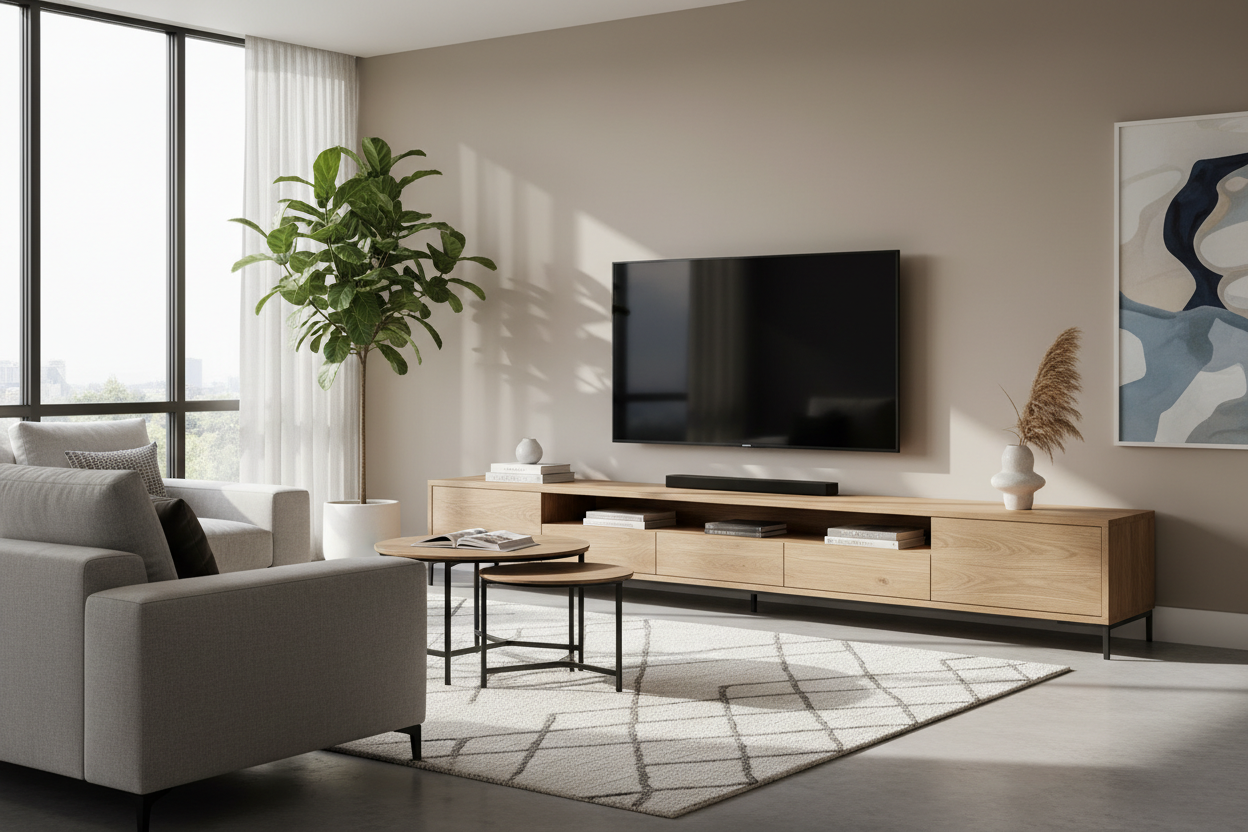
I remember the Saturday I finally finished mounting my 65-inch OLED. I had hidden the wires inside the drywall, patched the paint, and stepped back to admire my handiwork. I thought I was a minimalist genius. But ten minutes later, sitting on my sofa, I realized my living room looked like a sterile waiting room at a dentist's office. The screen was just... floating there, looking lonely and oddly small against the vast expanse of white paint. I realized then that a stand for under mounted tv isn't just a utility piece; it is the anchor the whole room depends on.
- Visual Anchor: Without furniture underneath, a wall-mounted TV looks like it is drifting away; a stand grounds the electronics.
- Storage Reality: Even if your TV is on the wall, your PS5, Apple TV, and soundbar still need a home that isn't the floor.
- Cable Management: A stand provides a physical barrier to hide the 'cable waterfall' that often happens over time.
- Proportions: The right stand makes your TV look like an intentional design choice rather than a tech installation.
The 'Floating Screen' Fantasy vs. My Awkward Reality
We have all seen those ultra-clean architectural photos where a TV sits on a bare wall with nothing around it. It looks great in a magazine, but in a real home, it creates a bizarre, empty void. When I tried it, the space under the screen became a graveyard for random shoes and my dog's tennis balls. It felt unfinished, like I had moved in but forgot to unpack the most important part of the room.
Beyond the aesthetics, there is the cable nightmare. Even with 'in-wall' kits, you eventually end up with a stray HDMI cable or a power brick for a new streaming stick. Without a tv stand under mounted tv setup, those wires just dangle. It kills the vibe instantly. I learned the hard way that you need a landing pad for the peripheral chaos of modern life.
Why the Room Needs a TV Stand Under Mounted TV Setups
A large television is a massive black rectangle. Visually, it is heavy. If you don't have something of equal or greater 'visual weight' underneath it, the room feels top-heavy and off-balance. It is the same reason you don't hang a massive piece of art over a tiny, spindly chair. You need a piece of furniture that can hold its own against the screen.
Choosing a low-profile console allows you to style a modern TV stand wall mounted so the tech blends into your decor. I like to use a few oversized coffee table books or a ceramic tray to soften the look. It stops the room from feeling like a sports bar and starts making it feel like a home. Without that anchor, the TV is just a monitor; with it, it is a media center.
The Golden Ratio: Sizing Stands for Under Wall Mounted TV
The biggest mistake I see people make is buying a stand that is the exact same width as their TV. It looks cramped and accidental. The rule of thumb I live by is the 'ten-inch rule.' Your stand should be at least 10 inches wider than the TV—5 inches of breathing room on each side. This creates a pleasing pyramid shape that leads the eye upward toward the screen.
Before you go browsing a collection of TV stands, measure your wall and your TV's actual width (not the diagonal screen size). If you have a 65-inch TV, it is usually about 57 inches wide. That means you want stands for under wall mounted tv that are at least 67 to 70 inches long. Anything smaller and the TV will look like it is about to crush the furniture.
What Actually Goes in an Entertainment Center Under Wall Mount TV?
The best part about mounting the screen is that the top surface of your furniture is now 'prime real estate.' You aren't fighting for space with a clunky plastic stand. This was the only way I could finally make room for my massive soundbar without it blocking the bottom two inches of the picture. It sits perfectly on the console, aimed right at my ears.
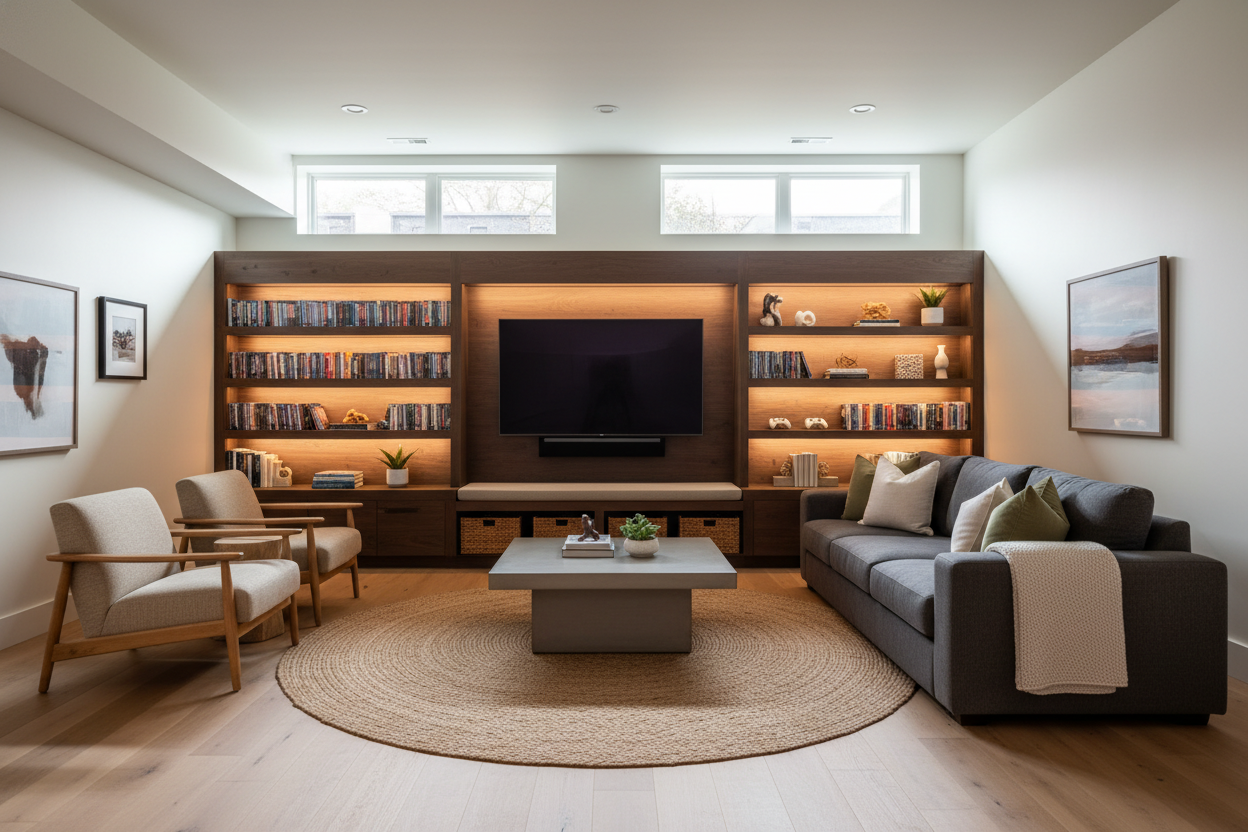
Use the interior of your entertainment center under wall mount tv for the ugly stuff. I keep my router, the messy power strips, and my gaming controllers tucked away behind closed doors. If you have gear that runs hot, look for a stand with ventilated back panels. I once fried an older receiver because I shoved it into a solid wood cabinet with zero airflow—don't be me.
Floating vs. Floor-Resting: Picking Furniture to Put a TV On (Or Under)
If you have a small room, a floating TV stand wall mounted media console is a total lifesaver. Because you can see the floor underneath it, the room feels larger than it actually is. It is also a dream for cleaning; no more moving a 100-pound credenza to vacuum the dust bunnies that congregate behind the legs. It’s the ultimate tv stand for under mounted tv for the space-conscious.
However, if you have chunky baseboards or plaster walls that won't support a heavy floating unit, stick to floor-resting furniture to put a tv on. Just make sure it is low-profile. You want the top of the stand to be about 18 to 22 inches off the ground. This leaves a comfortable 6-8 inch gap between the stand and the bottom of your mounted TV, which is the 'sweet spot' for a balanced look.
How high should my TV be above the stand?
Aim for 6 to 10 inches. Any higher and it looks like it is escaping; any lower and you might as well have just used the legs that came in the box.
Can I use a regular dresser as a stand?
You can, but dressers are usually 30-36 inches tall. If you mount a TV above that, you will be craning your neck like you're in the front row of a movie theater. Stick to media-specific consoles.
Should the stand be centered with the TV or the wall?
Always center the stand to go under mounted tv with the TV itself. If the TV is off-center on the wall, the stand should follow it to maintain the visual unit.


Leave a comment
This site is protected by hCaptcha and the hCaptcha Privacy Policy and Terms of Service apply.