

















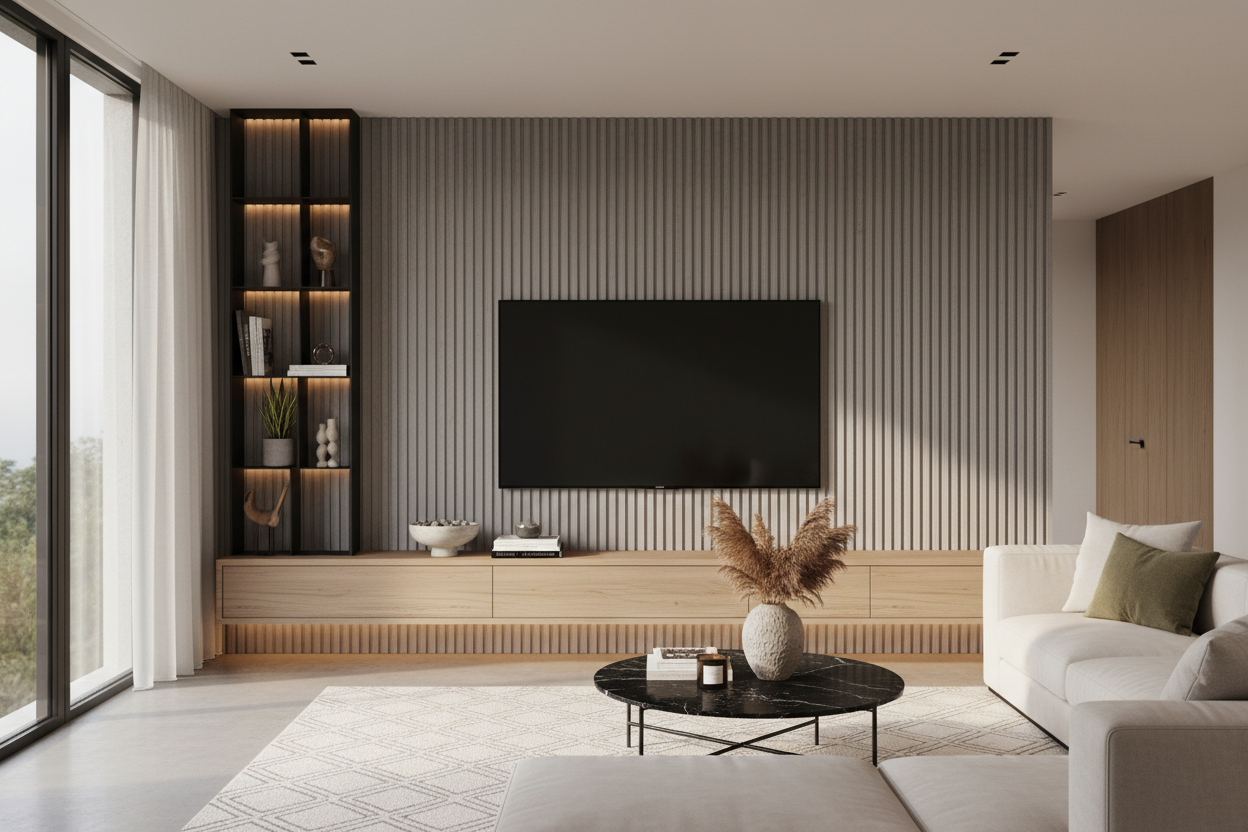
It happens in almost every living room project: the sofa is selected, the rug is laid down, and then a bulky media console arrives and instantly anchors the room in the worst way possible. Heavy, floor-resting furniture can make even a generously sized suburban family room feel cramped. If you want to introduce breathing room into your layout, a modern tv stand wall mounted unit is one of the most effective design strategies available.
By lifting the console off the floor, you expose more square footage, which immediately tricks the eye into perceiving a larger room. But getting this floating look right requires more than just picking a beautiful wood finish. In this guide, we will walk through the exact heights, material choices, and installation realities you need to know before drilling into your drywall.
Quick Decision Guide
- Clearance is key: Leave 12 to 18 inches of negative space between the floor and the bottom of the unit to achieve that weightless, floating effect.
- Check the depth: A depth of 12 to 15 inches is ideal for tight spaces, but you will need at least 16 to 18 inches if you plan to store larger audio receivers or gaming consoles.
- Studs are non-negotiable: Never rely on drywall anchors alone for a floating console; it must be anchored directly into wooden or metal wall studs.
- Plan your power: A floating console looks messy if cords are dangling beneath it. Budget for an in-wall cable management kit or a recessed outlet.
Maximizing Space with Floating Furniture
The Rules of Proportion
In North American homes, living rooms often serve double duty as entertainment spaces and family gathering spots. When you pair your console with a modern wall mount tv, the goal is to create a streamlined focal point. A common mistake is buying a console that is the exact same width as the television. For proper visual weight, your wall-mounted stand should be at least 10 to 15 inches wider than the TV itself. This creates a tiered, grounded look rather than a top-heavy layout that feels like it might tip over.
Navigating Room Layouts
Floating furniture is particularly useful in narrow spaces or open-concept floor plans where walkways are tight. Standard interior design rules dictate leaving at least 36 inches of clearance for main traffic paths. Because a wall-mounted stand removes the physical barrier of legs or a solid base, you can often get away with slightly tighter clearances without the room feeling obstructed.
The Reality of Installation and Materials
Hardware Over Aesthetics
When comparing modern tv stands wall mount hardware is just as important as the wood finish. Solid wood (like walnut or white oak) offers incredible longevity and a beautiful grain, but it is heavy. If you opt for solid wood, you need heavy-duty French cleats and absolute certainty about your stud locations. High-quality engineered wood or MDF with a premium wood veneer is often the smarter choice for floating pieces. It provides the exact same aesthetic but at a fraction of the weight, putting less stress on your walls over time.
Styling Your Floating Console
Balancing Visual Weight
Once installed, the top surface of your floating stand shouldn't become a catch-all for clutter. Because the piece itself is inherently minimalist, your styling should follow suit. I recommend the rule of threes: a structural element (like a ceramic vase), an organic element (a trailing plant like a pothos, which looks great draped over the edge), and a functional element (a sleek tray for remotes). Let the negative space between these items breathe.
Designer's Honest Take
I learned the hard way during a downtown condo project that a beautiful floating walnut console is completely useless if you don't plan for the power bricks of modern gaming systems. We installed a stunning 80-inch floating unit, only to realize the client's PlayStation 5 was too tall to fit inside the closed cabinetry, and the power brick for their sound system wouldn't fit through the pre-drilled cable holes.
The honest downside to floating consoles? The hidden costs. The unit itself might cost $500, but hiring an electrician to drop a recessed outlet directly behind the cabinet so no wires show can easily cost another $300. If you just run the cables down the front of the wall to a baseboard outlet, you completely defeat the purpose of the sleek, floating design. Always factor wire management into your initial budget.
Frequently Asked Questions
What height should a floating TV stand be?
The bottom of the unit should sit 12 to 18 inches off the floor. The top of the console should sit about 6 to 10 inches below the bottom edge of your television to allow room for a soundbar or decorative items.
Can I mount a TV stand on drywall without studs?
Absolutely not. Even if the console is light, once you add the weight of electronics, books, and the pressure of people opening and closing doors, drywall anchors will eventually fail. Always mount to at least two wooden or metal studs.
How do I hide the cords?
The cleanest method is installing a recessed outlet and a media enclosure box directly behind the TV, dropping the low-voltage cables (like HDMI) through the wall cavity to emerge cleanly inside the floating console below.

Leave a comment
This site is protected by hCaptcha and the hCaptcha Privacy Policy and Terms of Service apply.