

















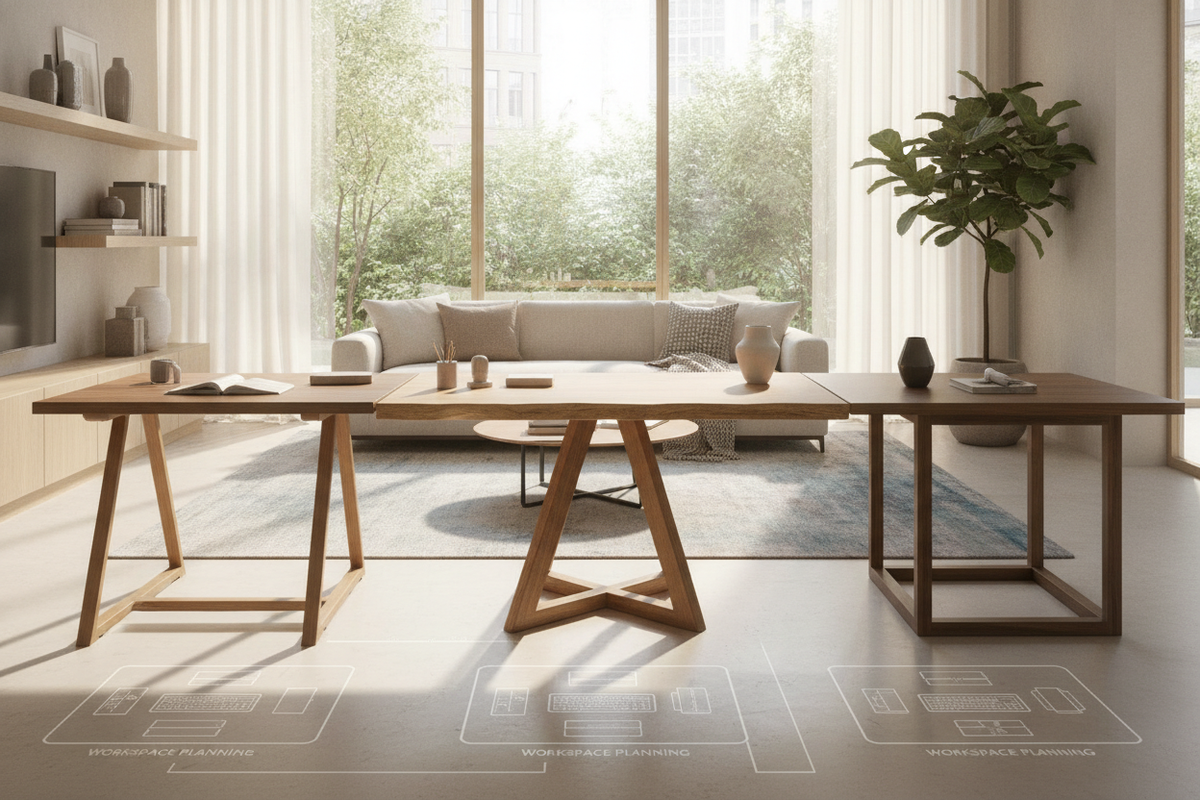
Understanding Wood Desk Frame Architectures
Choosing the right foundation for a home office begins with understanding how a wood desk frame carries weight, manages horizontal forces, and anchors daily work routines. The base serves as the structural skeleton of the entire workstation, dictating not only aesthetic balance but also long-term durability and ergonomic comfort.
Traditional Fixed Wood Frames vs. Hybrid Sit-Stand Bases
Traditional fixed timber frames rely on structural joinery—such as mortise-and-tenon, dowels, or corner gussets—to deliver unyielding stability. Fixed frames offer timeless warmth and seamless grain continuity from the legs to the tabletop. In contrast, hybrid sit-stand configurations blend motorized telescoping columns with timber outer cladding or crossbars. While adjustable bases provide postural variety, a fixed wood frame delivers superior lateral rigidity and clean architectural simplicity without electrical components or mechanical wear points.
Trestle, A-Frame, and Four-Leg Structural Geometries
Desk frames fall into several architectural geometries, each creating distinct visual weights and clearance profiles:
- Four-Leg Perimeter Frames: The classic configuration positions legs at the outer corners, linked by aprons. This layout maximizes open under-desk volume and integrates seamlessly with modular storage, as seen in setups like an l shaped desk with 3 drawers and wood legs.
- Trestle Bases: Trestle designs use dual end posts connected by a central horizontal stretcher. This architecture shifts support inward, offering generous leg movement along the perimeter while establishing a classic craft aesthetic.
- A-Frame and Angled Legs: Angled splay designs widen the stance toward the floor, effectively resisting lateral sway while lending a modern, mid-century architectural profile to the room.
Load Distribution and Lateral Stability Fundamentals
A well-engineered wooden frame disperses downward vertical loads from hardware and writing pressure evenly through its vertical members. Lateral stability—the resistance to front-to-back and side-to-side racking—depends heavily on the depth of the upper aprons, corner bracing blocks, or low stretchers. Without adequate lateral reinforcement, wider desk frames can develop micro-wobble during intensive typing.
Selecting Materials for Frames and Solid Wood Tops
Pairing a wood base with an appropriate worktop requires balancing timber species, moisture response, and visual harmony across the entire workstation.
Hardwood vs. Engineered Timber Profiles
Dense hardwoods such as oak, ash, walnut, and beech provide high structural strength, resilient screw-holding capacity, and natural resistance to everyday impacts. Engineered timber profiles, including high-grade plywood or dense composite cores with genuine veneer, offer enhanced dimensional stability in climates subject to dramatic temperature swings. When curating a refined look, exploring guidance on choosing the perfect ikea desk wood for a luxury look can help harmonize rich veneer patterns with solid timber elements.
Accommodating Natural Wood Expansion and Contraction
Solid wood is a dynamic material that absorbs and releases ambient moisture, expanding across its grain width as seasons change. Securing a solid timber top directly to a rigid frame with static fasteners can lead to split tops or stressed joints. Thoughtful desk architecture incorporates mechanical allowances, such as slotted fastener brackets or figure-eight fasteners, letting the tabletop move naturally across seasonal humidity cycles.
Matching Surface Grain and Base Finishes
When assembling custom components or investing in an integrated setup like an all solid wood writting desk computer desk, matching stain undertones and sheen levels creates visual continuity. Combining open-pore matte finishes across both base and top highlights organic wood grain textures while minimizing glare under task lighting.
Dimensional Sizing and Ergonomic Clearance Categories
A practical workspace balances surface surface area with functional leg clearance and overall room scale.
Compact Footprints for Nooks and Small Bedrooms
In secondary bedrooms or transitional alcoves, compact frames prioritize depth efficiency. Streamlined frame profiles with slender leg dimensions maintain open floor sightlines, keeping small home offices feeling spacious and uncluttered.
Standard Workstation Spans for Multi-Monitor Layouts
Workstations supporting dual displays, secondary laptop stands, and audio monitors require wider spans and robust frame support. For expansive arrangements, an l shaped corner desk with drawers brown wood grain provides dedicated zones for primary focus tasks and secondary administrative work without crowding the central sitting area.
Under-Frame Knee Clearance and Overhang Ratios
Proper ergonomic posture requires uninhibited leg movement. When planning a wood frame:
- Ensure the underside apron leaves ample vertical clearance above your thighs when seated with feet flat on the floor.
- Maintain a balanced surface overhang beyond the frame edge to accommodate monitor arms and clamp-on desk accessories without interfering with structural stretchers.
- Avoid center support beams that cross directly into natural knee rest areas.
Mounting and Fastening Solid Wood Surfaces to Frames
The mechanical connection between the top and the wood desk frame determines the longevity and structural stability of your entire desk.
Threaded Inserts vs. Direct Screw Fastening
Direct wood screws provide a quick initial hold, but repeated assembly and disassembly can strip timber threads over time. Threaded brass or steel inserts embedded directly into the tabletop underside create a durable machine-thread interface, allowing users to detach the desktop repeatedly for moves without degrading the timber.
Expansion Washers and Slotted Bracket Techniques
To safely fasten solid timber tops, builders rely on tabletop Z-clips, figure-eight fasteners, or slotted angle brackets. By placing screws through elongated slots perpendicular to the wood grain, the surface can shift along its width during seasonal swelling while remaining firmly seated against the lower frame.
Preventing Surface Warping, Cupping, and Structural Splitting
Cupping occurs when the top and bottom surfaces of a solid board absorb moisture at unequal rates. Applying balanced finishes to both sides of the desktop, combined with slotted mechanical fasteners, prevents internal tension from splitting joints or bowing the primary work plane.
Storage Architecture and Cable Routing Integration
Maintaining a clean, functional workspace requires intentional planning for storage and wire management around the timber base.
Pairing Mobile Pedestals and Freestanding Credenzas
While integrated drawers offer instant organization, freestanding or mobile pedestals provide flexibility. Rolling storage units can tuck neatly beneath standard frame spans or slide adjacent to the desk to serve as secondary utility surfaces for printers and organizers.
Under-Desk Channeling and Discreet Cord Trays
Exposed wiring detracts from the warm visual appeal of natural wood legs. Installing horizontal under-desk wire trays along the rear apron keeps power strips and power bricks off the floor. Fastening reusable hook-and-loop straps along the inner facets of rear desk legs keeps power leads hidden from front view.
Maintaining Legroom While Maximizing Storage Density
When selecting under-frame drawers, position them along the non-dominant side or perimeter leg zones. This layout preserves the primary central footprint for ergonomic chair swiveling and natural leg movement.
Room Zoning, Care, and Long-Term Maintenance
Proper environmental care and room placement protect the organic character of your wooden workstation across years of daily use.
Environmental Humidity Management and Timber Care
Solid timber thrives in consistent indoor environments. Position your desk away from direct heat registers, radiators, or damp baseline walls. Regular dusting with dry microfiber cloths and periodic applications of natural furniture wax preserve luster without building up sticky residues.
Preventing Frame Wobble and Leveling on Uneven Floors
Uneven floorboards can introduce annoying rocking motions into even the most rigid wooden frame. Adding adjustable threaded leveling glides or felt pads to the leg bases compensates for uneven surfaces while protecting hardwood flooring from scuffs.
Workspace Placement for Natural Lighting and Traffic Flow
Orient your desk frame perpendicular to natural light sources to reduce screen glare while enjoying outdoor views. Ensure adequate walkway clearance behind the seating zone so office chairs can roll back freely without hitting walls, shelving, or doorways.

Leave a comment
This site is protected by hCaptcha and the hCaptcha Privacy Policy and Terms of Service apply.