

















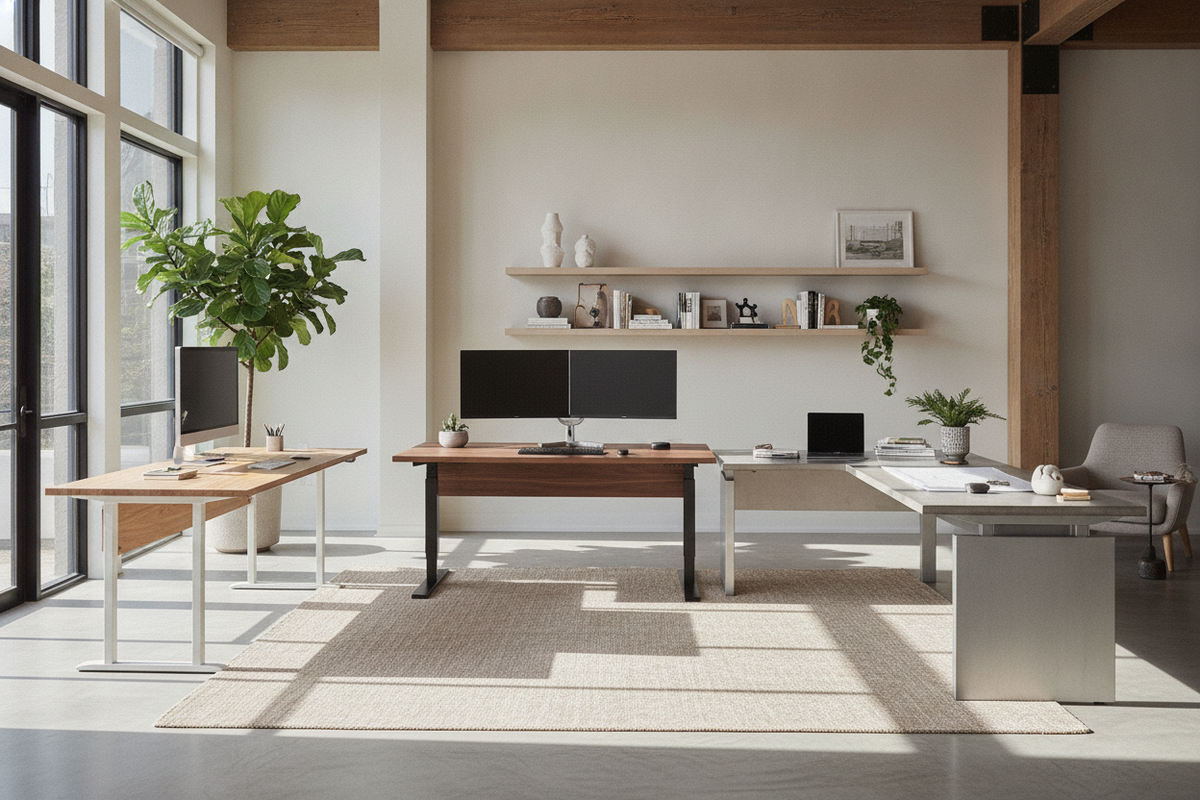
Introduction to Static Standing Desks
A static standing desk represents a dedicated architectural approach to the modern workspace. Unlike adjustable height furniture that relies on internal lifting mechanisms, a fixed-height workstation remains anchored at an upright elevation. This deliberate simplicity provides a stable, wobble-free surface designed for focused tasks, active daily routines, and streamlined room styling.
For many home offices and creative studios, selecting fixed furniture eliminates mechanical complexity while celebrating clean joinery and purposeful room proportion. When exploring options for a sophisticated space, reviewing a standing desk guide helps align surface materials with surrounding decor, ensuring the fixed piece functions harmoniously within the broader interior landscape.
What Defines a Fixed-Height Standing Workstation?
A fixed workstation is engineered to support regular upright posture without shifting components. The structure typically features extended vertical legs, robust corner bracing, and a continuous worktop. By maintaining a single elevation, these desks deliver predictable posture points for tasks ranging from document review to digital production.
Key Benefits: Structural Rigidity, Minimal Mechanics, and Aesthetic Purity
Without the need for internal motors, control boxes, or telescoping leg segments, static models present continuous lines and balanced proportions. This structural approach minimizes joint play and lateral deflection, offering solid support during typing and drafting. In addition, the lack of power cords for lifting mechanisms simplifies cable concealment and allows flexible placement against walls or in open floor plans.
Dimensional Sizing and Ergonomic Fit
Choosing a fixed workstation requires careful attention to personal biomechanics because the surface elevation cannot be recalibrated with the press of a button. Selecting the appropriate frame height ensures long-term comfort and fluid upper-body alignment throughout the workday.
Aligning Elbow Height and Forearm Angles
Proper alignment begins with natural posture. When standing upright with shoulders relaxed, your forearms should rest naturally parallel to the floor, forming a roughly right angle at the elbow. The worktop surface should meet your palms comfortably without requiring you to hunch forward or shrug your shoulders upward.
Monitor Placement and Eye-Level Calibration
To avoid neck strain, screen positioning must complement the static surface height. Displays are ideally positioned so the top third of the viewing area sits directly at eye level. Adding an adjustable monitor arm or elevated display riser allows individual fine-tuning for screens while keeping the primary desktop uncluttered. For multi-monitor configurations or wide creative surfaces, exploring a spacious standing desk product can provide perspective on how expansive spans handle peripheral hardware and accessory organization.
Worktop Depth and Span Considerations
Desktop depth influences viewing distance and reach zones. A deeper worktop preserves comfortable focal depth when working on large monitors, while leaving ample room for keyboards, reference books, and writing accessories. A wide horizontal span provides distinct zones for computer tasks and tactile desktop projects.
Static vs. Motorized Desks: Decision Framework
Selecting between a static frame and a motorized alternative depends on workflow habits, room architecture, and how many individuals utilize the workstation.
Dedicated Single-User Workspaces vs. Multi-User Environments
In private home offices where a single person uses the setup, a carefully matched static desk provides a customized physical fit tailored to one body profile. Conversely, in shared workspaces or flexible family rooms where individuals of varying heights work throughout the week, a versatile standing desk product offers dynamic repositioning to accommodate different ergonomic needs seamlessly.
Mechanical Simplicity vs. On-Demand Height Versatility
Static desks offer complete mechanical independence. With no motorized tracks or electronics to manage, they present uninterrupted reliability over years of use. Motorized desks, however, provide effortless transitions between seated and standing modes during extended work sessions. Evaluating your daily stamina and sitting preferences will help determine whether a dedicated upright station or a convertible platform is ideal.
Cost Allocation: Prioritizing Solid Materials Over Motors
When investing in a fixed-height frame, manufacturing resources are directed toward premium materials, reinforced joinery, and resilient surface finishes rather than mechanical assemblies. This often translates to richer wood textures, substantial steel framing, and exceptional tactile quality at a balanced investment level.
Seating and Active Support for Fixed-Height Setups
Working at a static standing desk does not require standing continuously for the entire day. Incorporating supportive seating and floor accessories introduces healthy physical variation into your daily schedule.
Integrating Drafting Chairs and Counter-Height Stools
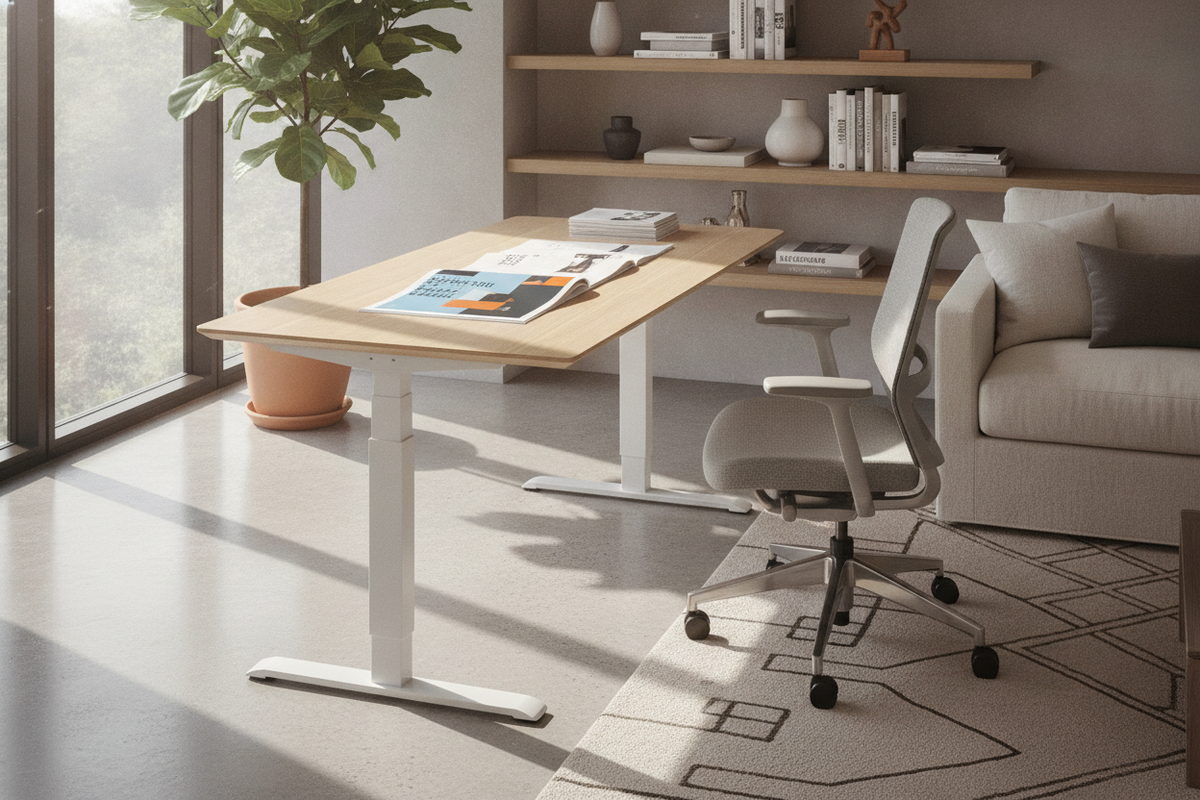
Drafting chairs and elevated task stools allow users to sit comfortably at a fixed standing surface. These chairs feature extended pneumatic cylinders and integrated foot rings, bridging the height gap so you can rest without moving your computer setup or adjusting the desktop elevation.
Perching Stools and Active Standing Footwear
Perching stools encourage an open hip angle, allowing users to lean partially while remaining in an active, semi-standing posture. Pairing this seating style with supportive, low-profile indoor footwear helps maintain comfortable weight distribution across the feet during active sessions.
Anti-Fatigue Mats and Footrests
Standing on hard floors for extended periods can lead to fatigue in the lower back and legs. A cushioned anti-fatigue mat provides responsive underfoot support, encouraging subtle weight shifts. Adding a small angled footrest under the desk allows you to alternate elevating one foot, relieving lower back tension and promoting comfortable posture changes.
Storage Configurations and Room Zoning
A static standing workstation creates unique vertical opportunities for room zoning and storage integration, maximizing both floor utility and visual order.
Under-Desk Pedestals and Vertical Clearance
The elevated profile of a fixed standing desk provides generous vertical space underneath the primary surface. Tall mobile pedestals, multi-drawer storage cabinets, and modular shelving units slide effortlessly beneath the tabletop, keeping documents, files, and personal items within arm's reach while preserving an open floor aesthetic.
Wall-Mounted Shelving and Overhead Organization
Because the worktop remains at a constant elevation, wall-mounted cabinetry and floating shelves can be positioned with permanent spatial precision. Shelves can be mounted close to the work surface without risk of collision, creating an integrated, built-in architectural look.
Zoning Secondary Focus and Meeting Areas in Home Offices
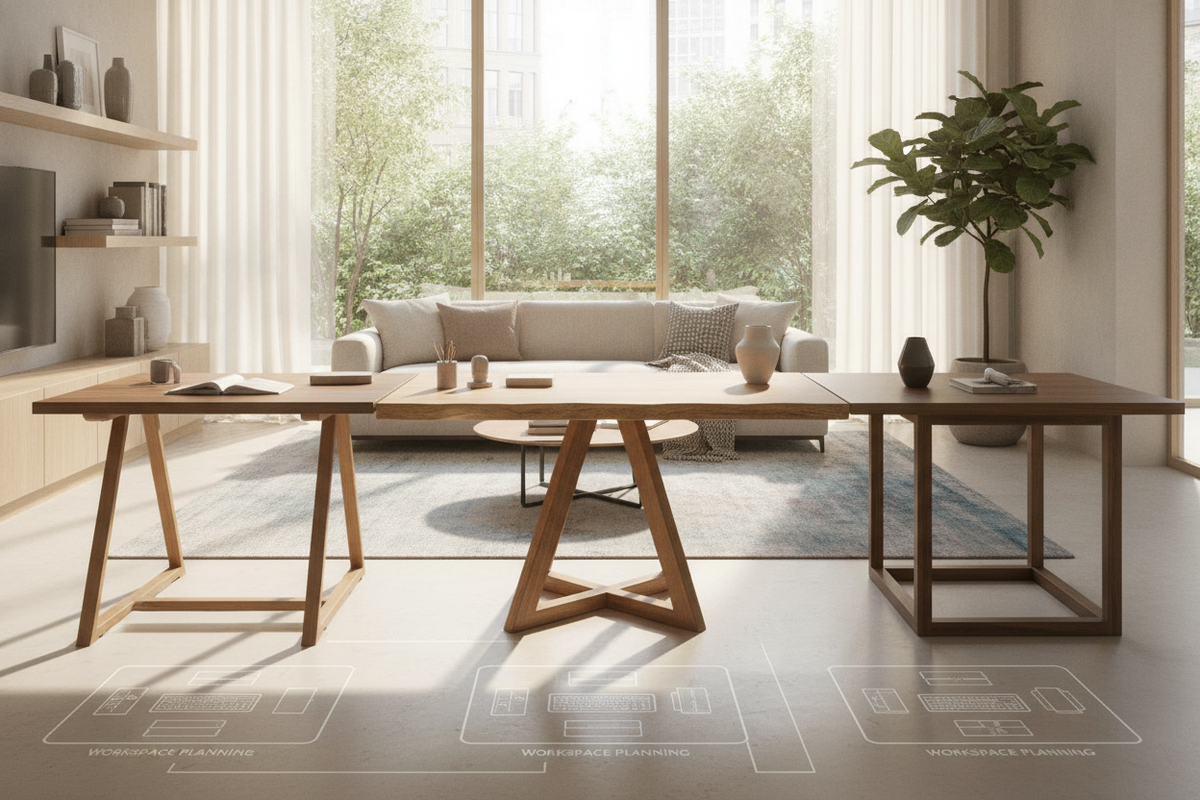
In open-plan workspaces or multi-functional rooms, a static standing desk functions as an architectural partition. It clearly defines a dedicated focus zone while leaving lower floor areas open for reading chairs or collaborative meeting tables. Exploring a comprehensive standing desk guide provides practical guidance on balancing ambient lighting, circulation paths, and acoustic comfort around upright work hubs.
Frame Materials, Base Geometries, and Long-Term Stability
The enduring satisfaction of a fixed standing desk depends on structural composition and base geometry. Selecting the right frame materials ensures steady daily performance.
Solid Timber and Welded Steel Leg Architectures
Static desks frequently employ heavy-gauge welded steel frames or solid hardwood leg assemblies. Steel construction offers sharp, modern profiles with exceptional load-bearing capacity, while timber frames introduce warmth, tactile richness, and timeless furniture craftsmanship.
Crossbar Reinforcement and Sway Elimination
Because standing desks operate at higher elevations, lateral forces from typing or leaning can produce noticeable sway if the base lacks reinforcement. High-quality static designs integrate low or mid-height crossbars, gusseted corner plates, and wide footplates that distribute weight evenly across the floor plane.
Assembly, Leveling Feet, and Maintenance Checks
Achieving rock-solid stability requires proper leveling during initial placement. Adjustable leveling glides under each leg compensate for uneven flooring, preventing rocking and preserving proper surface alignment. Periodic hardware inspections ensure all frame fasteners remain secure, keeping your fixed workstation sturdy, quiet, and reliable over many years of productive work.

Leave a comment
This site is protected by hCaptcha and the hCaptcha Privacy Policy and Terms of Service apply.