

















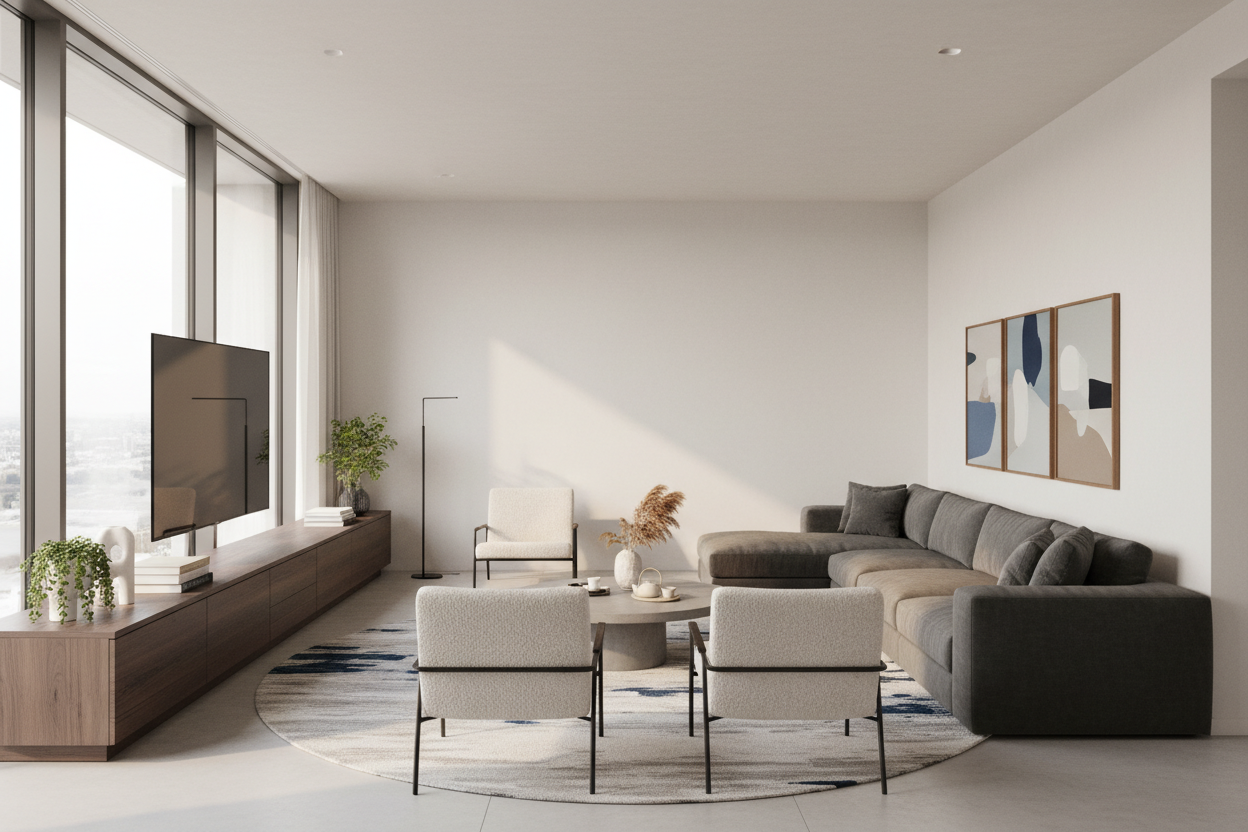
I remember staring at my living room after finally upgrading to a massive 120-inch velvet sectional. It was the dream couch—deep, plush, and expensive—but something felt fundamentally wrong. My old media console looked like a literal toy sitting across from it. That was the day I realized an extra long modern tv stand isn't just a design choice; it's a requirement for visual survival in a large room.
If you've ever felt like your room is 'off' despite having nice furniture, you're likely dealing with a scale issue. Most people default to buying standard sized tv stands because they are easy to find, but those 50-inch units are meant for small apartments and 40-inch TVs. When you pair them with a sprawling L-shape sofa, you create a room that feels like it’s tipping over.
Quick Takeaways
- Visual balance requires your media console to be wider than your TV and proportional to your seating.
- A 'lopsided' room happens when a heavy sectional isn't countered by a substantial piece on the opposite wall.
- Extra length provides critical storage for gaming consoles, subwoofers, and cable nests.
- Aim for the 2/3 rule: your console should be at least two-thirds the width of your sofa.
The 'Lopsided Living Room' Effect (And Why It Happens)
In design, we talk a lot about 'visual weight.' It’s the idea that certain pieces of furniture feel heavier or more dominant than others. When you drop a 100-inch, L-shaped sectional into a room, you've essentially placed a giant anchor on one side. If the opposite wall only has a tiny console, the room feels like a seesaw that’s stuck on one end.
I see this mistake constantly. People focus so much on the screen size that they forget the furniture holding it needs to anchor the entire wall. Without that width, your TV looks like it’s floating in a sea of drywall, and your couch looks like it’s bullying the rest of the furniture. You need a piece that can hold its own against the bulk of a modern sectional.
The Golden Ratio of Couch-to-Console Width
The math here is actually pretty simple, but most people ignore it. For a room to feel harmonious, your media unit should span at least two-thirds the width of the sectional or sofa facing it. If you have a massive 12-foot U-shaped setup, a puny 60-inch stand is going to look lost. You need something with a serious footprint.
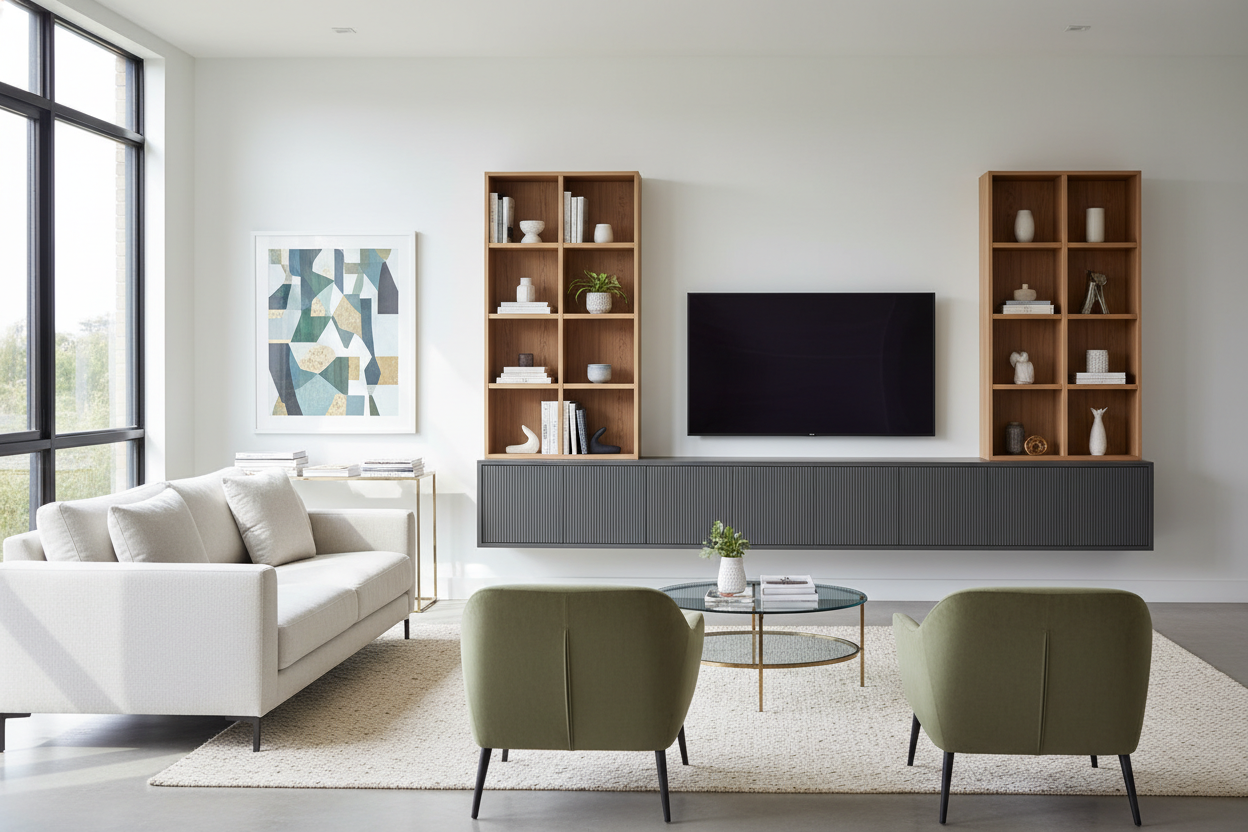
For example, a 94.5-inch white extra long console is often the sweet spot for oversized L-shaped sectionals. It provides enough horizontal line to catch the eye and balance out the bulk of the cushions. It’s not just about the TV; it’s about creating an architectural line that mirrors the scale of your seating. If the stand is shorter than the TV itself, you’ve already lost the battle.
More Length Means Hiding the 'Ugly' Tech
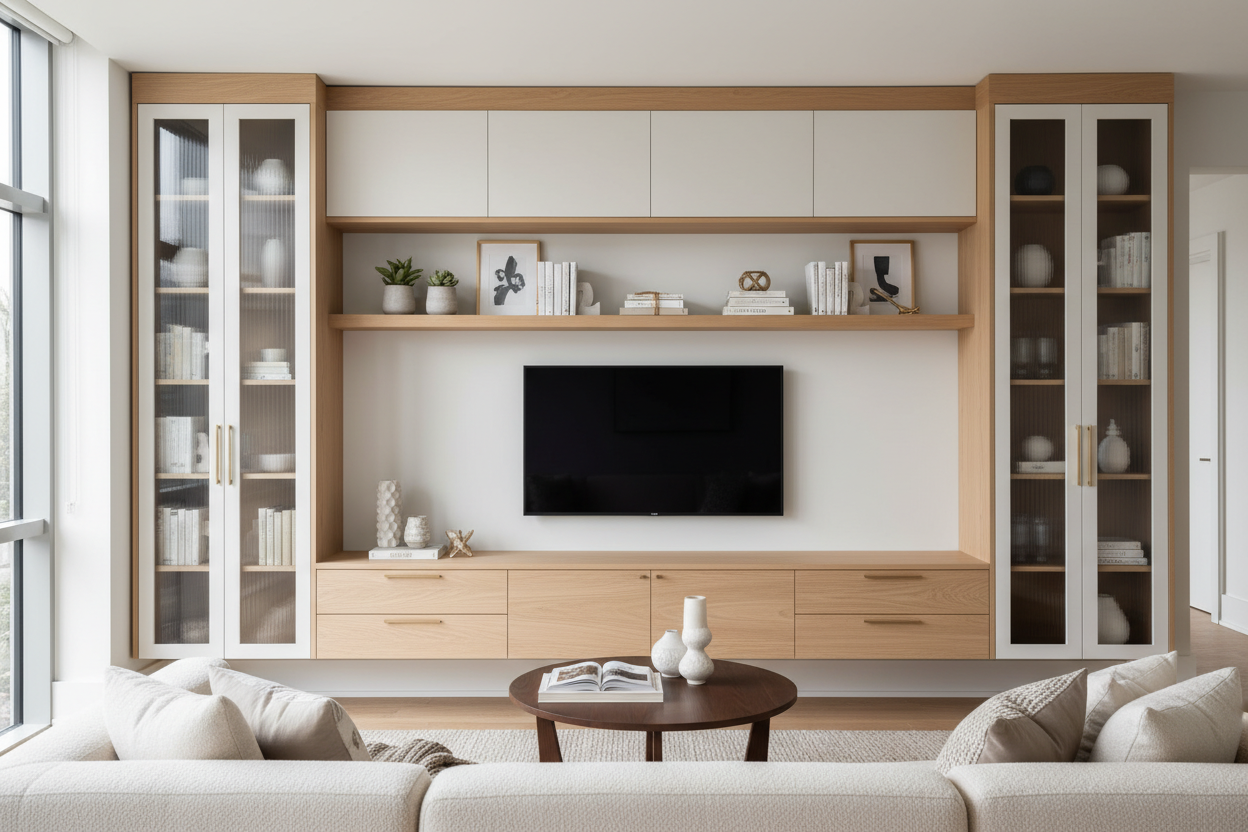
One of the best side effects of going long is the storage. We all have that one 'cable drawer' or the messy pile of HDMI cords behind the subwoofer. When you have an extra-long footprint, you finally have the internal volume to hide the junk. I’m a huge fan of using a slatted wood mid-century console because it solves two problems: it hides the ugly plastic boxes while still letting your remote signals and heat pass through easily.
Don't underestimate the power of enclosed storage. A longer unit means you can dedicate one end to the PS5 and the other end to that messy collection of board games or extra throw blankets that don't fit anywhere else. It keeps the 'modern' part of the aesthetic actually looking clean, rather than cluttered with tech debris.
What to Do With All That Empty Surface Area
A common fear I hear is: 'What do I do with three feet of empty wood on either side of the TV?' People get paralyzed by the 'dead space' and end up buying a smaller unit. Don't do that. That extra surface area is actually a styling opportunity that makes your house look like a human lives there, not a tech showroom.
I suggest asymmetrical styling. Put a tall, structural lamp on one side and a stack of coffee table books with a trailing Pothos on the other. It breaks up the 'black box' look of the television and draws the eye across the room. If you're feeling stuck, there are plenty of guides on how to style wide media consoles that can help you bridge the gap between 'empty' and 'curated.'
My Personal Lesson in Proportions
A few years ago, I bought a gorgeous 70-inch walnut stand for my 75-inch TV. I thought I was being efficient. In reality, it looked terrible. The TV overhung the edges of the stand, making the whole setup look top-heavy and precarious. It made my expensive TV look cheap. I eventually swapped it for an 85-inch unit, and the difference was night and day. The room finally felt grounded.
FAQ
How much wider should the stand be than the TV?
Aim for at least 6 to 10 inches of clearance on each side of the screen. This prevents the TV from looking like it’s falling off the edge and gives you room for a lamp or a plant.
Can I push two smaller units together?
You can, but they need to have flat sides so they sit perfectly flush. If there is a gap or a rounded edge, it will look like a DIY project gone wrong. It’s usually better to buy one continuous piece for a clean look.
Will an extra long stand make my room look smaller?
Counter-intuitively, no. Long, low furniture actually draws the eye across the room, making the wall feel wider. It’s the tall, chunky pieces that tend to close a room in and make it feel cramped.

Leave a comment
This site is protected by hCaptcha and the hCaptcha Privacy Policy and Terms of Service apply.