

















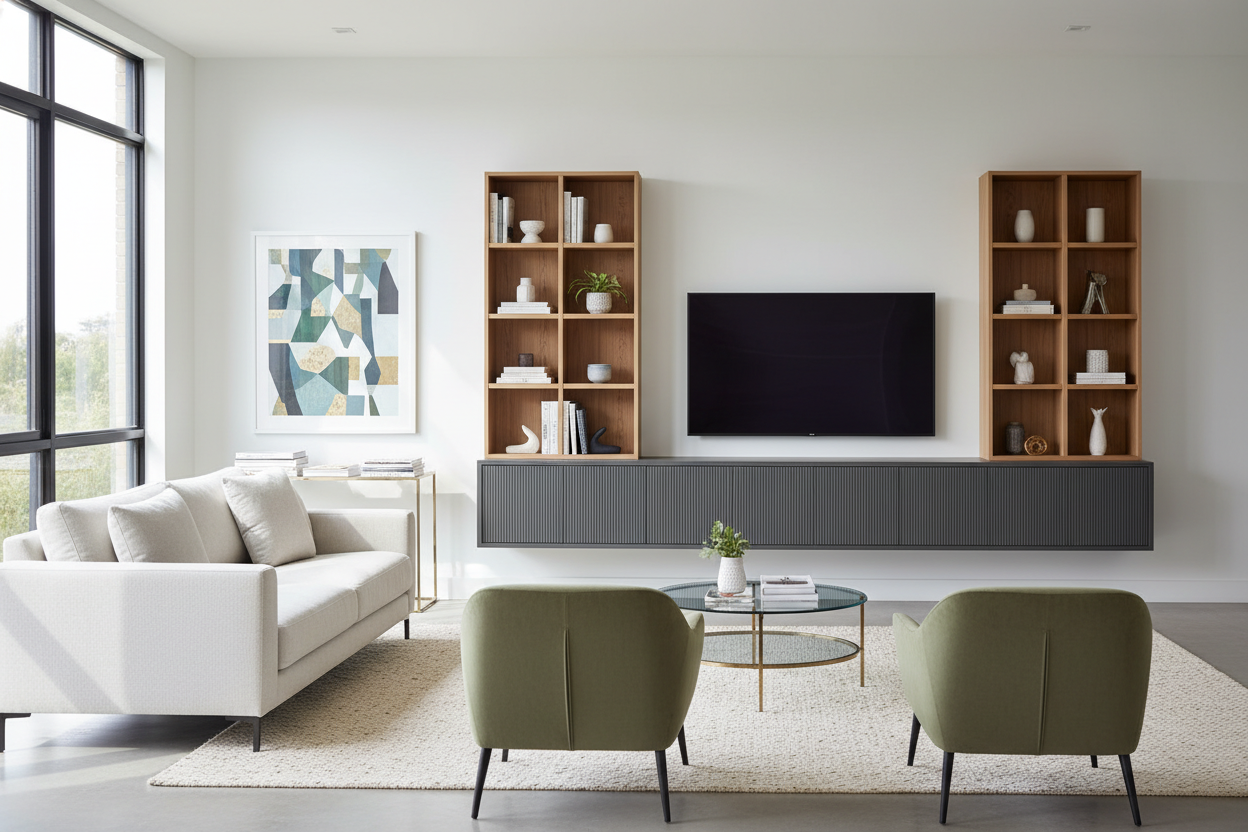
I spent three years staring at a 72-inch media console that felt like a boulder sitting in my 11-by-13 living room. Every time I vacuumed, I’d bang the nozzle against its heavy MDF base, and every time I sat on my sofa, the room felt two sizes too small. The floor space was gone, swallowed by a piece of furniture that mostly just collected dust bunnies and hidden cat toys.
The fix wasn't getting rid of storage—I have too many HDMI cables and board games for that—but moving it north. Swapping that floor-bound beast for a modern wall cabinet for living room storage was the single best decision I’ve made for my floor plan. Suddenly, I could see the rug extending all the way to the baseboard, and the room instantly felt like it had grown by ten square feet.
- Floating furniture creates a 'continuous floor' illusion that makes small rooms feel massive.
- Standard mounting height for a floating cabinet is usually 8 to 12 inches off the floor.
- Always use a stud finder; drywall anchors are not enough for heavy storage units.
- Cable management is the make-or-break detail for a clean, floating look.
The Epiphany: Why Floor-Resting Furniture Was Ruining My Vibe
I realized the problem during a deep clean. I had to move the entire console just to reach a stray sock, and I noticed how much 'visual weight' that area held. When your furniture touches the floor, your brain registers that space as occupied. By lifting the unit off the ground, you expose the floorboards, which tricks your eyes into thinking the room is wider than it actually is.
Before I committed to the wall, I spent weeks finding the perfect small cabinet to see if a smaller footprint would solve it. It helped, but it didn't give me that airy, architectural feel I was craving. I wanted my modern wall cabinet living room setup to look like it was part of the house, not just a box I’d dropped in the corner.
What Actually Makes a Modern Wall Cabinet for Living Room Work?
Not every cabinet is meant to be hung. If you try to bolt a kitchen upper to your living room wall, it’s going to look like a DIY project gone wrong. You need something with a slim profile—usually 12 to 16 inches deep—so it doesn't protrude into the walking path and feel like a hazard.
Modern design is all about the 'no-hardware' look. I prefer push-to-open doors or integrated finger pulls that keep the face of the cabinet flat and seamless. If you want to display some decor without the dust, a black cabinet with glass doors mounted at eye level can act as a sophisticated gallery space. It breaks up the solid weight of the unit and adds a bit of depth to the wall.
Proportions 101: Getting the Height Just Right
This is where most people mess up. If you mount it too high, it looks like a kitchen cabinet; too low, and it looks like it’s sagging. The 'golden rule' for me is keeping the bottom of the cabinet about 10 inches off the floor. This is high enough for a robot vacuum to clear, but low enough that the TV sitting above it stays at a comfortable viewing height.
If you’re mounting a TV above the cabinet, aim for a 6-to-8 inch gap between the top of the cabinet and the bottom of the screen. Any more than that and the two pieces look disconnected. Any less, and it starts to feel cramped and cluttered.
The 'Will It Fall Off the Wall?' Installation Anxiety
I’ll be honest: the first time I loaded my books into a floating cabinet, I held my breath. The fear of 40 pounds of wood and electronics crashing down is real. But here is the reality: if you hit two studs with 3-inch lag screws, that cabinet isn't going anywhere. Drywall anchors are fine for a picture frame, but for a 60-inch cabinet, they are a hard 'no.'
I used a heavy-duty French cleat system for mine. It’s a metal bracket that you level and screw into the studs, and then the cabinet literally hooks onto it. It distributes the weight evenly and makes it much easier to get the unit perfectly level without having to hold the whole thing up while you drive screws.
Still Scared to Drill? The High-Leg Freestanding Alternatives
I get it—some landlords treat a screw hole like a felony, or maybe you have those crumbly 1920s plaster walls that turn to dust the moment you look at them. You can still fake the floating look. The trick is to find a piece with 'stiletto' legs—thin, tapered supports that are at least 6 to 8 inches tall.
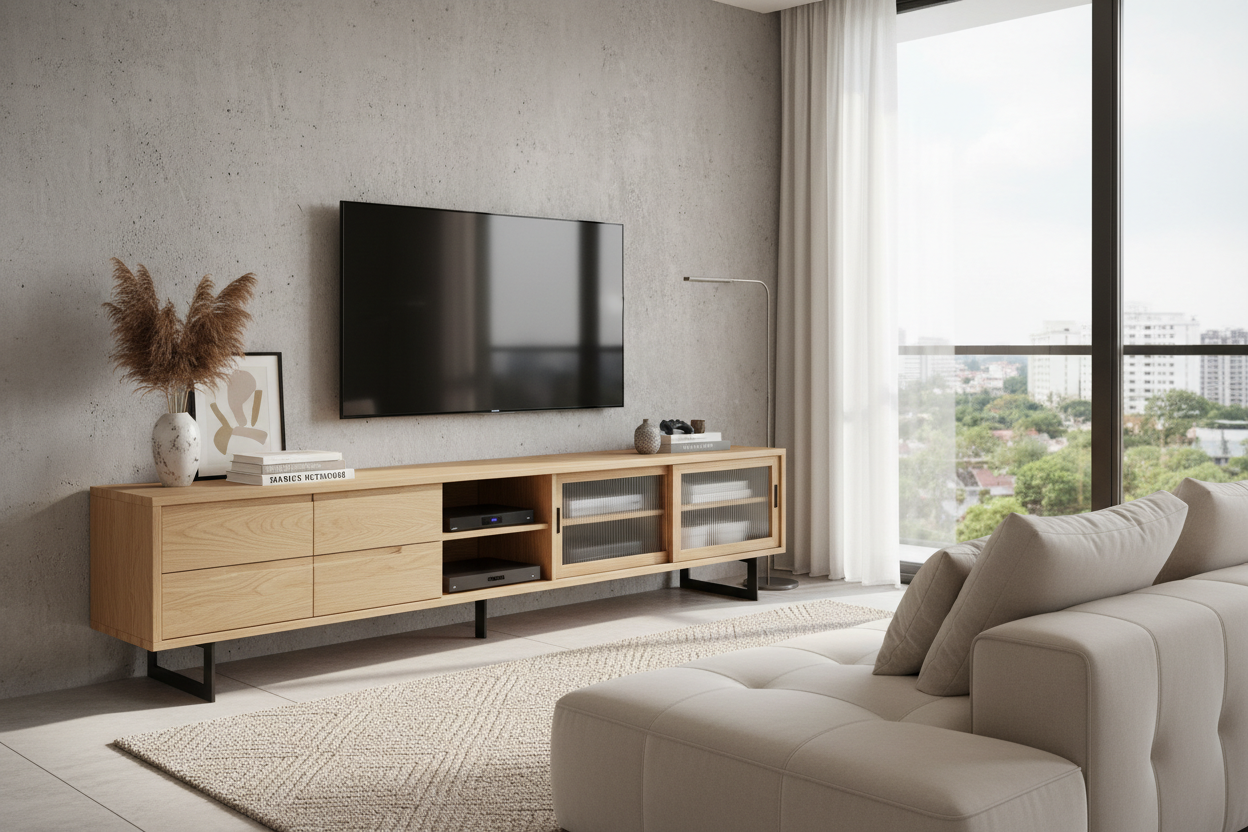
A sideboard with gold legs offers that same visual floor clearance while staying completely freestanding. It’s the ultimate renter-friendly compromise. If you prefer a more organic feel, looking into wooden cabinet designs for living room use that feature high-set bases can provide warmth without the bulk. You still get that 'breathable' floor space, just with four points of contact for peace of mind.
FAQ
Can I mount a floating cabinet on a brick wall?
Yes, but you’ll need a hammer drill and masonry anchors. Don't try to use standard wood screws; they’ll just strip. Tapcon screws are your best friend here.
How do I hide the cords?
If you’re brave, run them behind the drywall using a cable management kit. If you’re not, use a paintable cord cover that runs from the bottom of the cabinet to the outlet. Once it matches your wall color, it virtually disappears.
What is the weight limit for most wall cabinets?
Most well-constructed units can handle 50-75 lbs if properly mounted into studs. Always check the manufacturer's specs, and don't use it as a bench—it’s for storage, not sitting.

Leave a comment
This site is protected by hCaptcha and the hCaptcha Privacy Policy and Terms of Service apply.