

















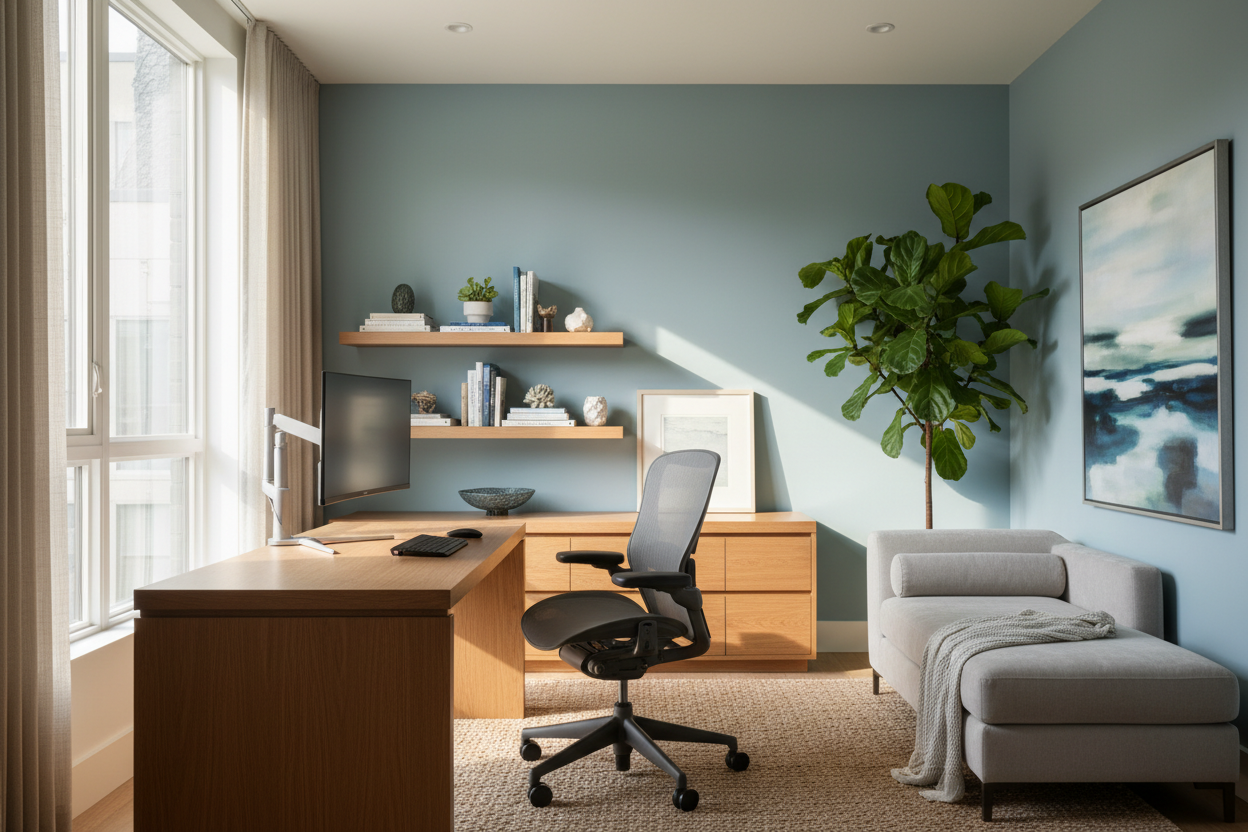
For years, the corporate office dictated our environment: generic beige walls, harsh fluorescent lighting, and furniture built for mass durability rather than individual comfort. As a designer, I see the shift to remote work not just as a logistical change, but as an opportunity to reclaim your spatial narrative. When we analyze why working from home is good, we move beyond the lack of a commute and look at the profound impact of curating your own sensory environment. It is about shifting from a space you occupy to a space that supports you.
Key Design Elements for a Superior WFH Experience
To truly understand the value of a home office, one must look at the fundamental design pillars that corporate spaces often ignore. Here are the core factors that elevate the home working experience:
- Ergonomic Autonomy: The ability to select a chair with the correct lumbar curve and seat depth for your specific body type.
- Lighting Control: Replacing abrasive overhead fluorescents with layered ambient and task lighting (2700K-3000K warmth).
- Material Quality: Swapping industrial laminate for natural materials like solid walnut, oak, or full-grain leather that age with grace.
- Acoustic Softening: Using textiles, rugs, and drapery to dampen echo, creating a focused, quiet atmosphere.
Customizing Your Ergonomic Narrative
In a commercial setting, procurement managers choose furniture based on warranties and bulk pricing. In your home, you choose based on physiology and aesthetic. This is a primary reason why is working from home better for your long-term health.
The Task Chair Investment
Don't settle for the 'dining chair' solution. A proper task chair is the engine of your workspace. I always advise clients to look for a synchro-tilt mechanism, which allows the seat and back to move in a harmonious ratio. Visually, you aren't restricted to black mesh. High-performance fabrics in boucle or velvet textures can soften the technical look of the chair, blending it seamlessy into a residential setting without sacrificing support.
The Materiality of Productivity
Texture plays a psychological role in how we work. Corporate desks are often high-pressure laminate (HPL)—cold and uninspiring. At home, you can introduce 'biophilic' elements through furniture.
Solid Wood vs. Veneer
When selecting a desk, I encourage investing in solid wood or high-grade architectural veneer. A solid white oak desk, for example, offers a tactile warmth that plastic cannot replicate. It grounds the room. Over time, honest materials develop a patina—a story of use—whereas synthetic materials simply look worn. This connection to nature within your workspace reduces cortisol levels and enhances focus.
Lighting and Spatial Flow
The 'cubicle farm' rarely accounts for circadian rhythms. At home, you can position your desk perpendicular to a window to harvest natural daylight without direct glare on your monitor. Supplement this with a heavily weighted architectural floor lamp for evening work. The goal is to create 'pools' of light rather than a flat wash, adding drama and reducing eye strain.
My Personal Take on why working from home is good
I realized the true power of the home office during a project—not for a client, but for myself. I had initially set up a stunning, vintage mid-century modern desk. It looked incredible in photos. However, after three months, I noticed the shallow drawer depth was forcing me to sit awkwardly, and the lacquer finish was terrifyingly prone to scratches.
I swapped it for a contemporary piece with a matte, nano-texture finish that resists fingerprints and a chamfered edge that doesn't dig into my forearms. The lesson? The "good" part of working from home isn't just the aesthetic freedom; it's the ability to fail, pivot, and refine your setup until it fits you like a bespoke suit. You can't swap out your desk in a corporate high-rise, but at home, you have the authority to perfect your ergonomics.
Conclusion
Ultimately, working from home allows you to align your environment with your professional needs and personal taste. By investing in quality materials, proper lighting, and ergonomic furniture, you create a space that doesn't just facilitate work, but elevates it. Treat your home office not as a utility, but as a sanctuary for productivity.
Frequently Asked Questions
How do I maintain visual separation in a small apartment?
Use area rugs to zone the floor. A distinct rug under your desk creates a psychological boundary, signaling to your brain that this specific square footage is for work, distinct from your living area.
Is a standing desk worth the aesthetic compromise?
Absolutely, but you don't have to compromise. Look for standing desks with solid wood tops and shrouded legs that hide the motors. Many high-end manufacturers now produce lift desks that look like traditional writing tables.
What is the best lighting temperature for a home office?
Aim for 3000K to 4000K for your task lamp to promote alertness, but keep your ambient room lighting warmer (around 2700K) to maintain a residential, comfortable feel that integrates with the rest of your home.

Leave a comment
This site is protected by hCaptcha and the hCaptcha Privacy Policy and Terms of Service apply.