



We have all fallen down the rabbit hole of scrolling through endless feeds of pristine workspaces. You save hundreds of images of modern offices, hoping to replicate that sense of calm, productivity, and sophisticated minimalism in your own home or corporate suite. But here is the design dilemma: translating a curated, staged photograph into a functional reality is rarely straightforward. Often, what looks sleek in a two-dimensional image feels cold or impractical once installed.
As an interior designer, I help clients bridge the gap between digital inspiration and physical comfort. This guide will walk you through dissecting those inspirational photos to understand the furniture profiles, material palettes, and spatial layouts that actually work in daily life.
Key Features to Look For
Before buying furniture based on an aesthetic, use this checklist to ensure the design is livable. These are the core elements that define high-quality modern office design:
- Material Authenticity: Look for matte finishes, natural wood grains, or high-quality veneers rather than high-gloss synthetics that scratch easily.
- Ergonomic Integration: Ensure chairs and desks offer adjustability without bulky levers that ruin the visual silhouette.
- Cable Management: Modern design demands clean lines; look for desks with integrated modesty panels or grommets.
- Lighting Layers: A mix of ambient (overhead) and task (desk lamp) lighting is crucial for reducing eye strain.
- Texture Variance: Combining metal, wood, and textiles prevents the space from feeling sterile.
Decoding the Visuals: Material & Texture
When you look at high-end modern office photos, the luxury appeal usually stems from a sophisticated mix of materials. In furniture selection, the tactile experience is just as important as the visual one. Avoid the temptation of buying cheap "fast furniture" that mimics the look but lacks the substance.
For desks, consider the difference between solid walnut and a printed laminate. While modern office pics might not show the difference in grain depth, in person, a natural veneer or solid wood top adds warmth and ages beautifully. If you prefer the industrial look often seen in pictures of modern offices, opt for powder-coated steel frames. They resist chipping and fingerprints far better than chrome, maintaining that matte, architectural look.
The Silhouette: Choosing the Right Furniture
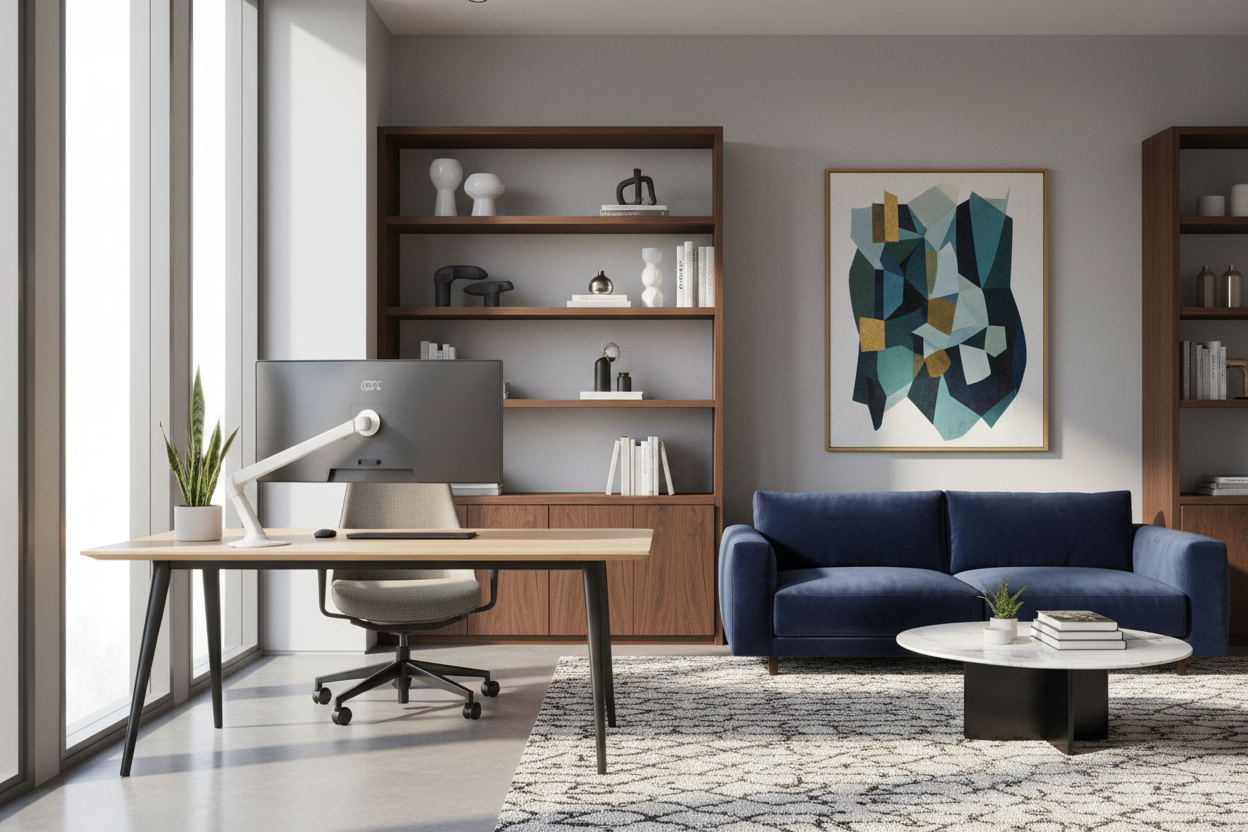
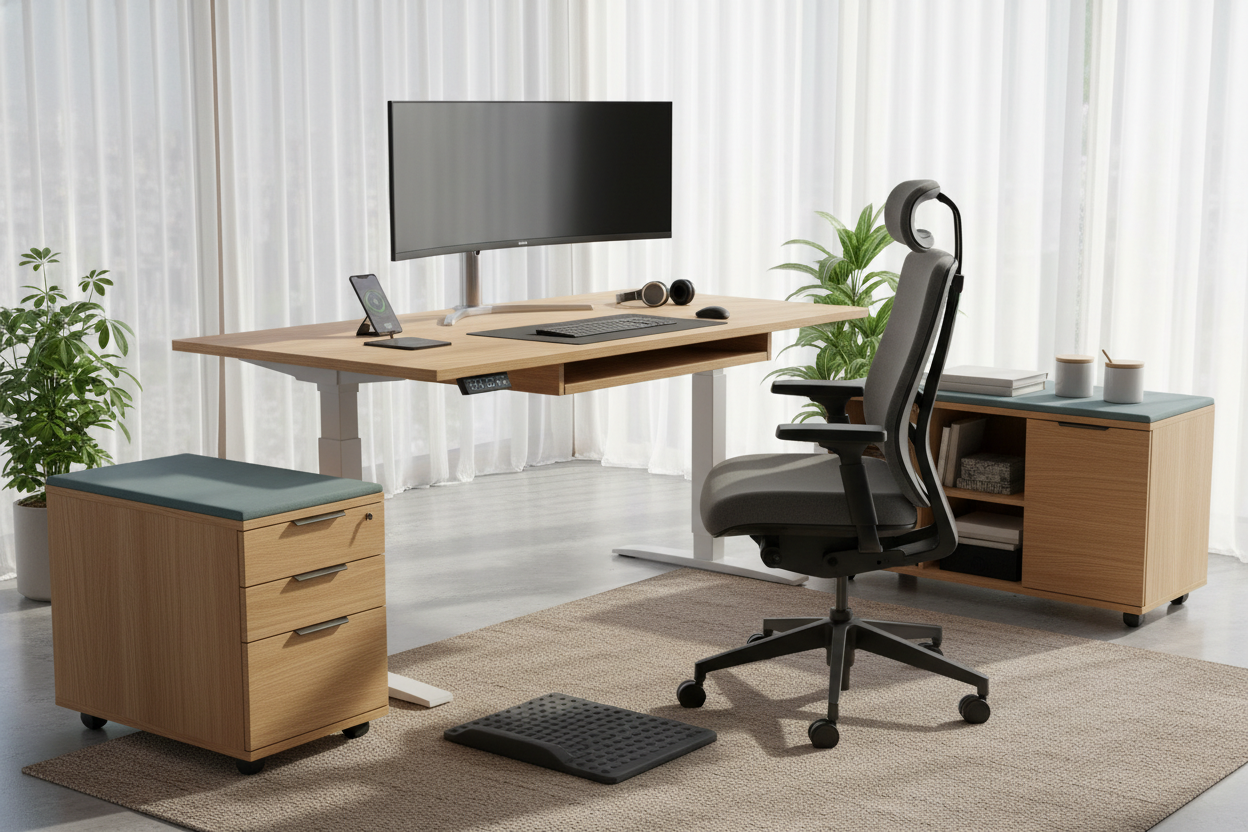
Modern design is defined by clean lines and "visual lightness." When shopping, pay attention to the legs of the furniture. Tapered legs or floating desktops create a sense of space, which is why modern office images often depict rooms that feel airy and open, even if the square footage is limited.
The Chair Dilemma
The chair is where aesthetics often clash with ergonomics. Many modern office photos feature low-back, mid-century style chairs that look stunning but offer zero lumbar support. As a specialist, I advise clients to look for "hybrid" task chairs. These feature the mechanical benefits of an ergonomic chair (tilt tension, lumbar depth) but wrap them in fabric or leather rather than exposed plastic mesh. This maintains the visual integrity of your inspiration board without sacrificing your back health.
Lighting and Spatial Planning
A common mistake is ignoring the "negative space" seen in a modern office picture. In photography, space is manipulated for balance. In your home, you need flow. Ensure you have at least 36 to 48 inches of clearance behind your desk for chair movement.
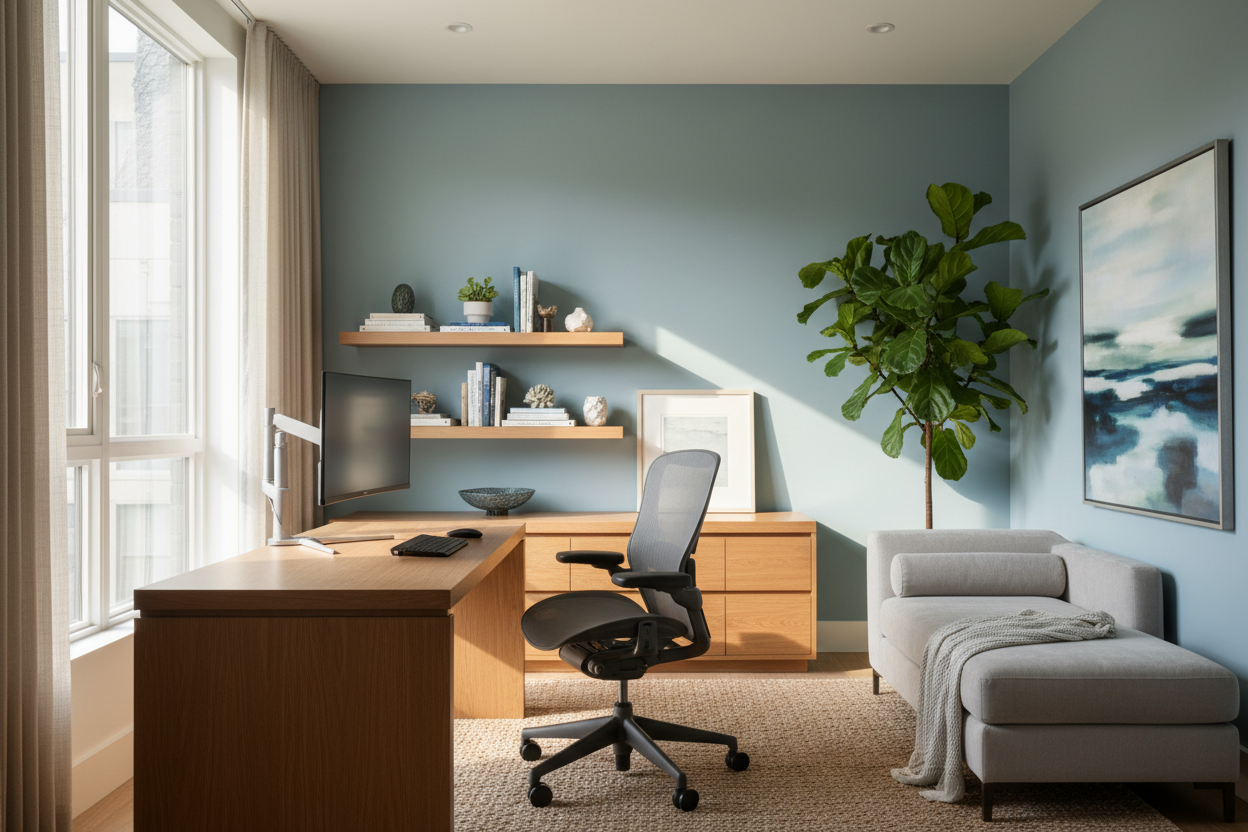
Furthermore, lighting in these photos is almost always staged. To recreate the warmth found in your favorite modern office images, avoid relying solely on harsh overhead recessed cans. Introduce a floor lamp with a linen shade to soften the shadows and an architectural desk lamp with a high CRI (Color Rendering Index) LED bulb to reduce glare on your monitor.
My Personal Take on images of modern offices
I learned a hard lesson early in my career regarding the "glass desk" trend that dominates so many modern office pics. I specified a stunning, architectural glass desk for a client who wanted a hyper-modern, transparent look. It photographed beautifully.
However, two weeks after installation, I got a call. The reality of a glass desk is that it amplifies clutter. Every cable, every dropped paperclip, and—worst of all—the constant smudges and fingerprints were visible. It required daily polishing to look like the photo. Since then, I always advise clients: if you love the look of glass, use it for shelving or coffee tables, but for your primary work surface, stick to a matte wood or Fenix laminate. It hides the chaos of work and feels warmer to the touch during long sessions. A workspace should serve you, not the other way around.
Conclusion
Transforming your workspace isn't just about copying a look; it is about understanding the design principles that make that look appealing. By focusing on quality materials, ergonomic silhouettes, and proper lighting, you can create a space that rivals the best modern office images while functioning perfectly for your daily grind.
Frequently Asked Questions
How do I make a small room look like spacious modern office photos?
Focus on "floating" furniture. Wall-mounted desks or shelving units keep the floor visible, which tricks the eye into perceiving more square footage. Also, use a monochromatic color palette to reduce visual noise.
Why do my furniture finishes look different than in online pictures?
Studio photography uses powerful lighting that can wash out wood stains or make fabrics appear lighter. Always request a physical material sample (swatch) before committing to large furniture pieces to ensure color accuracy in your home's lighting.
What is the best desk depth for a modern setup?
While some sleek desks in photos look narrow, for a functional modern office, aim for a depth of at least 24 to 30 inches. This provides enough distance for your monitor to prevent eye strain while leaving room for a keyboard and notepad.

Leave a comment
This site is protected by hCaptcha and the hCaptcha Privacy Policy and Terms of Service apply.