




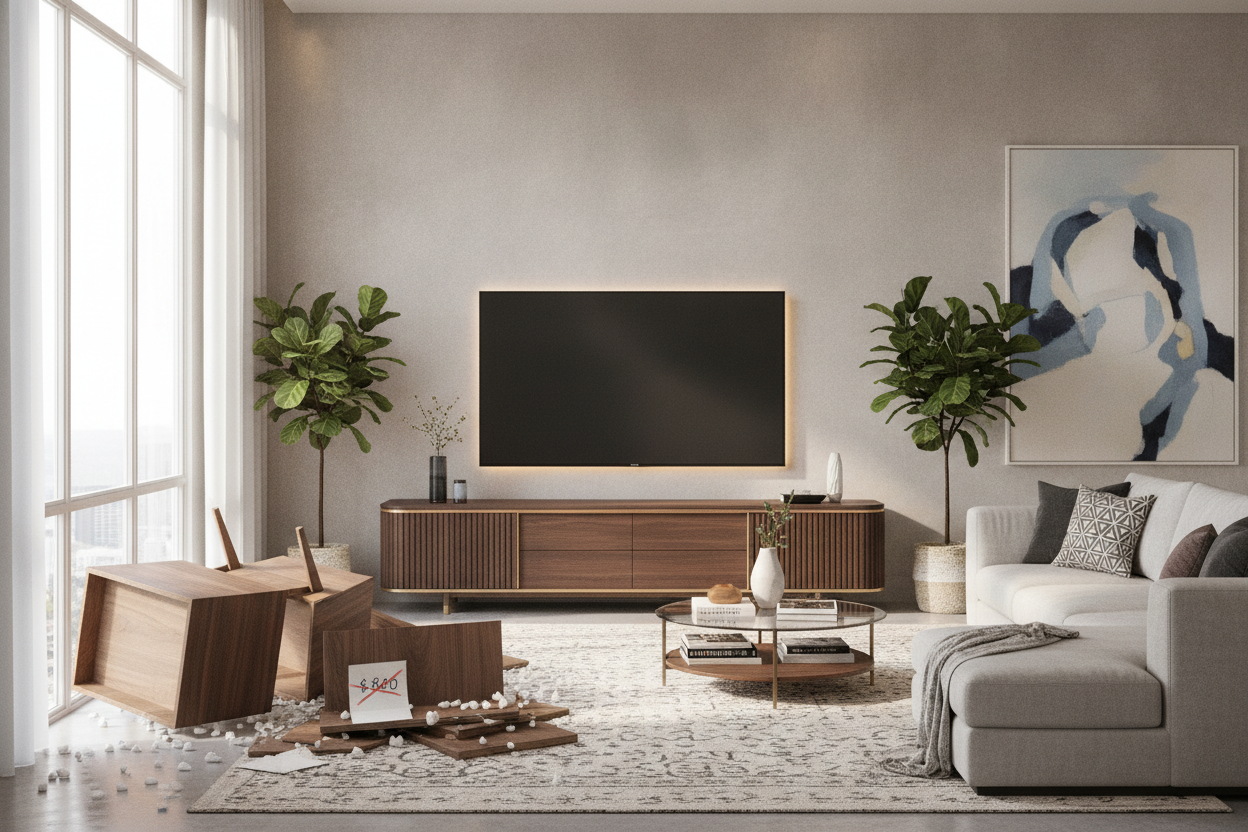
I spent an entire Saturday afternoon trying to hide three inches of exposed baseboard behind a particle-board unit that promised it was 'extra wide.' It wasn't. It looked like a high-water pair of pants for my living room wall, leaving an awkward gap that collected dust bunnies and stray charging cables.
After burning through three different units in two years, I finally realized that a tv stand custom built for my specific wall was the only way to stop the cycle of furniture regret. I’d spent $800 on 'temporary' solutions that ended up in a dumpster or on the curb. Here is what I learned about the trap of standard sizing.
Quick Takeaways
- Standard retail units are often too shallow for real AV equipment.
- Customization allows you to account for baseboards, so the piece sits flush.
- Solid wood outlasts three generations of flat-pack laminate.
- Integrated cable management is a requirement, not a luxury.
The 'Almost Fits' Trap: Why Retail Units Were Ruining My Living Room
Most furniture stores design for the average, but nobody’s living room is actually average. When you browse standard TV stands, you’re looking at increments of 12 inches that rarely align with the architectural realities of your home. I had a 94-inch alcove and was trying to force an 80-inch unit into it. Those 7-inch gaps on either side made the whole room look unfinished and accidental.
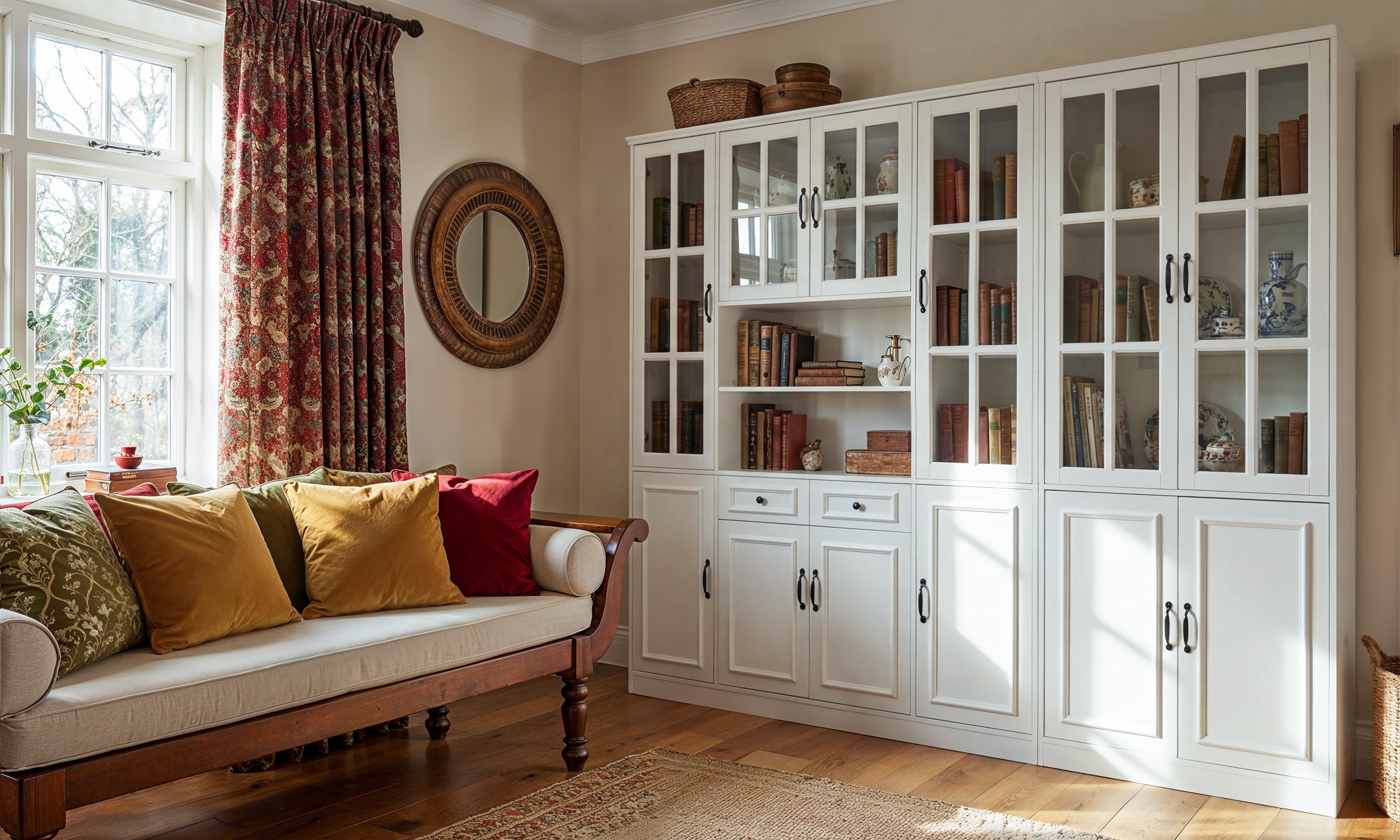
Standard units also tend to be too short. If you have high ceilings, a 20-inch tall console looks like a footstool. It fails to anchor the room. I realized I didn't just need a place to put the screen; I needed a piece of furniture that felt like it was part of the house. Custom media consoles allow you to dictate the height, width, and depth down to the quarter-inch, which is the difference between a 'find' and a 'fixture.'
The Breaking Point: Why I Finally Decided to Customise a TV Console
The breaking point came when I bought a 75-inch TV and realized my existing unit was literally bowing in the middle. Most mass-market furniture uses 1/2-inch MDF that isn't rated for the weight of modern glass or heavy AV receivers. I was tired of seeing that visible sag every time I sat on the sofa. I was also ditching flimsy glass options that showed every fingerprint and offered zero cable concealment.
I needed a way to customise tv console dimensions to fit my vintage Marantz receiver, which is surprisingly deep. Standard retail units are usually 15 to 16 inches deep, but once you plug in HDMI cables, you need at least 18 inches of clearance. Custom built tv stands are the only way to ensure your gear actually fits inside the cabinet without having to hack a hole in the back panel with a jigsaw.
Are Custom Built TV Stands Actually That Expensive?
Let's do the 'Tax of the Cheap' math. I bought a $200 unit that sagged. I replaced it with a $300 unit that was the wrong color. Then I spent $300 on a 'better' one that didn't have enough ventilation and fried my Xbox. That's $800 gone. A high-quality custom media console might run you $1,200 to $1,800, but you only buy it once. It’s an investment in your sanity and your home's resale value.
When you look at custom made tv stands, you aren't just paying for the size; you're paying for the finish. You can avoid those cheap flat black finishes that peel at the edges after six months. Instead, you get real wood grains and stains that match your existing flooring or trim. It’s the difference between a piece of furniture that looks like it was delivered in a box and one that looks like it was built with the house.
3 Details You Must Nail When Ordering Custom Wood TV Stands
If you’re going to commission custom wood tv stands, don't waste the opportunity by being vague. First, measure your baseboards. If your baseboards are an inch thick, tell your builder to include a 'toe kick' or a notch so the unit sits flush against the wall. If you don't, you'll still have that annoying gap where pens and remotes go to die.
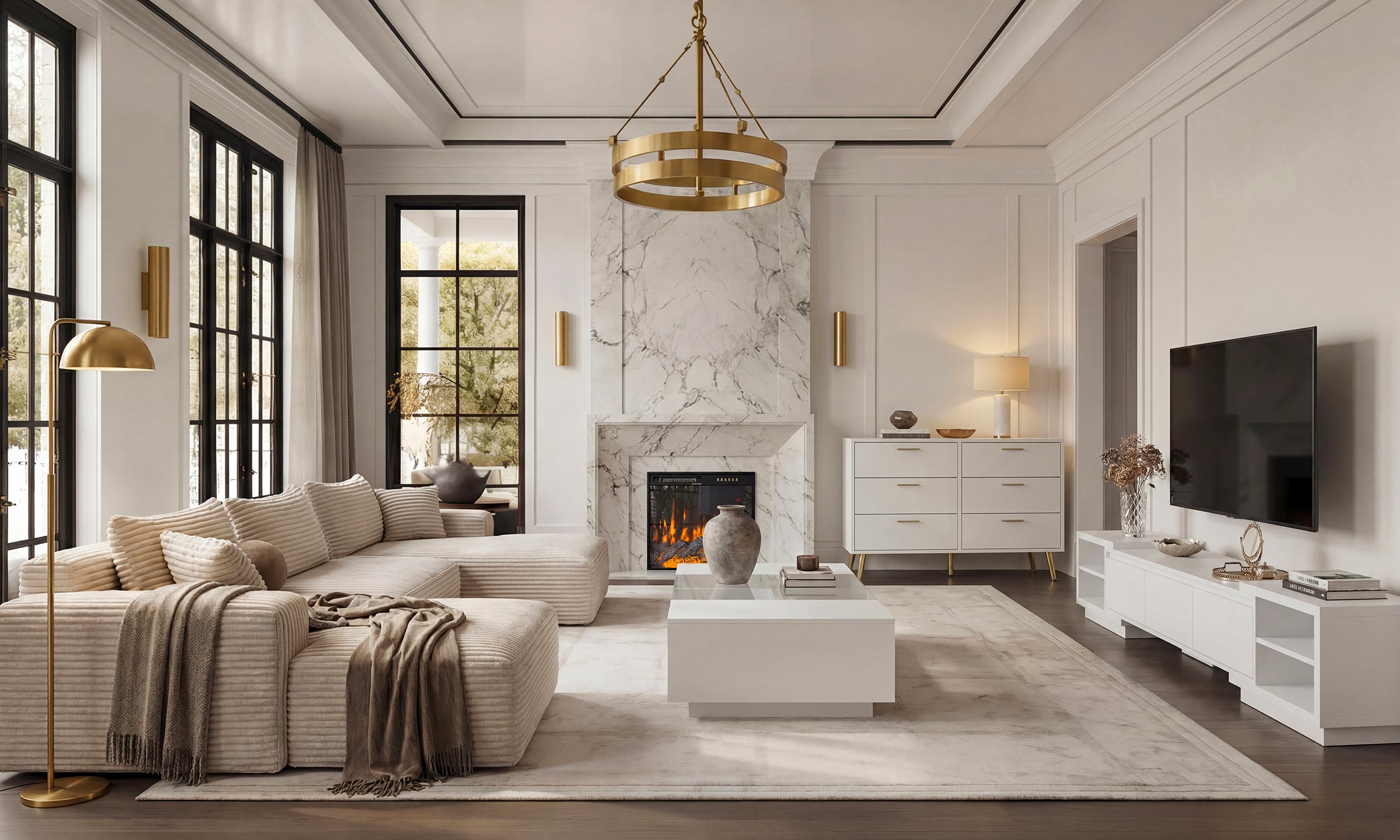
Second, plan your 'drop zones' for cables. I asked for a 2-inch channel behind the shelves so I could run wires vertically without drilling new holes later. Look at a long four-drawer media console as a reference for how much storage you actually need for controllers, remotes, and manuals. Finally, specify ventilation. If you’re hiding a PlayStation or a receiver behind closed doors, you need slotted back panels or active fans. Heat is the silent killer of expensive electronics.
Was Going Custom Actually Worth the Wait?
It took six weeks for my custom piece to arrive, and yes, I was impatient. But the moment we slid it into place, the room changed. It filled the alcove perfectly, the wood stain matched my white oak floors, and all the wires vanished. It didn't just hold the TV; it made the living room feel intentional and high-end. If you're tired of furniture that feels like a compromise, stop browsing the big-box sites and find a builder who can give you exactly what your space requires.
FAQ
How deep should a custom TV stand be?
At least 18 inches if you have an AV receiver. If you are only wall-mounting a TV and using a soundbar, you can go as slim as 12 to 14 inches to save floor space.
What is the best wood for a custom media unit?
Oak, Walnut, or Maple are the gold standards. They are dense enough to hold heavy equipment without sagging and take stains beautifully. Avoid pine; it's too soft and will dent the first time you drop a remote.
Do I need to vent my TV stand?
Absolutely. If you have any gaming consoles or receivers behind closed doors, you need at least two inches of clearance on all sides and a vented back panel to prevent overheating.

Leave a comment
This site is protected by hCaptcha and the hCaptcha Privacy Policy and Terms of Service apply.