

















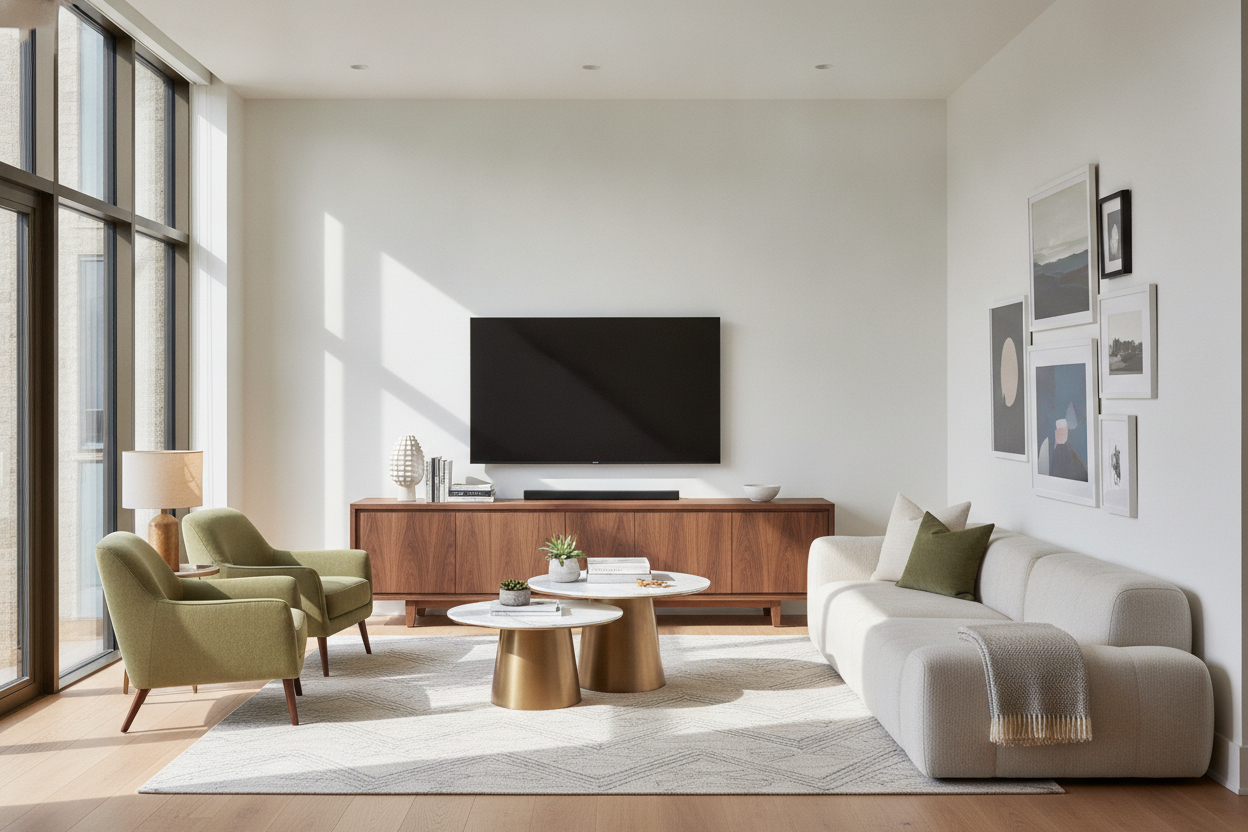
I spent three years staring at a tangle of dusty HDMI cables through a tempered glass shelf. Every time I sat down to watch a movie, I wasn't looking at the screen; I was looking at the glowing red light of my router and the gray dust bunnies clinging to the chrome legs of my TV stand. It felt like my living room was a Best Buy showroom from 2005.
The moment I swapped that cold, transparent mess for a solid media console wood piece, the entire room changed. It didn't just hide the mess; it anchored the space. If your living room feels like a sterile waiting room, the problem might be your furniture's lack of a pulse.
Quick Takeaways
- Wood hides the 'cable spaghetti' that glass and metal put on full display.
- Natural grain breaks up the harsh, flat black of giant TV screens.
- Solid wood won't sag under the weight of heavy receivers or soundbars.
- A 75-inch TV needs a long console to avoid looking like a mushroom on a toothpick.
Why I Finally Ditched My Glass and Metal TV Stand
I used to think 'modern' meant glass and metal. I was wrong. Glass is a nightmare to live with. It shows every fingerprint, every smear, and every speck of dust the second you finish cleaning it. But the real deal-breaker was the visibility. Most glass-and-metal tv stand console cabinet designs offer zero cable management. You’re forced to see every black cord snaking down to the power strip.
It makes a room feel frantic. When you have a heavy, solid piece of furniture, you create a visual 'stop.' My old metal stand felt like it was barely holding on, making my cozy living room feel temporary and uninviting. Transitioning to a wood unit allowed me to tuck the clutter behind cabinet doors, which instantly lowered my blood pressure every time I walked into the room.
How a Media Console Wood Piece Softens the 'Tech' Vibe
Let’s be honest: a 65-inch TV is just a giant, cold, black rectangle. It’s a void in your decor. When you place that void on top of a metal or plastic stand, the whole area feels industrial and harsh. A media unit wood block introduces organic texture and warmth that balances out all that high-tech glass and plastic.
The natural grain of oak, walnut, or mango wood provides a much-needed contrast to your soundbar and game consoles. I've seen people try to save money with flat black TV stands, but they often end up looking like cheap laminate that absorbs all the light in the room. Real wood grain has depth. It catches the light and makes the electronics feel like they belong in a home rather than a server room.
Finding the Right Long Wood Media Console for Massive Screens
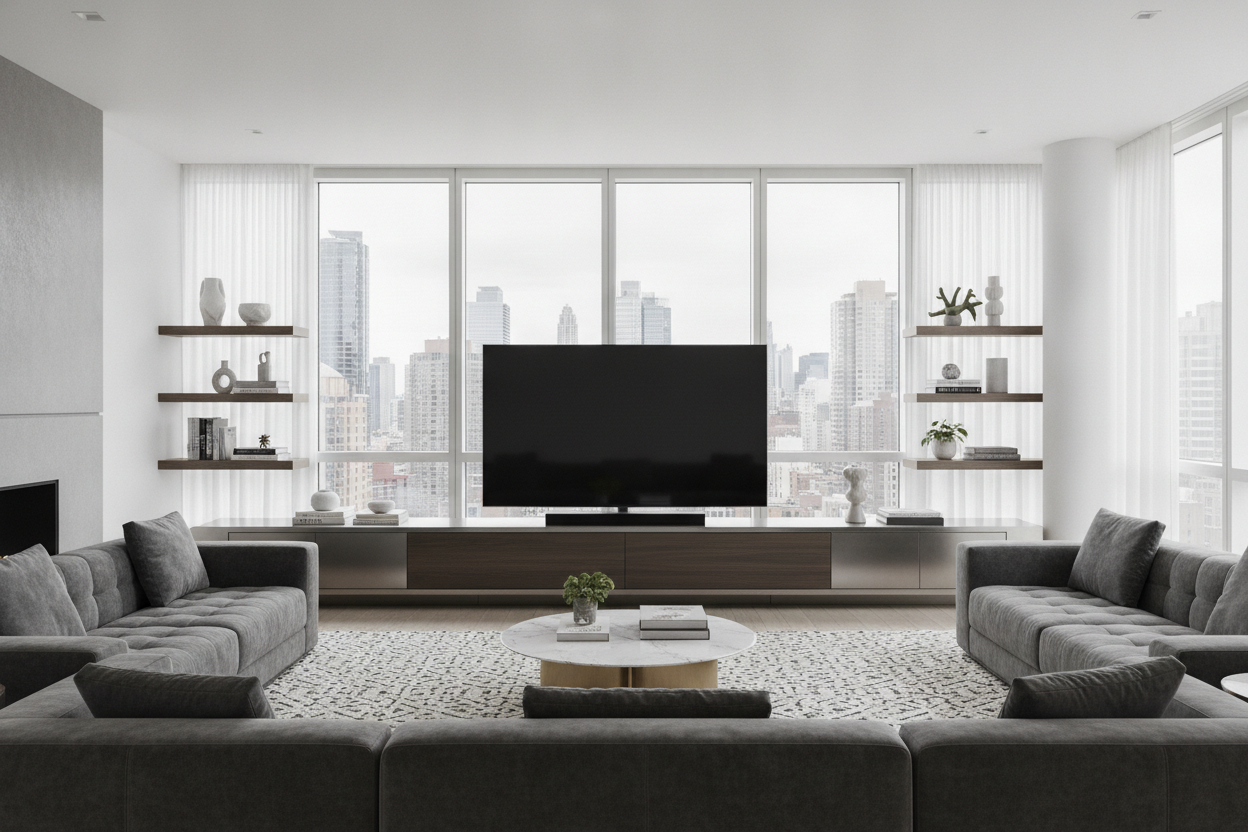
Proportion is everything. I see this mistake constantly: someone buys a massive 75-inch TV and plops it on a 50-inch stand. It looks top-heavy and precarious. If you have a huge screen, you need large media consoles that extend at least 6 to 10 inches past the edges of the TV on both sides.
A long wood media console acts as a visual anchor. It grounds the wall. If the console is too short, the TV dominates the room in an aggressive way. By choosing a wider wood media console table, you create space on the ends for a lamp or a small plant, which helps the TV blend into the overall design of the room instead of being the only thing you see.
Sturdy Wood Media Shelves vs. Bowing MDF Boards
If you've ever bought a cheap flat-pack unit, you know the 'MDF smile'—that depressing sag in the middle of the shelf after six months. Modern electronics are heavy. A high-end receiver can weigh 30 pounds, and a vintage record player isn't exactly light either. You need wood media stands that can actually handle the load.
I look for wood media shelves that are either solid wood or high-quality thick plywood with a real wood veneer. Avoid the paper-thin stuff. I once had a cheap particle-board unit literally crack under the weight of my vinyl collection. It’s worth spending the extra couple hundred dollars for a piece that won't require a center support leg that ruins the aesthetic.
My Favorite Ways to Style a Wood Media Console Table
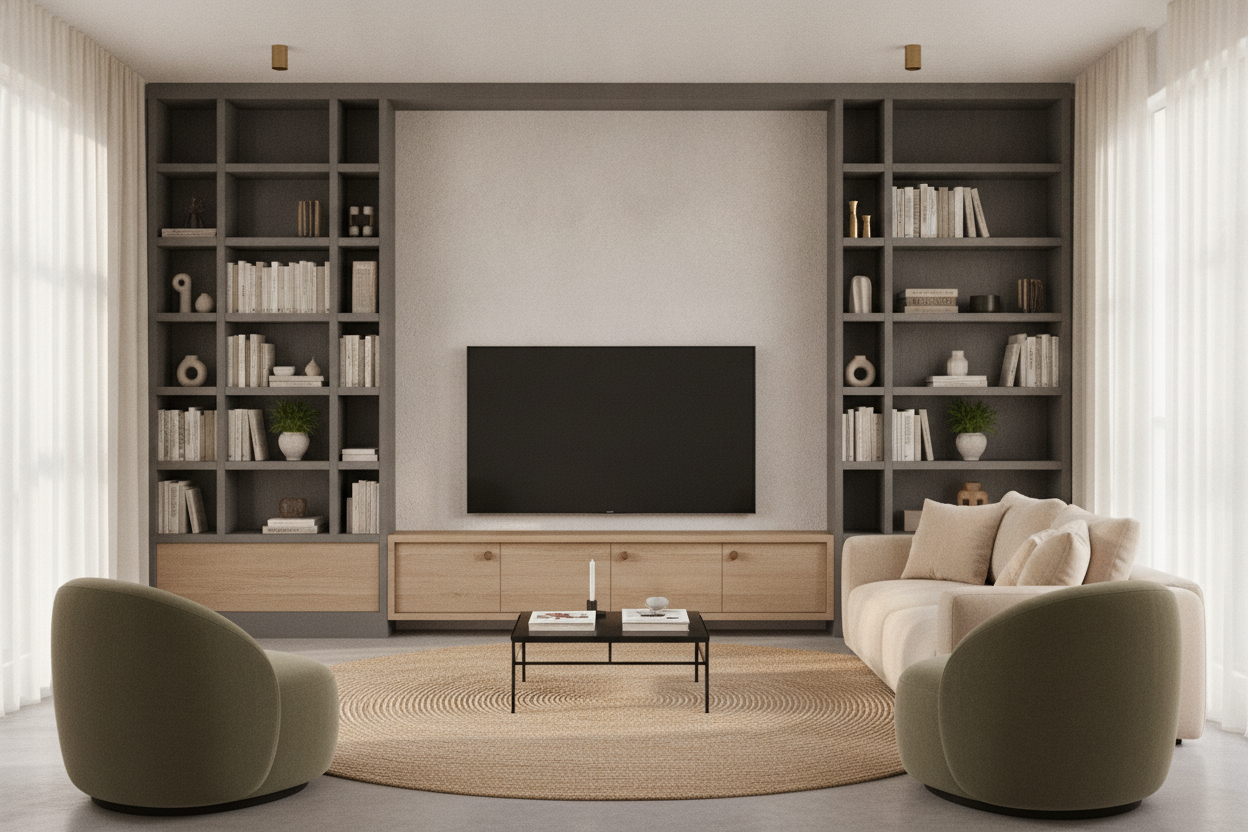
Once you have your media room console table in place, don't just leave the TV alone. The goal is to distract the eye from the big black box. I like to lean a couple of oversized art books on one side and place a matte ceramic vase on the other. It adds height and varied textures.
Greenery is your best friend here. A trailing Pothos or a structural Snake Plant next to the screen softens the edges of the TV. Just make sure you use a coaster or a tray under your pots—nothing ruins a beautiful wood media table faster than a water ring from a leaky planter. I learned that the hard way with a vintage teak unit I scored at a flea market.
When to Break the Rules: Mixing Wood with Metal Accents
You don't have to go full 'rustic cabin' to enjoy wood. In fact, some of the most interesting designs I've tested are those that mix materials. A unique media console might feature slatted wood doors with slim steel legs, giving you that mid-century modern look without the fragility of all-metal furniture.
If your room is already drowning in wood floors and wood trim, a solid oak unit might feel like 'too much.' In those cases, I suggest looking for a black and brass media console. It provides the grounding weight of a solid cabinet but uses metal hardware and legs to break up the timber tones. It keeps the space feeling curated rather than matched-to-death.
FAQ
Is solid wood better than veneer for a TV stand?
Solid wood is more durable and can be refinished, but high-quality veneers on plywood are actually more stable in homes with big temperature swings. Just stay away from 'paper' veneers found on the ultra-cheap stuff.
How do I hide cables in a wood console?
Look for units with pre-drilled 'media holes' in the back panel. If the piece you love doesn't have them, you can easily use a 2-inch hole saw bit on a power drill to create your own entry points behind the cabinet doors.
Should my TV stand be higher or lower than my sofa?
Your eyes should be level with the bottom third of the screen when sitting. Usually, this means a console height of 20 to 24 inches. If you go too high, you'll be dealing with 'bedroom TV' neck strain.

Leave a comment
This site is protected by hCaptcha and the hCaptcha Privacy Policy and Terms of Service apply.