

















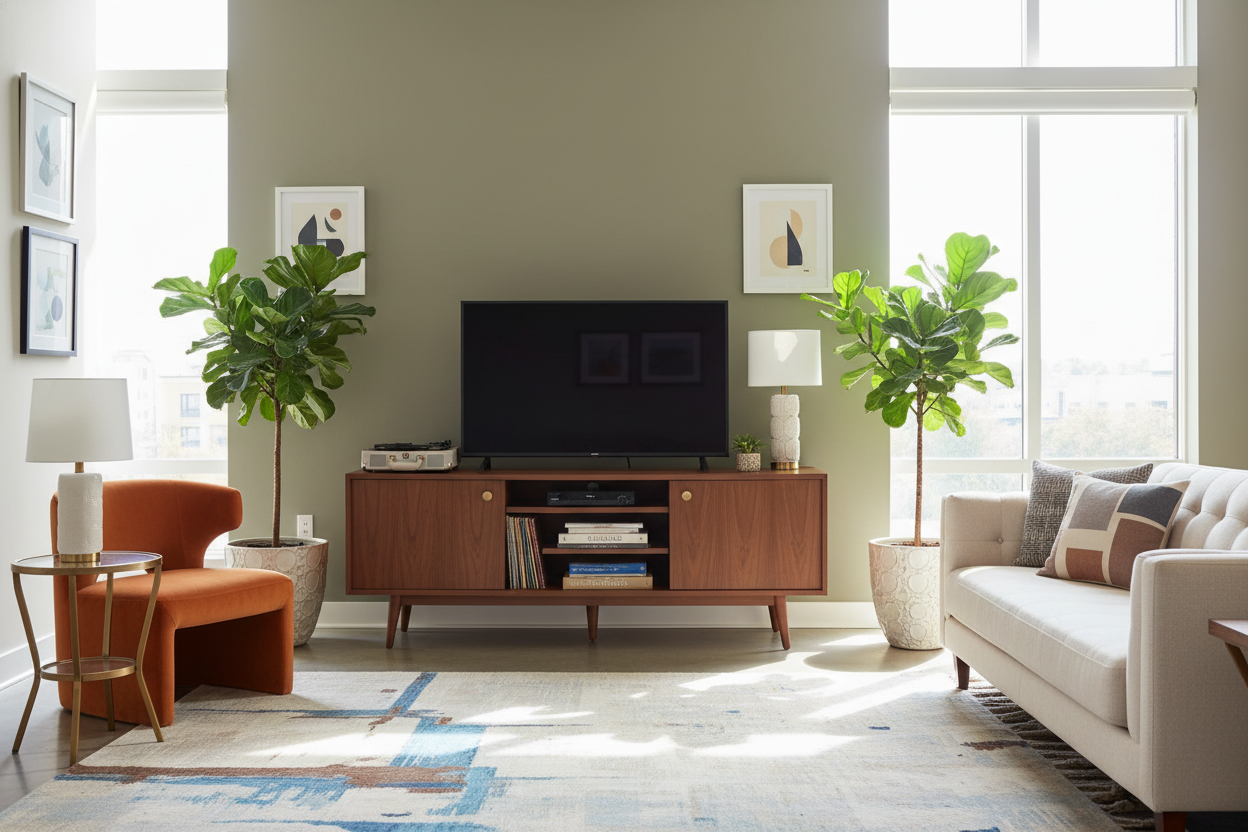
I used to be a vintage purist. I spent three months hunting down a 1962 walnut buffet on Craigslist, convinced it was the only way to house my electronics without ruining the vibe. It looked incredible for exactly forty-eight hours—until I realized I had to drill a two-inch hole through solid vintage teak just to plug in my lamp, and the weight of my screen started causing a visible dip in the wood. Buying a mid-century modern entertainment center wasn't giving up on style; it was an admission that my 21st-century tech needs more than a 1960s dining room accessory can provide.
- Vintage sideboards often lack the internal bracing needed for heavy, wide-screen televisions.
- Cable management is non-existent in authentic antiques, leading to a 'rat's nest' of wires behind the unit.
- Modern consoles offer ventilation holes that prevent your gaming consoles from overheating in enclosed cabinets.
- A low-profile design ensures your TV sits at eye level, saving you from 'hospital bed' neck strain.
The Thrifted Credenza Delusion (And Why My Cords Were a Nightmare)
We've all seen the Pinterest photos of a gorgeous, spindly-legged sideboard acting as a media hub. What you don't see is the structural nightmare behind the scenes. Most vintage pieces were designed to hold porcelain plates and linen napkins, not a 60-pound piece of glass and a heat-spewing receiver. My old buffet started bowing within six months because the weight distribution was all wrong.
Then there’s the wire situation. Realizing I had no way to hide my router, PS5, and soundbar cables without leaving the cabinet doors permanently ajar was my breaking point. I tried those sticky plastic cord clips, but they just peeled off the vintage finish. Switching to purpose-built TV stands meant I finally had a dedicated channel for every wire, keeping the look clean without the DIY carpentry trauma.
Why a Purpose-Built TV Unit Mid Century Style Just Works Better
A proper mid mod entertainment center mimics the aesthetic of the 1950s but understands that we live in a world of HDMI cables. The back panels are usually recessed or removable, and the shelving is adjustable. I’ve found that a tv unit mid century design often includes specific cutouts for airflow. If you’ve ever felt the heat coming off a modern gaming console, you know that trapping it inside a solid wood box is a recipe for a fried motherboard.
It is also about the footprint. Modern units are often shallower than dining room credenzas. This saves you three or four inches of floor space, which doesn't sound like much until you're trying to walk past your coffee table in a narrow apartment. It’s more than just a TV stand; it’s a piece of furniture engineered for the weight of your actual life.
Finding a 65 Inch TV Stand Mid Century That Doesn't Look Enormous
The biggest mistake I see is people buying a stand that is the exact same width as their TV. If you have a 65-inch screen, your 65 inch tv stand mid century needs to be at least 70 inches wide. You need that 'visual breathing room' on the sides so the TV doesn't look like an oversized hat on a small head. I prefer a brown mid century tv stand in a darker walnut finish to help the black bezel of the TV blend in rather than pop.
Go for a unit with tapered legs. Those iconic 'stiletto' legs create negative space underneath the furniture. It makes the entire piece feel like it's floating, which prevents a large 72-inch console from feeling like a heavy block of wood that's eating your entire living room wall.
The Low-Profile Secret to Making Your Ceilings Look Taller
If your TV stand is too high, it cuts your wall in half and makes your ceilings feel lower than they are. A mid century modern low profile tv stand—usually sitting about 18 to 22 inches off the ground—keeps the center of the screen at eye level when you're sitting on the sofa. This is the 'designer secret' for making small rooms feel airy.
I’m a huge fan of the mid century modern credenza tv stand with slatted or 'tambour' doors. They hide the clutter of your cable box and remotes but still allow infrared signals to pass through. You get the sleek, horizontal lines that define the era without the visual noise of seeing your messy stack of Blu-rays through glass doors.
Do You Really Need to Match Your Coffee Table?
Please, stop buying 'sets.' A mid century modern tv stand and coffee table don't need to be identical twins. In fact, if they match perfectly, your house starts to look like a furniture showroom from a strip mall. I like to mix my wood tones. If my entertainment center is a deep, honey-toned teak, I might go for a walnut coffee table with a slightly different grain.
The key to making them feel like they belong together is the leg style. If your TV stand has round tapered legs, find a coffee table with a similar silhouette. They don't have to be the same species of wood, but they should speak the same design language. It feels more 'collected over time' and less 'bought in one click.'
FAQ
Will a 65-inch TV fit on a 60-inch stand?
Technically? Maybe. Visually? It’s a disaster. The TV will overhang the sides, making the whole setup look top-heavy and cheap. Always aim for a stand that is at least 4-6 inches wider than the screen.
Is walnut better than oak for mid-century styles?
Walnut is the classic choice for that 'Mad Men' look. It has a tighter grain and a richer, darker tone. Oak can work, but it often feels more 'Scandi' or 'Farmhouse' unless it’s stained very specifically.
How do I hide the wires if the back is open?
Use black Velcro ties to bundle the cables together and run them down the back of one of the center legs. If the stand is low-profile enough, the bundle will be almost invisible from a sitting position.

Leave a comment
This site is protected by hCaptcha and the hCaptcha Privacy Policy and Terms of Service apply.