

















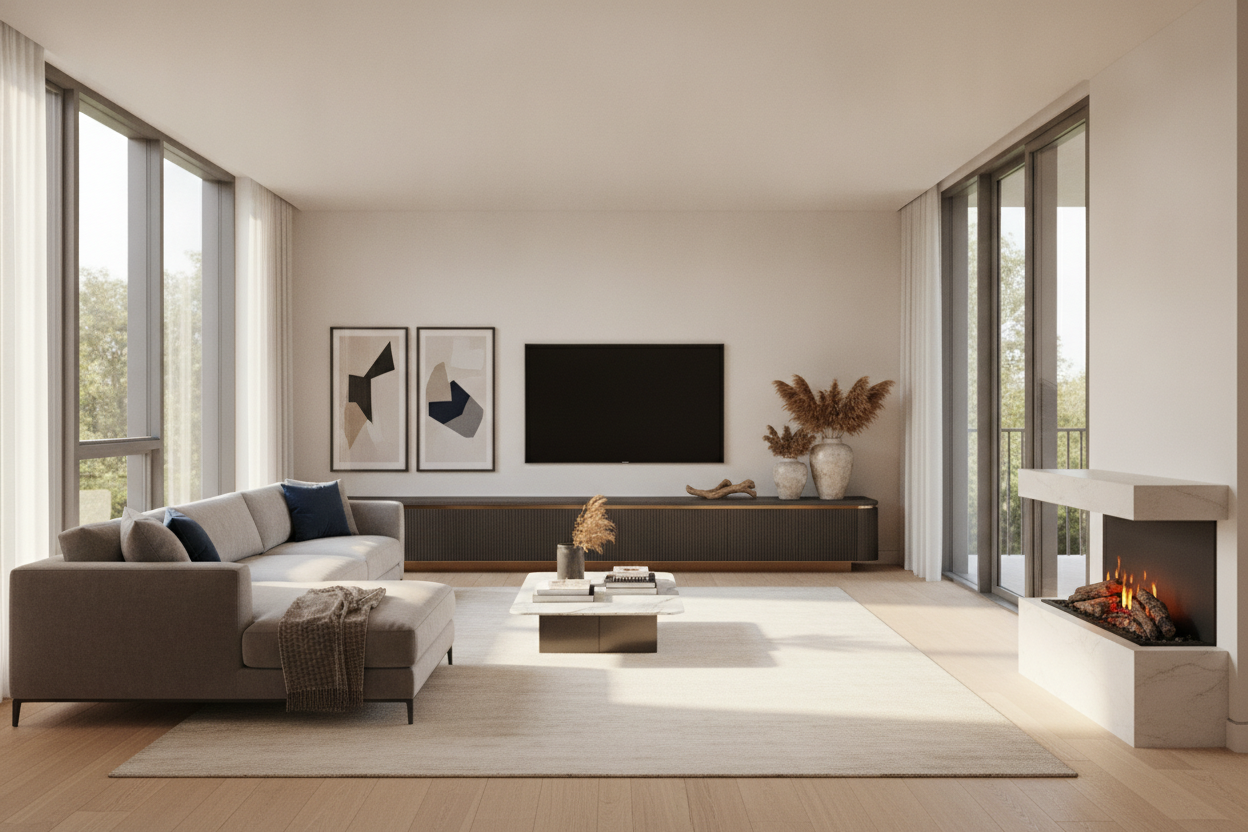
I spent three weeks last winter huddled under a faux-fur weighted blanket, staring at my TV and shivering. My living room in this old house is drafty, and the tiny space heater I had was doing exactly nothing for my frozen toes except adding a rhythmic clicking sound to my evening. I wanted real fire. I wanted a gas fireplaces tv stand that could actually heat my 400-square-foot living room without sounding like a hairdryer on its last legs.
- Gas units output 20,000 to 30,000 BTUs; most electrics top out at a measly 5,000.
- Freestanding gas furniture is almost non-existent in retail stores for massive liability reasons.
- Venting and hard-piped gas lines make these permanent, immovable fixtures in your home.
- The unregulated heat from a ventless gas log can literally melt the internal circuitry of an OLED TV.
The Dream: Real Flames, Serious Heat, and My TV
The logic seemed sound at 1 AM after three glasses of wine. If I’m going to dedicate six feet of wall space to a media console, it might as well pull double duty as a furnace. Most electric inserts are basically glorified nightlights with a heating element. I wanted the visceral roar of a flame and the kind of heat that forces you to peel off your sweater within ten minutes of sitting down.
Searching for a gas fireplaces tv stand felt like looking for a unicorn that also does your taxes. I pictured a mid-century modern walnut cabinet with a sleek, blue-flame gas insert. No ash, no logs to haul, just a remote click and instant warmth. I was ready to drop two grand to make it happen, thinking I could just find a model, have it delivered, and be cozy by the weekend. I was very, very wrong.
Wait, Do They Actually Exist in the Wild?
Here is the cold, hard truth I learned after calling four different specialty hearth shops: you won't find these at your local big-box furniture store. When you see those gorgeous photos on Pinterest of a TV floating over a roaring fire, 99% of the time, that's a custom-built, permit-heavy architectural feature. It is a stone-and-steel hearth built into the wall framing, not a piece of furniture you put together with an Allen wrench on a Saturday afternoon.
Manufacturers simply do not make a gas fireplace and tv stand combo as a mass-market item for the average consumer. The liability is a nightmare. A gas line isn't a plug-and-play situation, and most furniture brands aren't willing to bet their company on your local handyman's ability to not blow up the block. If you want this, you're usually looking at buying a zero-clearance gas insert and then hiring a contractor to build a custom cabinet around it using non-combustible materials like James Hardie board or steel studs.
The Terrifying Math of a Gas Ventless Fireplace TV Stand
If you do find a way to wedge a gas ventless fireplace tv stand into your setup, you're playing a dangerous game with your electronics. A ventless gas unit is designed to be 99% efficient, which sounds great until you realize all that heat—upwards of 30,000 BTUs—has nowhere to go but straight up. Right into the belly of your TV.
Standard flat screens are mostly plastic and delicate solder. Most manufacturers, like Sony or LG, recommend keeping their panels away from anything over 104 degrees Fahrenheit. A ventless gas log can easily push the air directly above it to 160 or 180 degrees within twenty minutes. You aren't just risking a shortened lifespan for your tech; you're looking at warped bezels and permanent 'ghosting' on the panel. Plus, for every gallon of gas burned, you get about a gallon of water vapor. That's a lot of humidity to be pumping directly into the back of a ventilated TV. It's a recipe for a short circuit.
The Nightmare of Routing a Gas Line to Furniture
Then there's the logistics. You can't just run a yellow flexible gas hose across your rug and call it a day. You need a licensed plumber to tap into your main line, drill through your subfloor, and hard-pipe a connection to that specific spot. This involves permits, pressure tests, and a plumber named Sal charging you $150 an hour to crawl through your spider-infested crawlspace.
Once that pipe is through the floor, that's it. You are married to that layout. If you decide next year that the sofa looks better on the north wall, you're stuck with a dead gas pipe sticking out of your hardwood like a sore thumb. You have to ask yourself if a massive entertainment center worth the space is still a good idea when it becomes a permanent part of the room's skeleton. For me, the answer was a hard no. I move my furniture every time I get bored, which is about every six months.
What I Bought Instead (And Why My TV is Grateful)
After realizing I didn't want to melt my $1,500 OLED or commit to a permanent floor pipe, I pivoted. I started looking into high-end infrared electric units. They don't have the 'real' gas smell, but they can kick out enough heat to take the chill off without the moisture or the 200-degree exhaust that ruins electronics. They're also significantly cheaper once you factor in the lack of plumbing costs.
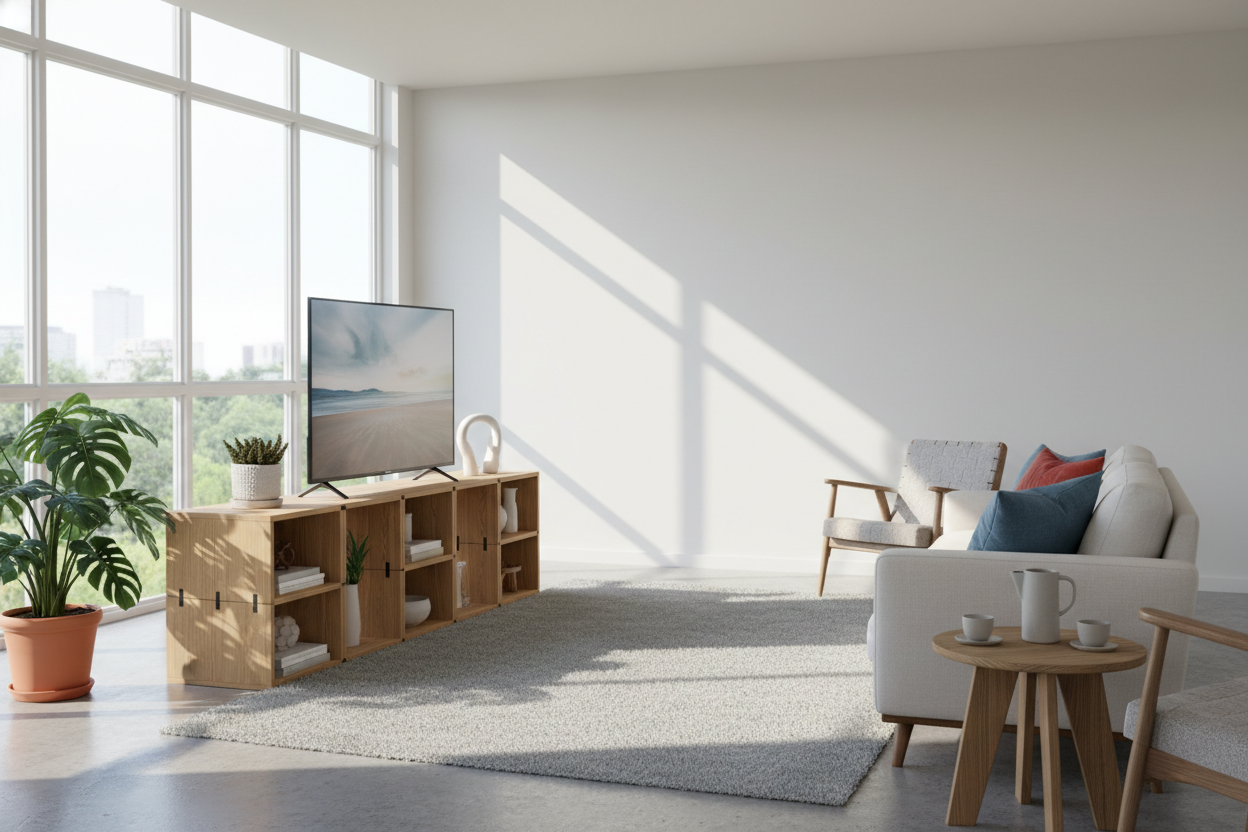
I ended up browsing standard fireplace TV stands and found a 70-inch unit with an infrared quartz heater. It pulls 1,500 watts, which is the limit for a standard household outlet, and it keeps my toes warm without the drama. My TV stays cool, my house stays un-exploded, and I can still move the whole thing to the other side of the room if I feel like it. Sometimes the 'fake' version is actually the smarter move for your sanity.
FAQ
Can I put a TV above a ventless gas fireplace?
You can, but you need a deep mantel—at least 12 inches—to deflect the rising heat away from the screen. Even then, you should use a heat probe to ensure the area around the TV stays under 100 degrees.
Do gas fireplace TV stands require a chimney?
Ventless versions don't, but they require a permanent gas line and significant room ventilation to prevent carbon monoxide buildup. Vented versions require a full wall flue, which is almost never found in freestanding furniture.
Is electric heat better than gas for a TV stand?
For furniture, absolutely. Electric is safer for the wood frame and the electronics. While it produces less raw heat (5,000 BTUs vs 30,000), it doesn't require permanent plumbing or professional permits to install.

Leave a comment
This site is protected by hCaptcha and the hCaptcha Privacy Policy and Terms of Service apply.