

















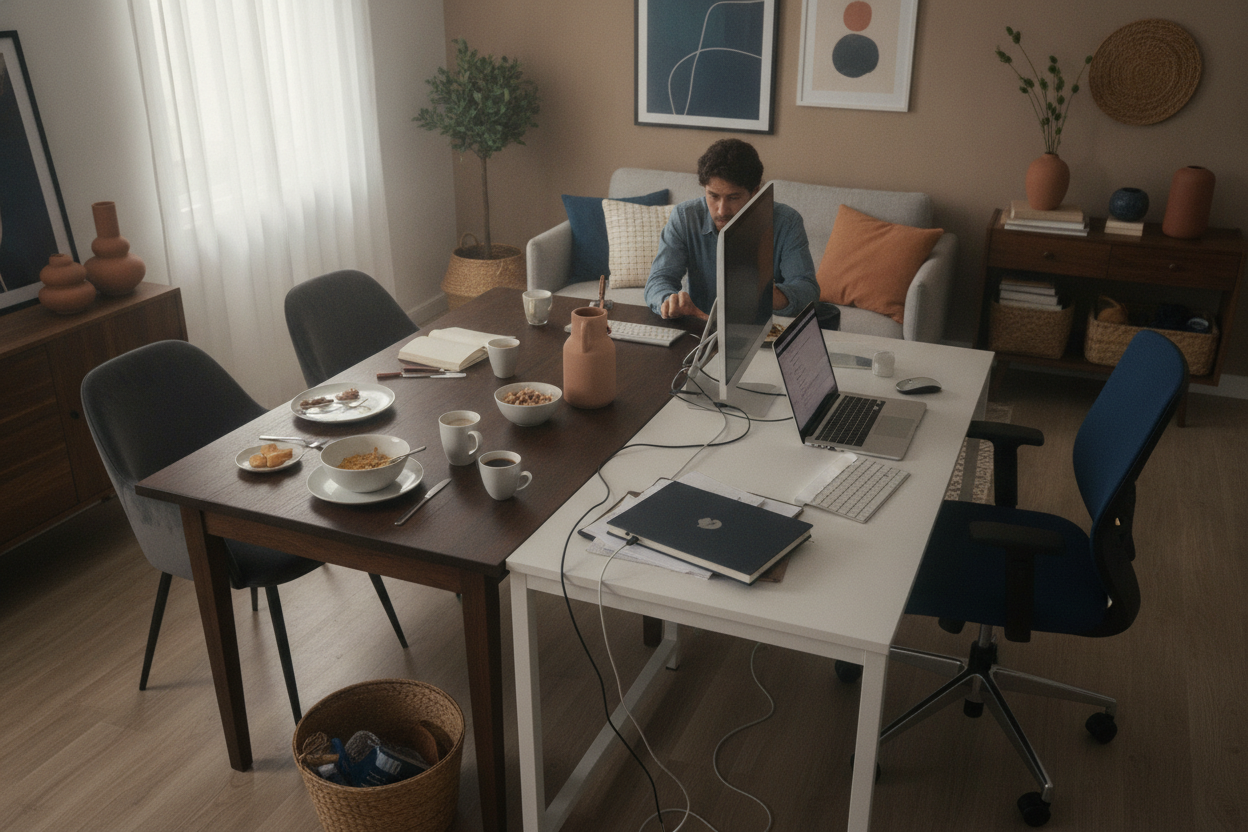
I spent three years working from a massive 96-inch reclaimed walnut dining table. I had this Pinterest-fueled dream that I could draft emails on one end and host sophisticated, candle-lit dinner parties on the other. It seemed like the ultimate minimalist hack. In reality, I ended up eating my morning oatmeal over a tangled web of MacBook chargers and staring at half-finished spreadsheets while trying to enjoy a glass of wine at 8 PM. It was a disaster for my spine and my sanity.
If you are currently trying to make your tables and desk situation a single, unified piece of furniture, stop. You are likely suffering from a cluttered mind and a very sore neck. Here is why the 'one big table' theory fails every single time and how to actually fix your floor plan.
- Ergonomic Mismatch: Dining tables are usually 30 inches high; desks should be 28-29 inches. That one-inch difference is a one-way ticket to shoulder impingement.
- Visual Noise: If you can see your tax returns while you're eating tacos, you aren't actually relaxing.
- The Crumb Factor: Keyboards and toast do not mix. Ever.
- Zoning Matters: Your brain needs physical cues to switch from 'hustle' to 'home'.
The 'One Big Table' Fantasy vs. Reality
We’ve all seen the photos of airy lofts where a single, gorgeous slab of oak serves as the centerpiece for everything. It looks intentional and clean. But unless you have a full-time housekeeper to whisk away your dual monitors and ergonomic mouse every afternoon at 5 PM, that table will just become a permanent staging ground for clutter.
In my experience, the 'multi-use' table quickly becomes a 'no-use' table. You stop hosting people because the effort to clear the workspace is too high, and you stop working efficiently because you're constantly moving your coffee mug to avoid rings on your documents. A dedicated surface isn't a luxury; it's a boundary.
Why Dining Tables Are Ergonomic Nightmares
Most people don't realize that standard dining furniture is built for a completely different posture than office furniture. A dining chair is designed for leaning back and socializing, while a desk chair is meant for upright support. When you pair a 30-inch dining table with a standard chair, you're likely reaching 'up' to type, which puts immense strain on your trapezius muscles.
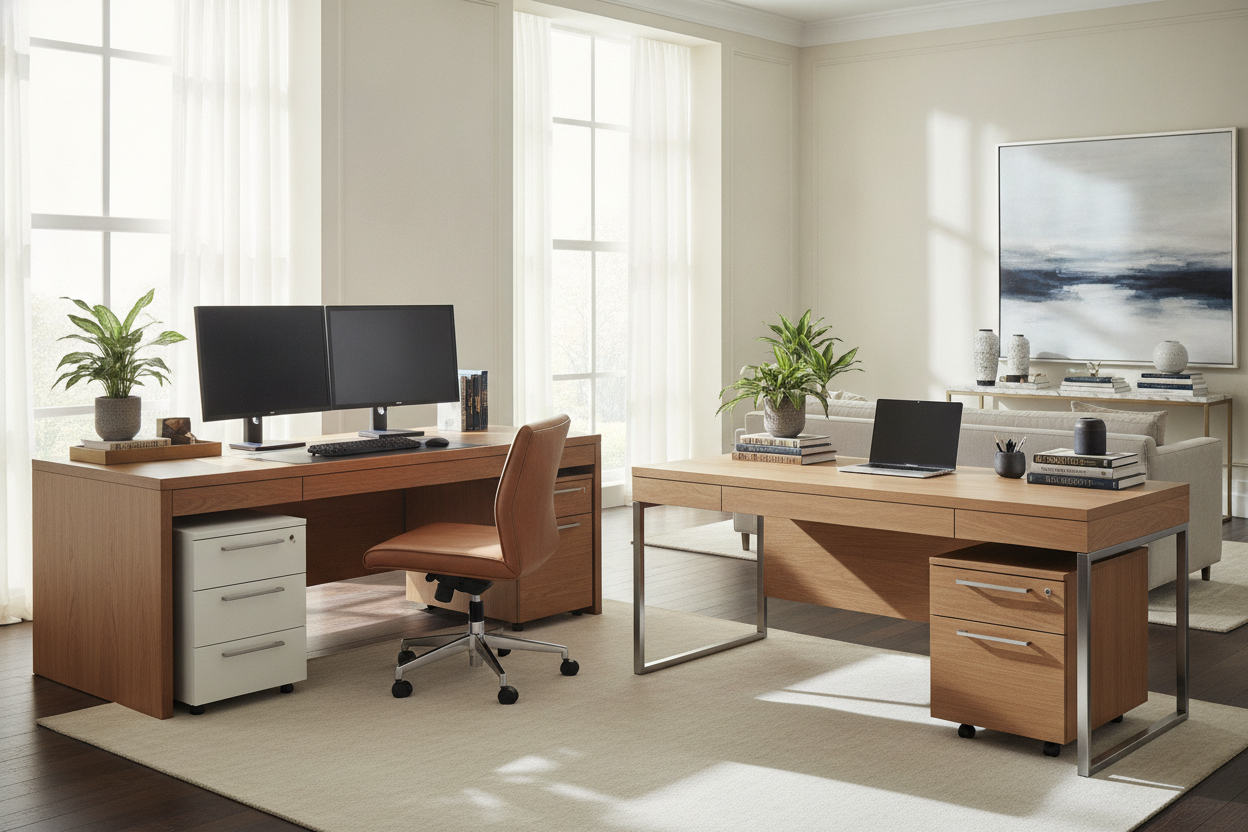
I learned the hard way that spending $800 on a high-end writing computer desk is significantly cheaper than a year of physical therapy for chronic neck strain. A real workspace allows you to tuck your legs under comfortably and keep your elbows at a 90-degree angle. If you're struggling with height, look for dedicated writing computer desk options that prioritize the human frame over aesthetic dining standards.
The Psychological Toll of Never 'Leaving' Work
There is a specific kind of burnout that happens when your workspace and your relaxation space are the exact same piece of furniture. When I worked from my dining table, I felt like I was always on the clock. My brain couldn't decouple the smell of dinner from the stress of a looming deadline.
By refusing to separate these zones, you're denying yourself a mental 'commute.' Even if that commute is just walking three feet to a different corner of the room, it tells your nervous system that the day is done. Without that physical separation, your home stops feeling like a sanctuary and starts feeling like a 24-hour cubicle.
How I Finally Separated My Setup (Even in a Small Space)
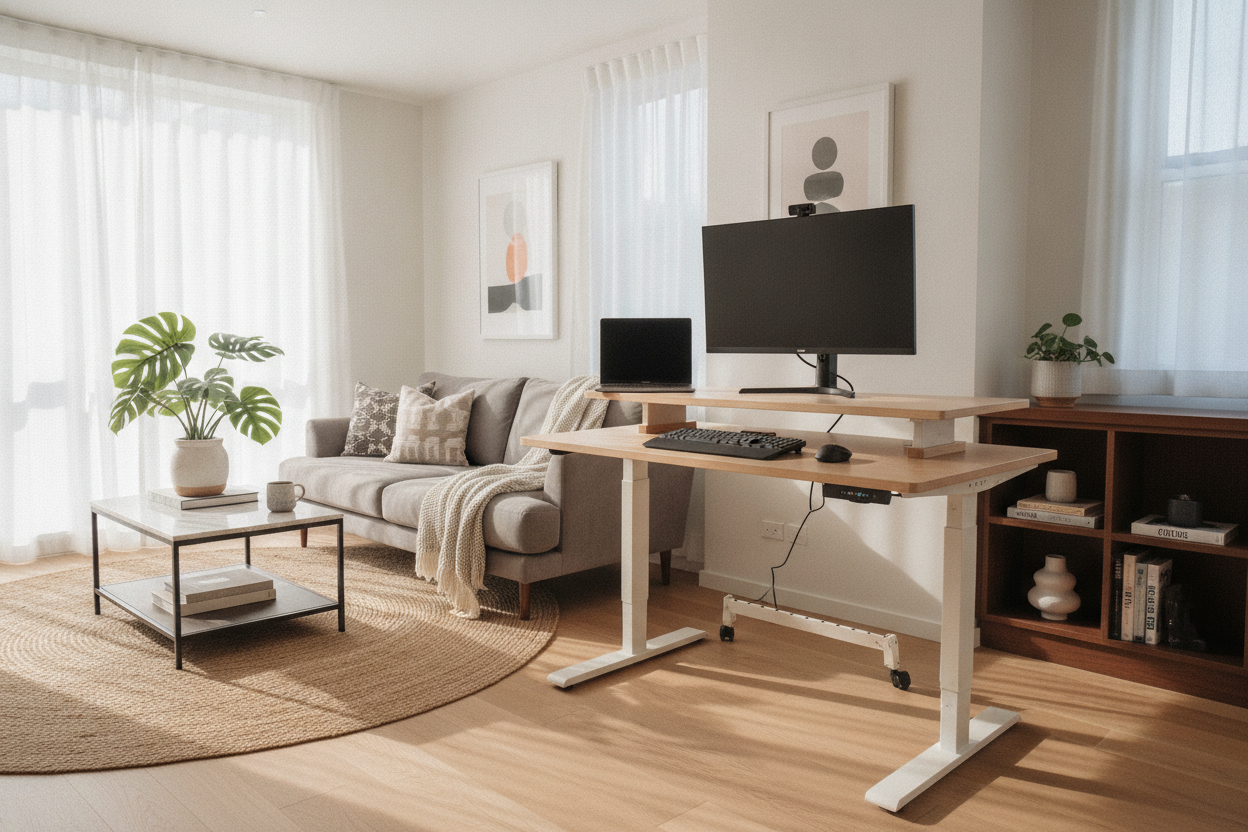
I live in a 650-square-foot apartment, so I get the 'no room' excuse. I used it for years. But you don't need a spare bedroom; you just need a zone. I finally reclaimed my dining table by tucked a slim profile desk into a nook I previously thought was useless. I used a tall bookshelf to create a visual 'wall' between my living area and my laptop.
If you're tight on square footage, go vertical. You can style a desk and hutch to store your hardware and files upward rather than outward. This keeps your work gear out of your line of sight when you're sitting on the sofa, which is the secret to actually 'turning off' at night.
Ditching the Mega-Table for Clever Side Tables
Instead of one giant flat surface, I switched to a smaller dining table and a dedicated desk, supplemented by movable tables for desk overflow. I use a small C-shaped side table to hold my printer and my oversized water bottle. It keeps my primary workspace clear and prevents the 'sprawl' that usually happens on a large dining table.
Keeping everything organized is the only way this works in a small footprint. I highly recommend checking out a drawers and desk buying guide to find furniture that hides the cords and the pens. If you can't see the office supplies, you won't think about the office.
The Verdict: Give Your Work Its Own Zone
Stop trying to make your dining table do double duty. It’s failing at both jobs. Reclaim your eating space for actual living, and give your work the dedicated, ergonomic home it deserves. Even a small, 40-inch desk in the corner of your bedroom is better than a 90-inch dining table that makes you miserable. Your back, and your dinner guests, will thank you.
FAQ
Can I just use a standing desk converter on my dining table?
You can, but it's a clunky solution. It doesn't solve the 'visual clutter' problem, and most dining tables aren't heavy enough to stay stable when you're typing on an elevated platform. It’s a band-aid, not a fix.
How much space do I really need for a separate desk?
Less than you think. A 36-inch wide surface is plenty for a laptop and a secondary monitor. If you can fit a nightstand, you can likely fit a slim writing desk.
What is the best height for a desk?
For most adults, 28 to 29 inches is the sweet spot. Dining tables are almost always 30 inches or higher, which is why they feel so uncomfortable for long-term typing.

Leave a comment
This site is protected by hCaptcha and the hCaptcha Privacy Policy and Terms of Service apply.