

















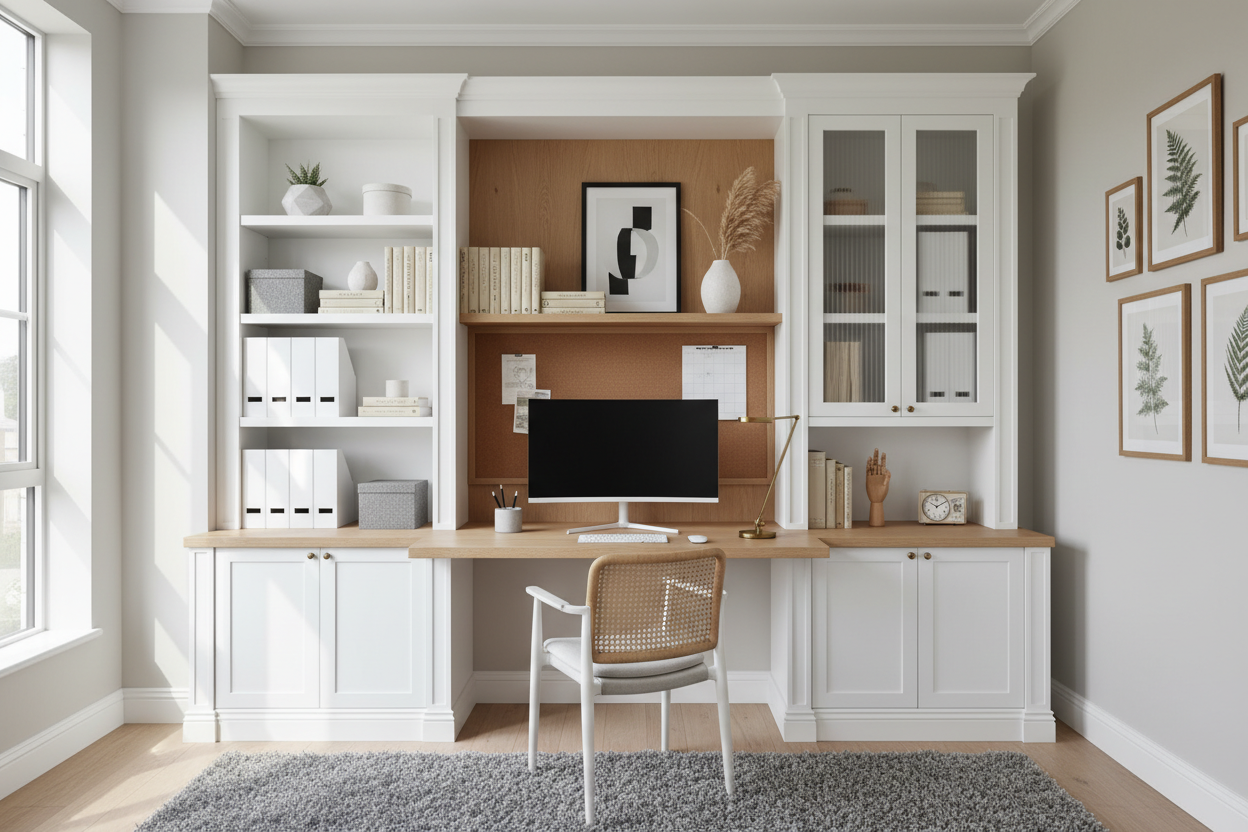
Vertical storage is often the forgotten hero of home office design. We tend to focus on the surface area of the desk, forgetting that the wall space above is prime real estate for both organization and aesthetic grounding. When working with a desk and hutch ikea setup, the challenge isn't functionality—it's preventing the piece from looking like a temporary dorm room solution. With the right approach to scale, material selection, and hardware, these modular units can mimic the architectural weight of custom built-ins.
Key Features to Look For
- Series Compatibility: Ensure the depth of the hutch matches the desk series (e.g., Hemnes vs. Micke) to avoid overhangs or instability.
- Material Composition: Distinguish between solid pine (often found in Hemnes) and honeycomb paper filling (common in Lack/Micke) for longevity.
- Cable Management: Look for pre-drilled grommets or hidden channels behind the back panel to maintain a clean visual.
- Adjustable Shelving: Essential for accommodating taller binders or decorative objects to break up the visual density.
Choosing the Right Silhouette and Material
As a designer, I categorize IKEA office furniture into two distinct tiers based on substrate. If you are aiming for a permanent, high-end feel, lean toward the Hemnes or Idanäs collections. These utilize solid wood and wood veneer, which accept light differently than melamine foil. The texture of real wood grain adds warmth and creates a sense of history that flat laminates struggle to achieve.
However, for tighter urban apartments, the sleeker, non-intrusive lines of the Micke or Kallax desk hutch ikea combinations are superior. Their shallower profiles reduce the piece's "visual weight," preventing the room from feeling claustrophobic. When selecting your finish, remember that dark colors (like black-brown) absorb light and shrink a space, while white or light stains reflect ambient light, making the footprint feel larger.
Elevating the Aesthetic: The "Built-In" Hack
The difference between a showroom purchase and a curated piece often comes down to context and hardware. To elevate a standard hutch:
Hardware Swaps
Discard the standard-issue knobs. Replacing them with brushed brass, matte black, or leather pulls instantly changes the character of the piece. It creates a bespoke look that distracts the eye from the mass-produced joinery.
Lighting Integration
A dark hutch can become a black hole in your design scheme. I always recommend installing slim LED puck lights or strip lighting under the upper shelves. This provides necessary task lighting for your workspace while highlighting styled objects, adding depth and dimension to the unit.
My Personal Take on desk and hutch ikea
I have specified IKEA units for countless budget-conscious renovations, and I have learned a very specific lesson regarding their assembly and longevity. A few years ago, I installed a large Hemnes combination for a client's alcove. The design looked flawless, almost like custom millwork.
However, six months later, the client called about "racking" (side-to-side wobbling). The issue wasn't the wood—it was the back panel. In these units, the backboard is often a folded sheet of fiberboard held in by tiny nails. It provides the structural shear strength. If you don't nail that back panel perfectly straight and hit every single interval, the hutch loses rigidity over time. Since then, I always use wood glue in the dowel holes and add small L-brackets to the back corners for reinforcement. It’s an invisible fix that makes the furniture feel solid as a rock years later. Also, a word of warning: the "white stain" finish is very different from the "white" finish. The stain allows knots to show through eventually; the acrylic white does not. Choose carefully based on how much rustic texture you can tolerate.
Conclusion
A standard desk and hutch doesn't have to look standard. By selecting the right materials, paying attention to lighting, and ensuring structural integrity during assembly, you can create a workspace that feels sophisticated and intentional. Treat the unit as a canvas, not just storage, and your home office will thank you.
Frequently Asked Questions
Can I attach an IKEA hutch to a non-IKEA desk?
Technically yes, but it is risky. IKEA hutches are designed with specific weight distributions and attachment points (usually metal brackets) that mate with their corresponding desks. If you mix brands, you must secure the hutch directly to the wall studs to prevent tipping.
How do I hide the gap between the hutch and the wall?
Baseboards often prevent the desk from sitting flush against the wall. To achieve a built-in look, you can either scribe (cut) the desk legs to fit over the baseboard or install a filler strip of wood painted to match the wall color to bridge the gap behind the unit.
What is the weight limit for IKEA hutch shelves?
This varies by series, but generally, the adjustable shelves on a standard desk hutch ikea unit are rated for roughly 30-40 lbs (15-20 kg). Be cautious with heavy text books; place the heaviest items on the bottom fixed shelf to maintain the center of gravity.


Leave a comment
This site is protected by hCaptcha and the hCaptcha Privacy Policy and Terms of Service apply.