




I spent three years curating my living room like it was a 1970s Italian disco. Velvet everywhere. A rug that looks like a topographical map of Mars. A gallery wall that reached the ceiling. I loved it until I couldn't breathe. Last Tuesday, I sat on my floor and realized my brain was vibrating because there was nowhere for my eyes to land. I needed a white living room cabinet—not because I'm turning into a minimalist, but because I needed a visual mute button.
- White storage acts as 'negative space' to give your eyes a rest.
- Opaque doors are superior to shelving for hiding visual clutter.
- Swapping stock hardware is the easiest way to avoid the 'pantry look'.
- Matte or textured finishes feel more expensive than high-gloss laminate.
The Maximalist's Dilemma: Too Much Stuff, Nowhere to Rest Your Eyes
My walls are painted 'Peacock Blue' and my curtains are a heavy botanical print. It is a mood, and usually, it is my favorite mood. But lately, coming home felt like walking into a loud conversation where everyone was shouting at once. I realized that my collection of vintage glass, 40-plus houseplants, and stacks of design magazines had finally crossed the line from 'curated' to 'chaotic'.
When every square inch of a room is a 'moment', nothing actually stands out. I kept trying to fix the clutter by buying more colorful bins or patterned boxes, which only added to the noise. I didn't need more decor; I needed a void. I needed a large, quiet piece of furniture that could swallow the mess and provide a blank surface to break up the patterns.
Enter the Blank Canvas: Why White Furniture Works Here
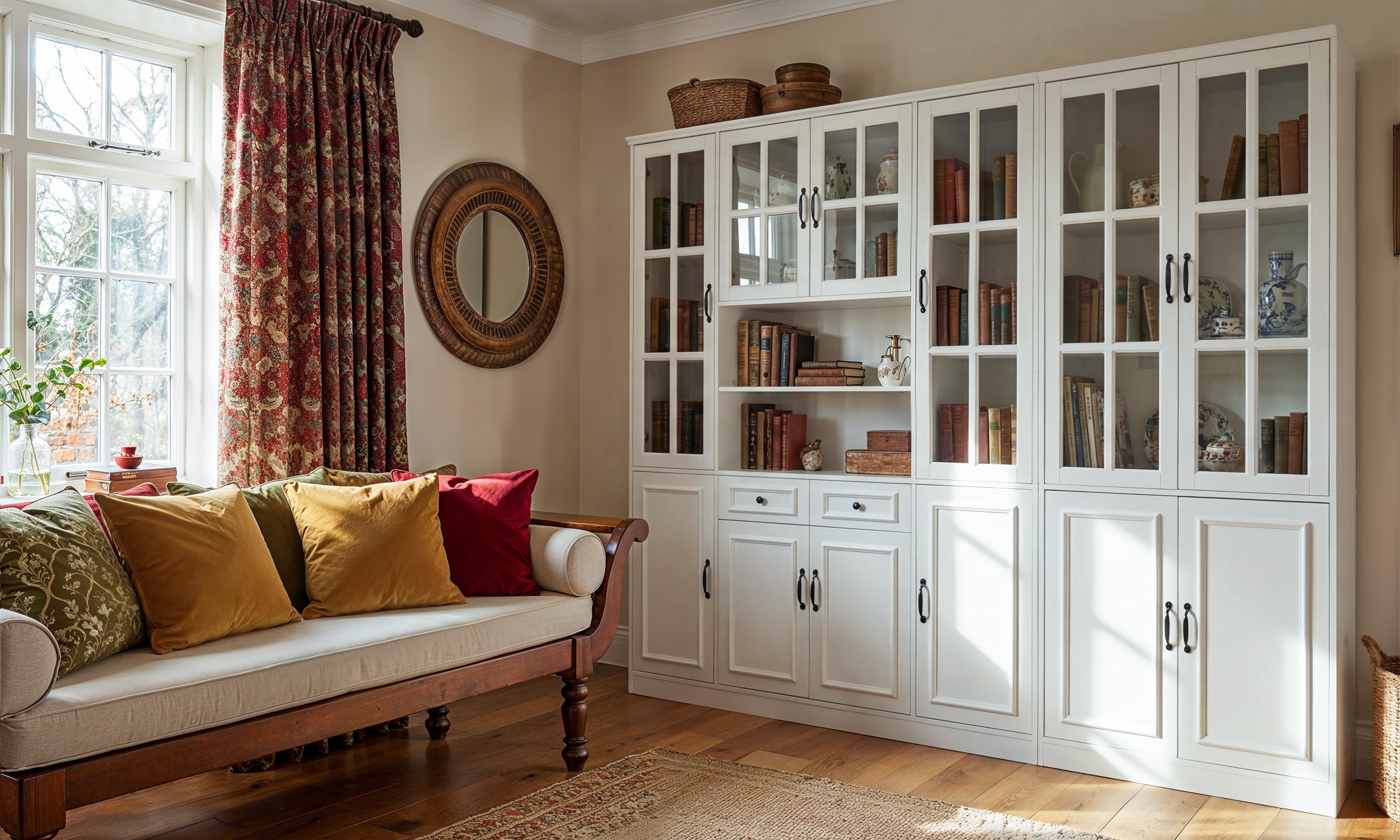
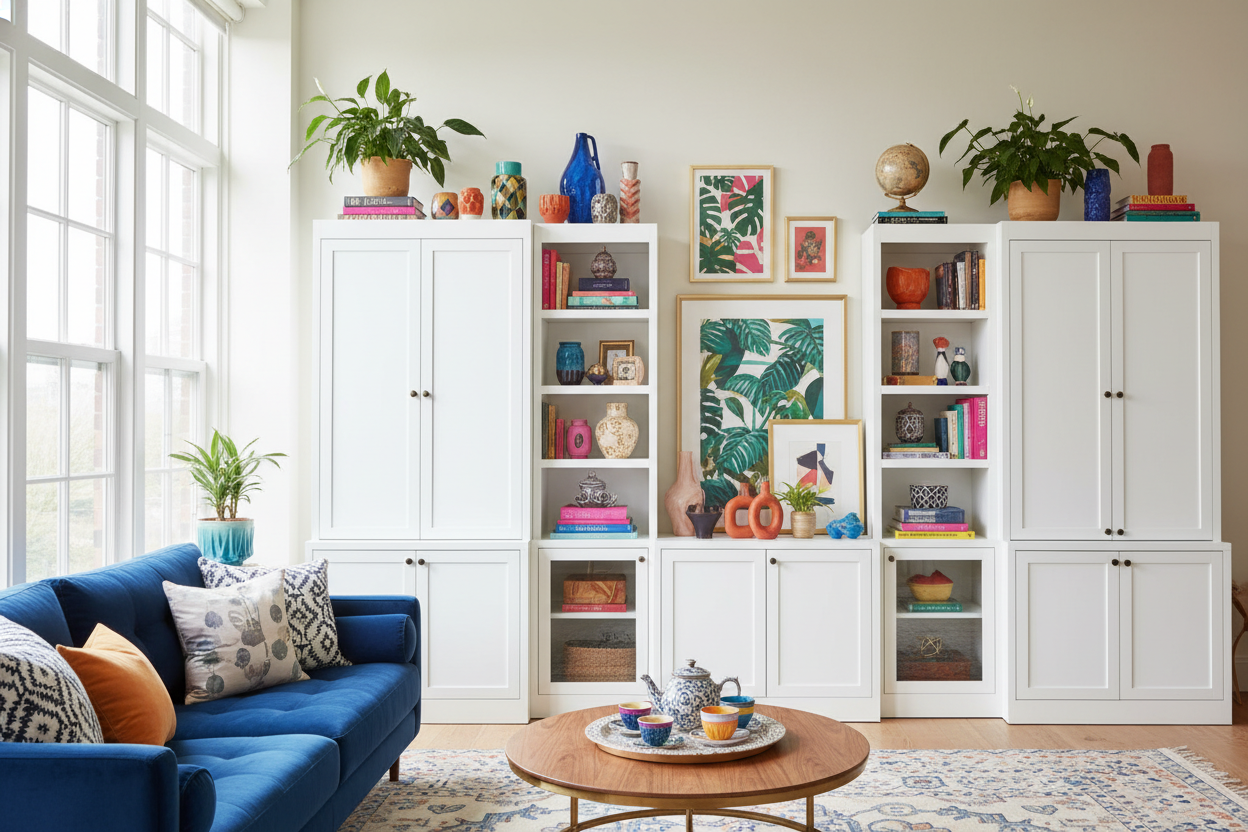
A large block of white isn't boring—it's architectural. It acts as a visual reset. When you integrate living room storage that doesn't compete for attention, your expensive art and wild textiles actually look better because they have a frame of reference. I'm talking about a solid 60-inch span of white that just sits there, being still.
I chose a piece that was 15 inches deep—just enough to hold my board games and camera gear without eating up the floor plan. The white finish reflects the light from my north-facing window, making that dark, 'Peacock Blue' corner feel intentional rather than cave-like. It’s the furniture equivalent of a deep breath.
Beating the 'Kitchen Cupboard' Allegations
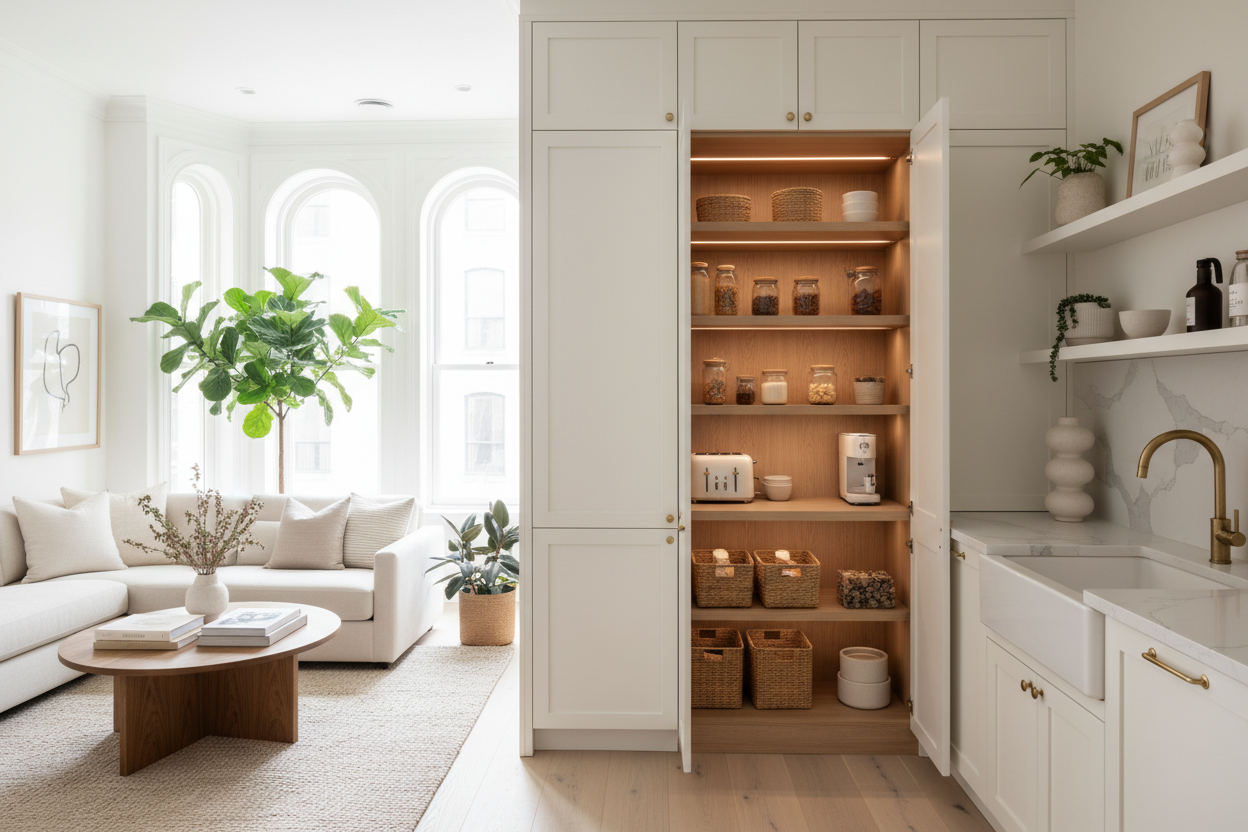
The biggest fear with white cabinets living room setups is that the space will end up looking like you dragged a pantry out of the kitchen. Avoid the 30-inch standard upper cabinet look. You want something with furniture-grade legs or a recessed plinth base that makes it feel like a sideboard, not an appliance.
My secret? Throw the stock handles in the trash immediately. I replaced the cheap silver pulls on my white cupboard living room unit with oversized, heavy brass knobs. The weight of the metal makes the doors feel more substantial, and the gold tone warms up the white so it doesn't look clinical. If brass isn't your thing, try hand-turned wood knobs for a more organic, Scandi-maximalist feel.
Hiding the Mess: The Magic of Solid, Closed Doors
Open shelving is a lie told by people who own exactly four aesthetically pleasing books and no remote controls. For the rest of us, we have tangled HDMI cables and half-finished knitting projects. A contemporary storage cabinet with solid doors is the only way to achieve true visual peace. You can't 'style' a router and a power strip into looking good.
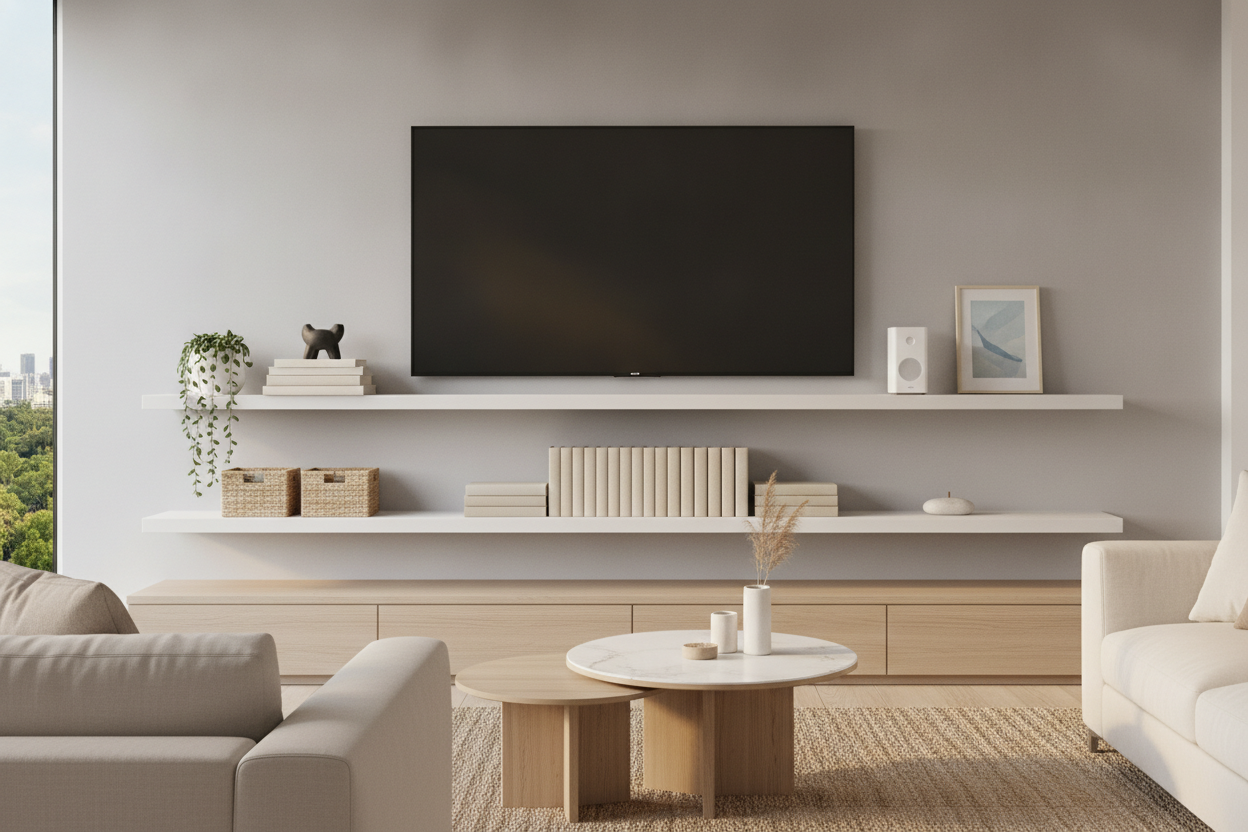
I recently ditched my low, open-shelf media console for a modern wall cabinet and the change was instant. By moving the storage higher and keeping it closed, I reclaimed three feet of 'white space' on the wall. It’s not just about hiding the mess; it’s about controlling how much information your brain has to process when you’re trying to watch a movie.
Finding the Right White Cupboard Living Room Vibe
Don't just buy a flat-pack white box. Look for texture. A boho white storage cabinet with carved doors, cane inserts, or fluted detailing adds enough interest that it doesn't feel like a hospital locker. Because it's monochromatic, the texture stays subtle, but it keeps the piece from looking 'cheap'.
I personally prefer a 'Swiss Coffee' or 'Alabaster' white over a 'Stark Hospital' white. A warmer undertone prevents the cabinet from looking blueish under LED lights. If you're worried about it being too plain, use the top surface to display one—and only one—hero piece, like a large ceramic vase or a single trailing plant.
The Verdict: It's Okay to Have One 'Boring' Piece of Furniture
In a room full of stars, you need a stage. Grounding a wild, heavily patterned room with a simple, quiet storage piece actually makes your favorite colorful decor pop even more. My neon sign looks twice as bright now that it’s hanging near a neutral cabinet rather than a busy wallpapered corner. It turns out that living room storage white pieces aren't a surrender to minimalism; they are the support system that makes maximalism actually livable.
FAQ
Does white furniture get dirty easily?
It shows dust less than black furniture, but fingerprints are real. I recommend a matte finish over high-gloss, as it hides smudges better and looks more like painted wood than plastic.
How do I keep it from looking like a dorm room?
Scale and weight. Avoid flimsy plywood that bows in the middle. Look for pieces with a solid base and upgraded hardware. If it weighs less than 50 pounds, it’s probably going to look like a temporary solution.
Can I mix a white cabinet with wood floors?
Absolutely. White and wood is a classic pairing. The white cabinet actually acts as a buffer between a colorful wall and a wood floor, preventing the 'too much brown' or 'too much color' overlap.

Leave a comment
This site is protected by hCaptcha and the hCaptcha Privacy Policy and Terms of Service apply.