




You want a workspace that feels distinguished, moody, and rich with history. But translating that vision into a standard suburban spare bedroom often leads to a room that feels heavy, cramped, and frankly, a bit like a dusty museum exhibit. Designing a victorian office requires a delicate balancing act. If you lean too hard into the period reproduction pieces, the room loses its functionality. I am going to walk you through exactly how to capture that moody 19th-century aesthetic while keeping the space highly functional and visually breathable.
Quick Decision Guide
- Anchor with one statement piece: Choose either an ornate antique desk or dramatic wallpaper, never both.
- Cheat the architecture: Use applied picture molding or beadboard to give standard drywall historical gravitas.
- Mix your eras: Pair heavy, carved walnut desks with sleek, modern brass lighting to keep the room feeling current.
- Ditch the period chair: Authentic 19th-century seating is notoriously unergonomic; invest in a modern leather executive chair instead.
Anchoring Your Victorian Style Office
The Desk: Managing Visual Weight
A true victorian style office usually centers around a massive, solid wood desk—often mahogany, walnut, or dark oak. While a traditional double-pedestal desk looks incredible, it carries immense visual weight. In a typical 10x12 North American home office, a dark, blocky desk will immediately swallow the room. If you are working with limited square footage, look for a Victorian writing table with turned legs instead of a solid base. The negative space underneath allows light to pass through, making your victorian home office feel substantially larger.
Bringing the 19th Century into 2025
Mastering the Modern Victorian Office
The secret to a successful modern victorian office is tension. You want the friction between old-world craftsmanship and contemporary clean lines. If you have an authentic, heavily carved victorian era office desk, do not pair it with an equally ornate antique lamp. Instead, introduce a minimalist, matte black or unlacquered brass task light. This contrast highlights the antique details rather than letting them get lost in a sea of vintage clutter.
Curating Victorian Office Decor
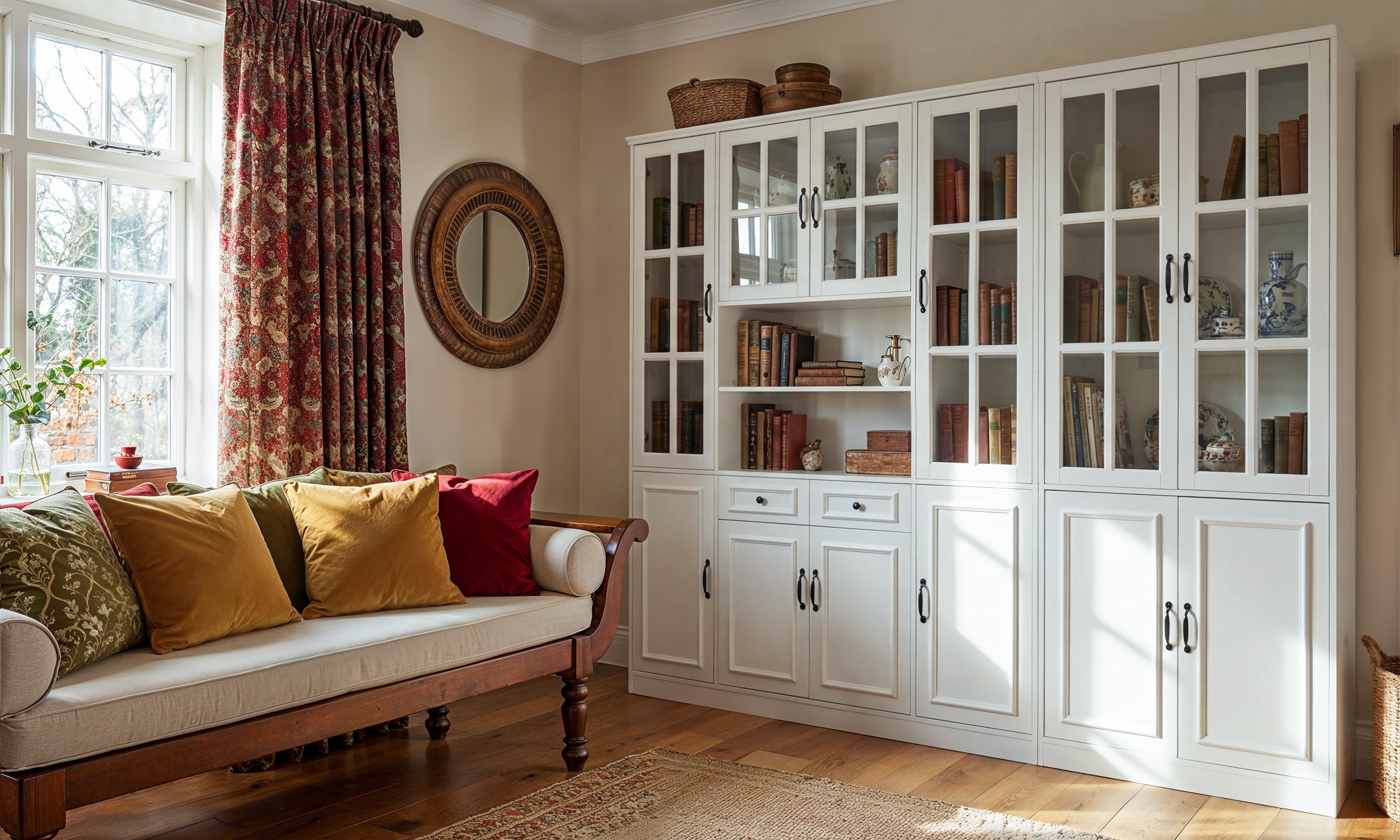
When researching victorian home office ideas, you will inevitably see heavily patterned William Morris wallpapers and dense gallery walls. To make this work without overwhelming the eye, control your color palette. Stick to tonal variations of moody hues like hunter green, navy, or deep burgundy. When hanging victorian office decor, use matching frames—whether all gilded or all ebonized wood—to bring order to an otherwise eclectic collection of vintage botanical prints or architectural sketches.
Designer's Honest Take
Early in my career, I designed a spectacular workspace for a client obsessed with authentic 19th-century antiques. We sourced a breathtaking, original Eastlake cylinder desk. It was visually stunning, but I learned a hard lesson that week. First, a 300-pound solid walnut desk does not easily clear a standard 32-inch interior door—we had to remove the doorframe entirely. More importantly, we paired it with a period-accurate, tufted velvet parlor chair. Within three days, the client's back was in agony. The chair was built for sitting rigidly for 20 minutes, not for eight hours of Zoom calls. From that project on, my rule for victorian office ideas has been absolute: buy the antique desk, but always buy a high-quality, ergonomically modern chair. Your spine does not care about historical accuracy.
Frequently Asked Questions
How do I make a Victorian office feel less dark?
Victorian design embraces moody colors, but you can prevent it from feeling like a cave by maximizing your lighting. Layer your light sources: use a bright overhead fixture, a dedicated desk lamp, and picture lights over your art. Adding a large, ornately framed mirror will also bounce natural light around the room.
How do I hide modern technology in an antique room?
Cable management is critical. Route cords down the back legs of your desk using zip ties. Use a large, vintage-style leather desk pad to anchor your keyboard and mouse, and consider a monitor arm that clamps to the back of the desk to keep the wood surface clear.
What colors are best for this style?
Deep, saturated jewel tones are historically accurate and highly effective. Think emerald green, sapphire blue, rich plum, and charcoal. Paint the baseboards and trim the same color as the walls to create a seamless, enveloping backdrop that makes your wood furniture pop.


Leave a comment
This site is protected by hCaptcha and the hCaptcha Privacy Policy and Terms of Service apply.