

















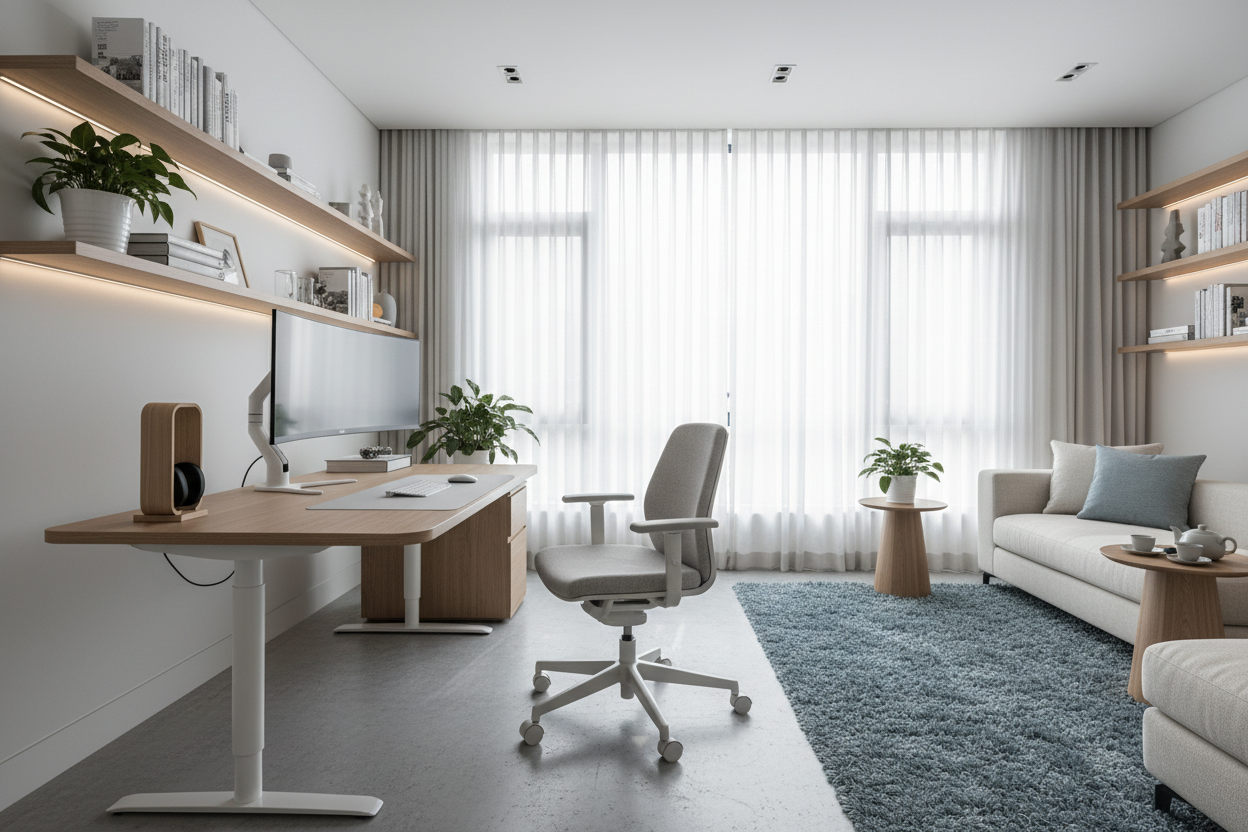
The boundary between domestic relaxation and professional rigor has dissolved. As a designer, I see clients struggle not just with finding remote roles, but with sustaining them because their environment works against them. Successfully managing high-level home working jobs requires more than a laptop and a stable Wi-Fi connection; it demands a spatial strategy that fosters focus without sacrificing the aesthetic integrity of your residence.
Key Design Features for Remote Workspaces
- Ergonomic Foundation: Prioritize seating with adjustable lumbar support and seat depth over purely sculptural accent chairs.
- Lighting Temperature: layering ambient light (3000K) with task lighting (4000K) reduces eye strain during long shifts.
- Acoustic Control: Incorporate textiles, rugs, or acoustic paneling to dampen echo for professional audio clarity.
- Visual Backdrop: Curate a 'Zoom-ready' background that balances personal style with professional neutrality.
- Material Durability: Select desk surfaces (hardwoods or high-pressure laminates) that resist heat and abrasion from electronics.
Curating the Executive Backdrop
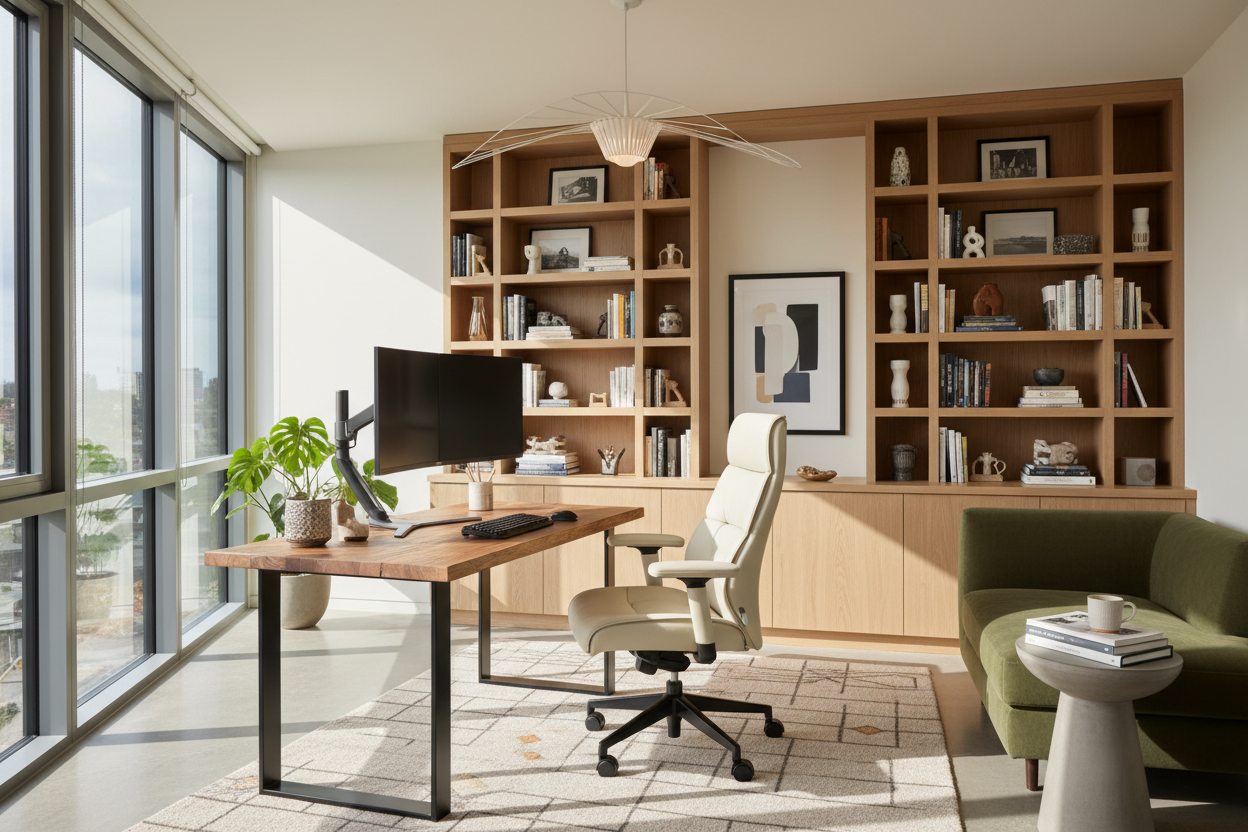
If you are currently looking for a work from home job, understand that your environment acts as a non-verbal résumé during video interviews. A cluttered or poorly lit background suggests disorganization. We want to create a focal point behind you—perhaps a structured bookshelf or a piece of abstract art with a matte finish to avoid glare.
When clients ask me, "Where can I get a job working from home that respects my seniority?" I often tell them to dress the room for the role they want. A mid-century modern credenza or a biophilic design element (like a statement Ficus Lyrata) signals a sophisticated, grounded lifestyle that appeals to executive recruiters.
The Furniture Investment: Form Meets Function
The Desk Dilemma: Solid Wood vs. Veneer
For those who have already secured jobs available to work from home, the desk is the primary workstation. While solid walnut or oak offers a tactile warmth and repairability that veneer cannot match, it reacts to humidity. If your workspace is in a conservatory or near a radiator, high-grade architectural veneer is often the more stable choice. Ensure the depth is at least 24 inches to allow for proper monitor focal length.
Seating Dynamics
Many people say, "I need a job working from home," but fail to account for the physical toll of sedentary work. Avoid the temptation to use a dining chair. Look for a task chair with a synchro-tilt mechanism. This allows the backrest and seat to move in a ratio (usually 2:1), keeping your feet flat on the floor while you recline, maintaining circulation.
Spatial Planning and Workflow
When you seek to get work at home jobs, you must define the territory. If you lack a dedicated room, use a console table behind a sofa to create a 'floating' office. This zones the living area without erecting walls. The goal is to position your sightlines toward a window or the room's entry point—never face a blank wall, as this stifles creative thinking.
For those who have wanted work from home arrangements for years and finally have them, the biggest pitfall is the 'creep' of office clutter into living spaces. Invest in closed storage. A lacquer-finished cabinet can hide printers and files, looking like a sleek sideboard when the workday ends.
My Personal Take on Home Working Jobs
I learned the hard way that 'luxury' doesn't always equal 'functional' when it comes to the 9-to-5 grind. A few years ago, I designed a custom workspace for myself featuring a stunning, high-gloss black lacquer Parsons desk. It looked incredible in photos.
However, within a week of actual use, it drove me insane. Every single fingerprint showed up instantly. Worse, the optical mouse didn't track well on the high-gloss surface, forcing me to use a mousepad that ruined the clean lines I loved. But the real dealbreaker was the temperature; the lacquer felt perpetually cold on my forearms, distracting me during deep work sessions. I eventually swapped it for a matte, oiled white oak desk. It developed a patina where my hands rest, feeling warm and inviting rather than sterile. If you see home jobs available and plan to apply, think about the tactile experience of your furniture, not just the visual.
Conclusion
Securing and maintaining home working jobs is an exercise in environmental psychology. By selecting materials that age gracefully and layouts that separate rest from labor, you build a career sanctuary. Treat your home office not as a temporary utility, but as a permanent extension of your professional identity.
Frequently Asked Questions
What is the best desk depth for a multi-monitor setup?
Ideally, aim for a depth of 30 inches. This allows you to place monitors at arm's length to reduce eye strain while leaving ample room for a keyboard, sketchbook, and task lighting without feeling cramped.
How do I soundproof a shared space without construction?
Soft furnishings are your best friends. Heavy velvet curtains, thick wool rugs with a high pile, and upholstered furniture absorb sound waves. You can also mount fabric-wrapped acoustic panels that double as pinboards.
Is a standing desk worth the aesthetic compromise?
Absolutely, but you don't have to compromise. Look for 'hidden' lift mechanisms where the legs telescope internally, or choose a desk with a solid wood top that masks the industrial look of the frame. Your spinal health is paramount.

Leave a comment
This site is protected by hCaptcha and the hCaptcha Privacy Policy and Terms of Service apply.