

















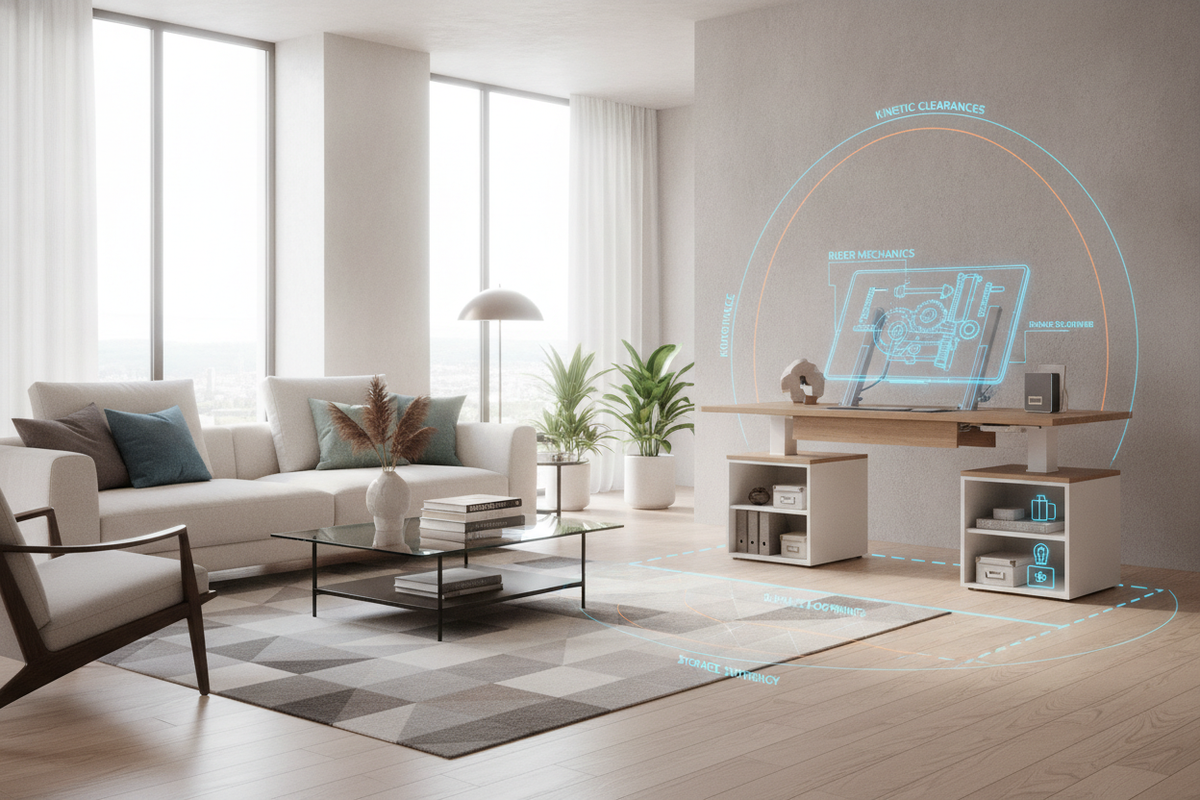
Retrofitting a standard workstation with a standing desk converter offers an adaptable pathway to an active work posture without replacing cherished home office furniture. Whether you operate from a vintage hardwood writing desk, a mid-century modern credenza, or a modular executive desk, an uplift desk converter acts as an architectural overlay. It delivers dynamic sit-stand versatility while preserving the spatial integrity and foundational storage of your primary desk.
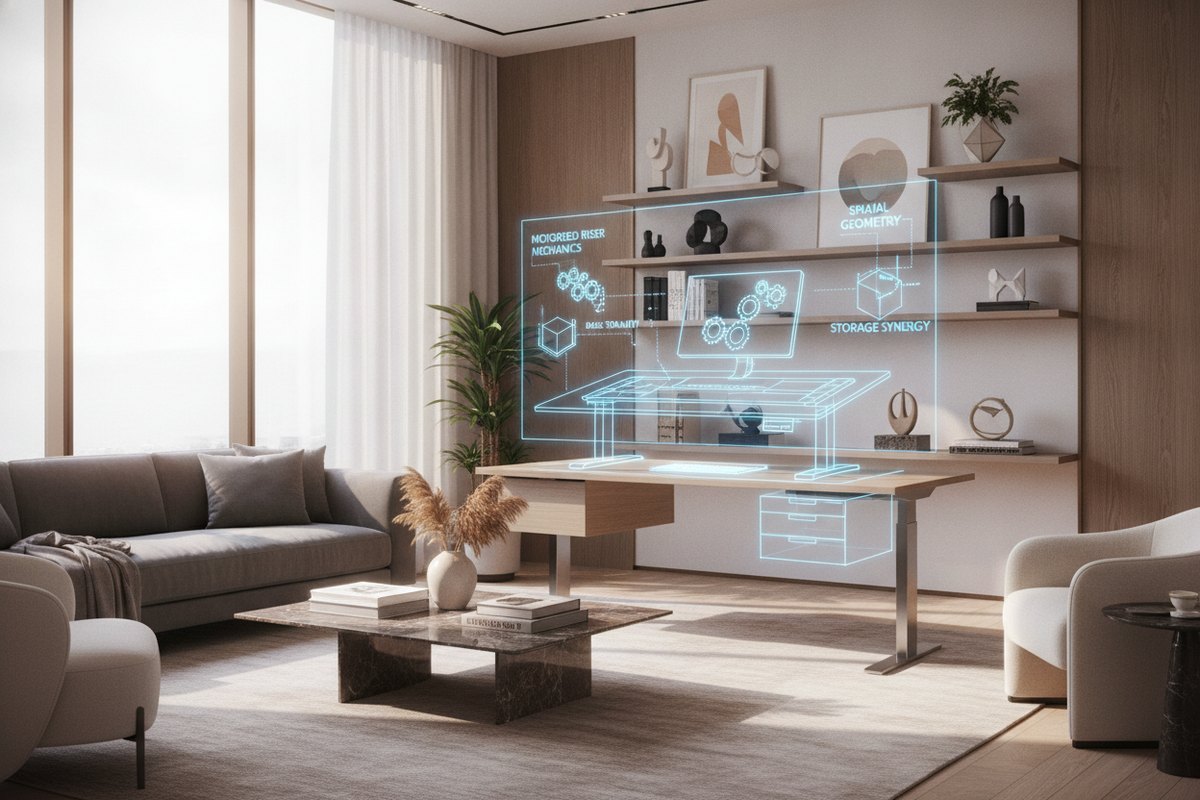
Understanding how a desk converter interacts with your surface involves more than simply checking width and depth. It requires evaluating kinetic lift mechanics, weight distribution, cable pathways, and adjacent cabinetry synergy to create a balanced, clutter-free workspace.
Workstation Transformation: Understanding the Desk Converter Ecosystem
A standing desk converter transforms a fixed-height desktop into a dual-level, variable-height workstation. Rather than requiring full furniture deconstruction, these units rest securely atop an existing platform, raising monitors, laptops, and input accessories smoothly throughout the working day.
Different office setups demand distinct converter configurations:
- Compact Single-Laptop Stations: Minimalist risers designed for quick height adjustments in small alcoves or multipurpose living areas.
- Dual-Display Platforms: Broad upper decks capable of supporting multiple monitors alongside essential desk accessories.
- Corner and L-Shaped Configurations: Tapered or angled bases tailored to maximize corner dead space without restricting arm movement.
By identifying your specific technology layout early, you can select an uplift desk riser structure that complements your desk surface rather than crowding it.
Converter Mechanical Archetypes: Electric vs. Pneumatic Lift Systems
Modern desk risers generally rely on one of two mechanical approaches: motorized electric lift columns or counterbalance pneumatic gas-spring assemblies.
Electric converters feature motorized drives that lift platforms at the touch of a button. These systems provide steady, incremental height adjustments without requiring manual effort, making them well-suited for heavier monitor arrangements. Their smooth motor engagement prevents sudden shifts, keeping delicate electronics secure during vertical movement.
Pneumatic converters use gas-assist springs actuated by hand levers. As you squeeze the adjustment handle, the internal pressurized cylinder counterbalances the equipment weight, allowing fluid manual positioning. Pneumatic models operate silently and require no power outlets, giving you complete placement freedom across standalone desks.
In addition to the power source, pay attention to the lift motion trajectory. Straight vertical lift mechanisms rise strictly perpendicular to the desk, maintaining a consistent center of gravity. In contrast, forward-arcing scissor designs travel slightly outward toward the user as they ascend, which requires adequate clearance behind your task chair.
Surface Footprint Sizing and Desktop Compatibility Audits
Before introducing an uplift desk converter to your workspace, perform a thorough audit of your base furniture. The structural composition and physical dimensions of your main desk dictate the stability of the entire assembly.
When evaluating how top-tier conversion units blend with existing desktop aesthetics, consulting our comprehensive desk converter guide offers foundational styling and layout principles.
Key surface considerations include:
- Surface Depth and Width: Ensure the base footprint of the converter rests entirely on the desktop without any overhang. Even minor perimeter overhang can destabilize the unit when fully extended.
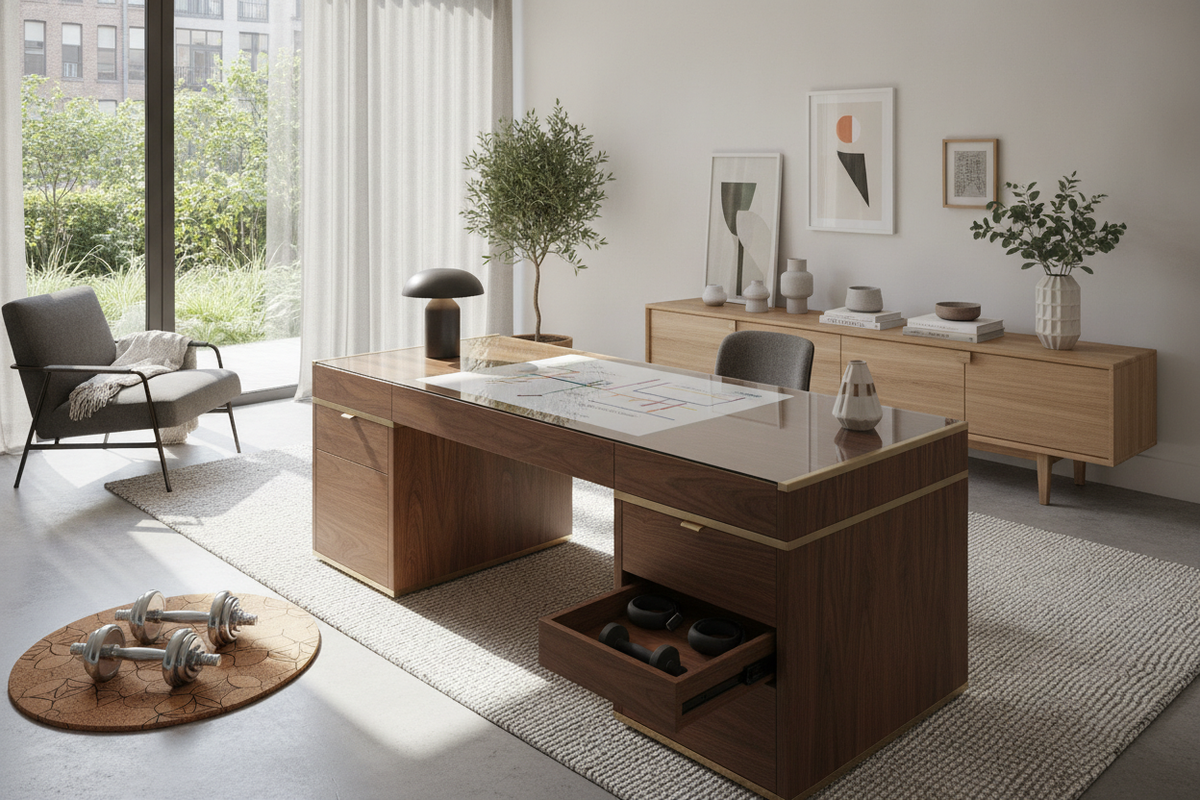
- Desktop Core Material: Solid wood, thick engineered wood boards, and high-density composite panels offer rigid support for localized equipment weight. Thin honeycomb surfaces or tempered glass tops require careful evaluation to ensure even load distribution across broad rubberized contact pads.
- Rear Edge Clearances: If your desk faces a wall or sits against office partitioning, confirm that the riser structure clears baseboards, trim moldings, and wall-mounted power strips throughout its full range of motion.
Tiered Ergonomic Geometry: Display Platforms and Keyboard Trays
A primary ergonomic advantage of a two-tier desk riser is the spatial separation between visual displays and tactile input surfaces. Single-plane desks often force a compromise between neck angle and forearm posture; tiered converters resolve this tension through stepped architecture.
The upper tier positions screens closer to eye level, encouraging a natural head orientation without downward tilt. Meanwhile, the dropped lower tier positions your keyboard and mouse near elbow height, promoting neutral wrist alignment whether seated or standing.
To maintain clean ergonomics across both tiers, consider these organizational practices:
- Position monitors centrally on the upper tier to avoid unbalanced side-to-side weight transfer.
- Keep the keyboard platform clear of non-essential stationery to ensure unhindered mouse maneuvering.
- Choose low-profile desk mats that protect the converter deck while softening contact points for your palms.
Dynamic Spatial Clearances and Kinetic Path Planning
Unlike static furniture, a standing desk riser operates within a dynamic three-dimensional envelope. Planning for its kinetic path ensures smooth transitions and prevents accidental equipment interference.
Examine overhead clearances beneath wall-mounted shelving units, cabinetry, or task light fixtures. When elevated to maximum height, displays must clear overhead structures with comfortable margins. Additionally, observe how overhead lighting interacts with the raised display to prevent harsh glare or cast shadows across your primary work surface.
Cable management requires dedicated dynamic slack. Power cords, display cables, and peripheral leads must flex naturally without snagging along moving joints or pulling taut against wall outlets. Fastening cables through integrated routing channels along the converter spine ensures neat, snag-free vertical travel.
Coordinated Storage Synergy: Pairing Risers with Modular Office Furniture
Because an uplift desk converter occupies significant surface real estate on your main desktop, offloading stationery, files, and personal items to surrounding modular furniture is essential for an uncluttered workspace.
Integrating your sit-stand desk with complementary FUFU&GAGA storage solutions creates a cohesive, highly functional home office ecosystem:
- Mobile Filing Pedestals: Tucked neatly beneath the main desk frame, mobile file cabinets keep critical paperwork accessible without intruding on the converter footprint.
- Credenzas and Low Sideboards: Positioned adjacent to or behind your desk, low credenzas offer broad surface space for printers, docking hubs, and secondary reference materials.
- Vertical Bookcases and Display Cabinets: Tall shelving units utilize vertical room dimensions, housing reference libraries and decor items while keeping your central work area open and visually calm.
By delegating storage to purposeful cabinetry, your desk surface remains dedicated to the dynamic riser assembly, maximizing focus and physical comfort.
Workflow Blueprint: Maintenance, Stability Checks, and Daily Routine
Maintaining a high-performing sit-stand workstation requires occasional maintenance and consistent posture habits. Incorporating simple checks into your weekly routine prolongs the operational lifespan of your desk riser.
Wipe down mechanical tracks and scissor joints periodically to prevent dust accumulation from hindering smooth movement. Inspect cable ties and spiral wraps to verify that cords have not shifted into pinch points. Periodically recheck that all monitor mountings and accessory clamps remain firmly fastened to the riser deck.
Finally, approach your sit-stand routine progressively. Alternate between sitting and standing postures at regular intervals throughout the day rather than holding a single static stance for extended periods. Combining a well-engineered uplift desk riser with thoughtfully arranged storage creates a versatile workspace tailored to productivity, comfort, and enduring interior harmony.

Leave a comment
This site is protected by hCaptcha and the hCaptcha Privacy Policy and Terms of Service apply.