

















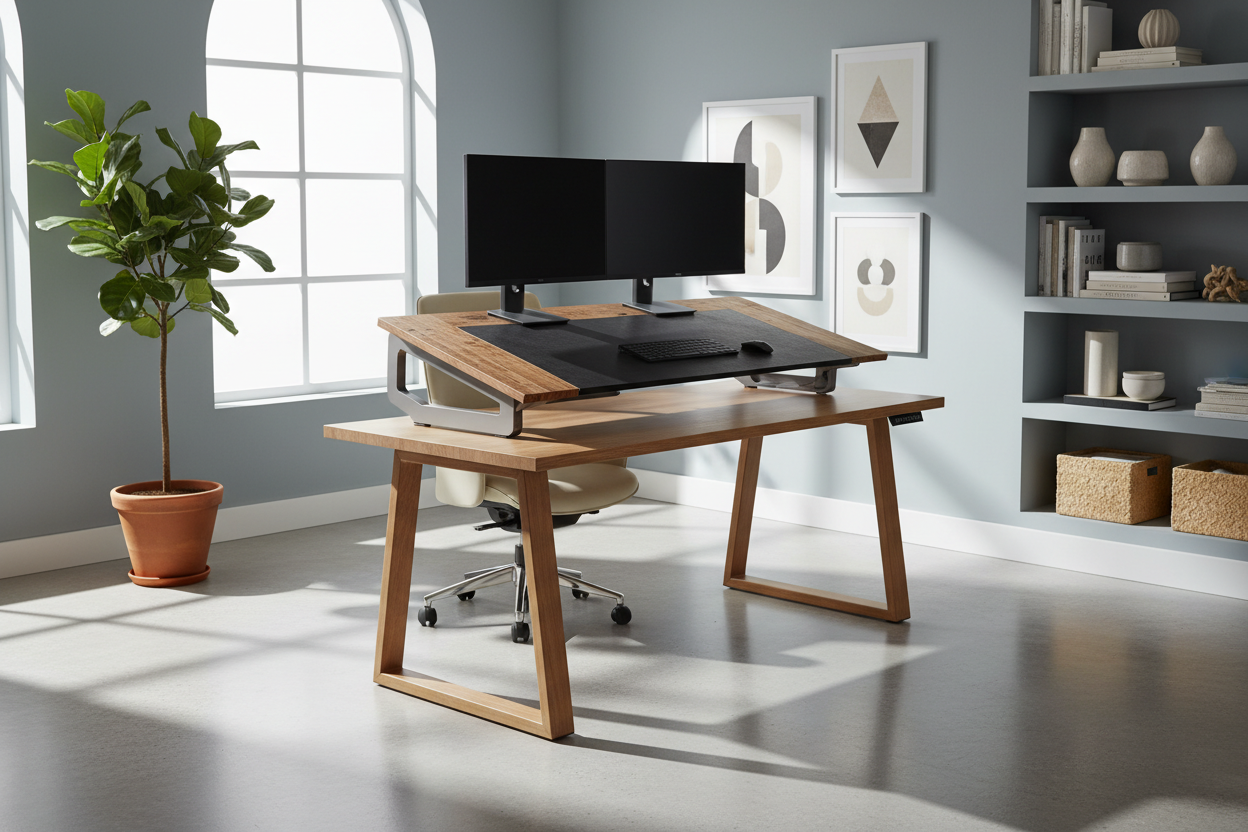
Ever spent months curating the perfect home office, only to ruin the aesthetic the second you drop a massive piece of ergonomic equipment right in the middle of it? It is a design dilemma I see constantly. Clients want the health benefits of a sit-stand setup, but they do not want their carefully styled den to look like a corporate cubicle.
If you are hunting for a wirecutter standing desk converter, you already know you are looking for top-tier mechanics and reliability. Those reviews are fantastic for testing stability and lift mechanisms. But as a designer, my job is to figure out how that heavy, utilitarian piece of metal actually lives in your home. Today, we are going to bridge the gap between ergonomic function and interior style, so you can work comfortably without sacrificing your room's visual appeal.
Quick Decision Guide
- Measure your depth first: Most converters require at least 24 inches of desk depth to sit safely without overhanging.
- Watch the visual weight: X-lift mechanisms look bulkier than Z-lift models. Choose a Z-lift if you want to preserve negative space.
- Protect your surfaces: Converters are incredibly heavy. Always use a custom-cut felt pad underneath to protect solid wood or veneer desks from deep scratches.
- Cable management is mandatory: A converter in the raised position exposes every single wire. Invest in a flexible cable sleeve to bundle cords neatly.
Integrating Clunky Tech into Residential Spaces
Managing Proportion and Visual Weight
The biggest issue with adding a converter to an existing desk is proportion. Standard residential writing desks are typically 20 to 24 inches deep. When you place a heavy-duty converter on top of a slender mid-century modern desk, the visual weight becomes completely top-heavy. The silhouette is ruined, and the desk looks like it might tip over.
If you are committed to a converter, you need a desk with visual grounding. Think solid pedestal bases, thicker tops, or a classic parsons design. You want the furniture underneath to look substantial enough to carry the mechanical load above it. If your room is small, opt for a white or light gray converter rather than the standard matte black; lighter colors recede visually and feel less imposing in tight quarters.
Style and Coordination
Making Utilitarian Gear Look Intentional
You cannot hide a standing desk converter, so you have to integrate it. If your room leans transitional or farmhouse, a stark black metal riser will clash violently. Instead, look for models that incorporate bamboo or wood-grain laminate platforms. While it might not perfectly match your existing oak desk, layering complementary wood tones feels much more intentional than introducing a massive block of black steel.
To soften the overall look, add organic textures around the workstation. A trailing pothos plant on a nearby shelf, a textured woven rug under your chair, or a leather desk pad can help neutralize the harsh, industrial lines of the lifting mechanism.
Designer's Honest Take
Over the years, I have had to fix a lot of home office mistakes. Here is my honest warning: while the top standing desk converter wirecutter tested might be mechanically flawless, it can be absolutely brutal on your furniture.
Three years ago, a client bought a highly-rated converter and placed it directly onto a beautiful, vintage walnut credenza we had repurposed as a desk. The converter had small rubber feet, which seemed fine. But after six months of daily lifting and lowering, the subtle shifting of the heavy steel frame ground those rubber pads right through the fragile vintage veneer. It cost over five hundred dollars to repair the wood. I learned the hard way that you should never place one of these units on a delicate surface without a full-coverage, high-density felt mat underneath. They are built for laminate corporate desks, not heirloom furniture.
Frequently Asked Questions
Will a standing desk converter scratch my wooden desk?
Yes, it is highly likely over time. The weight of the monitors combined with the downward force used to lower the unit causes micro-shifts. Always place a protective mat or thick felt pads between the converter and a solid wood or veneer desk.
How much desk depth do I actually need?
While some bases are only 16 inches deep, the keyboard tray usually extends further out. For a comfortable layout that does not crowd your stomach or risk tipping, your base desk should be an absolute minimum of 24 inches deep, though 30 inches is ideal.
Are converters better than full standing desks for small spaces?
Not always. Converters eat up almost all of your usable desktop real estate. If you have a small space, a compact 42-inch full standing desk often looks cleaner and provides more usable flat surface than a traditional desk covered by a bulky converter.


Leave a comment
This site is protected by hCaptcha and the hCaptcha Privacy Policy and Terms of Service apply.