





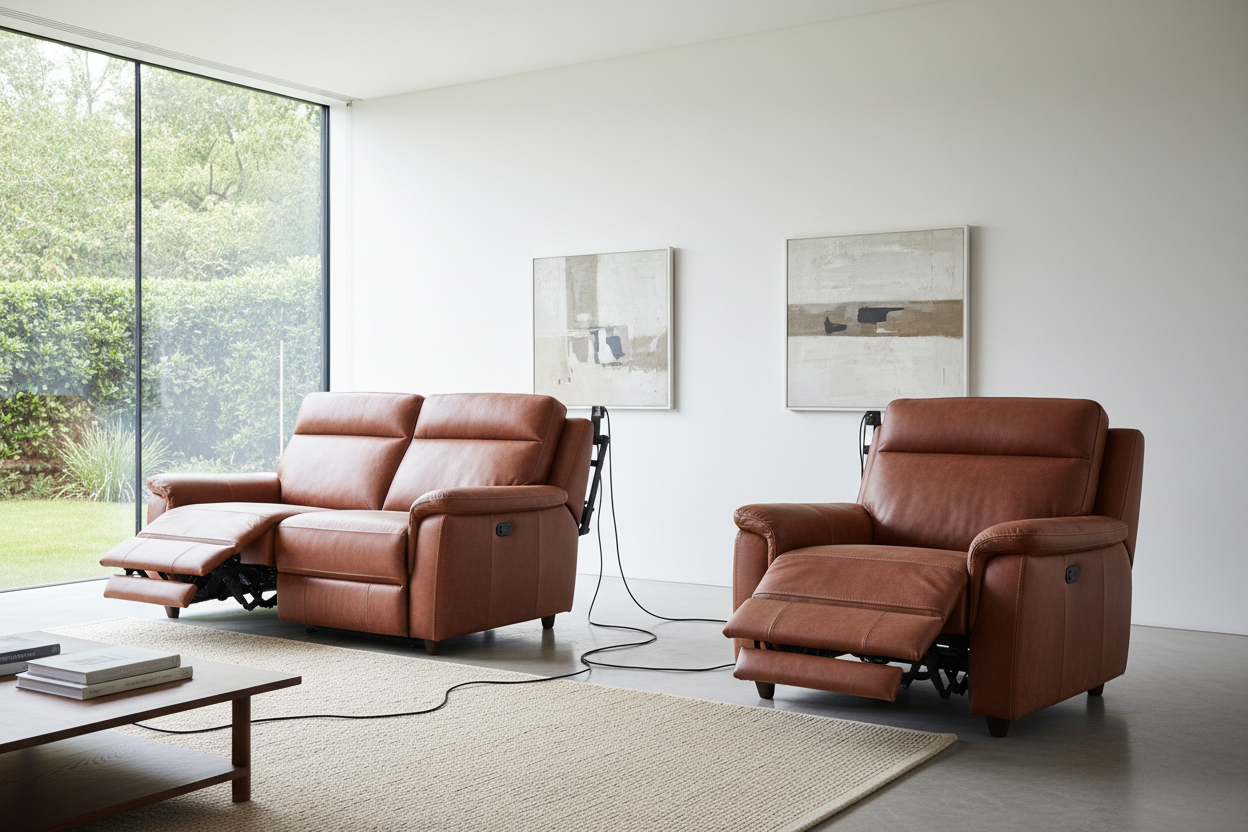
In my fifteen years of designing residential interiors, few furniture requests spark as much debate as the desire for motion furniture. Clients often find themselves torn between two extremes: the unrivaled comfort of a reclining mechanism and the fear that it will turn their sophisticated living room into a bulky, unrefined "man cave." The truth is, you do not have to sacrifice aesthetics for ergonomics. The secret lies in selecting leather sofa and loveseat recliners that prioritize silhouette and leather grade as much as the reclining mechanism itself.
Key Features to Look For
- Leather Grade: Prioritize Top Grain or Full Aniline over "Genuine" or Bonded leather for longevity and patina.
- Mechanism Type: Choose wall-hugger mechanisms for tight spaces to minimize required wall clearance.
- Suspension: Look for kiln-dried hardwood frames paired with sinuous spring suspension for sag-resistance.
- Power Source: Determine if you need battery packs for floating furniture layouts to avoid unsightly cords.
- Cushion Density: High-resiliency foam wrapped in down provides the best balance of structure and softness.
Deciphering Leather Quality and Texture
When investing in a reclining leather couch and loveseat, the terminology can be intentionally misleading. As a designer, I steer clients away from "bonded" leather, which is essentially leather dust glued together with polyurethane. It peels within years. For a piece that anchors a room, you want Top Grain leather. It is the outermost layer of the hide, sanded to remove imperfections, offering durability that withstands daily reclining motion without cracking.
Consider the tactile experience as well. If you want a buttery, soft feel, look for semi-aniline dyes. These retain the natural variation of the hide while offering a light protective coat against spills—essential for high-traffic family rooms.
Mastering the Layout and Flow
The most common error homeowners make is ignoring the "motion footprint." A static sofa has a fixed depth; a recliner changes shape. Standard mechanisms require substantial clearance behind the frame. If you are placing the furniture against a wall, a "wall-hugger" or "zero-clearance" design is non-negotiable. These mechanisms shift the seat forward as it reclines, requiring only inches of back clearance.
For open-concept spaces where the furniture floats in the center of the room, visual weight becomes the priority. Avoid overstuffed, pillowy arms. Opt for track arms or slightly tapered silhouettes. This keeps sightlines open and prevents the room from feeling crowded by heavy furniture blocks.
Color Theory and Visual Balance
Leather is a dominant material. A black or dark espresso set can create a "black hole" effect in a room if not balanced correctly. To counter the visual heaviness of a reclining set, I recommend layering textures. Pair the sleek, cool surface of the leather with a high-pile wool rug or nubby linen throw pillows. This textural contrast softens the industrial nature of the reclining mechanism and integrates the pieces into a cohesive design scheme.
My Personal Take on Leather Sofa and Loveseat Recliners
I learned a hard lesson early in my career regarding "floating" motion furniture. I designed a stunning open-plan living area for a client in Chicago, specifying a high-end power reclining set to sit right in the center of the room, facing the fireplace. It looked incredible on the floor plan.
However, on installation day, we realized a critical oversight: power recliners need electricity. Because the sofa was floating in the middle of the room, we were left with ugly black extension cords snaking across a beautiful oak floor to the nearest wall outlet. It ruined the clean lines immediately. We had to scramble to purchase aftermarket rechargeable battery packs that tucked under the frame. Now, I never specify power motion furniture without checking for floor outlets or ordering integrated battery packs. It’s a small logistical detail that saves the entire aesthetic.
Conclusion
Integrating motion furniture into a stylish home is no longer a compromise; it is a design opportunity. By focusing on high-grade hides, streamlined silhouettes, and proper spatial planning, your leather sofa and loveseat recliners can serve as the luxurious, functional heart of your home. It is time to embrace comfort without apology.
Frequently Asked Questions
How much space do I need behind a reclining sofa?
Standard recliners typically require 8 to 12 inches of wall clearance. However, wall-hugger (or zero-wall) models are designed to pivot forward, requiring as little as 2 to 4 inches of space, making them ideal for smaller rooms.
Is a power recliner better than a manual one?
Power recliners offer infinite reclining positions and are generally easier to operate for people with mobility issues. However, manual recliners are lighter, have fewer mechanical parts that can fail, and do not require proximity to a power outlet.
How do I maintain the leather on a recliner?
Dust weekly with a microfiber cloth to prevent abrasive particles from settling in the grain. Apply a high-quality leather conditioner every 6 to 12 months to keep the hide supple and prevent cracking, especially in the creases where the reclining motion occurs.

Leave a comment
This site is protected by hCaptcha and the hCaptcha Privacy Policy and Terms of Service apply.