

















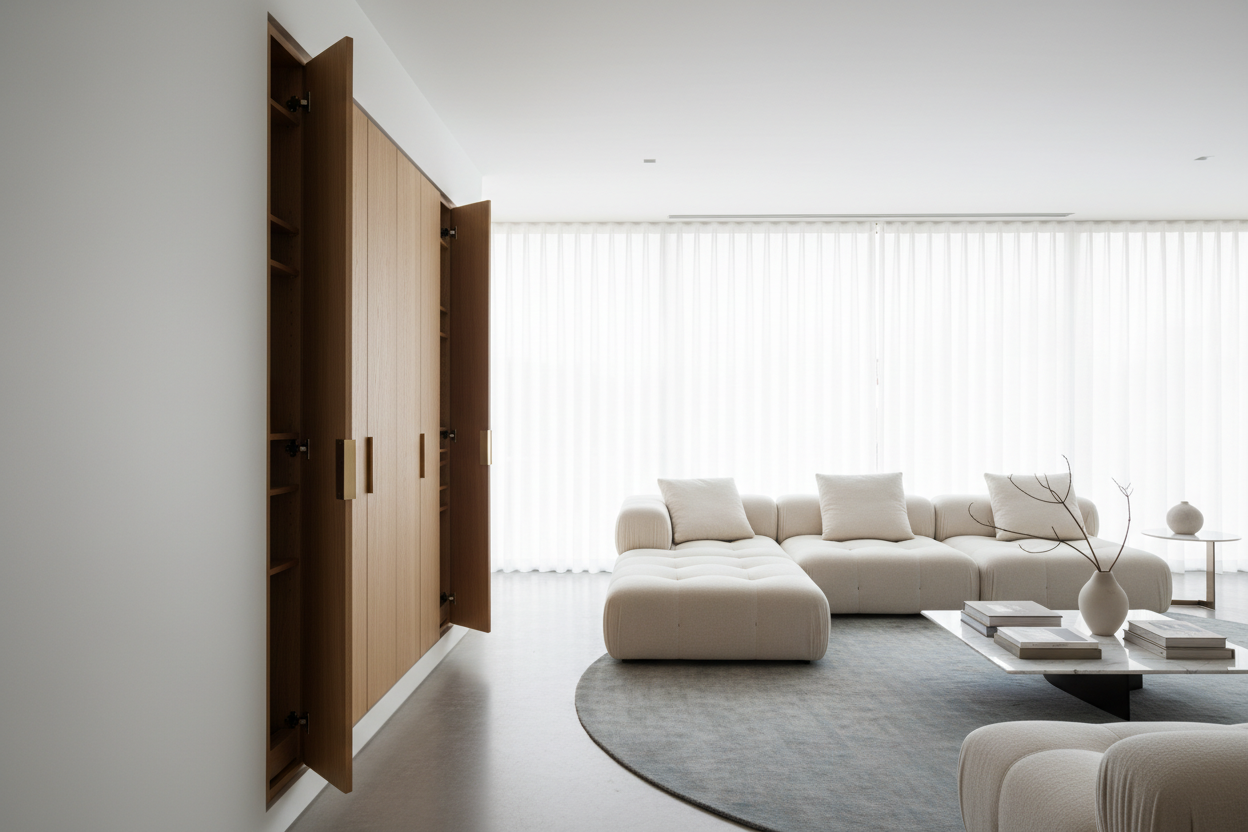
We have all stared at that one awkward, empty wall. Maybe it sits just past the entryway, or perhaps it is the tight corridor leading into your primary bathroom. You desperately need storage, but a standard 18-inch deep credenza would completely choke the walkway. This is exactly where a shallow tall cabinet proves its worth.
By utilizing vertical space rather than eating up your floor plan, you gain practical storage without sacrificing the flow of your room. In this guide, I will walk you through how to properly size, style, and secure these narrow pieces so they look intentional rather than awkwardly squeezed in.
Quick Decision Guide
- Ideal Depth: Look for profiles between 10 and 14 inches deep to maximize walkway clearance.
- Safety First: Because of their high center of gravity, these cabinets must always be anchored to a wall stud.
- Visual Weight: Match the cabinet color to your wall if you want it to recede, or choose a contrasting wood tone to create a focal point.
- Door Styles: A shallow tall cabinet with doors keeps visual clutter hidden, while open shelving requires constant styling maintenance.
Navigating Tight Footprints
In typical North American homes, hallways and transitional spaces are often neglected because finding furniture that fits is notoriously difficult. A tall shallow cabinet solves this by hugging the wall. However, scale and proportion still matter immensely.
The 36-Inch Clearance Rule
Even when dealing with narrow furniture, you must respect the room's traffic flow. Always leave a minimum of 36 inches of clear walking space in front of the cabinet. If you are placing a tall shallow cabinet with doors in a tight hallway, account for the swing radius of the doors. If the doors block the path when fully open, consider a unit with sliding doors or an open-shelf upper section.
Managing Visual Weight and Style
Because these pieces stretch upward, they naturally draw the eye. If your ceilings are standard 8-foot heights, a dark, heavy, solid wood cabinet can make the room feel top-heavy and cramped.
Solid vs. Glass Fronts
If you are storing extra linens, out-of-season shoes, or utility items, a tall shallow storage cabinet with solid doors is your best route. To prevent it from looking like a looming monolith, opt for lighter finishes like white oak, ash, or a painted matte finish that blends with your trim. On the other hand, if you want to display books or ceramics, a glass-front unit introduces negative space, making the piece feel significantly lighter in the room.
Designer's Honest Take
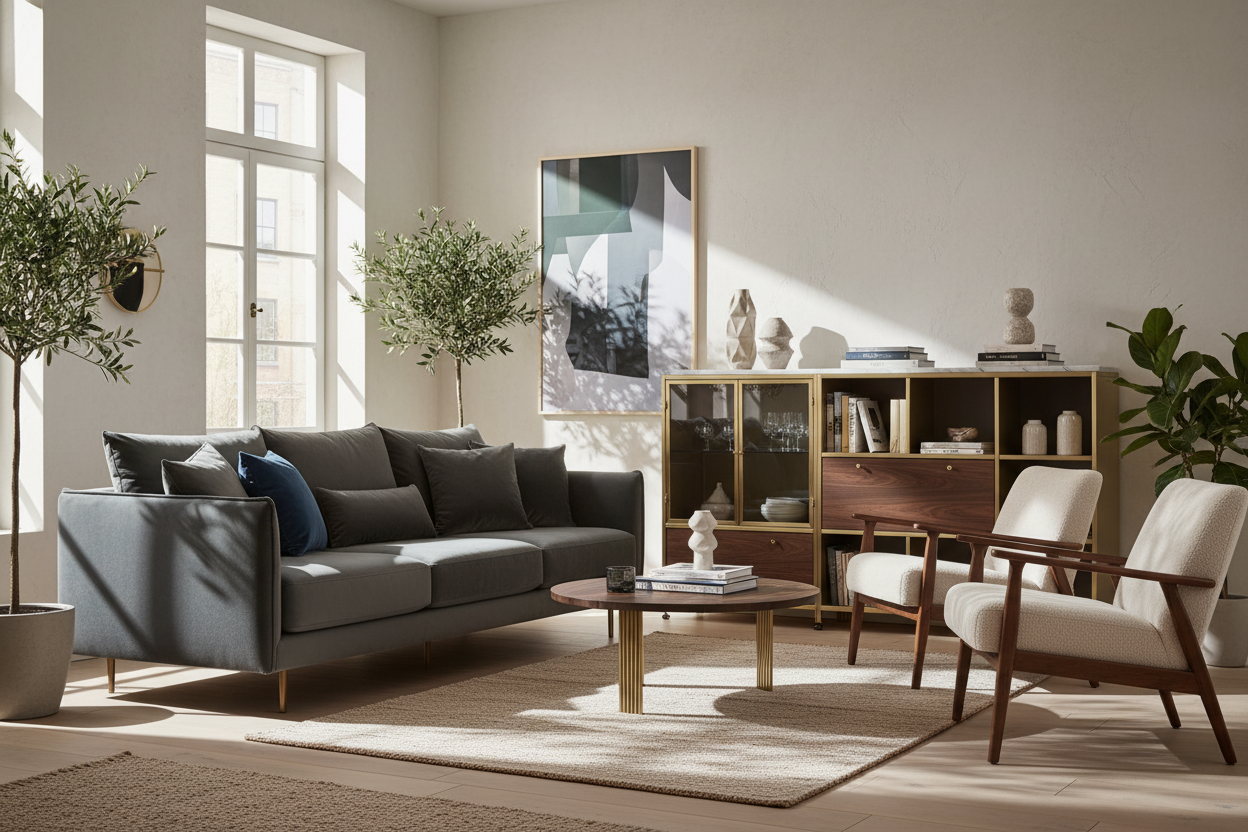
I love narrow storage, but I learned a hard lesson during a townhouse project in Toronto a few years ago. I specified a stunning walnut shallow tall cabinet with doors for a client's narrow dining room. The plan was to use it as a modern hutch.
First issue: The home had 6-inch architectural baseboards, meaning the cabinet sat inches away from the wall. We had to carefully notch the back legs to make it sit flush. Second issue: At only 12 inches deep, standard 11-inch dinner plates barely fit, and large serving platters absolutely did not. The doors wouldn't close. We ended up having to pivot and use it for glassware and bar accessories instead. The takeaway? Measure your actual items before buying. Narrow depth is great for walkways, but it drastically limits what you can store inside.
Frequently Asked Questions
How deep is a standard shallow cabinet?
Most shallow cabinets range from 10 to 15 inches in depth. Anything under 10 inches becomes difficult to use for anything other than spices, paperback books, or small toiletries.
Where is the best place to use a tall shallow storage cabinet?
They excel in entryways for shoe storage, in bathrooms for rolled towels and toiletries, and in narrow dining rooms as glassware or pantry overflow.
Does a tall narrow cabinet need to be anchored?
Absolutely. The ratio of height to depth makes these pieces highly susceptible to tipping, especially on carpet or uneven hardwood floors. Always use anti-tip hardware secured directly into a wall stud.


Leave a comment
This site is protected by hCaptcha and the hCaptcha Privacy Policy and Terms of Service apply.