










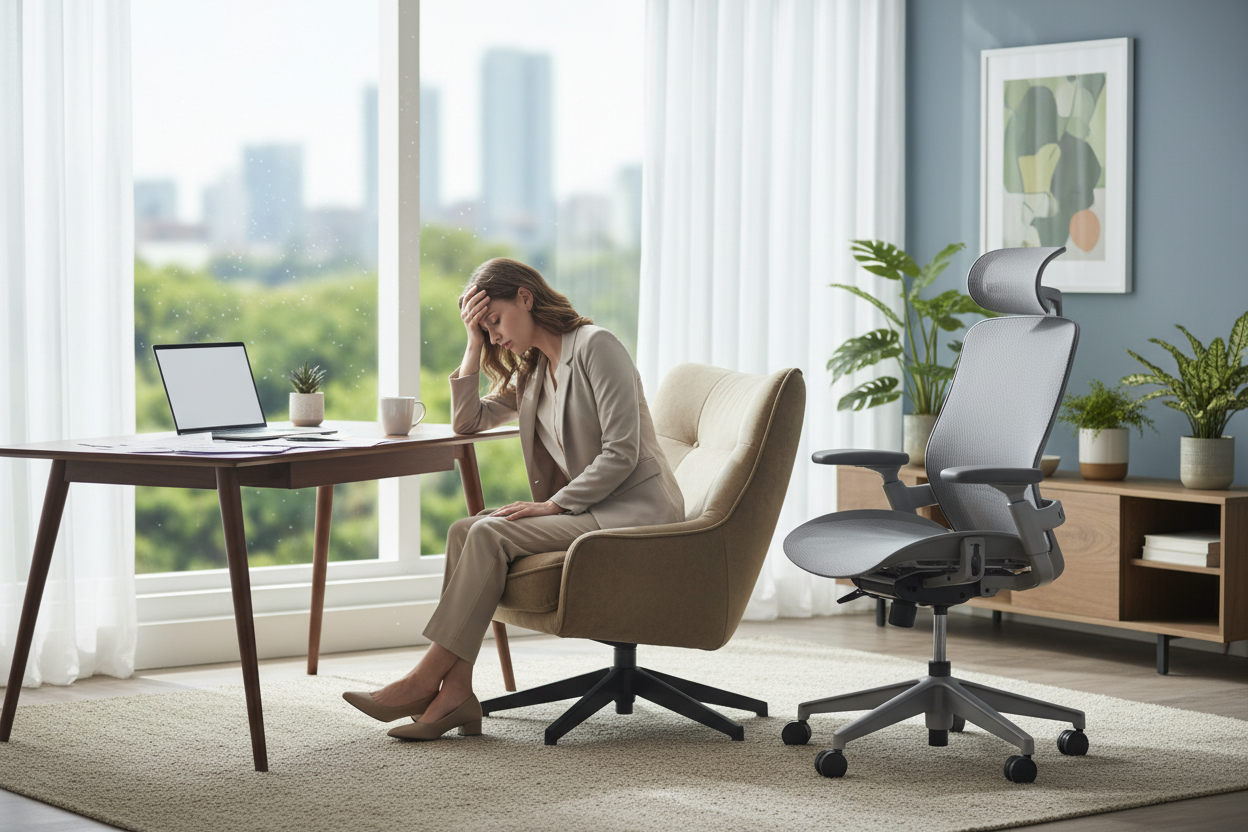
We have all been there: standing in a showroom or scrolling endlessly online, captivated by a sleek, velvet-upholstered silhouette that looks stunning but feels like a torture device after hour two. As a designer, I see clients constantly struggle to balance the visual weight of furniture with the biological need for support. Choosing the right desk chairs for offices is not merely about matching your wood veneers or color palette; it is about engineering your productivity.
Whether you are outfitting a corporate suite or curating a cozy nook, the chair is the most intimate piece of furniture you will own. It connects directly with your body for eight hours a day. This guide cuts through the marketing noise to help you find a seat for desk work that respects both your spine and your interior design aesthetic.
Quick Decision Guide: Key Features to Look For
- Lumbar Support: Look for an adjustable lumbar curve. A static backrest rarely fits every spine curvature perfectly.
- Seat Depth: You should have about two to three fingers of space between the edge of the seat and the back of your knees to ensure proper circulation.
- Material Breathability: For long hours, mesh or perforated leather beats solid velvet or cheap vinyl, which can trap heat.
- Mechanism Quality: Avoid simple up/down levers. Look for a "synchro-tilt" mechanism where the backrest and seat pan move in a ratio (usually 2:1) for dynamic support.
- Base Stability: A five-star base is the industry standard for safety. Ensure the casters match your flooring (soft casters for hardwood, hard for carpet).
The Ergonomic Equation: More Than Just a Soft Seat
When you look to buy an office chair, you are essentially buying a tool for your health. A common misconception is that a "soft" chair equals a comfortable one. In reality, a computer work chair needs to provide resistance, not just cushion. If you sink in too deeply, your pelvis tilts backward, straining your lumbar discs.
Mechanism Matters
For a dedicated workstation chair, price often correlates with the complexity of the mechanism under the seat. A standard office chair for computer use should offer tension control. This allows you to recline without feeling like you are falling backward or fighting a spring. If you are looking for a computer chair for home use, ensure it has a "waterfall edge"—a seat front that curves downward to prevent cutting off circulation to your lower legs.
Materiality: Balancing Durability and Style
In a commercial setting, we prioritize high-Martindale rub counts (durability). However, for a desk chair in home environments, texture is king. The industrial look of a mesh office chair for computer desk setups is fantastic for airflow, but it can look clinical in a warm, bohemian study.
The "Resimercial" Trend
We are seeing a massive shift toward "resimercial" design—where home and office chair aesthetics merge. You might consider an armchair for desk usage if you work casually or host meetings. These often look like dining or lounge chairs but conceal a swivel base or hidden height adjustment. If you search for a "computer couch chair" or a "desk couch chair," you are likely looking for these wider, padded hybrid options that allow for cross-legged sitting, which is becoming increasingly popular in home work chairs.
Navigating the Market: Budget vs. Investment
Clients often ask if a low price office chair is worth the savings. Here is the honest truth: cheap chairs for desks often fail in the gas lift cylinder (the part that makes the chair go up and down) within a year. When analyzing desk chairs prices, consider the cost-per-use.
If you buy a computer chair that costs $150 but needs replacing in 18 months, it is more expensive than a $600 chair that lasts a decade. However, you don't always need a Herman Miller. Many mid-range office chairs and desks brands offer solid ergonomics without the designer premium. When you shop desk chair options, check the warranty. Five years is the minimum for a quality work office chair.
Space Planning for the Home Office
A massive executive leather chair destroys the scale of a small bedroom office. For tight spaces, look for a new office desk chair with a low profile or a mid-back design. A "spinny chair for desk" setups (swivel) is non-negotiable if your workspace is L-shaped or if you frequently turn to access files.
If you are pairing a study chair with desk cabinetry, measure the armrest height. Nothing is more frustrating than a nice chair for desk work that cannot tuck under the table because the arms are too high, eating up valuable floor space.
My Personal Take on desk chairs for offices
In my fifteen years of designing workspaces, I have learned that specifications on a website never tell the whole story. I once specified a stunning, high-end leather executive chair for a client's home office. It looked incredible. However, three months later, the client called me complaining about "slide."
Because he often wore suit trousers, the high-gloss leather combined with a slightly forward-tilted seat meant he was constantly engaging his core just to stop sliding off the chair. It was exhausting for him. We swapped it for a fabric-upholstered task chair with a grippier texture and a seat slide adjustment.
The Lesson: When you buy a computer chair, sit in it while wearing the clothes you actually work in. Also, check the "squeak factor." Lower-tier chairs often develop a mechanical creak in the tilt mechanism that is impossible to fix and maddening during quiet focus time. Silence is a luxury feature that isn't listed on the tag.
Conclusion
Finding the perfect seat for desk work is a balance of biology and beauty. Do not be seduced by aesthetics alone, but do not settle for an ugly utilitarian piece that ruins your room's vibe either. Whether you need a study chair, a computer chair home office setup, or a fleet of chairs for a corporate floor, prioritize the mechanism and the fabric feel. Your back will thank you.
Frequently Asked Questions
How much should I spend on a good office chair for home use?
While you can find cheap chairs for desks under $100, they rarely offer ergonomic support. A decent "workstation chair price" usually starts around $250–$400 for reliable mechanics and foam density that won't collapse after a few months.
Can I use a dining chair as a desk chair?
For very short periods, yes. However, a dining chair lacks the lumbar curve, seat height adjustment, and swivel capacity of a proper office working chair. Using one full-time is a recipe for chronic back and neck pain.
What is the best chair for a computer table in a small apartment?
Look for armless task chairs or "drafting" style chairs with a smaller footprint. A light-colored or mesh back can also reduce the visual weight, making the chair for home office desk setups feel less intrusive in the room.


Leave a comment
This site is protected by hCaptcha and the hCaptcha Privacy Policy and Terms of Service apply.