

















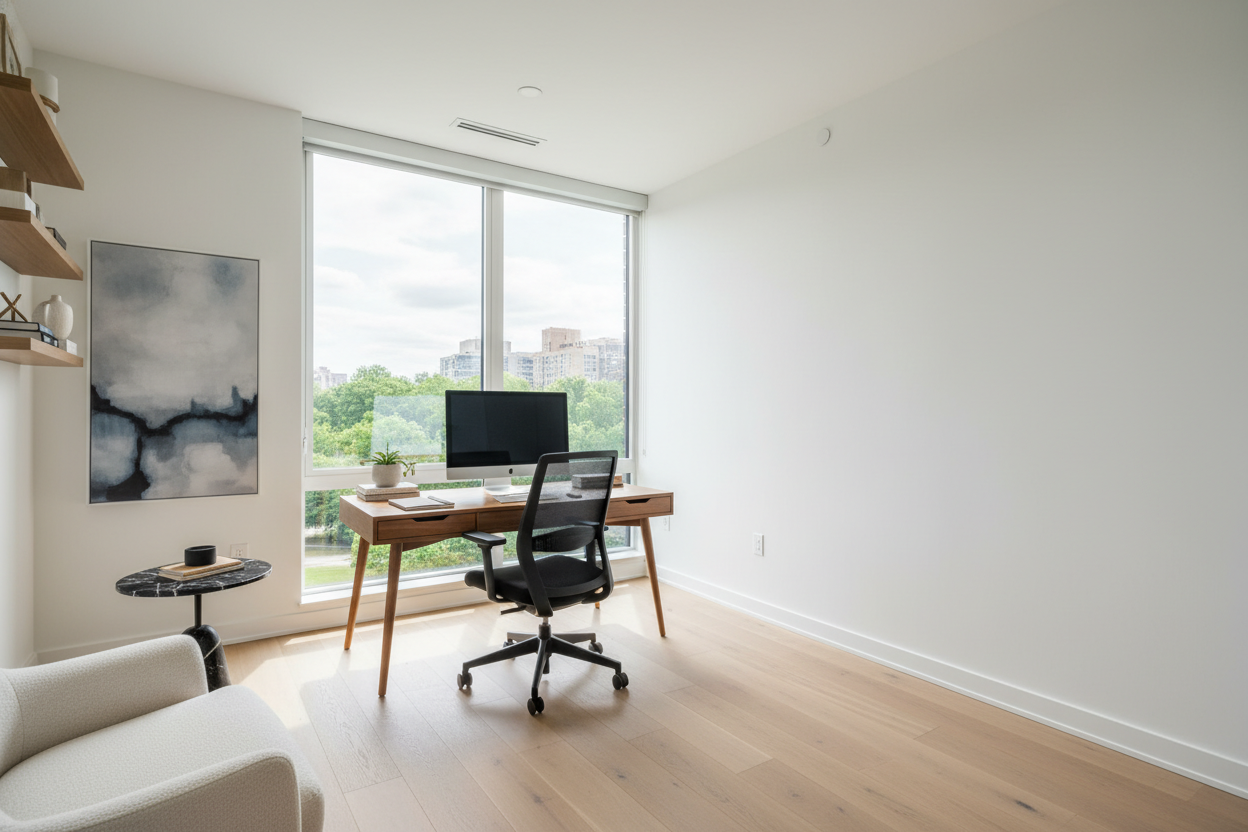
There is a distinct difference between a workspace that looks good in a catalog and one that actually functions for an eight-hour workday. Many homeowners focus heavily on selecting a statement desk or a sculptural chair, only to realize later that screen glare renders the space unusable at 3 PM, or that the traffic flow feels cramped. A truly successful modern home office layout is less about decoration and more about spatial engineering.
Key Features of an Optimized Layout
- The Command Position: Orienting the desk to face the door without being directly in line with it to reduce subconscious stress.
- Light Layering: Combining ambient overhead lighting with focused task lighting to prevent eye strain.
- Traffic Flow: Maintaining a minimum of 36 inches of clearance behind the desk for chair movement.
- Vertical Storage: Utilizing wall height to keep the footprint open and airy.
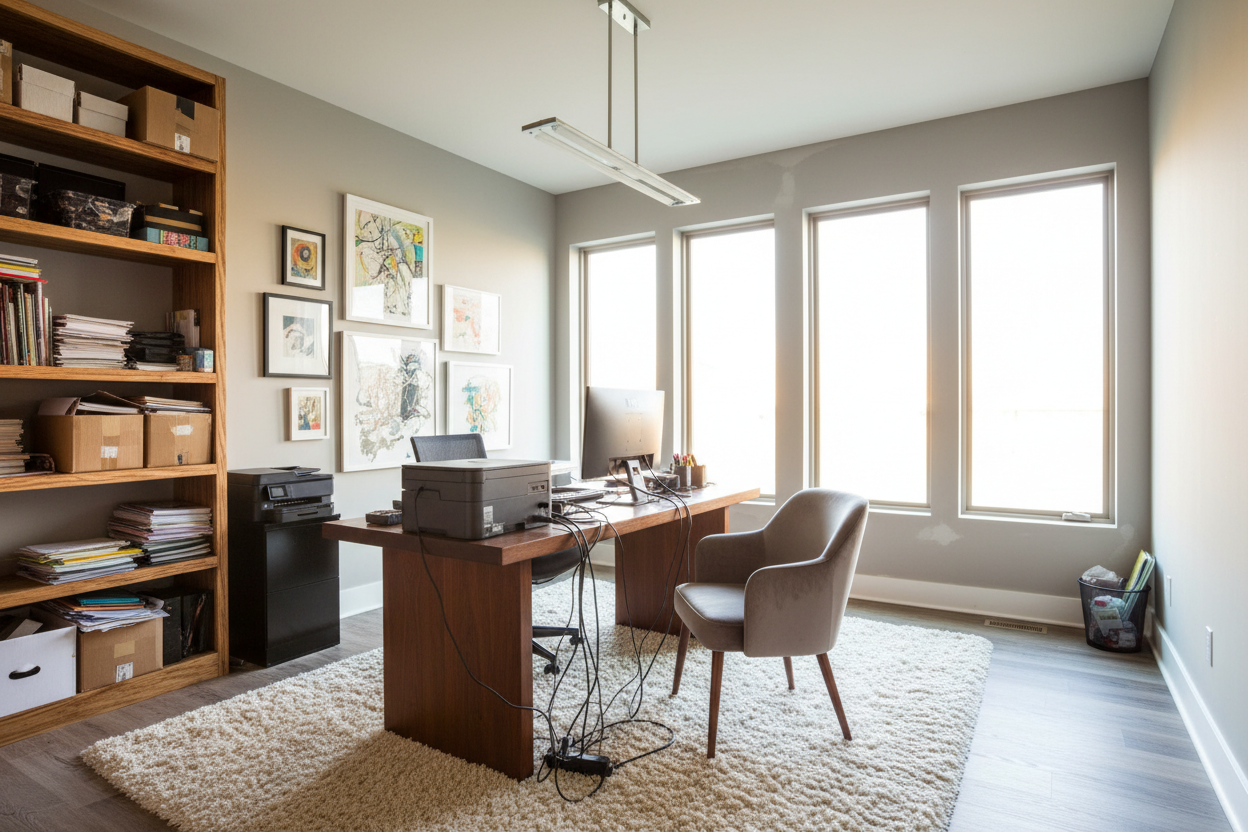
- Cable Architecture: Planning layout proximity to outlets to avoid trailing wires.
Establishing the Command Position
In high-end residential design, we prioritize the "Command Position." This isn't just a Feng Shui concept; it is a psychological necessity for focus. The most frequent error I see is pushing the desk directly against a wall. While this saves space, it creates a visual dead-end.
Instead, float the desk in the room if space permits. This layout allows you to overlook the room, creating a sense of authority and openness. If square footage is tight, position the desk perpendicular to a window. This offers the benefits of natural light without the harsh contrast of backlighting your monitor, which is a nightmare for video calls.
Curating the Modern Home Office Look
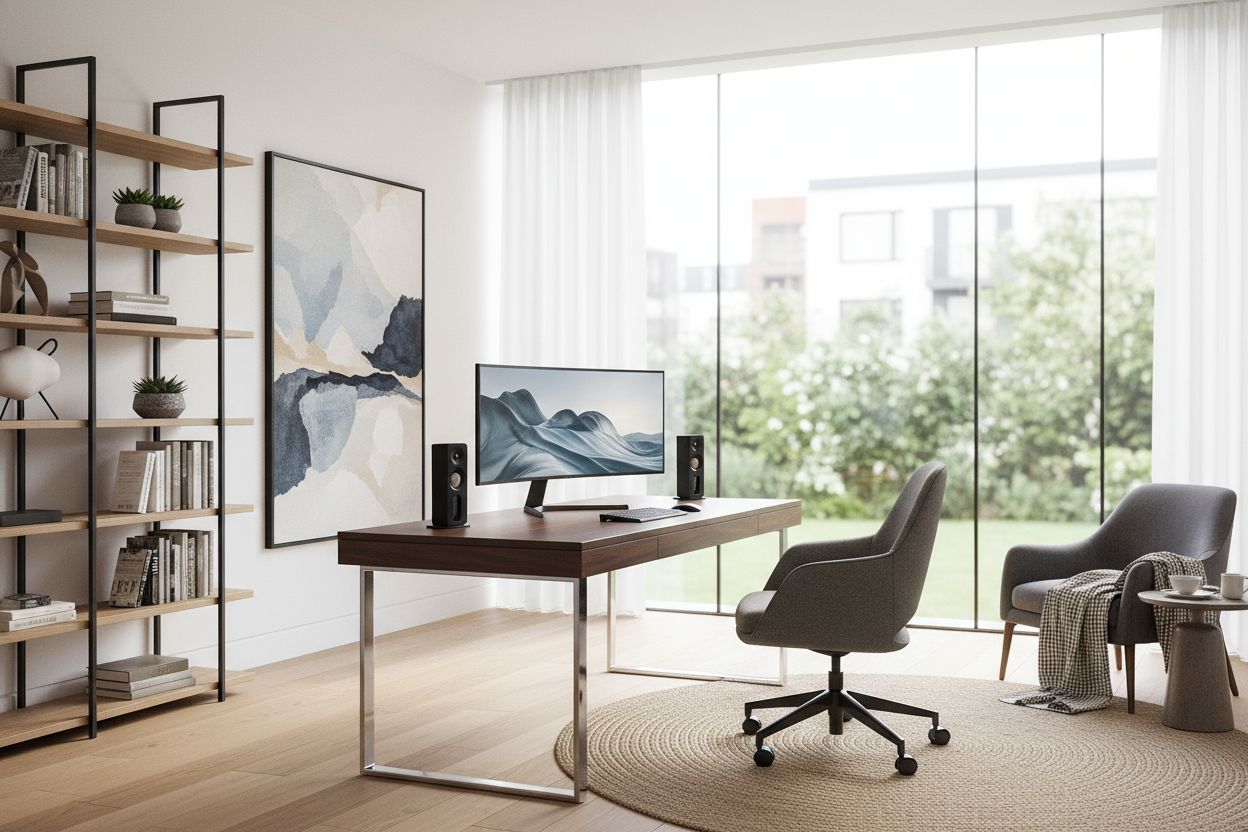
Achieving a cohesive modern home office look requires a careful balance of textures. Modern design risks feeling sterile if you rely too heavily on glass, chrome, and high-gloss lacquer.
Materiality and Acoustics
When planning the layout, consider how materials affect sound. A glass desk in a room with hardwood floors will create an echo chamber. To counter this, I always integrate "soft architecture" into the layout. This might mean placing a high-pile wool rug beneath the desk zone or positioning a velvet accent chair in the corner. These elements absorb sound and introduce tactile warmth without cluttering the visual lines.
Ergonomics Meets Aesthetics
Do not sacrifice your lumbar spine for a sleek silhouette. The layout must accommodate a chair with a proper wheelbase. Ensure your floor plan accounts for the chair's turning radius. If you are using a rug, the chair must sit entirely on it, or entirely off it. There is nothing more frustrating than a caster wheel constantly getting stuck on the lip of a rug every time you scoot forward.
My Personal Take on Modern Home Office Layout
I learned a painful lesson about layout and electrical planning during a project for a client in a downtown loft. We designed a stunning floating desk arrangement right in the center of the room to capitalize on the skyline view. It looked incredible on paper.
However, we overlooked one unpolished detail: the floor outlets. Because the building was concrete, trenching the floor for a new outlet was impossible. We ended up having to run a cable cover across the beautiful hardwood floor to power the computer. Every time I visited, I saw that plastic strip accumulating dust and scuff marks. It ruined the floating effect entirely. Now, I never finalize a layout without first mapping the power sources. If you can't plug it in invisibly, the layout doesn't work, no matter how beautiful the furniture is.
Conclusion
Your home office should be a machine for living and working. By prioritizing flow, lighting, and acoustic balance over purely decorative choices, you create a space that sustains your energy rather than draining it. Measure your space, check your outlets, and give yourself room to breathe.
Frequently Asked Questions
What is the minimum space needed for a functional home office layout?
Ideally, you need a space of at least 7x10 feet to accommodate a standard desk and chair with proper circulation. However, for a "cloffice" (closet office) or nook, you can work with a depth of 24 inches if the width allows for elbow room.
How do I stop my modern office from looking cold?
Introduce organic elements. A live edge wood desk, a leather blotter, or linen drapery adds texture. Lighting temperature also matters; stick to 3000K bulbs for a warm, inviting glow that is still bright enough for work.
Should the desk face the window?
Generally, no. Facing a window directly can cause eye strain due to the variance in brightness between the screen and the sunlight. It is better to have the window to your side (perpendicular) for even illumination.

Leave a comment
This site is protected by hCaptcha and the hCaptcha Privacy Policy and Terms of Service apply.