

















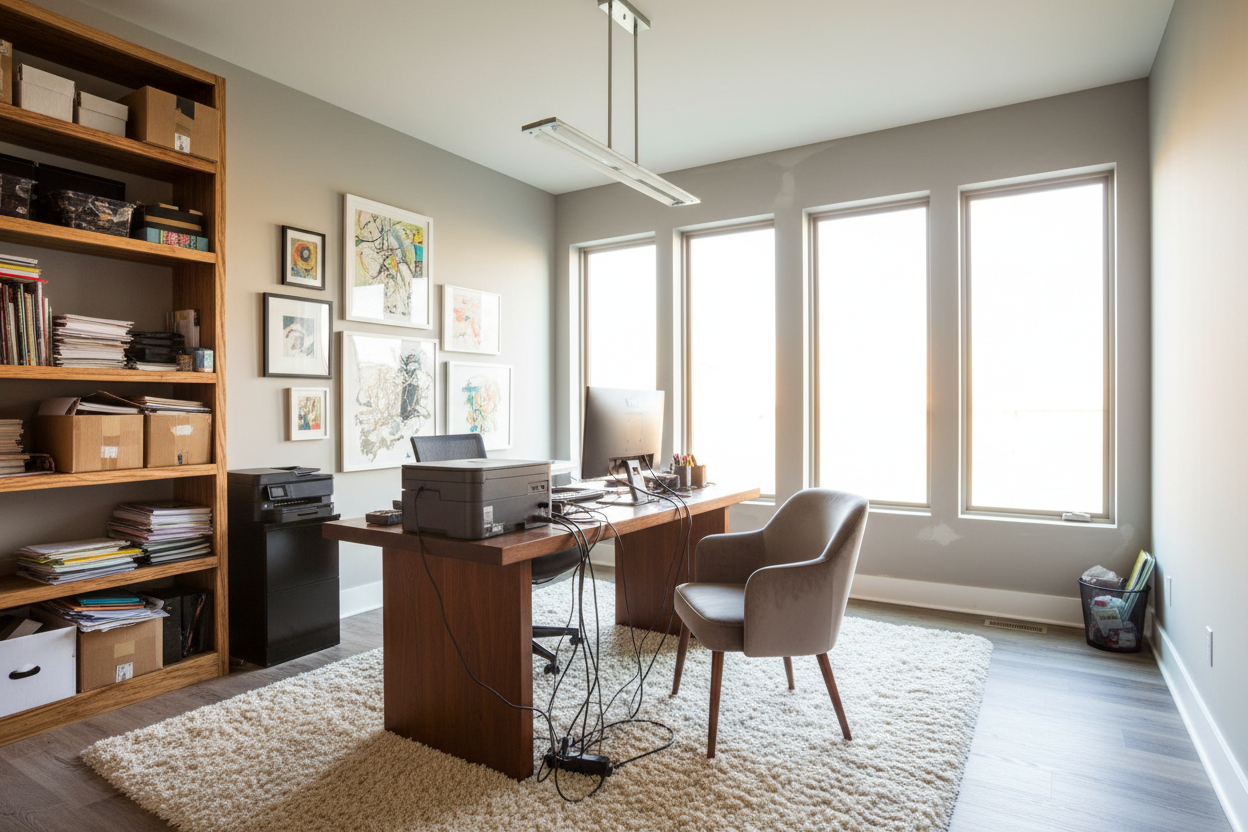
We've all been there: balancing a laptop on a stack of books, staring at a blank wall, and wondering why it is so hard to focus. When your workspace consists of leftover dining chairs and inadequate lighting, it drains your energy before the workday even begins. A strategic home office remodel shifts the dynamic entirely. By rethinking your layout, lighting, and ergonomics, you can create a room that actually supports your workflow rather than fighting it. In this guide, you will walk away knowing exactly how to plan your space, where to allocate your budget, and which furniture pieces matter most.
Quick Decision Guide
- Prioritize natural light by positioning your desk perpendicular to windows to reduce screen glare.
- Leave at least 36 inches of clearance behind your desk chair to allow for comfortable movement.
- Invest heavily in your seating; a high-quality ergonomic chair outlives trendy aesthetic alternatives.
- Incorporate closed storage to hide visual clutter, which directly impacts mental fatigue.
Space Planning & Layout
The foundation of any successful home office renovation is the floor plan. It is tempting to shove a desk against the furthest wall to maximize open floor space, but this often creates a stagnant, uninspiring environment. Instead, consider the visual weight of your furniture and how it anchors the room.
Nailing the Clearances
When looking at home office remodeling ideas, pay close attention to the math. You need a minimum of 60 inches of width for a primary workspace to accommodate a monitor, a laptop, and reference materials. Behind the desk, leave 36 to 42 inches of clearance so you can push your chair back without hitting a wall or a bookshelf. If you have the square footage, floating the desk in the center of the room facing the door creates a commanding, executive feel and utilizes negative space beautifully.
Comfort & Ergonomics
A workspace that looks stunning in photos but leaves you with lower back pain is a failed design. Ergonomics must dictate your furniture selections when remodeling a home office. Standard desk height in North America is 29 to 30 inches, which actually runs a bit high for anyone under five-foot-eight. This is where an adjustable chair with a footrest becomes critical.
The Desk and Chair Relationship
Your chair is not the place to compromise. Look for seat depth adjustability, lumbar support, and breathable materials. Pair it with a desk that accommodates your specific workflow. If you use multiple monitors, ensure the desk depth is at least 30 inches so the screens are not sitting right against your nose. Sit-stand desks have become a staple for a reason, allowing you to shift your posture throughout the day and maintain your energy levels.
Value & Longevity
Budgeting for a remodel requires knowing when to open your wallet and when to hold back. You do not need to spend thousands on every single piece in the room to achieve a high-end look.
Where to Splurge vs. Save
Splurge on your task chair and your primary work surface. A solid wood or high-quality commercial laminate desk will withstand years of coffee rings and heavy equipment without peeling. Save on secondary items like guest seating, decorative rugs, and accent lighting. You can easily find stylish, budget-friendly bookshelf options that look custom if you trim them out with baseboards—a favorite trick among residential designers.
Designer's Honest Take
Over my 15 years designing residential spaces, I have planned countless workspaces. Early on, I pushed heavy, custom built-in cabinetry for almost every client because it looks incredibly tailored. But I learned the hard way that built-ins are a massive commitment. In one suburban project, we installed gorgeous floor-to-ceiling navy oak built-ins. Two years later, the client had another baby and desperately needed that room back as a nursery. Tearing out those expensive cabinets was painful to watch.
Now, I often recommend high-quality modular storage instead. It gives you that seamless silhouette but allows the room to evolve as your life changes. The downside to modular systems? They rarely sit perfectly flush against uneven drywall, so you have to be comfortable with tiny gaps or use a bit of clever styling to hide the seams.
Frequently Asked Questions
How much does a home office remodel cost?
A basic cosmetic update involving paint, a new desk, and an ergonomic chair can cost between $1,500 and $3,000. A full renovation involving custom cabinetry, hardwired lighting, and new flooring typically ranges from $5,000 to $15,000 depending on materials and labor in your area.
Where should a desk be placed in a home office?
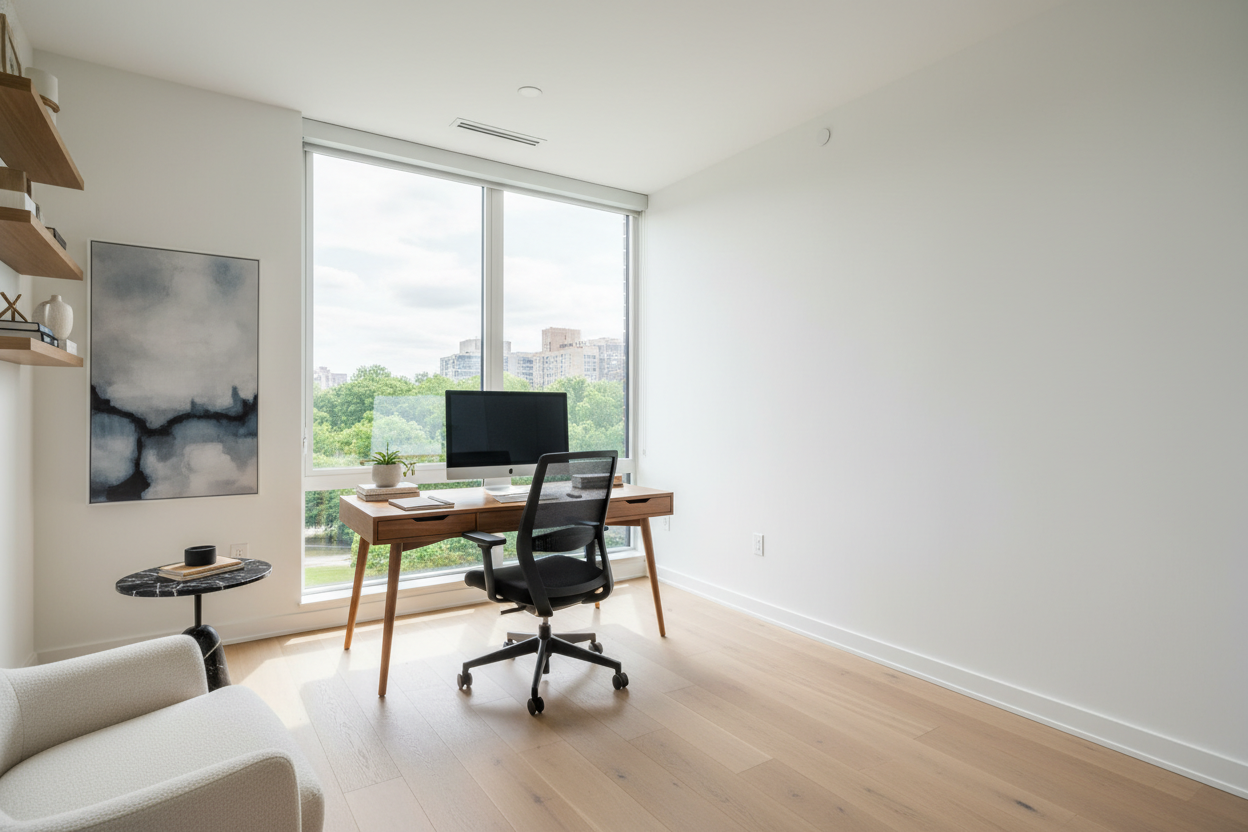
Ideally, place your desk perpendicular to a window. This gives you the mental benefit of natural light without the harsh glare on your computer screen. If possible, position yourself so you have a clear view of the door.
Is a built-in desk worth the investment?
It depends on your long-term plans. Built-ins maximize every inch of space and provide a tailored look, making them great for permanent homes. However, if you might move or repurpose the room within five years, opt for freestanding furniture.

Leave a comment
This site is protected by hCaptcha and the hCaptcha Privacy Policy and Terms of Service apply.